
Intel Xe3 Arc B390 iGPU Lands With Panther Lake: Intel Claims RTX 4050 Class 1080p Performance, 82% Lead Versus Radeon 890M, And Exclusive Multi Frame
Intel’s Panther Lake launch is not just a CPU story, it is a graphics platform inflection point. Alongside the Core Ultra Series 3 rollout, Intel is spotlighting its fastest integrated GPU to date, the Xe3 based Arc B390, and the company is presenting numbers that put it in direct contention with entry level discrete laptop graphics, while also widening the gap versus competing iGPUs from AMD and Qualcomm in the same power class.

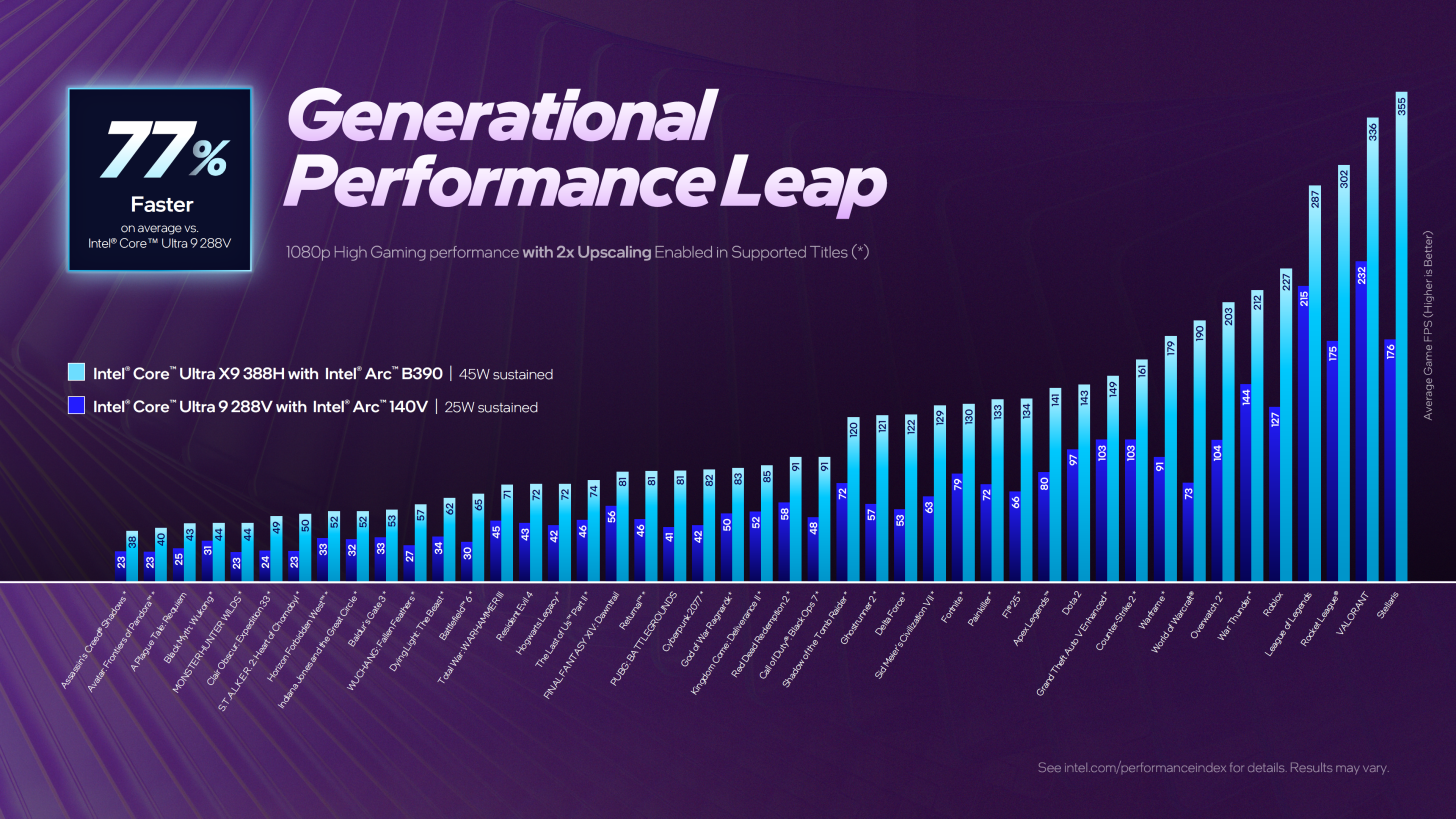
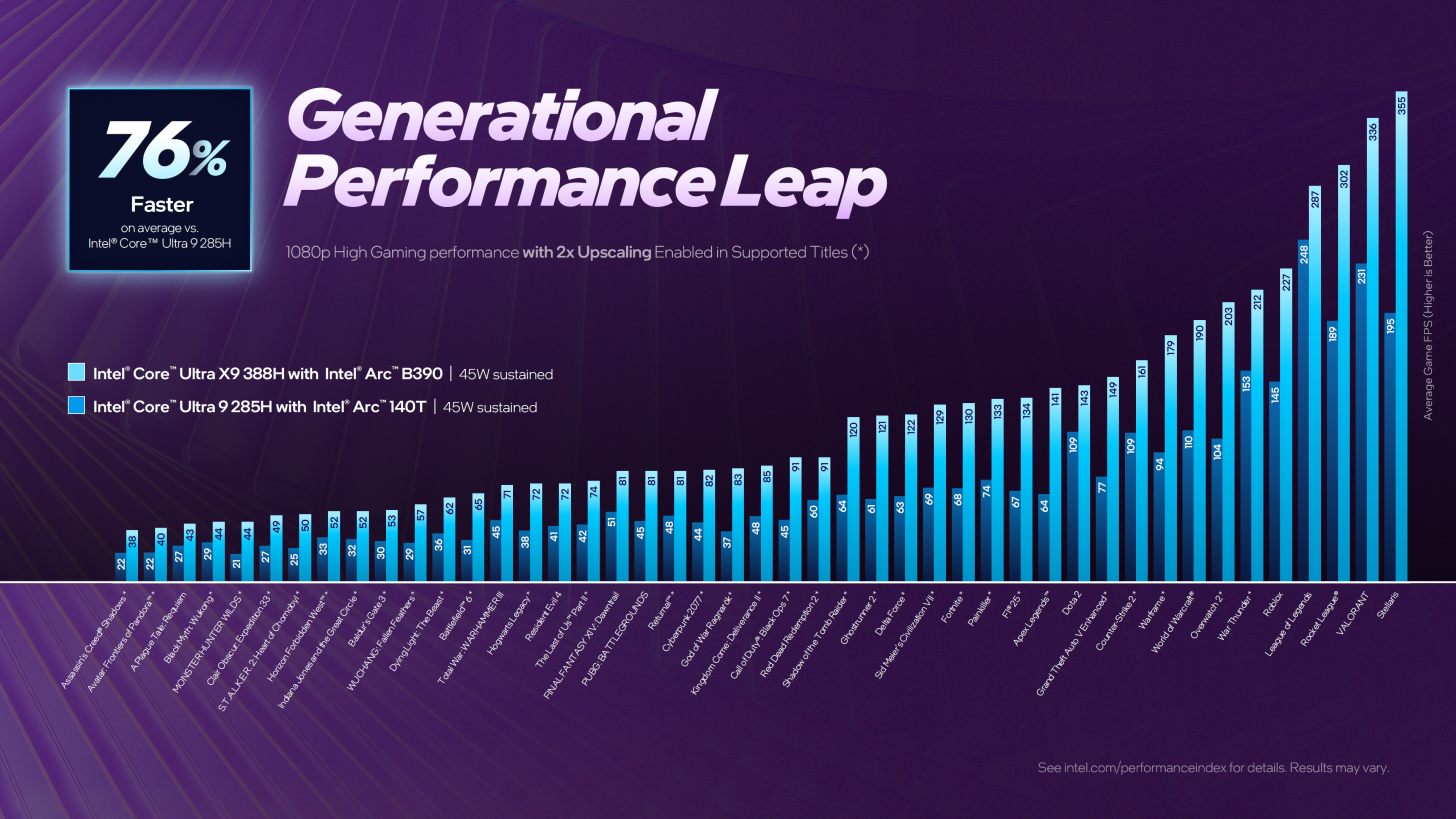
Intel positions Arc B390 as the flagship of the new Arc B series iGPUs, featuring 12 Xe3 cores and delivering a major uplift versus Intel’s previous best integrated solutions. Intel claims the Arc B390 delivers a 50% improvement versus the Arc 140V found in Lunar Lake, alongside a 77% graphics performance improvement, and a 76% uplift versus the Xe+ based Arc 140T on Arrow Lake. Intel notes these uplifts were measured at 1080p with 2x upscaling enabled across the tested GPUs in titles that support upscaling, which is important context because the scaling technique can influence comparative results depending on the game and the implementation.
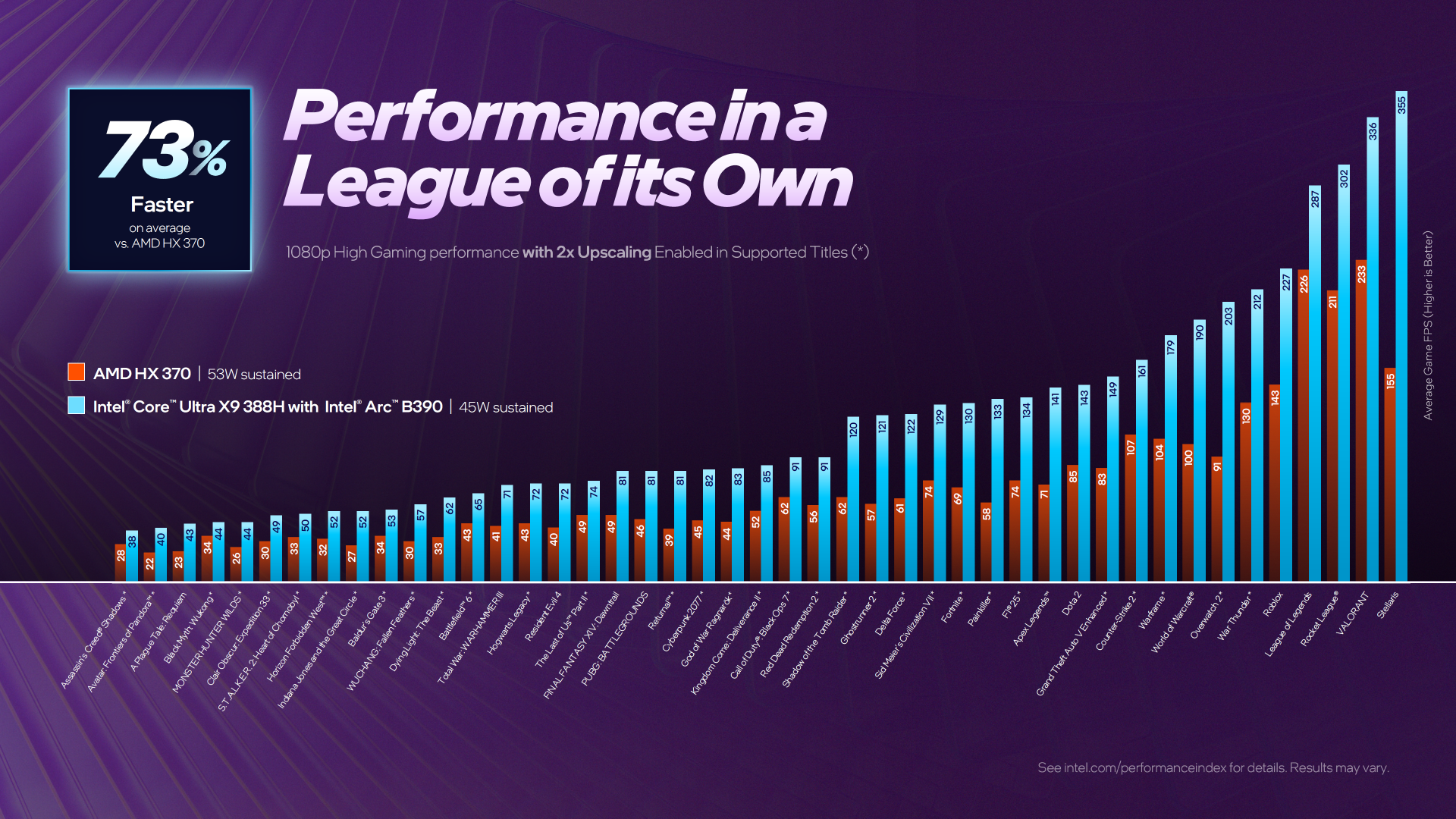
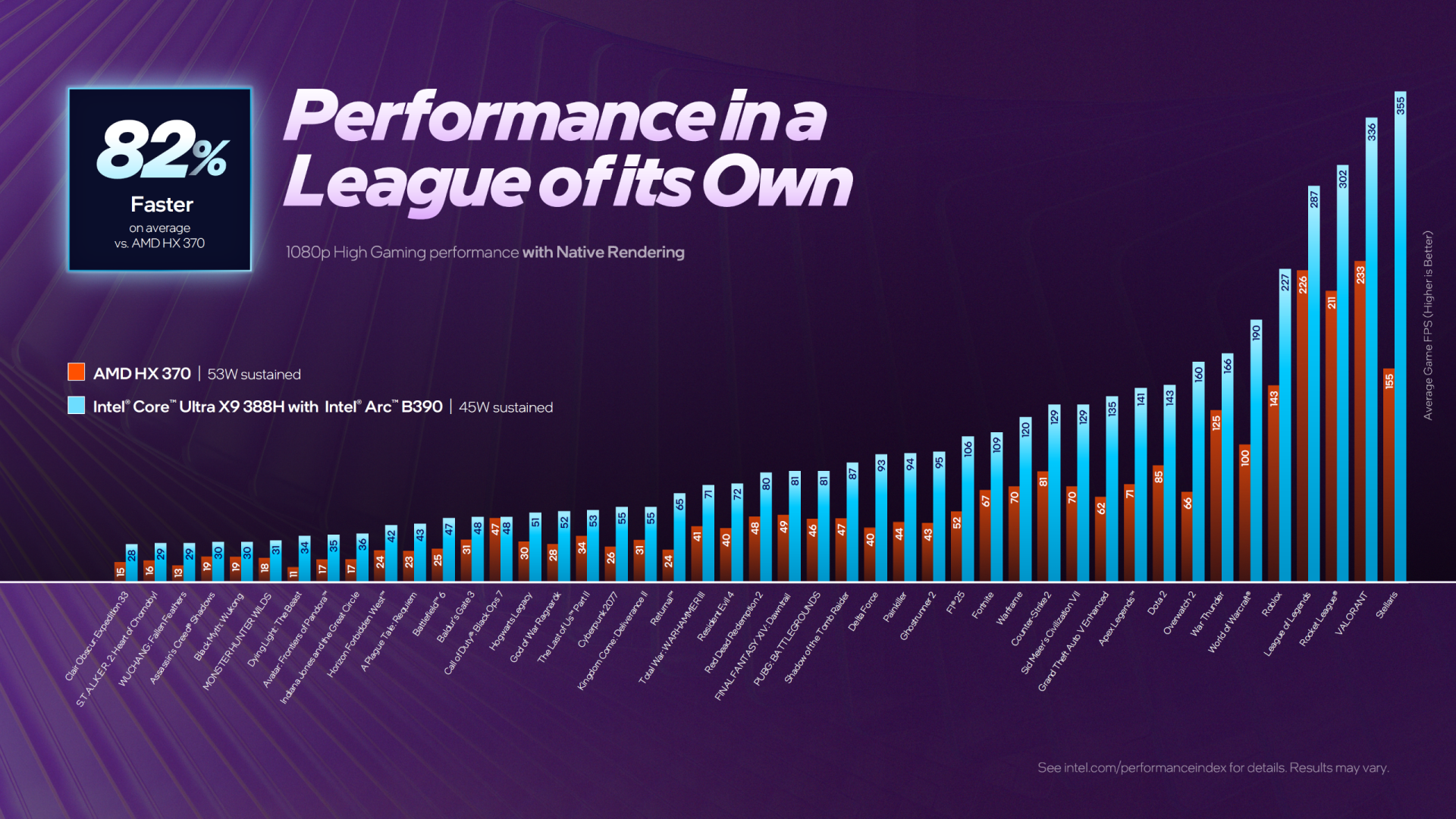
For native 1080p gaming performance, Intel compares a Core Ultra X9 388H configuration equipped with Arc B390 against AMD’s Ryzen AI 9 HX 370 using Radeon 890M. Intel claims an 82% performance uplift for Arc B390 in this comparison, while also stating the AMD platform was running at a sustained 53W versus 45W sustained on the Intel platform. If these claims translate cleanly into shipping devices, this is a very meaningful performance per watt narrative, especially for thin and light gaming laptops and handhelds where sustained wattage budgets are tightly capped.
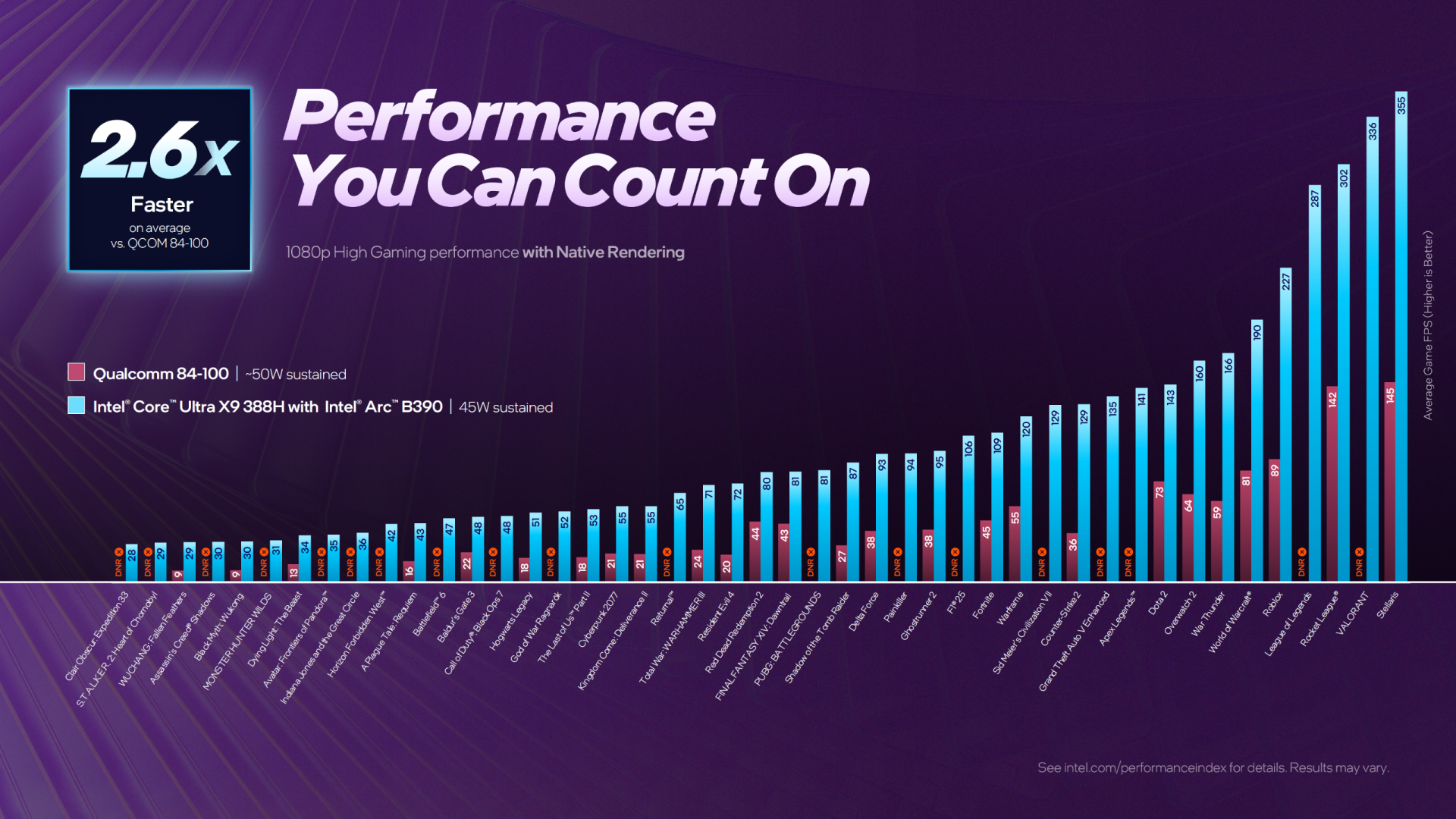
Intel also compares Arc B390 against Qualcomm’s Adreno GPU inside the Snapdragon X Elite 84 100, stating a 2.6x lead for Intel at 1080p while Qualcomm is listed at a sustained 50W. That is a decisive margin if representative, and it reinforces Intel’s broader strategy to make integrated graphics a pillar feature of the Core Ultra Series 3 platform rather than a secondary checkbox.
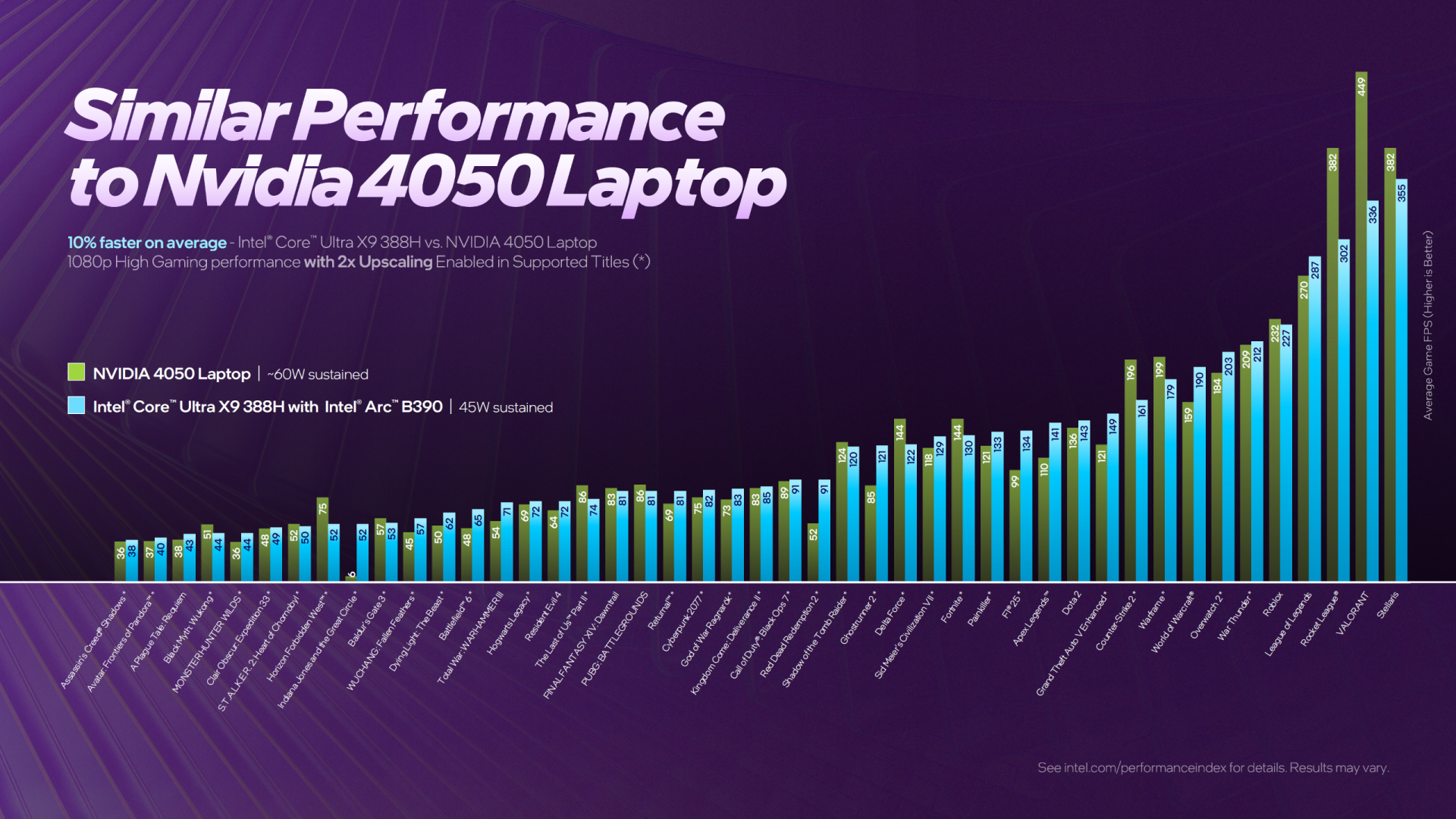
The headline that will get gamers talking is Intel’s discrete comparison. Intel claims that at the same 45W sustained power, Arc B390 delivers similar performance to an NVIDIA RTX 4050 laptop GPU operating at 60W sustained, and even averages 10% faster across a tested game set. That is a bold positioning move because RTX 4050 is a familiar baseline in mainstream gaming laptops, and matching it with an iGPU has direct implications for cost, thermals, battery life, and device thickness. If OEM implementations deliver consistent memory bandwidth and thermals, Arc B390 could enable a new tier of laptops and handhelds that skip entry level discrete GPUs without sacrificing 1080p playability.
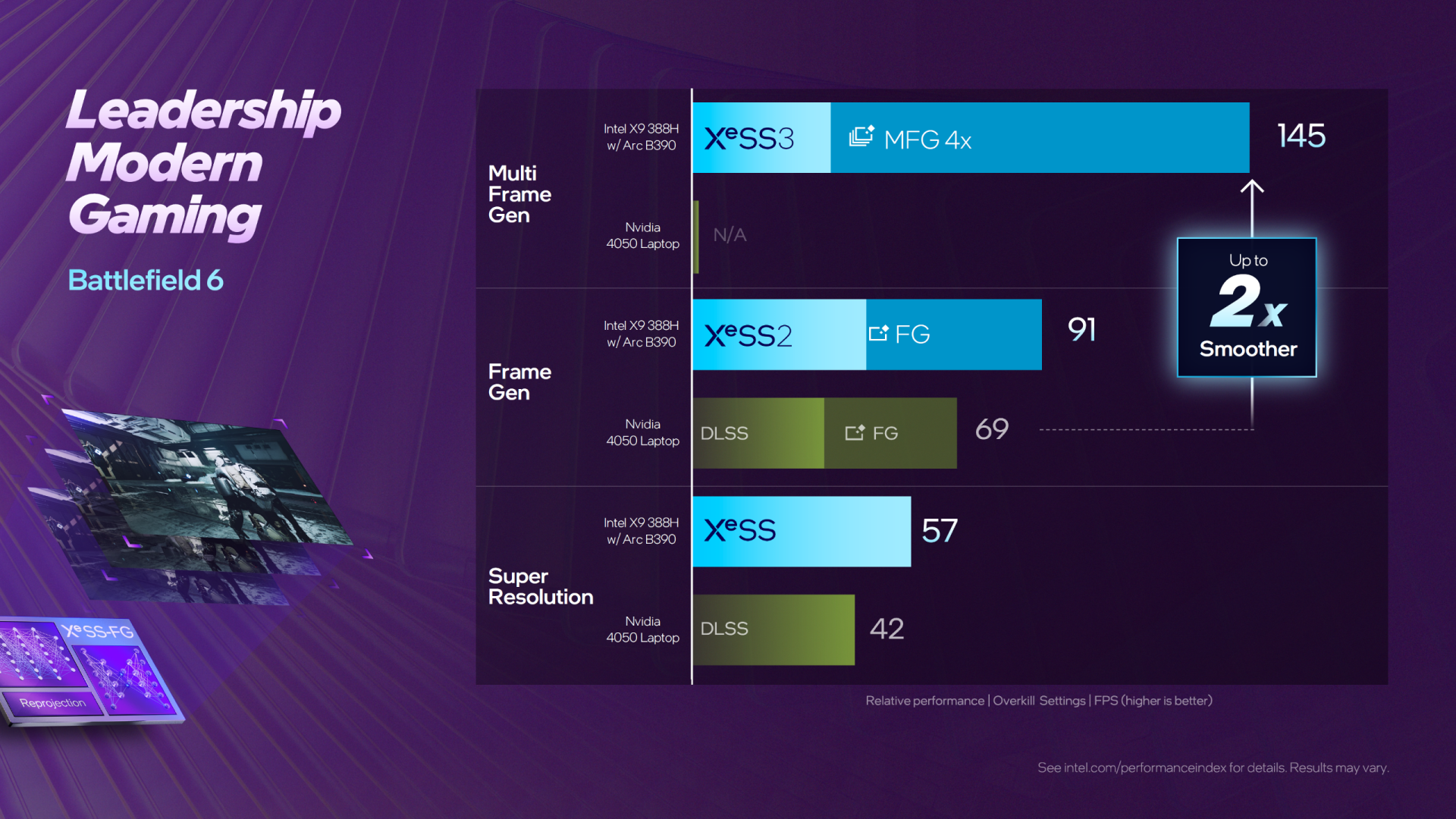
Intel further highlights frame generation and Multi Frame Generation results where Arc B390 is shown outperforming both Radeon 890M and RTX 4050 laptop graphics in titles such as Battlefield 6 and Cyberpunk 2077. Intel’s key differentiation claim is that Arc B series iGPUs are currently the only integrated GPUs on the market supporting Multi Frame Generation up to 4x mode. From a feature competitiveness perspective, this is Intel trying to turn its graphics software stack into a platform advantage, not just a silicon spec sheet.

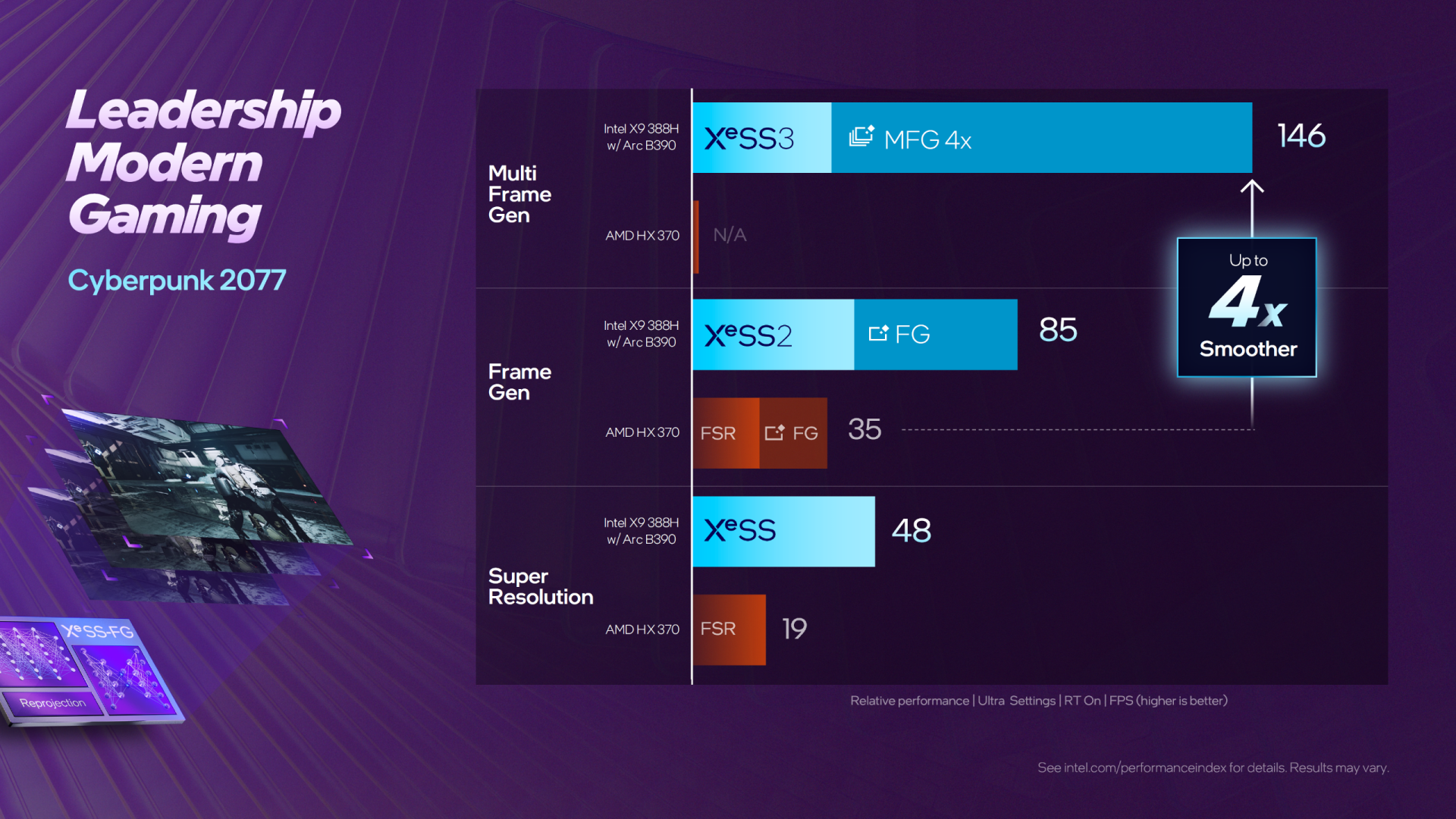

Strategically, this is the most interesting part. If Xe3 iGPUs can credibly approach RTX 4050 class performance in real OEM systems, the value proposition of entry level discrete laptop GPUs changes overnight. OEMs could simplify designs, reduce BOM cost, improve acoustic profiles, and still market 1080p gaming capability, especially when paired with modern upscaling and frame generation features. For gamers and handheld enthusiasts, it sets the stage for thinner devices with fewer compromises, assuming Intel’s drivers, power tuning, and memory configurations remain consistent across partners.
The key caveats to watch will be real world sustained clocks, memory bandwidth behavior in LPDDR5x 9600 class devices, thermals in compact chassis, and driver maturity across a wide game library. But in terms of pure platform intent, Intel is clearly signaling that Xe3 is built to make integrated graphics a mainstream gaming solution rather than a fallback.
If Intel Arc B390 iGPU truly delivers RTX 4050 class gaming at 45W, would you rather buy a thinner laptop or handheld without a discrete GPU, or do you still prefer the upgrade headroom and ecosystem stability of a dedicated RTX laptop GPU?
