
Intel Officially Launches Core Ultra Series 3 Panther Lake, The First Shipping 18A Client Product
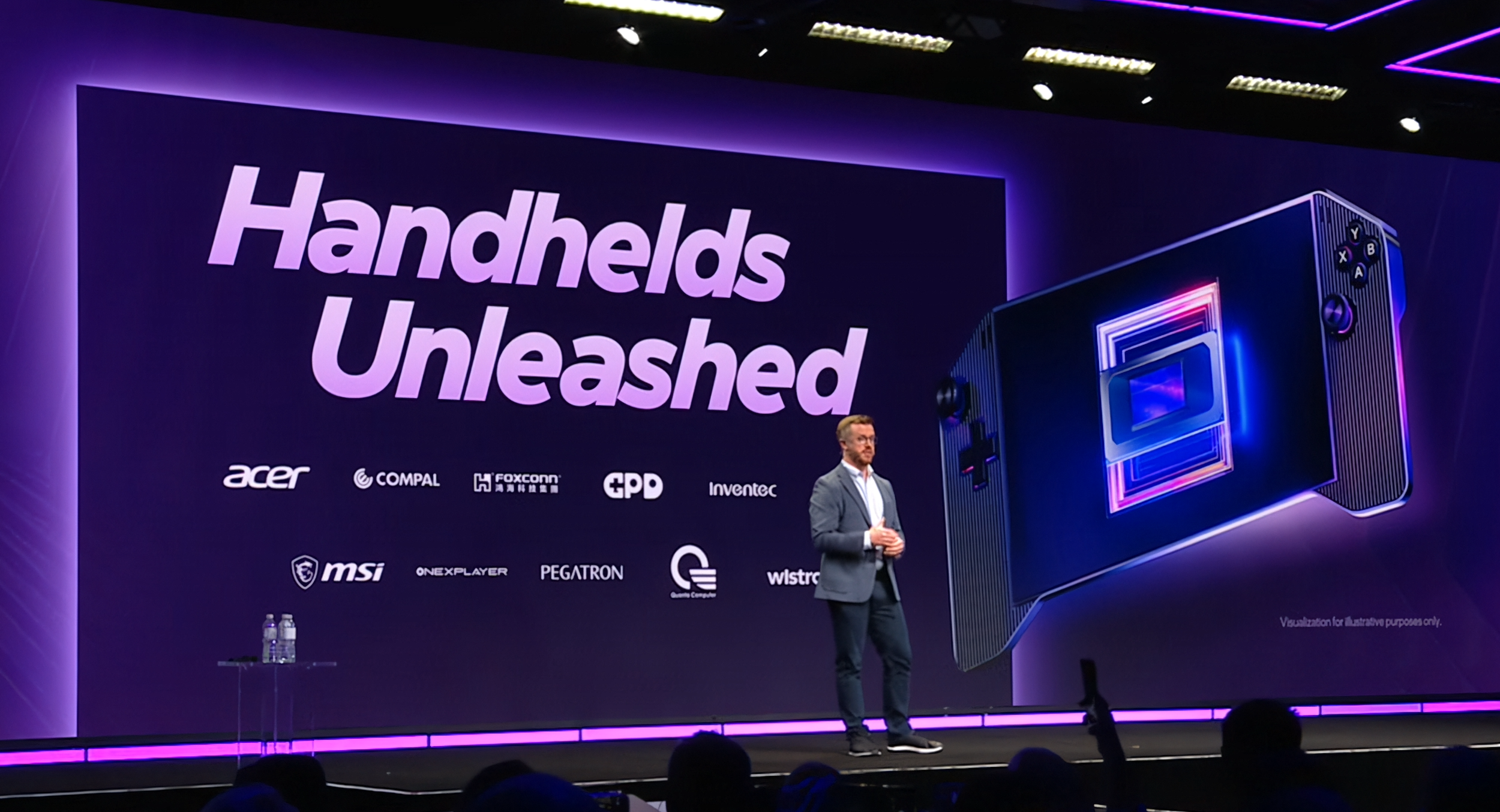
Intel has officially launched its Core Ultra Series 3 lineup, led by Panther Lake, and this is a milestone moment because it represents Intel’s first 18A product reaching the market. Panther Lake is positioned as a multi tile client platform refresh that goes beyond the typical laptop CPU update, bringing new CPU core architectures, upgraded Xe3 graphics, and expanded on device AI acceleration through updated NPU and IPU capabilities. Intel previously confirmed Panther Lake would launch at CES 2026, and the company’s messaging now frames it as a unified solution intended for AI PCs, compact desktops, and even emerging gaming handheld form factors.
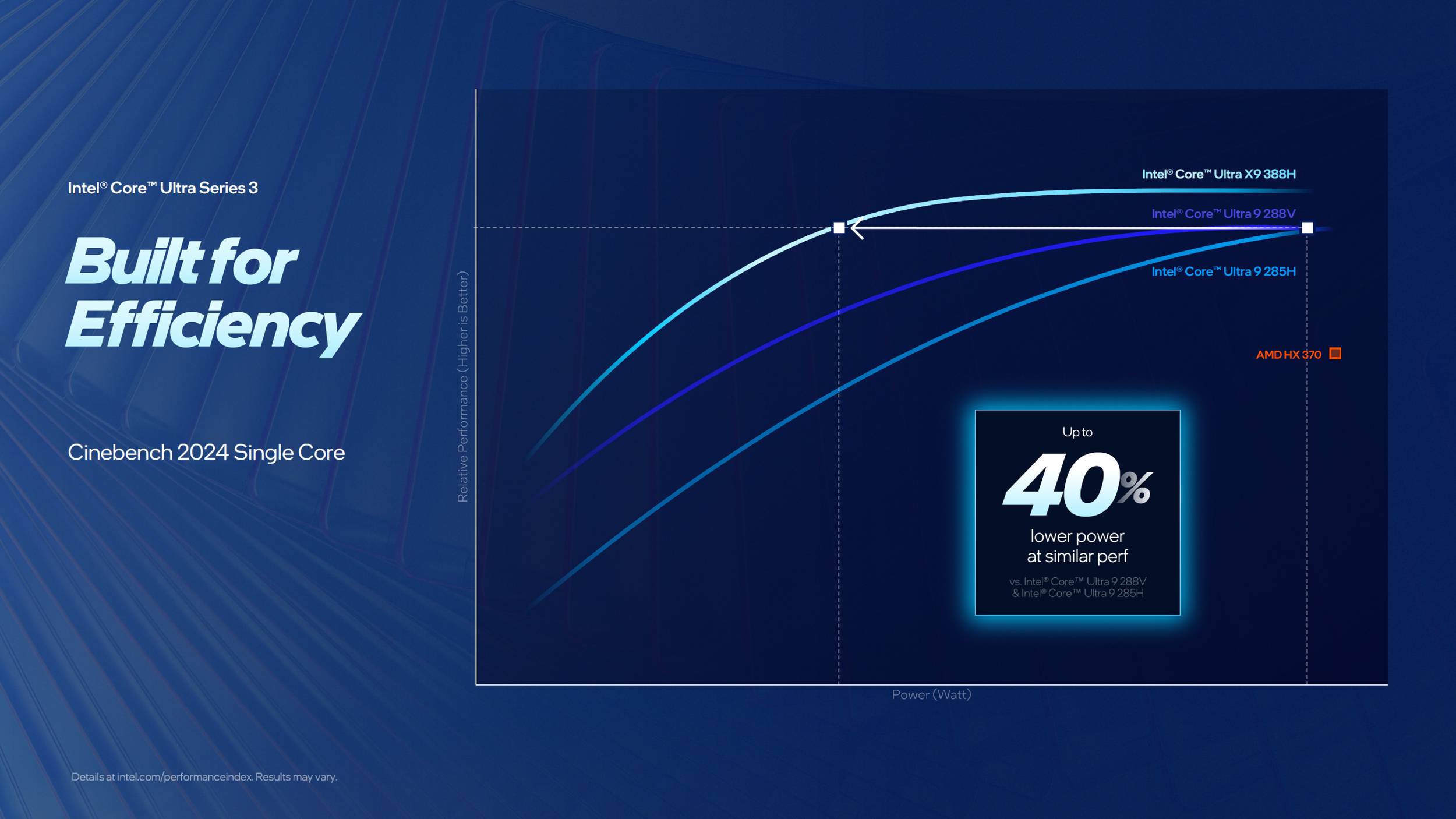
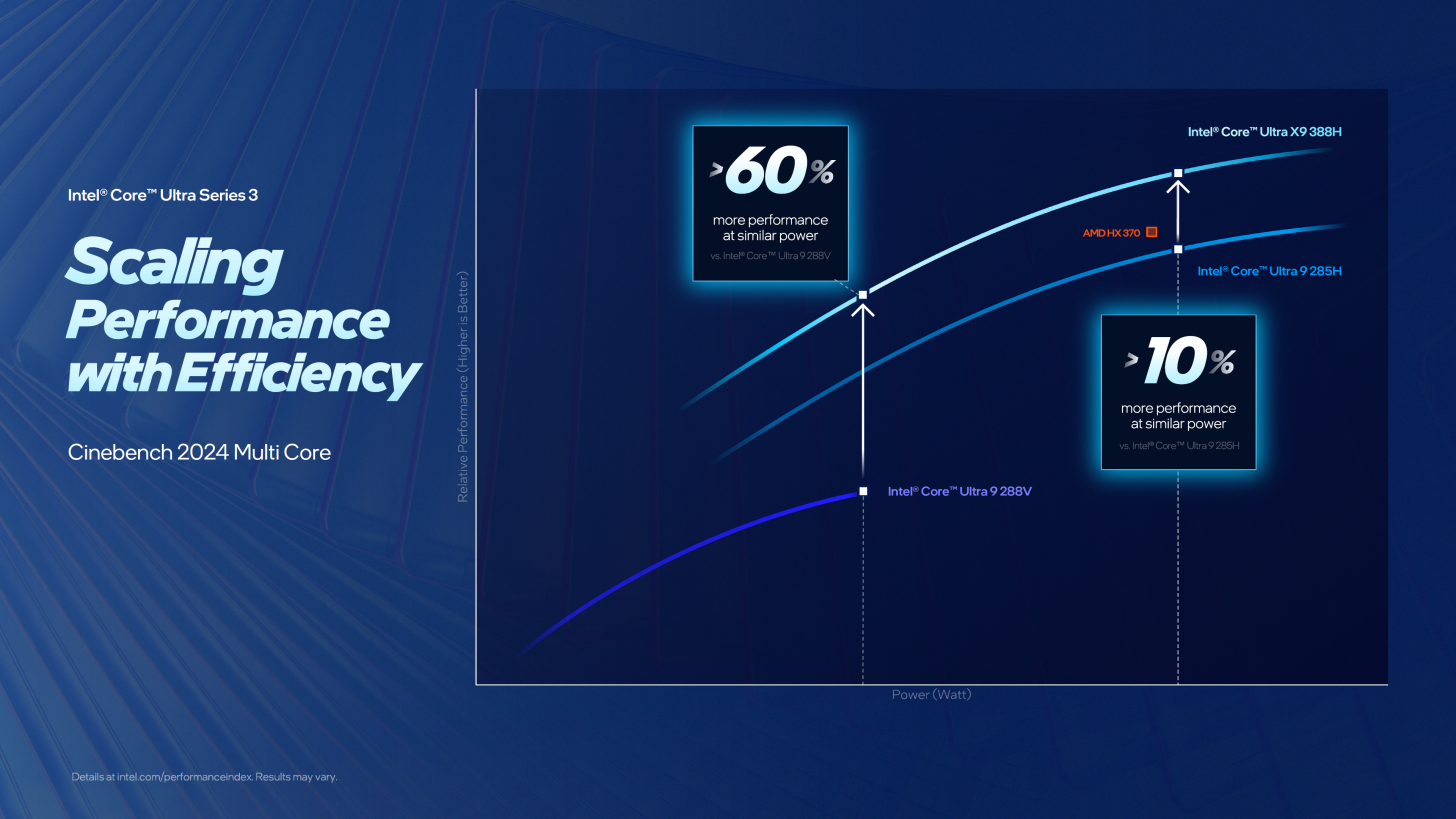
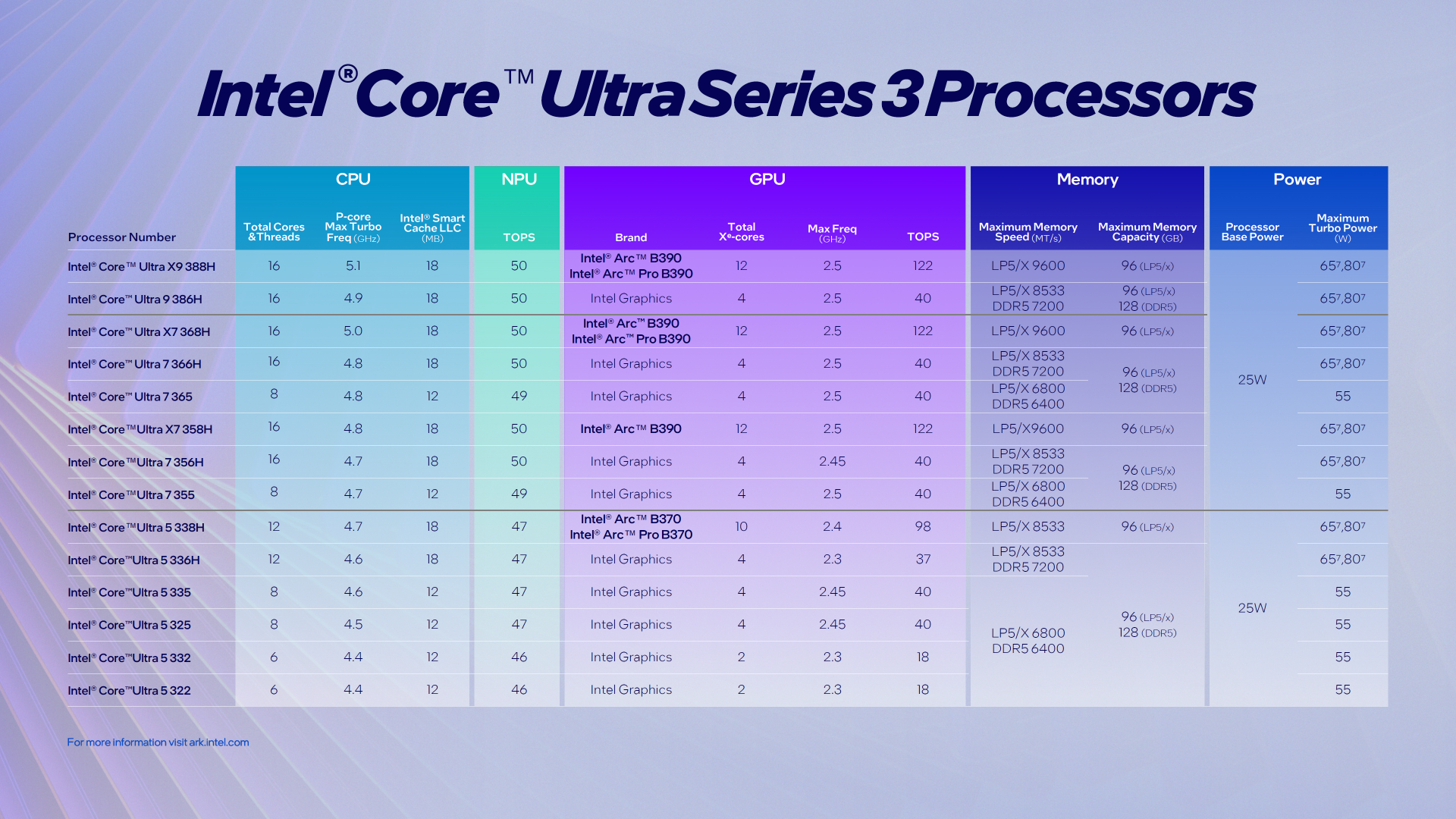
From a performance narrative standpoint, Intel is targeting efficiency leadership as much as raw throughput. For single thread workloads, Intel claims Panther Lake can deliver similar performance while using up to 40% less power, a key metric for thin and light devices where sustained thermals and battery life decide the real world experience. On multi thread performance, Intel highlights a 60% uplift at similar power in Cinebench 2024 for the flagship class Core Ultra 9 388H compared to a prior generation reference, and the same presentation positioning suggests Intel believes it can remain competitive against AMD’s Ryzen AI 9 HX 370 in the same performance envelope.
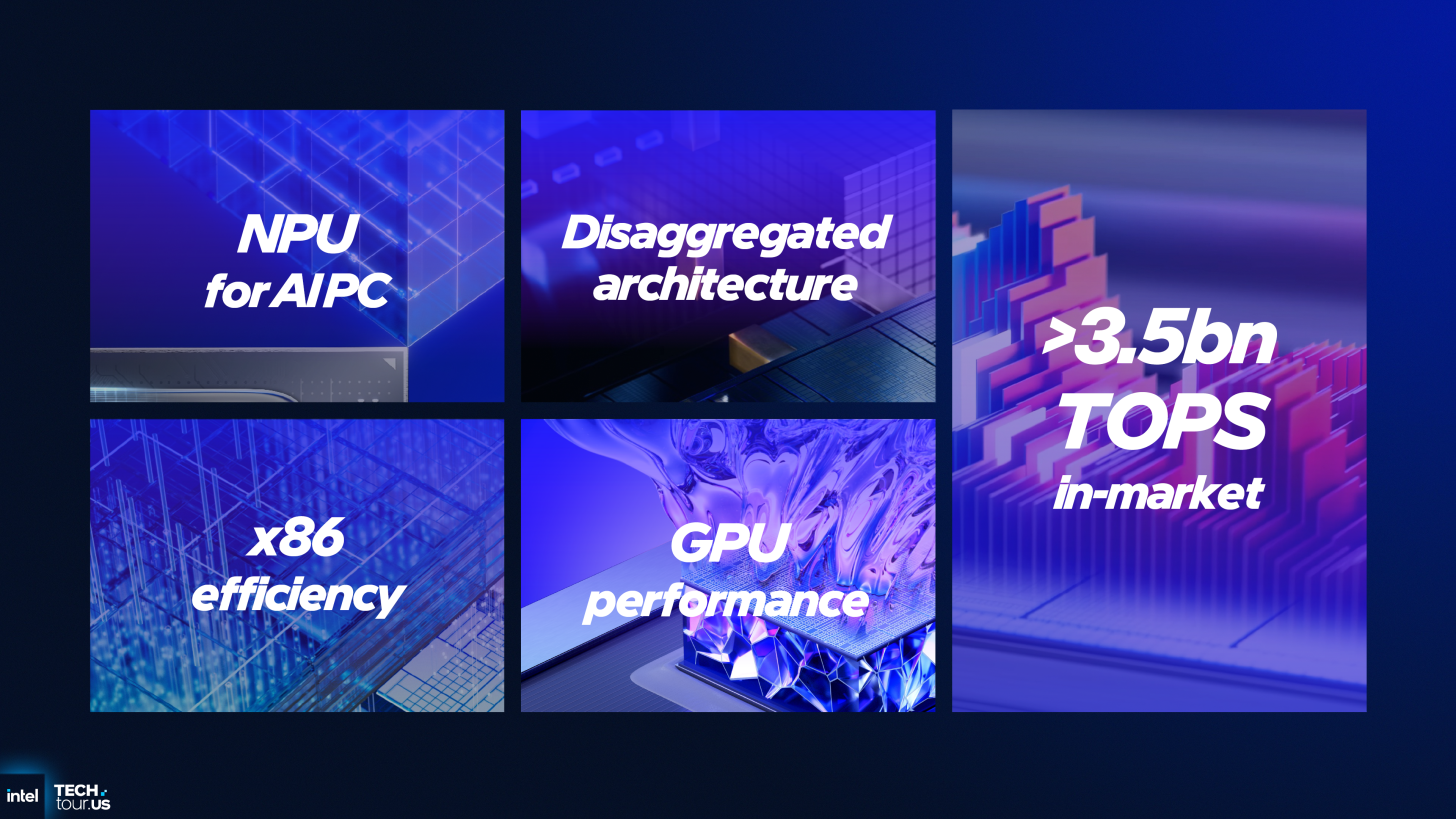
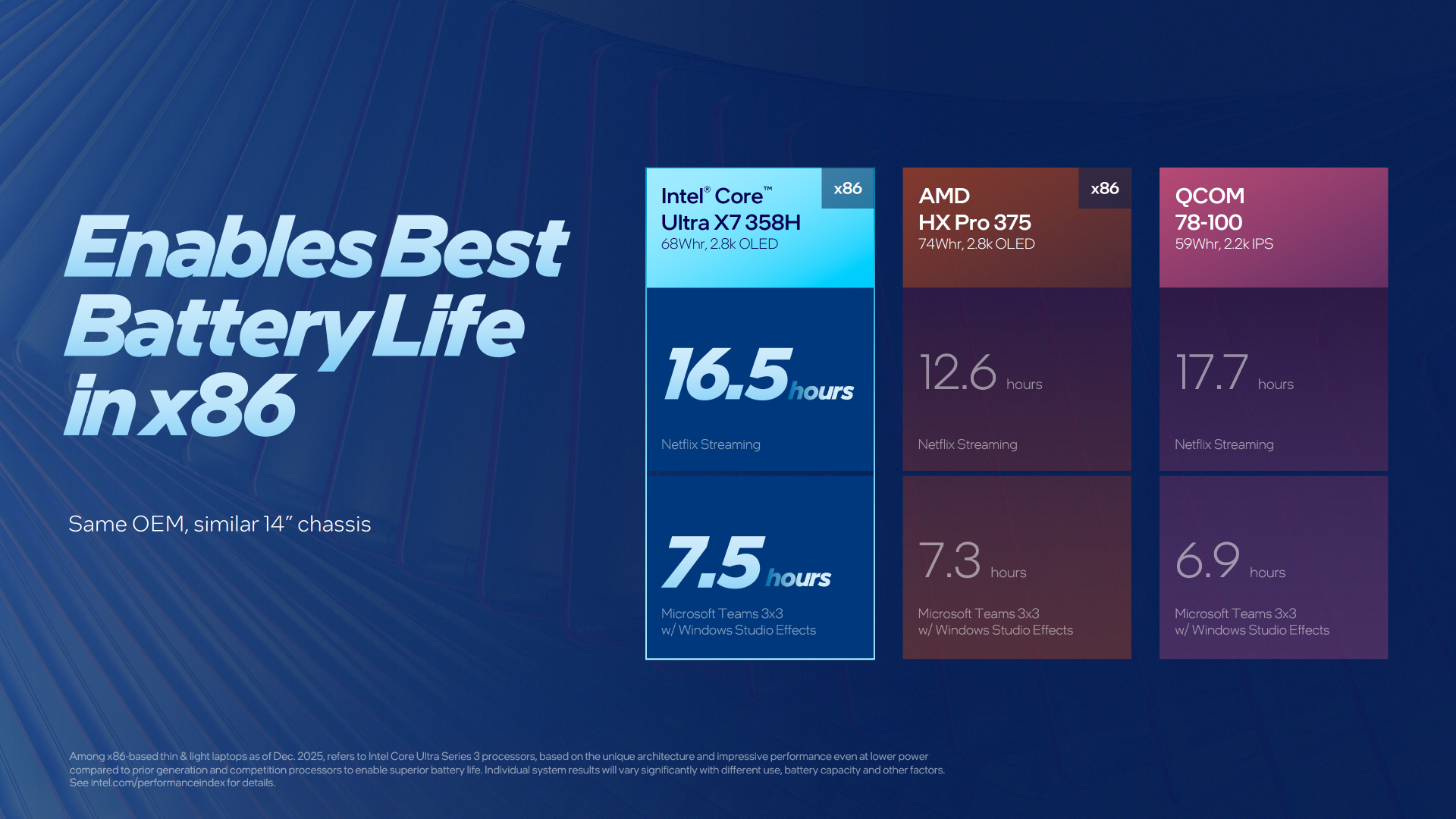
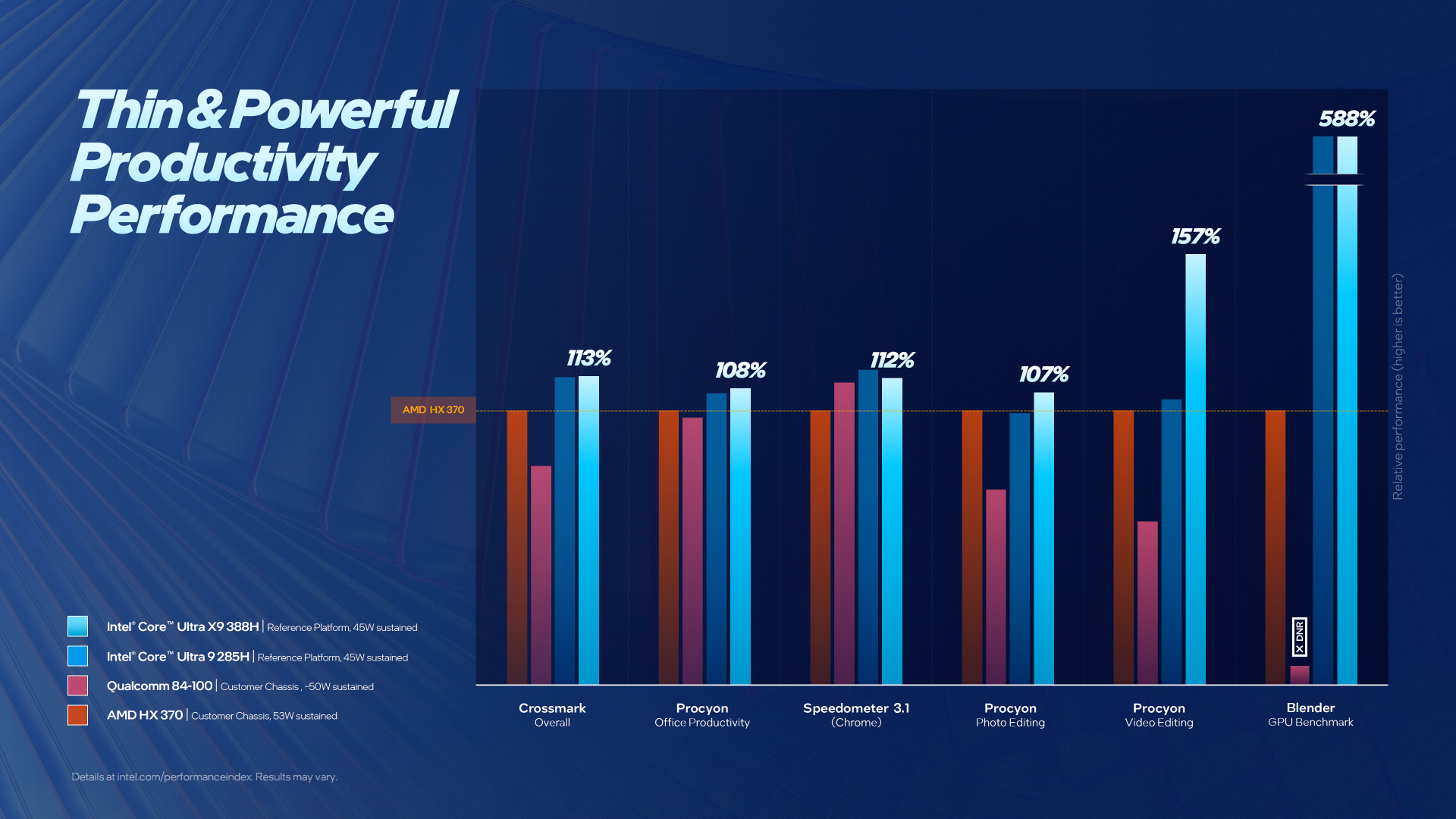
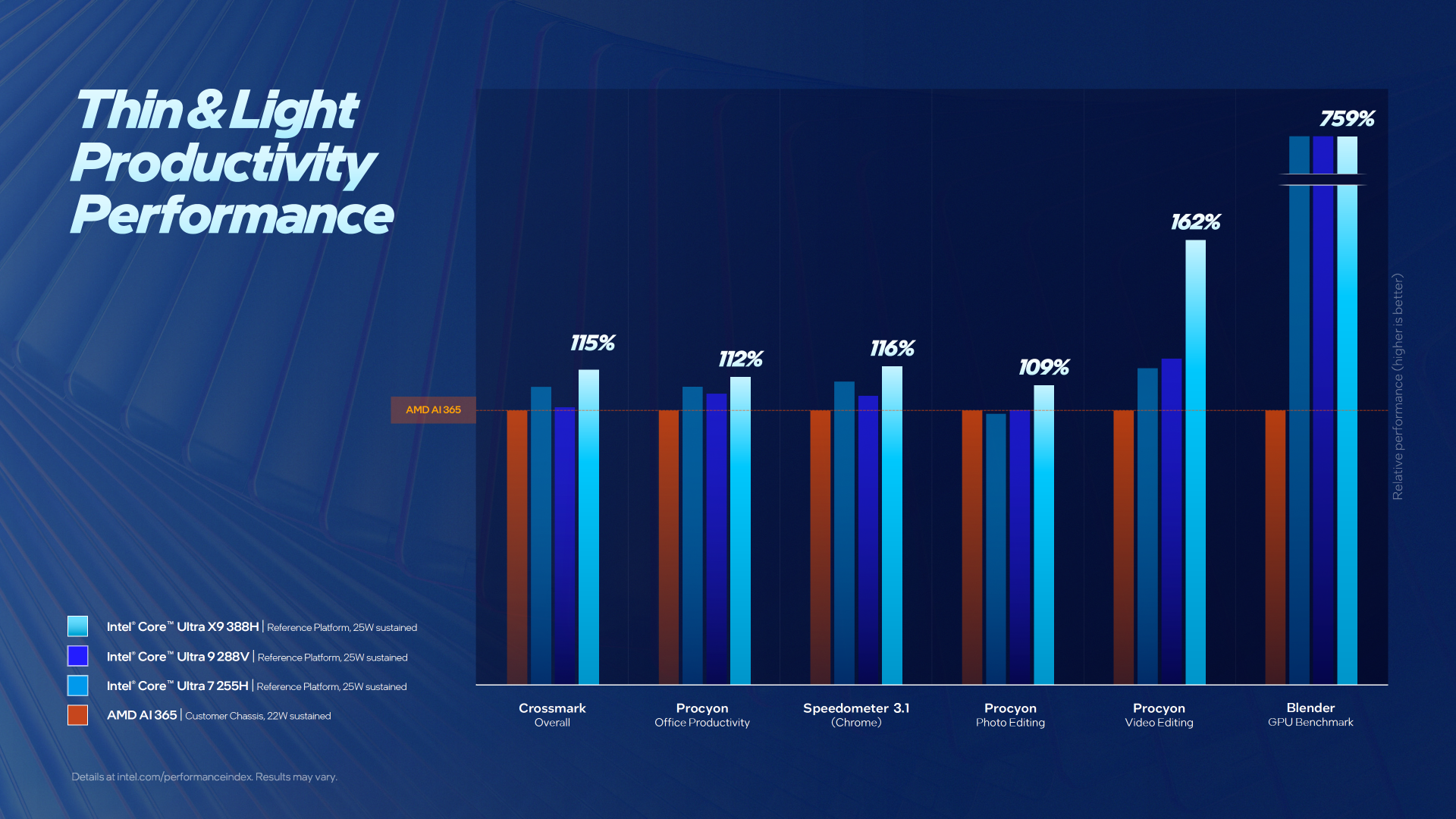
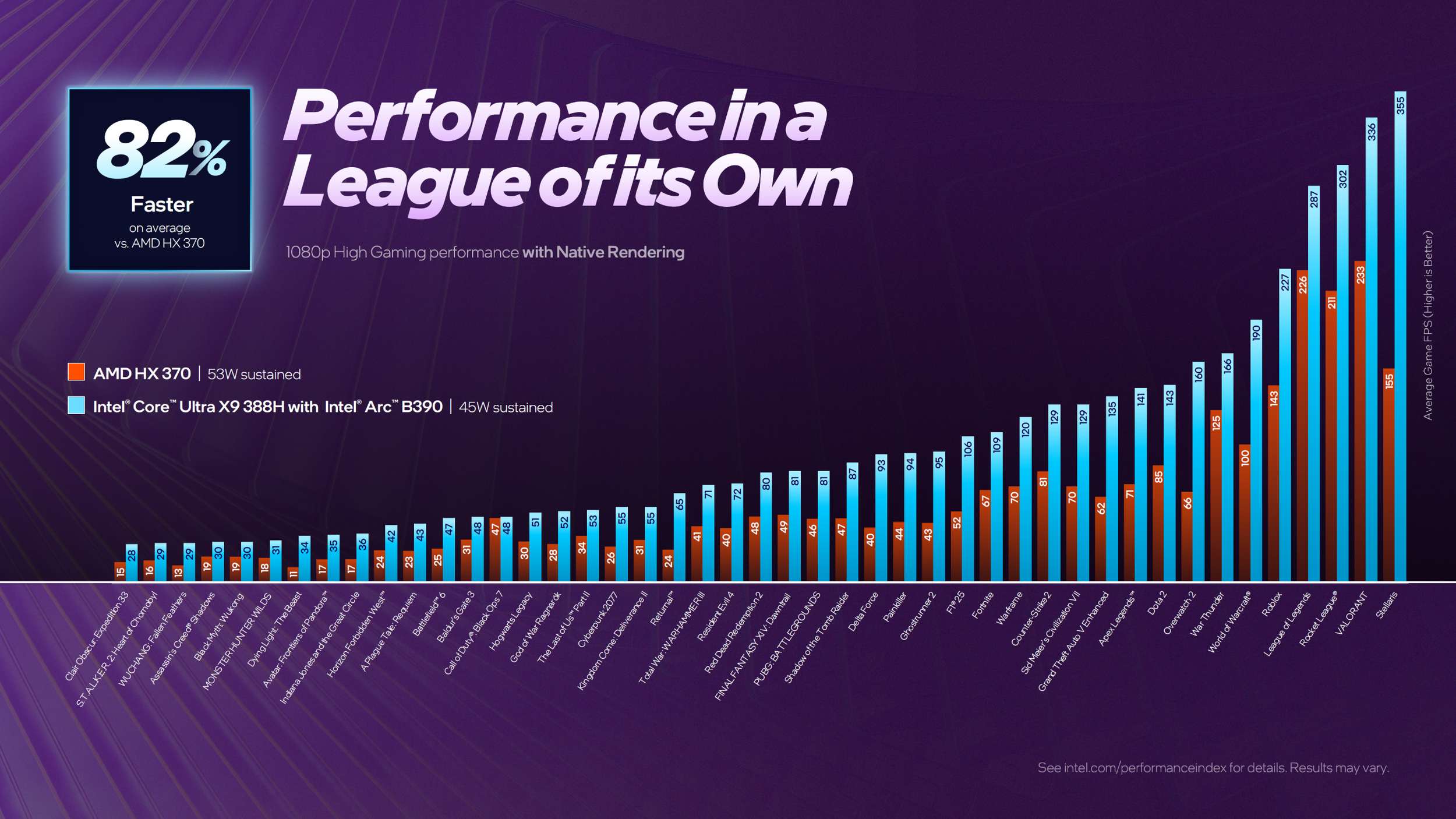
Graphics is where Intel is making its loudest gaming adjacent claim. Intel says the Arc B390 integrated GPU based on Xe3 delivers up to 82% more performance versus AMD’s Radeon 890M across a broad set of 1080p game testing. Intel also calls out Multi Frame Generation support, positioning Panther Lake iGPU as a feature forward platform for mainstream gaming, creator workflows, and handheld devices where integrated graphics can make or break the purchase decision.
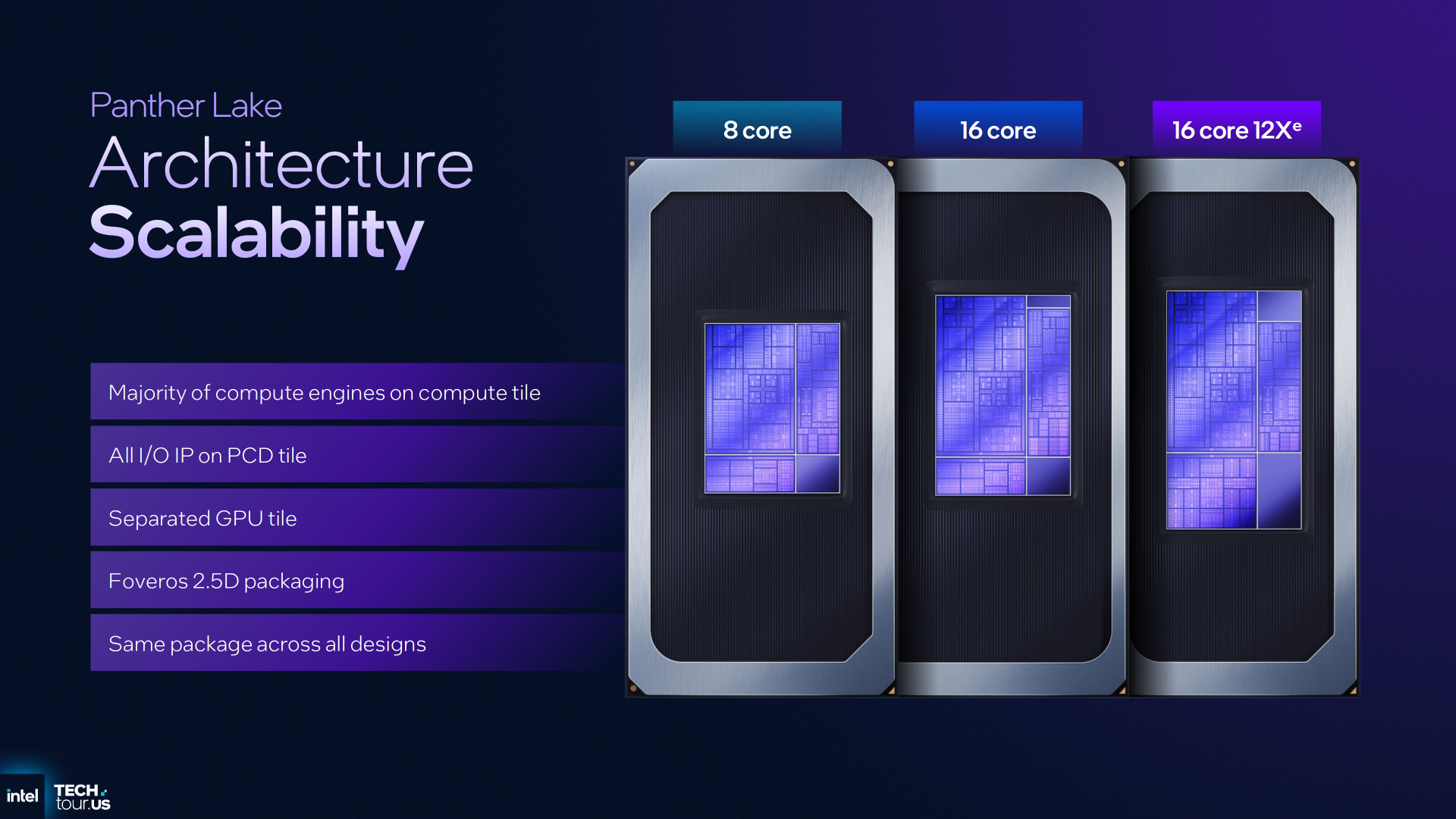
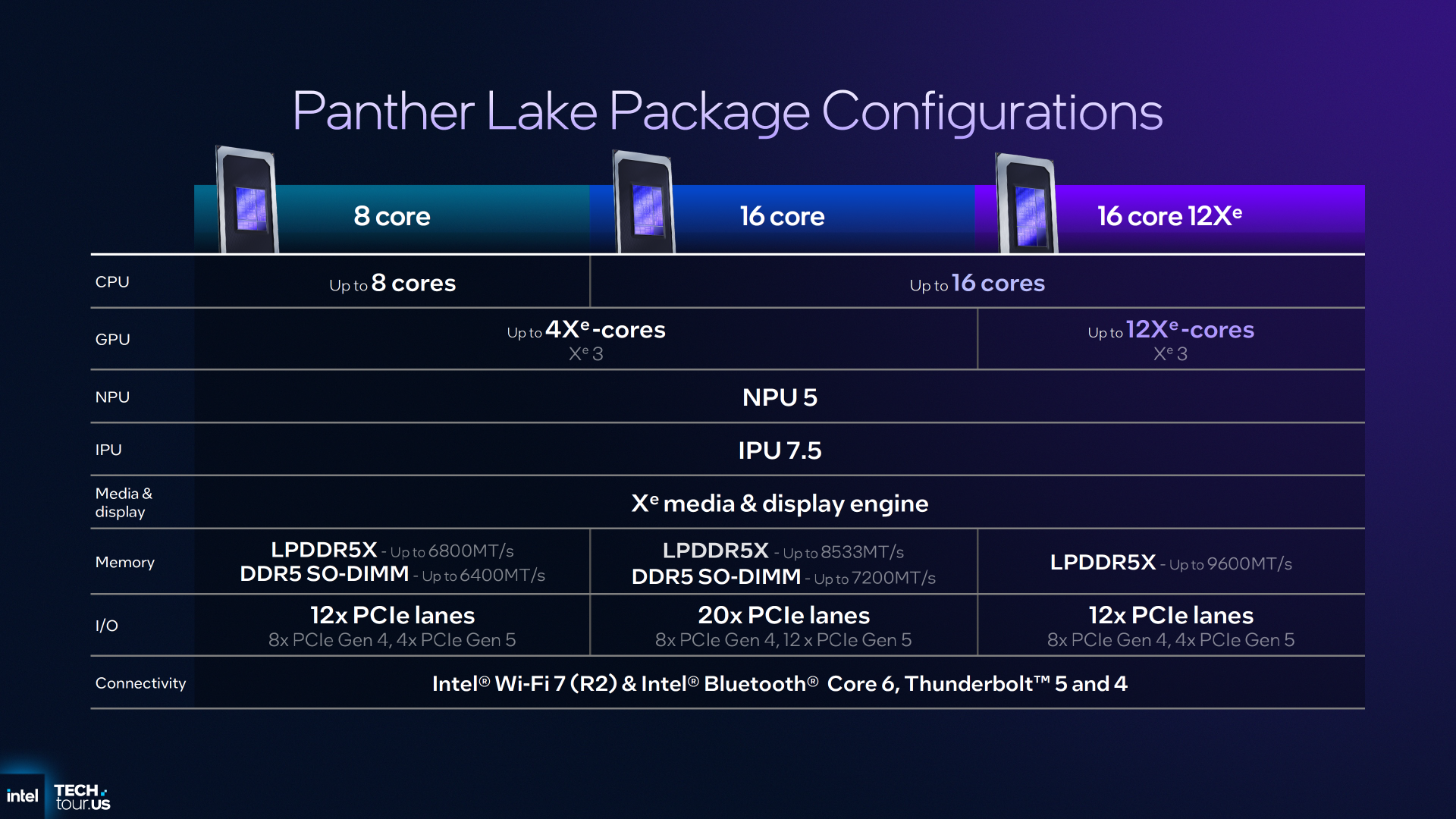
Panther Lake’s scalability is built around 3 die configurations, and Intel is using these to cover multiple market segments without forcing one design to carry every SKU. The 3 configurations Intel detailed are:
Panther Lake 8C with 4 P Cores, 0 E Cores, 4 LP E Cores, and 4 Xe3 Cores
Panther Lake 16C with 4 P Cores, 8 E Cores, 4 LP E Cores, and 4 Xe3 Cores
Panther Lake 16C 12Xe with 4 P Cores, 8 E Cores, 4 LP E Cores, and 12 Xe3 Cores
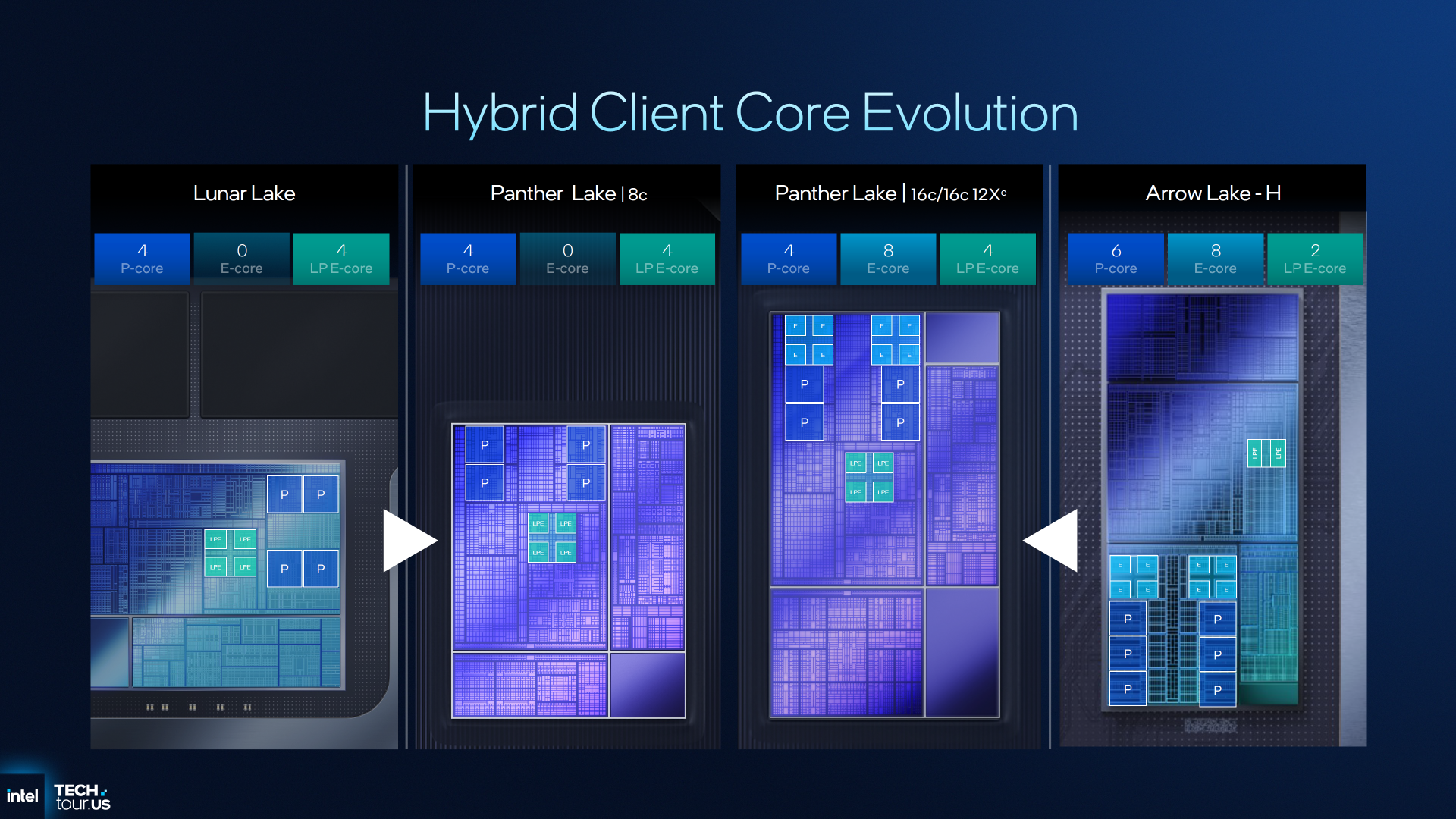
This segmentation matters because it signals a clearer product mapping versus the prior generation mix. Intel indicates the entry level 8C design is the logical replacement path for Lunar Lake class devices, while the higher end 16 core designs target the Arrow Lake H tier.
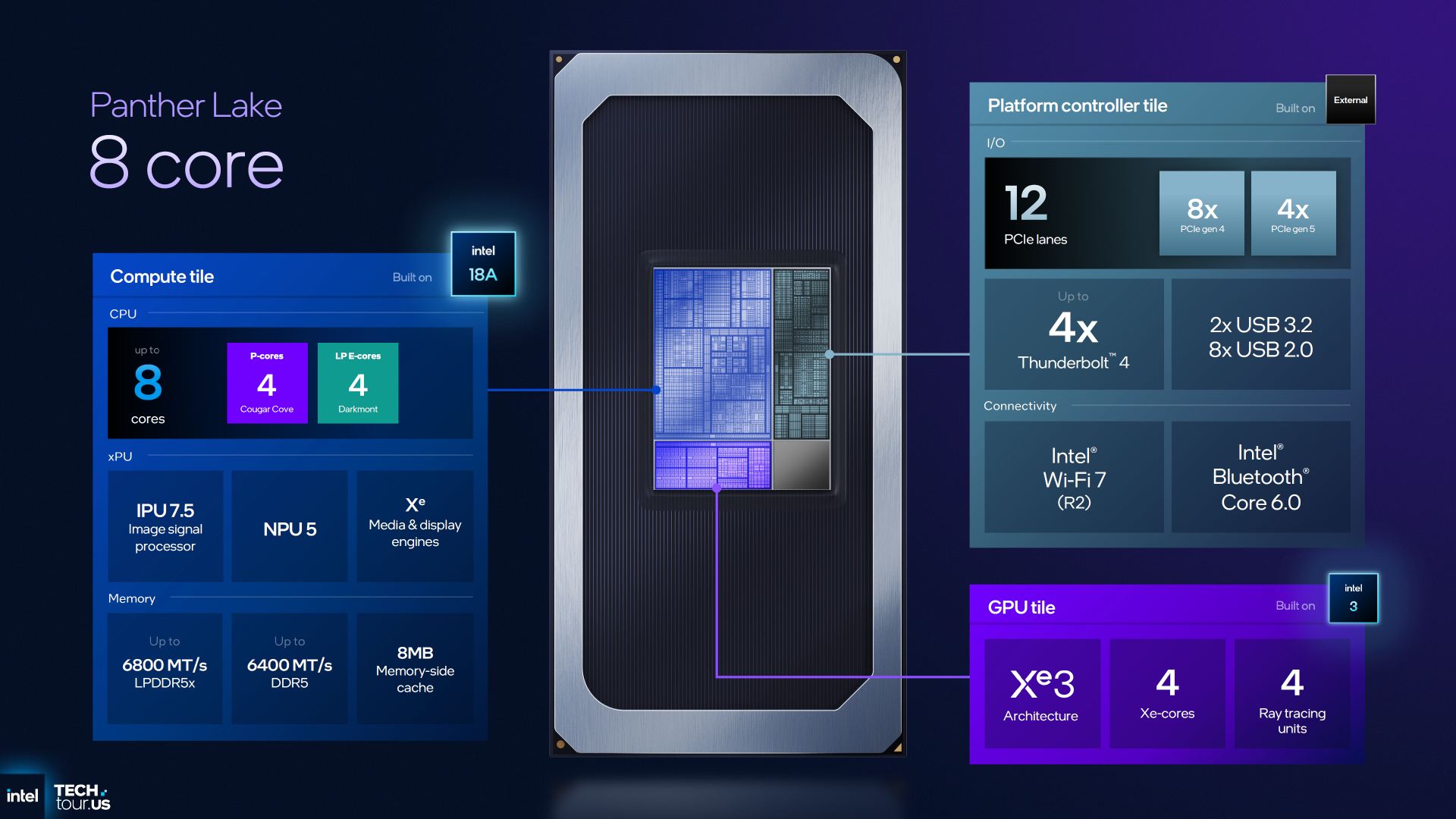
Drilling into the entry level 8 core die, the compute tile uses Intel 18A and combines the xPU stack including IPU 7.5, NPU5, and Xe media and display engines. Memory support is rated up to LPDDR5x 6800 and DDR5 6400, with 8MB of memory side cache. Cache allocation includes 12MB of L2 for the P Cores and 4MB of L2 for the Darkmont cluster. The graphics tile on this tier features up to 4 Xe cores and 4 RT units on Xe3 and is produced on Intel 3, while the platform controller tile is produced on TSMC N6 and integrates modern I O such as up to 12 PCIe lanes in an 8 Gen4 and 4 Gen5 split, Thunderbolt 4, USB 3.2, USB 2.0, plus Intel Wi Fi 7 R2 and Intel Bluetooth Core 6.0.
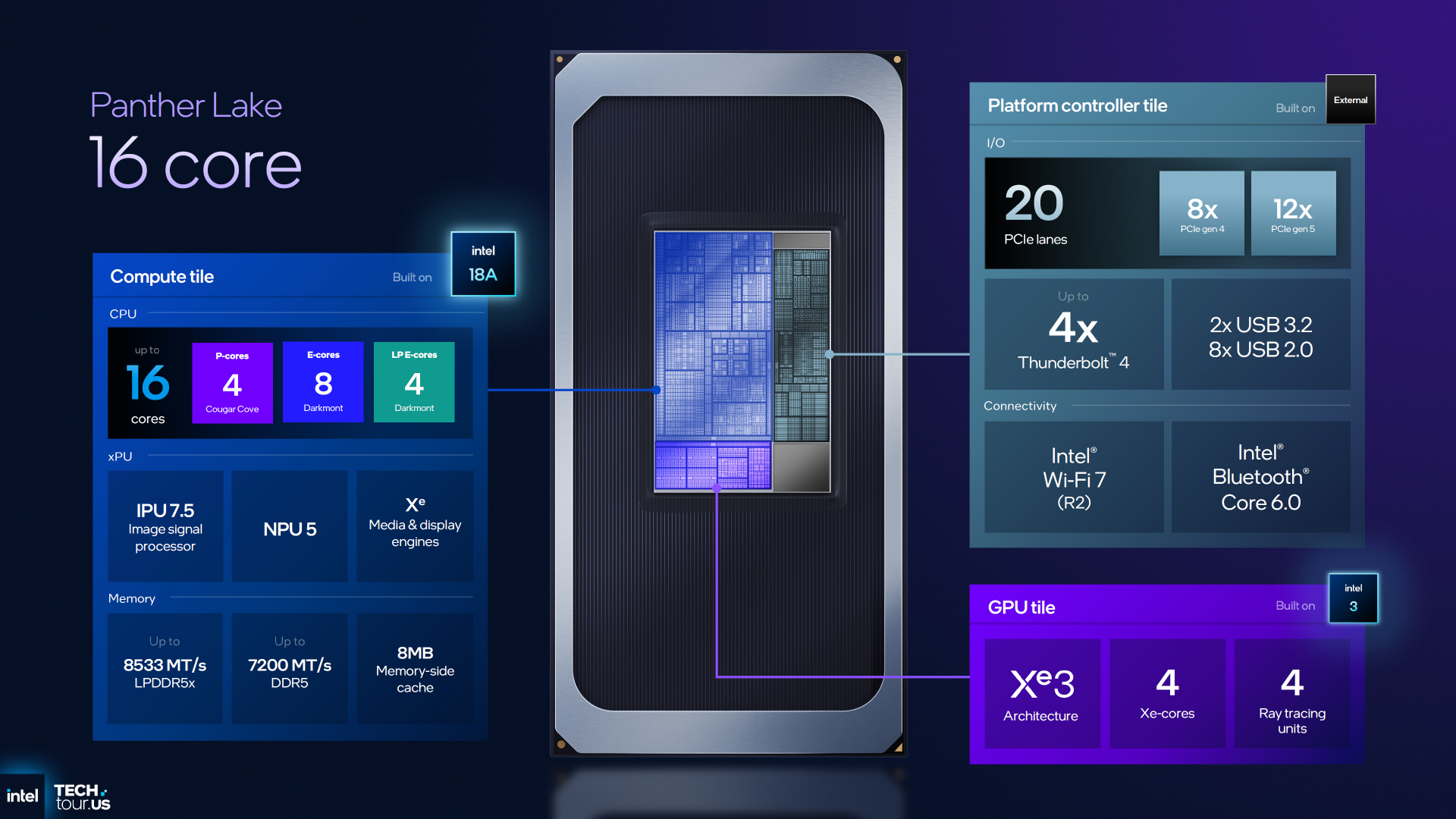
The 16 core die expands compute with 4 P Cores, 8 E Cores, and 4 LP E cores. Intel outlines 12MB of L2 cache for P Cores and 12MB of L2 cache for the E Cores across 3 clusters, plus higher memory support up to LPDDR5x 8533 and DDR5 7200. This tier also upgrades the platform controller tile with up to 20 PCIe lanes, including 12 Gen5 lanes, while retaining a 4 Xe core Xe3 graphics tile produced on Intel 3.
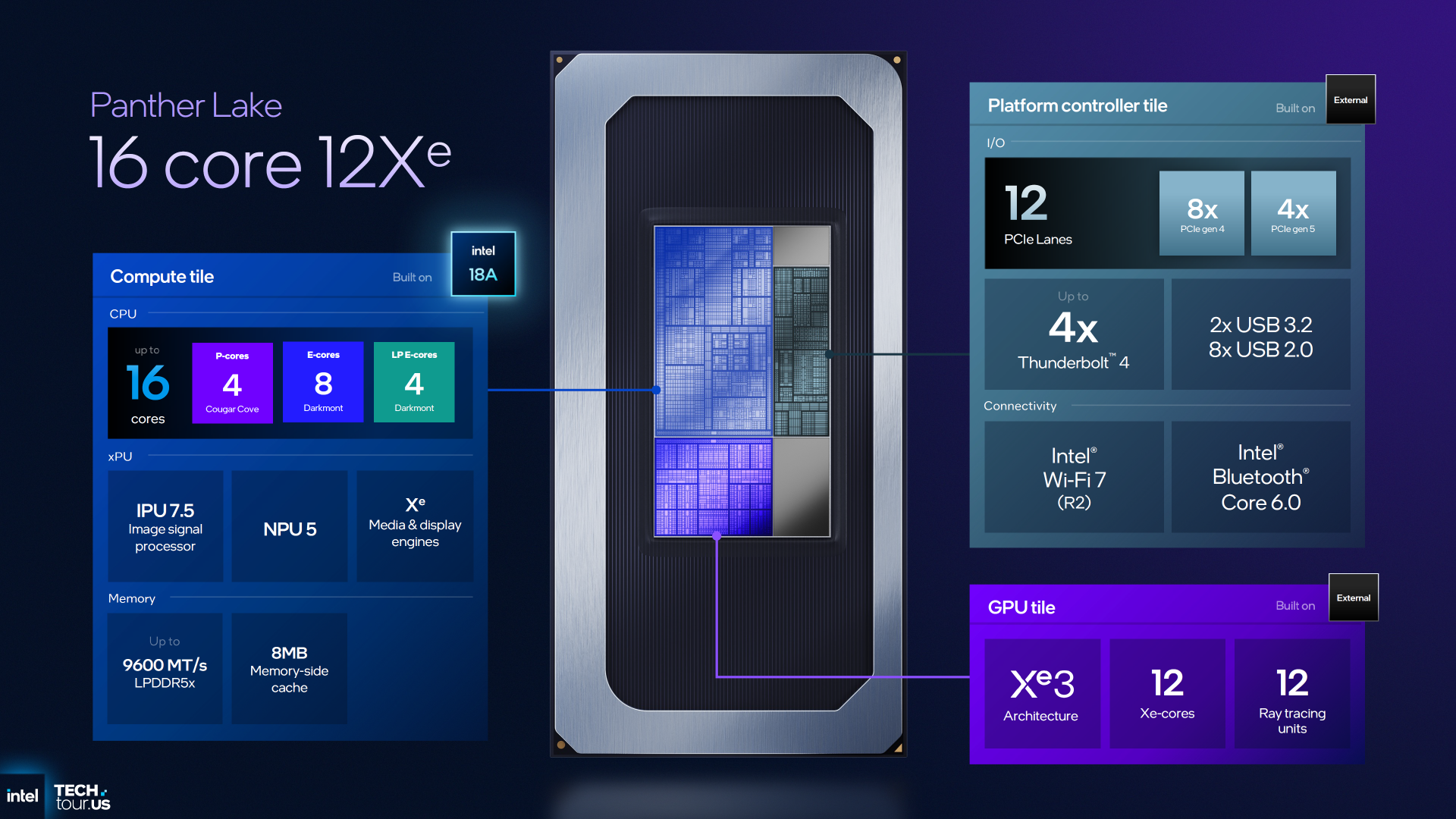
At the top end, the 16 core 12Xe configuration is the flagship oriented die for graphics heavy portable and compact systems. It keeps the same compute tile layout as the standard 16 core design but upgrades memory support to LPDDR5x 9600, which Intel frames as critical for feeding a larger Xe3 graphics tile with 12 Xe cores and 12 RT units. In this variant, the GPU tile is fabricated on TSMC N3E, and the platform controller tile returns to a 12 lane PCIe configuration similar to the 8 core die, reflecting a product design choice that prioritizes graphics and memory bandwidth while keeping platform I O more streamlined.

Zooming out, Intel’s Panther Lake strategy is a deliberate attempt to merge the efficiency story of Lunar Lake with the throughput positioning of Arrow Lake, while making on device AI and integrated graphics central to the value proposition. If Intel’s claims translate into shipping systems with stable thermals and consistent performance per watt, Panther Lake could become a strong platform for premium laptops, creator machines, and the next wave of gaming handhelds that want integrated graphics with modern upscaling and frame generation features.
If you are shopping in 2026, what matters more to you in a laptop or handheld, 40% lower power at similar performance, a bigger Xe3 iGPU uplift, or the next gen NPU stack for on device AI features?
