
Intel Reportedly Places Major Taiwan Equipment Orders to Expand EMIB Capacity as Advanced Packaging Becomes a Bigger AI Battleground
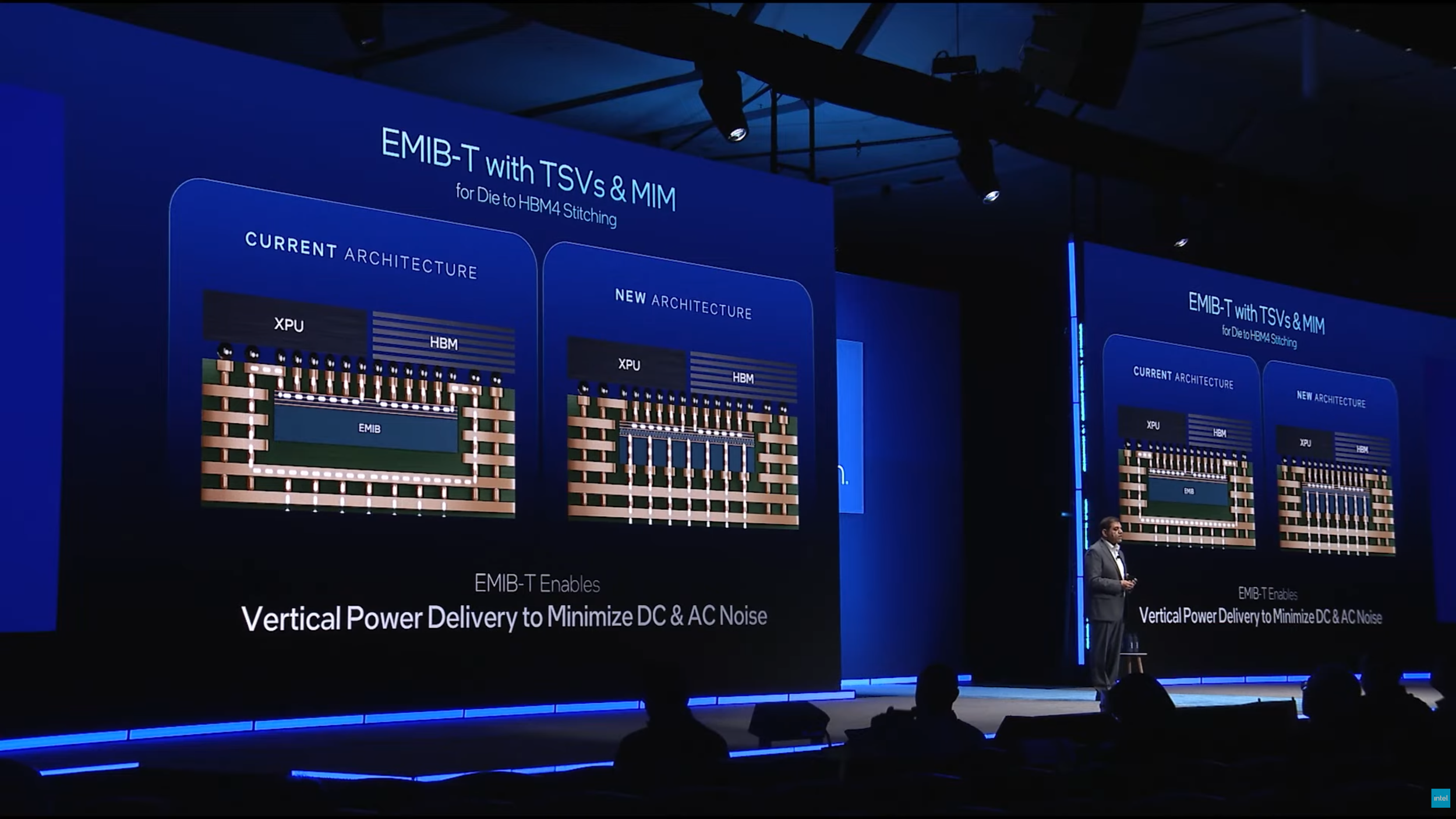
Intel is reportedly moving aggressively to scale its EMIB advanced packaging capacity, with new supply chain reporting saying the company has placed substantial equipment orders with Taiwanese vendors to support expansion in both Oregon and Vietnam. A report cited by Investor and summarized by TrendForce says Intel is ramping EMIB capacity in parallel across those sites, with Taiwanese suppliers expected to deliver equipment in the second half of 2026.
That move makes strategic sense. Advanced packaging is now one of the most important choke points in AI hardware, and Intel is trying to position EMIB as a credible alternative to TSMC’s CoWoS at a time when CoWoS capacity remains tight. TrendForce says the current market backdrop is helping Intel’s packaging portfolio gain attention, especially as more customers look for another path to assemble very large AI chips.
The reported expansion centers on Intel’s EMIB technology, short for Embedded Multi die Interconnect Bridge, and its newer EMIB T variant. Tom’s Hardware, citing earlier reporting, says EMIB T adds through silicon vias to the bridge for improved power delivery and signal integrity, with support for packages up to 120 by 180 mm and more than 38 bridges plus over 12 reticle sized dies. That is exactly the kind of scale Intel needs if it wants EMIB to compete for future hyperscale AI packages rather than remain an internal packaging showcase.
The timing also lines up with Intel’s broader packaging push. Tom’s Hardware reported in April that Intel was already in talks with Google and Amazon over advanced packaging services, while Intel executives have been signaling that packaging could become a billion dollar plus external revenue stream. The same report noted Intel’s New Mexico advanced packaging site is already operational, Malaysia is nearing first phase readiness, and Intel has also begun outsourcing some EMIB work to Amkor in South Korea. In other words, the Oregon and Vietnam equipment story fits into a much wider capacity buildup rather than looking like an isolated procurement burst.
What is less certain is how quickly this turns into real customer wins. TrendForce says EMIB related yield chatter has reached around 90 percent, but that figure is still being framed as a milestone rather than proof of mature volume readiness. It also points to analyst commentary that moving from around 90 percent validation yield toward roughly 98 percent class production expectations is the truly difficult part. That is a crucial distinction because AI customers do not just need a packaging option. They need one that can ship reliably and at scale.
This is where the current excitement around EMIB still needs a reality check. Reports have linked Intel packaging to future Google TPU programs, Meta designs, and even NVIDIA’s longer term roadmap, but most of those names remain tied to analyst commentary, supply chain talk, or indirect reporting rather than formal customer announcements. TrendForce itself frames several of those adoption claims through secondary sources, not through official product disclosures. So the momentum is real, but the customer lineup is still more speculative than settled.
I see a lot of talk about EMIB-T hehe but I don't see this being published, which I've seen in some documents placed around 2030.
— X86 is dead&back (@x86deadandback) May 4, 2026
So you have something new to discuss hehe
200+ EMIBS/241x240=🤯🤯🤯🤯
576cm2?
DIN A4 sheet= 630 cm2 right?🤯 pic.twitter.com/MVDLbrpACZ
Even so, Intel’s bet is easy to read. The company knows packaging is one of the few places where it can still carve out leverage in the AI race while its process roadmap continues to rebuild. EMIB offers a lower complexity bridge based alternative to full interposer approaches, and if Intel can improve yield, scale capacity, and prove delivery consistency, it could become far more than a backup option in the advanced packaging market. That is why these Taiwan equipment orders matter. They suggest Intel is not waiting for demand certainty before building out. It is trying to make sure the infrastructure is ready if large external orders start landing.
For now, the most balanced takeaway is that Intel is clearly betting big on EMIB, but the market is still waiting for the harder proof. Equipment orders and expansion plans show intent. What will matter next is whether those investments translate into stable production, stronger yields, and signed customer programs that Intel can point to publicly.
What do you think will matter more for Intel’s packaging push, getting EMIB capacity online fast or proving that yields and reliability are finally strong enough to pull customers away from TSMC?
