
Intel Launches Core Series 3 Wildcat Lake for Everyday Laptops as It Pushes a More Affordable AI PC Tier
Intel has officially launched its new Core Series 3 mobile processors, bringing the long awaited Wildcat Lake family into the market as a lower cost companion to the company’s Core Ultra Series 3 lineup. In Intel’s official announcement, the company says the new chips are aimed at value buyers, commercial systems, and essential edge devices, and are built on the same broader foundation as Panther Lake while being tuned for more accessible everyday PCs. The launch was published on April 16, 2026, and Intel says systems powered by Core Series 3 begin rolling out starting now through OEM partners.
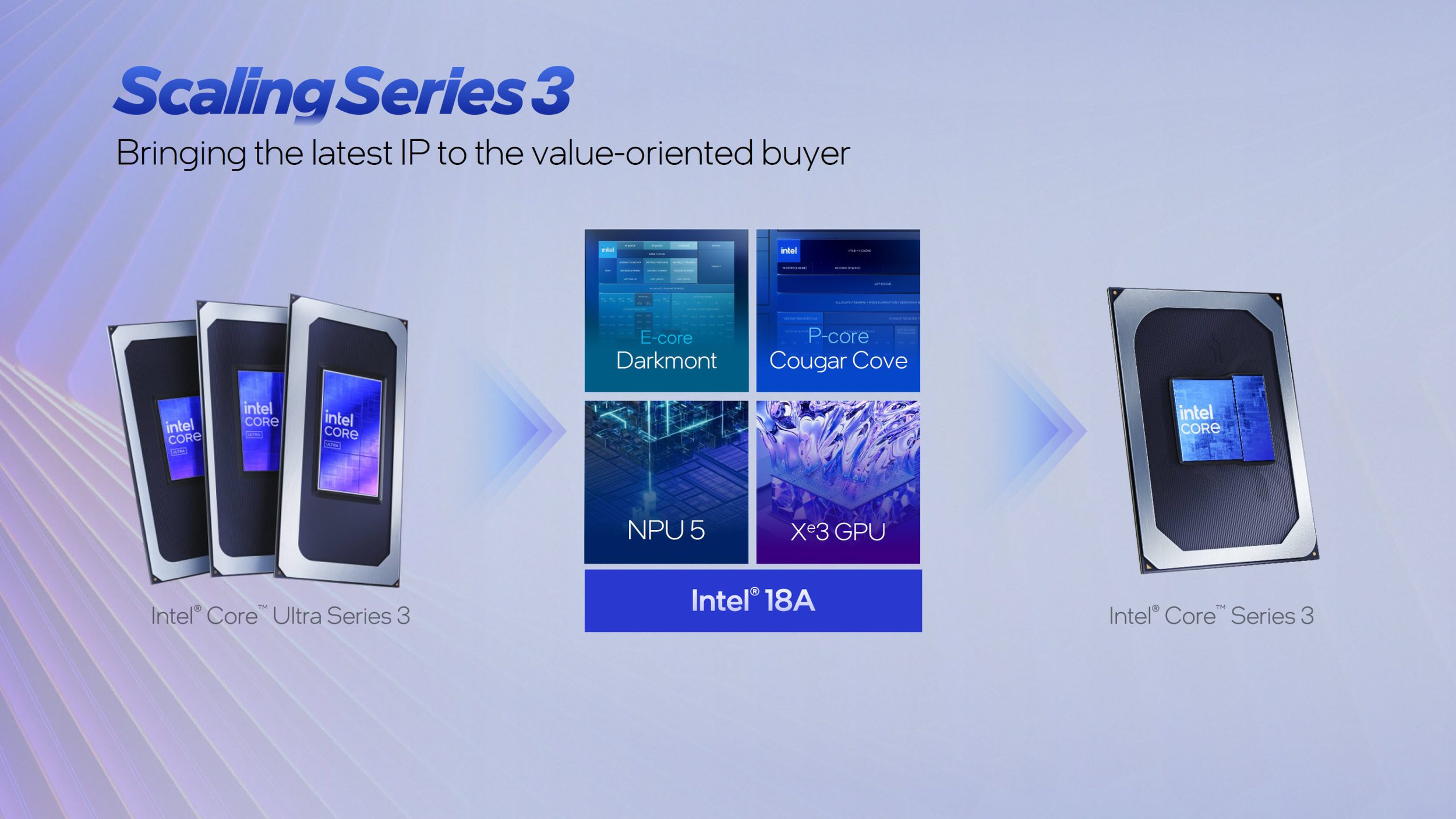
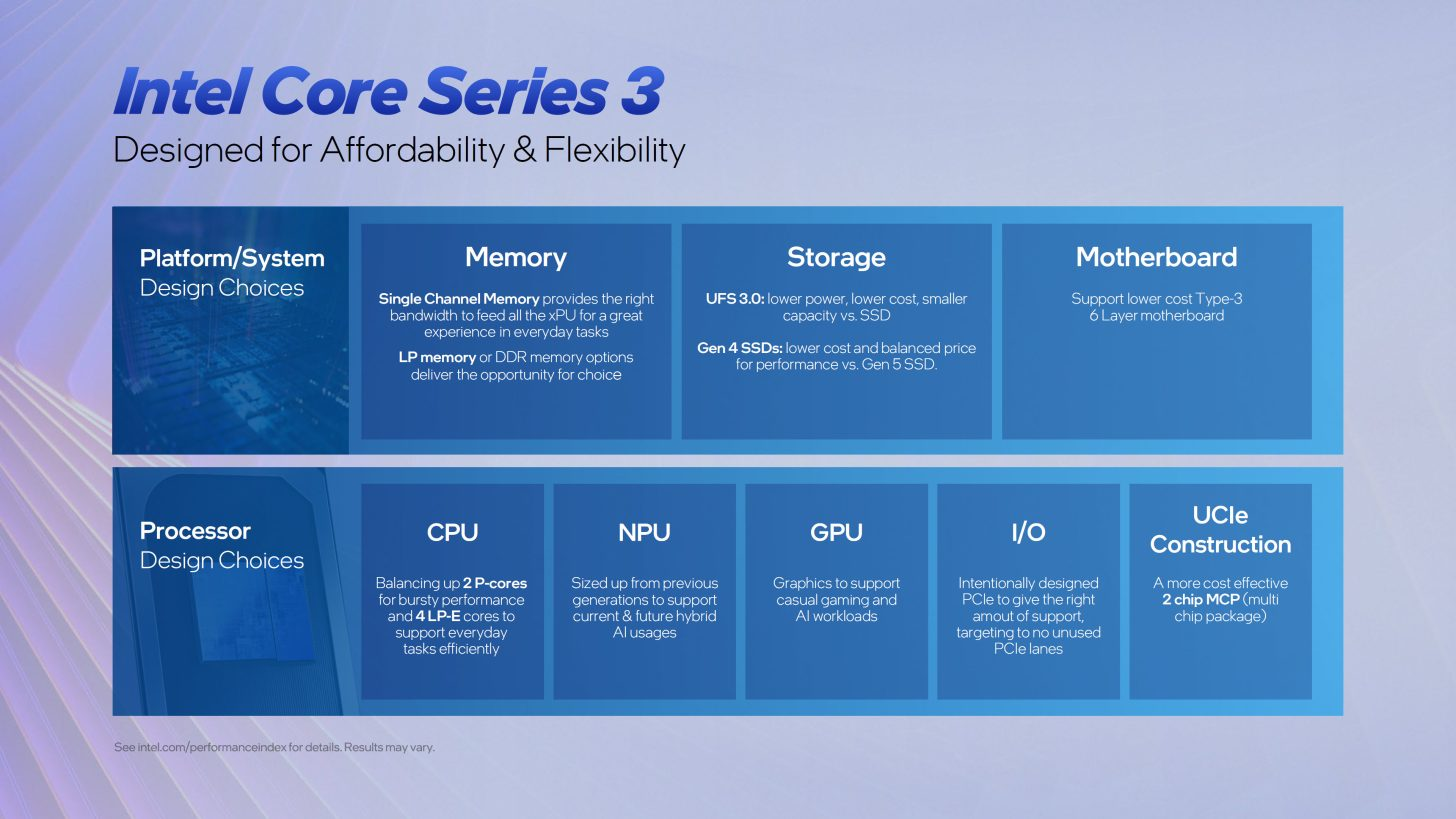
That makes Wildcat Lake an important product for Intel’s 2026 client strategy. While Panther Lake has carried much of the attention around premium AI PCs, Intel is now extending the architecture down into a more mainstream segment where battery life, practical performance, and lower platform cost matter more than chasing flagship specifications. Intel explicitly says Core Series 3 is “purpose engineered for value” and built to meet the needs of students, families, small businesses, and edge deployments at scale.
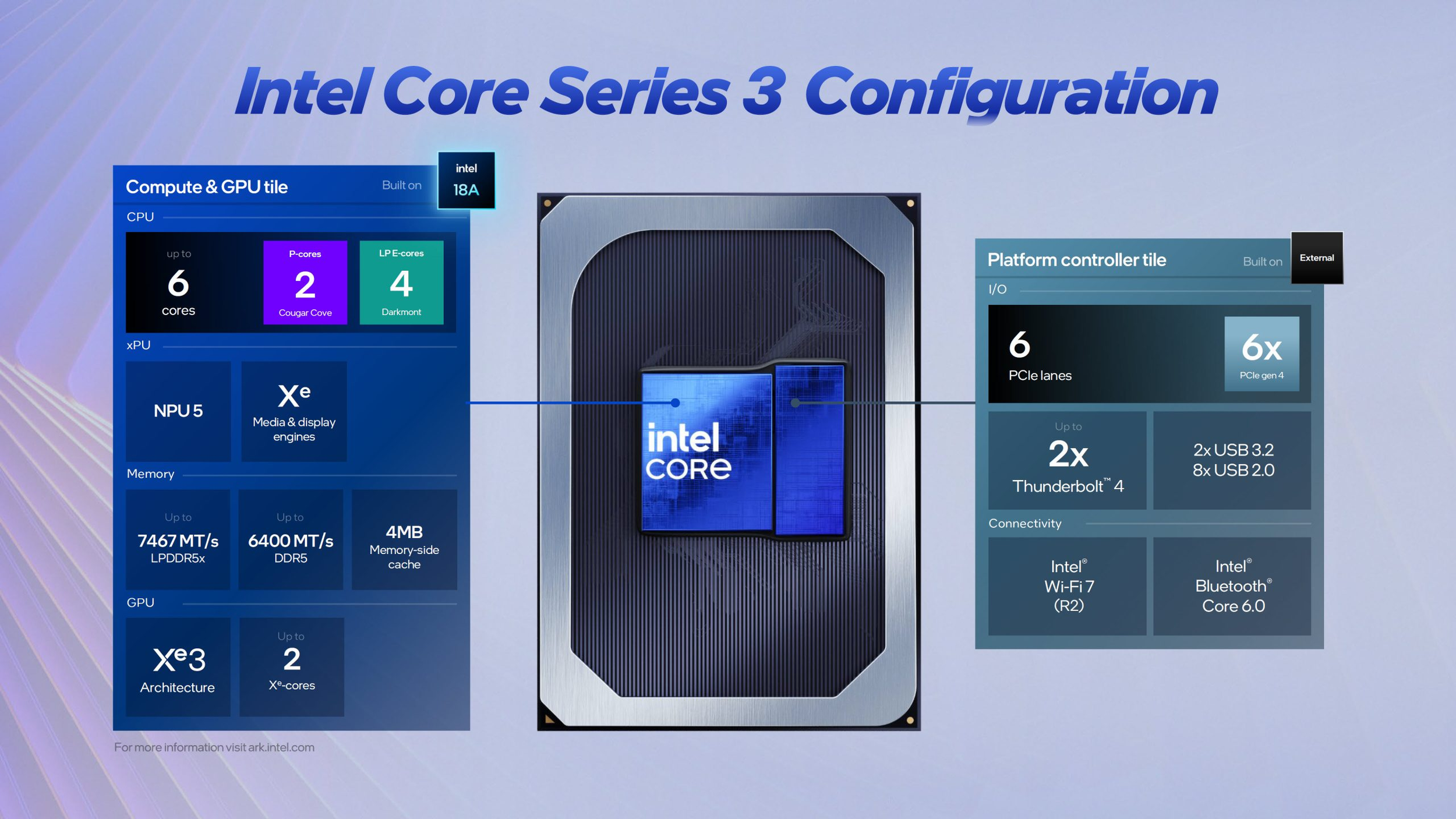
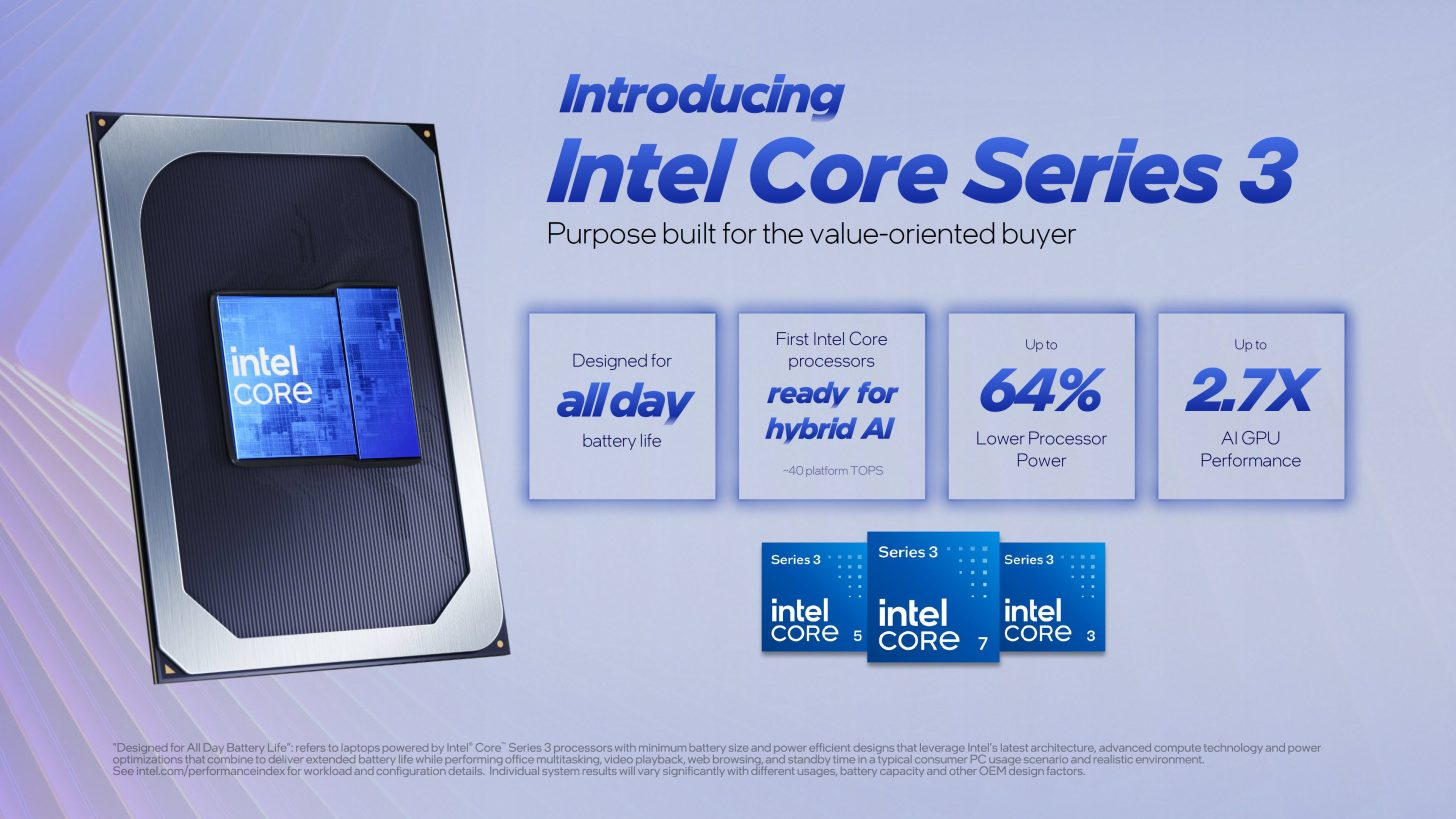
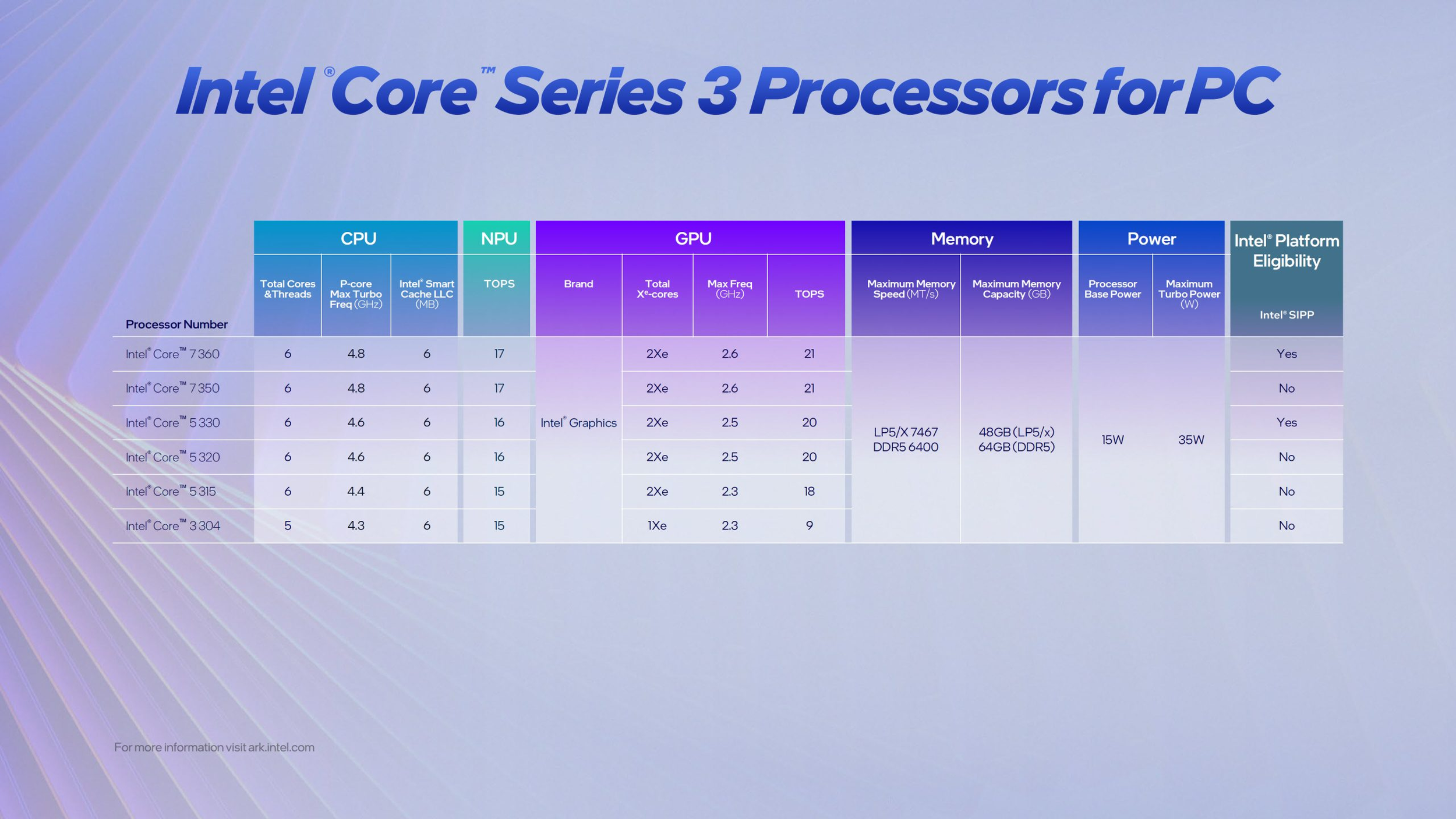
The technical positioning is also notable. Intel says Core Series 3 is manufactured on Intel 18A and is the company’s first hybrid AI ready Core Series processor, offering up to 40 platform TOPS. The official feature list also includes support for up to 2 integrated Thunderbolt 4 ports, Intel Wi Fi 7, and Intel Bluetooth 6, showing that Intel is not treating this as a stripped down legacy tier, but rather as a modern mainstream platform with current connectivity standards intact.
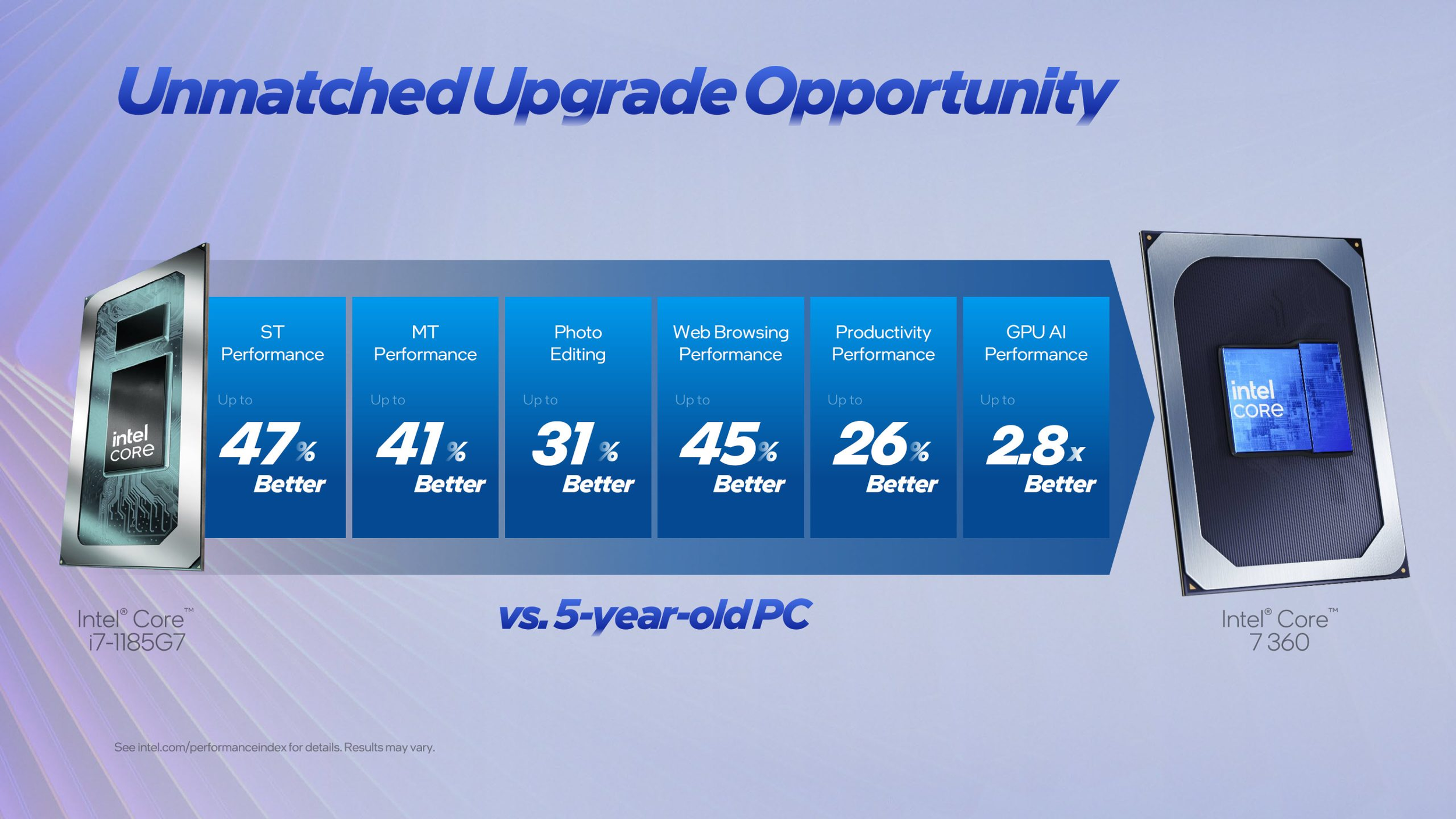
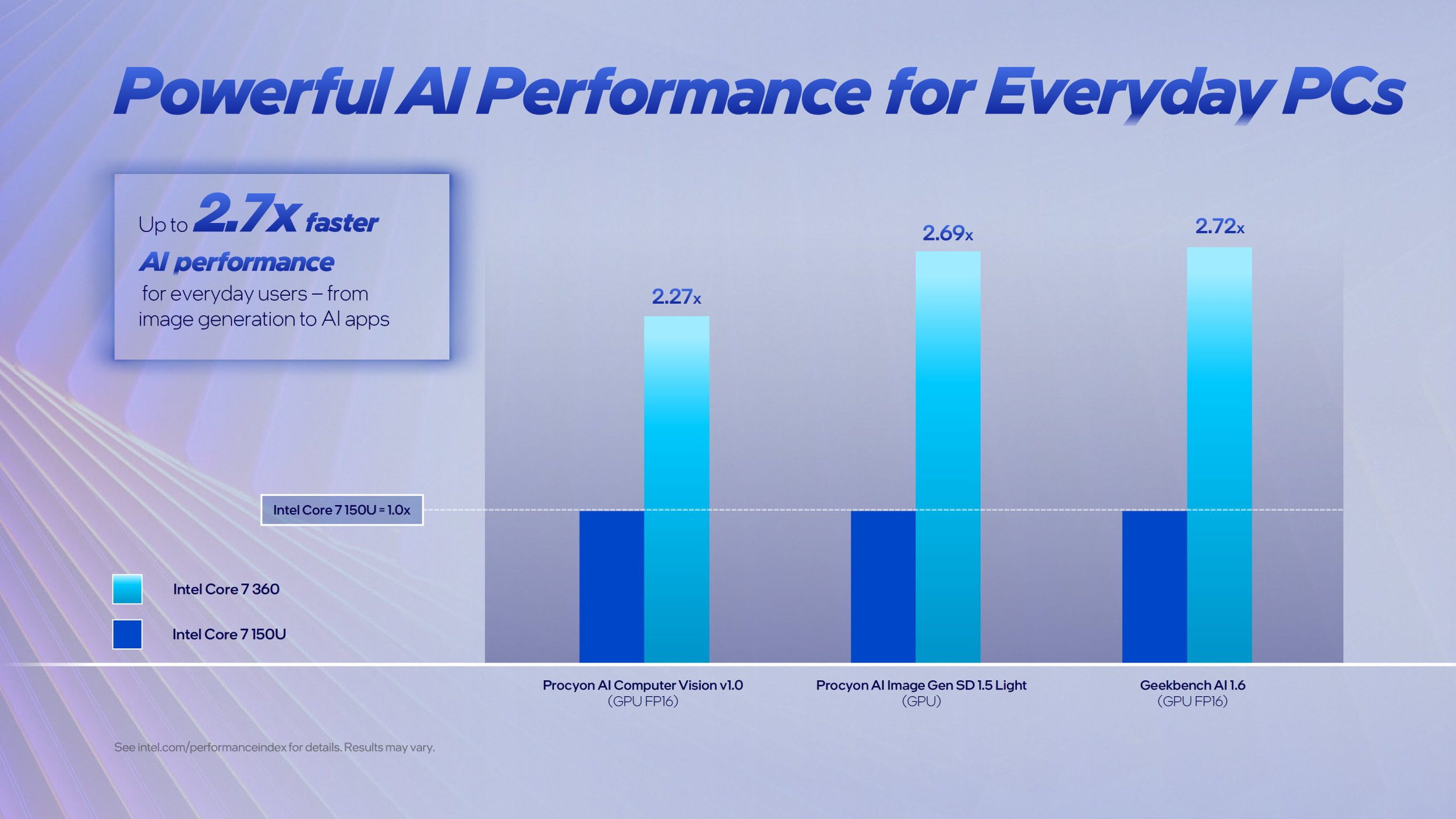
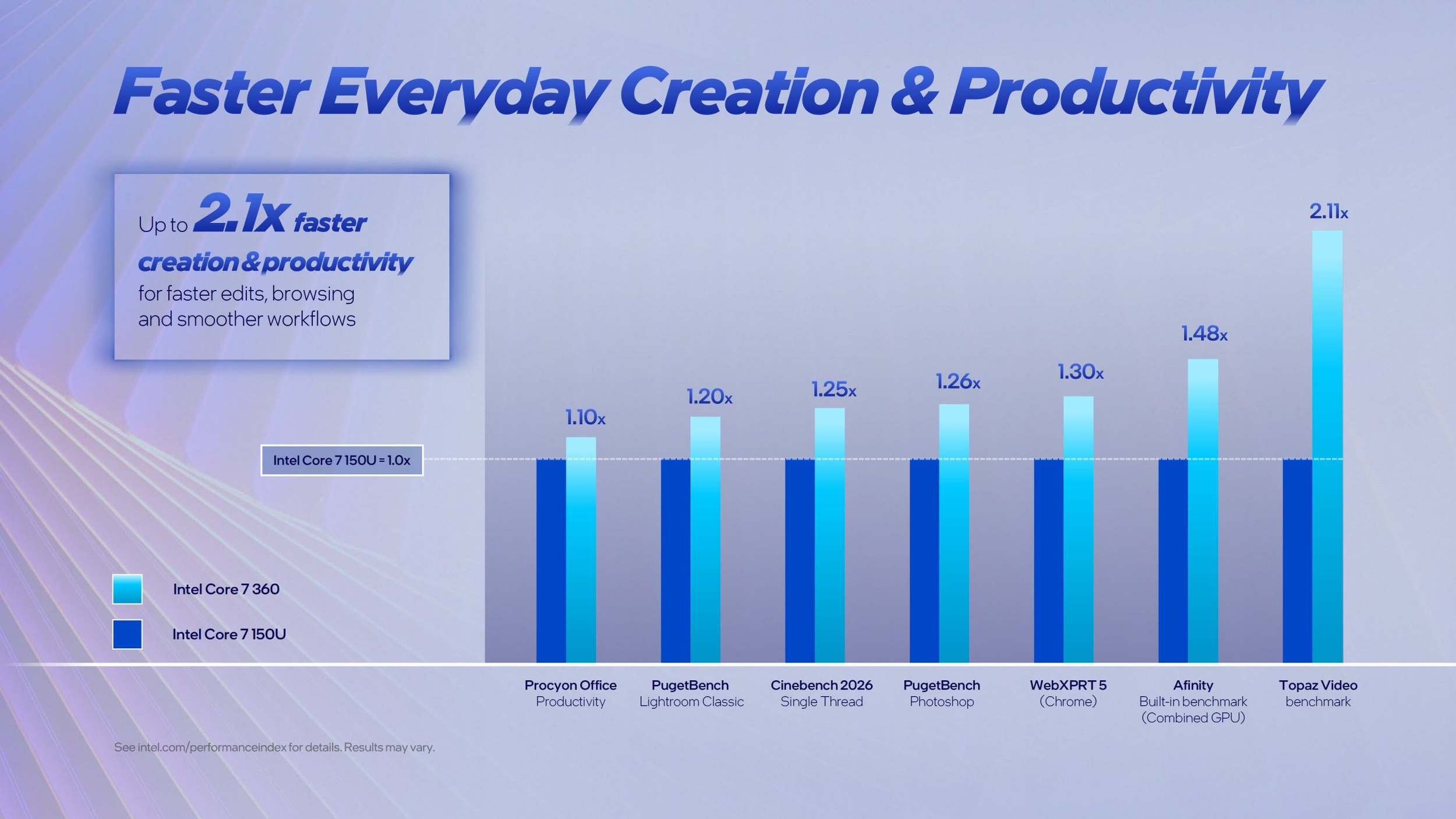
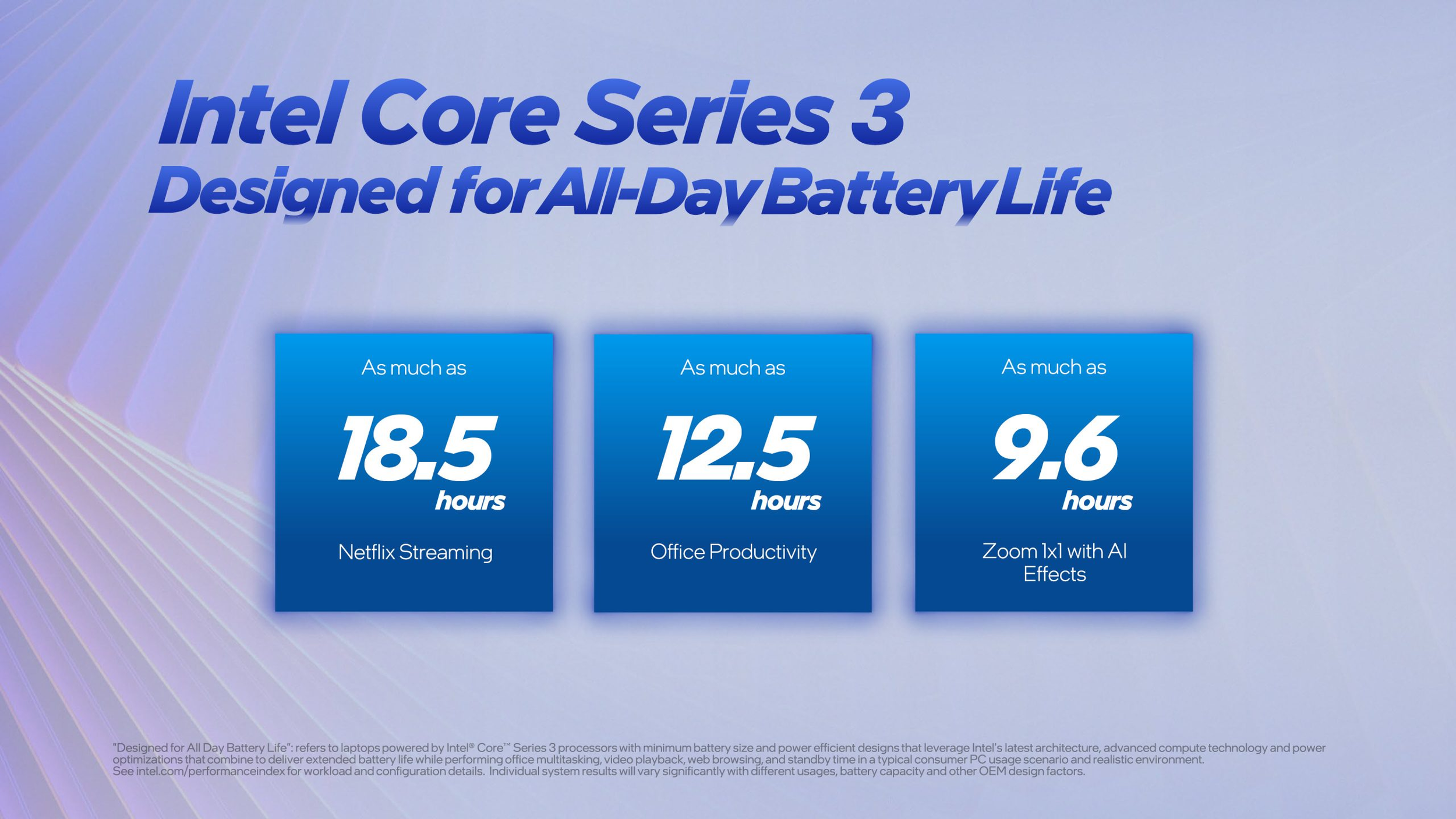
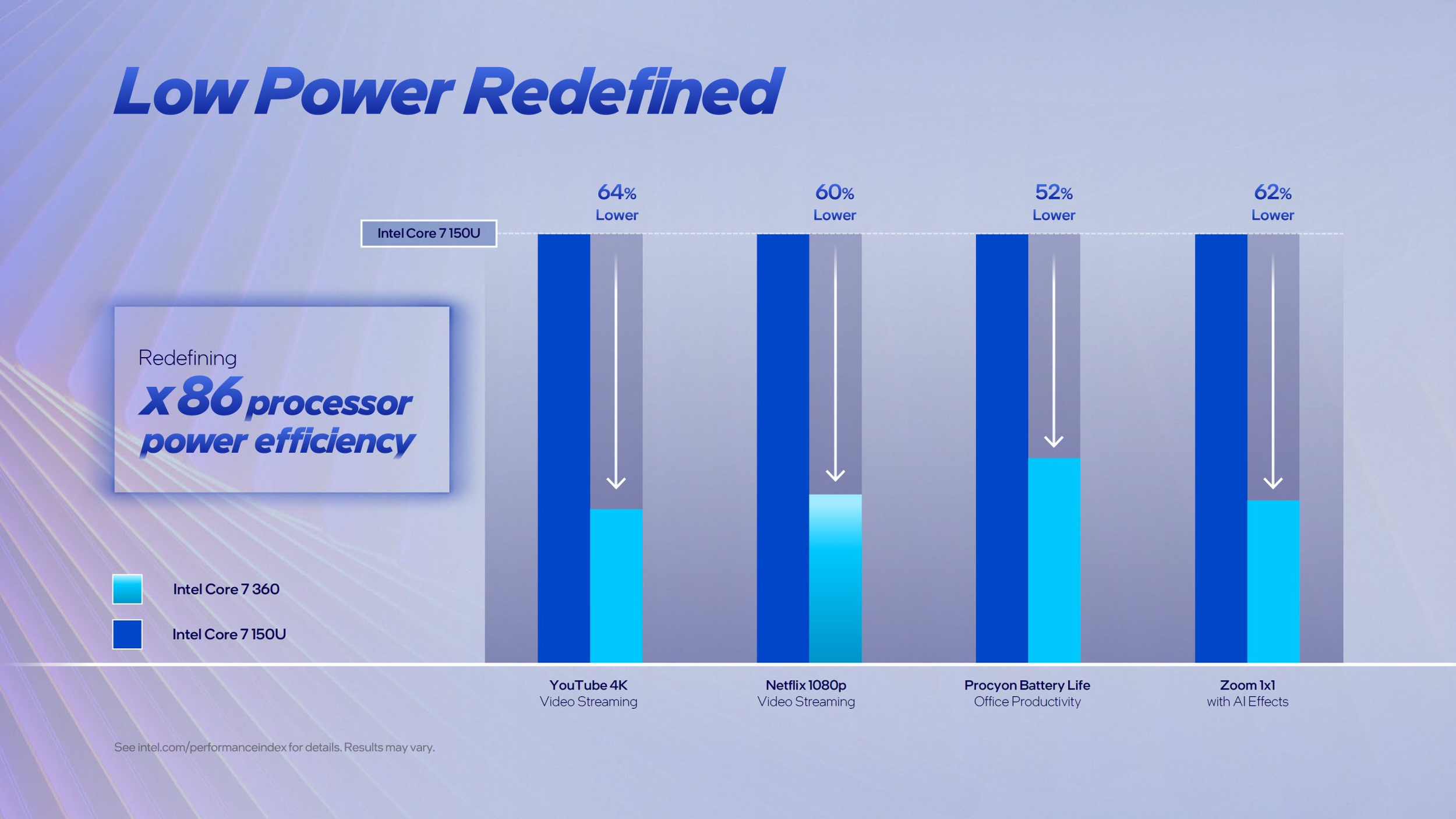
Intel is making a strong efficiency and everyday performance pitch as well. In its launch materials, the company claims Core Series 3 can deliver up to 2.1x faster creation and productivity performance, up to 64 percent lower processor power, and up to 2.7x AI GPU performance compared with previous generation Core 7 150U processors. Intel also says the chips are designed for all day battery life, which is exactly the kind of message it needs if it wants Wildcat Lake systems to compete in the affordable thin and light market.
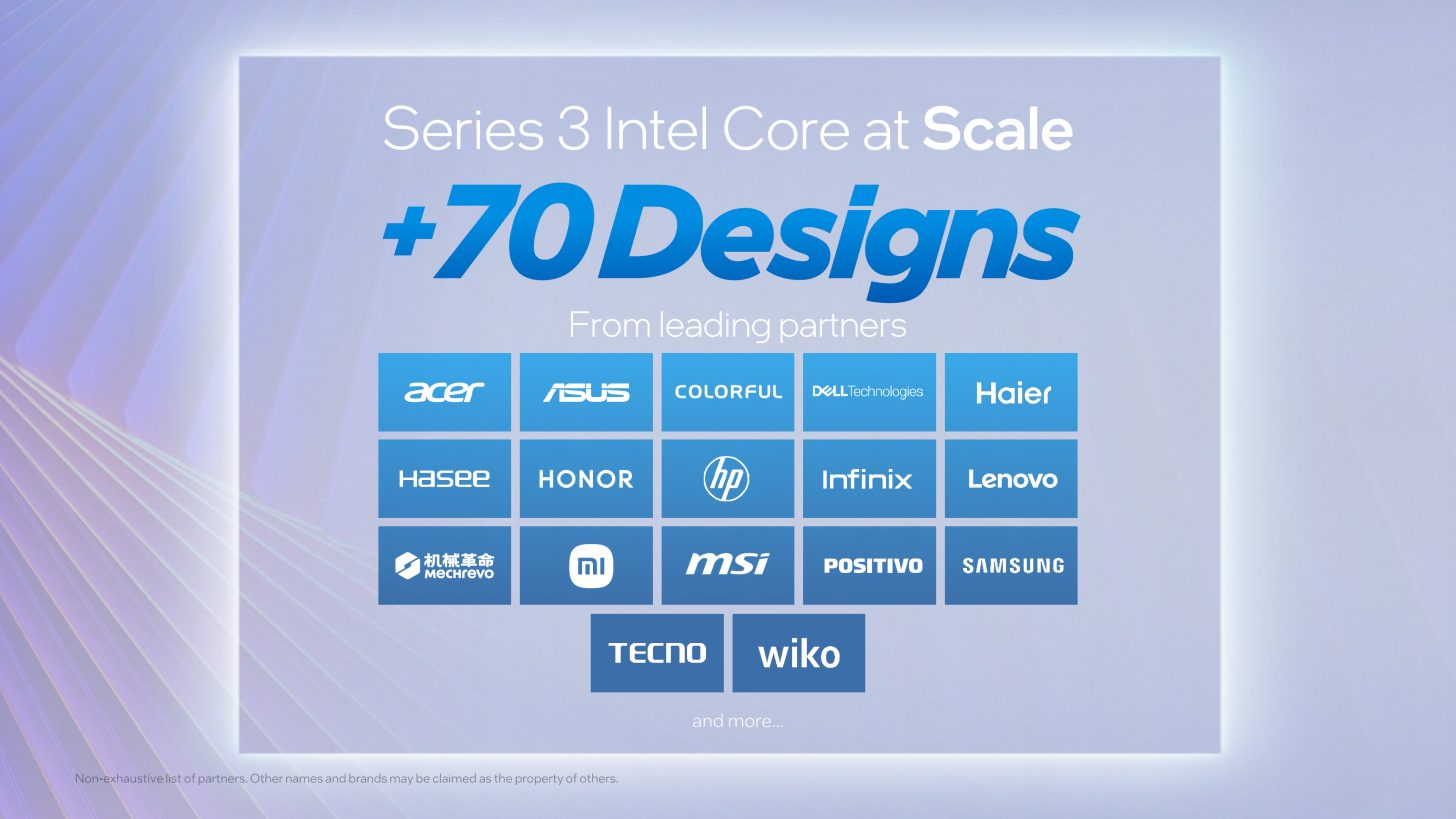
The scale of the rollout is meaningful too. Intel says more than 70 designs from partners are set to launch in the coming months, with a broad spread of notebook vendors already listed in the official announcement, including Acer, ASUS, Dell, HP, Lenovo, MSI, Samsung, and others. Availability for consumer and commercial systems starts on April 16, 2026 according to Intel, while edge systems based on Core Series 3 are scheduled from the second quarter of 2026.
From a market perspective, this looks like Intel’s clearest answer yet to the idea that modern AI capable laptops cannot also be aimed at everyday price sensitive buyers. The company is not positioning Wildcat Lake as a direct premium halo product. Instead, it is trying to bring newer architecture, local AI capability, and stronger battery efficiency into the part of the market where volume really matters. That could make Core Series 3 one of Intel’s most strategically important launches of the year, even if it does not carry the same enthusiast excitement as Panther Lake.
The bigger question now is how aggressively OEMs will price these first systems and whether Intel can translate its platform message into real shelf level value. The official launch confirms the chips, the partner support, and the rollout timing, but final system pricing will depend on the actual laptop configurations that arrive over the next several months. What is already clear is that Intel wants Wildcat Lake to be seen as the practical AI PC tier for mainstream buyers, not just another budget line with a new name.
Do you think Intel’s Wildcat Lake systems can become the real sweet spot for affordable everyday laptops this year, or will buyers still lean more toward ARM based designs in this price range?
