
A New Linux VRAM Fix Could Make 8 GB GPUs Feel Viable Again for Modern PC Gaming
A new Linux side graphics fix is drawing attention for a very practical reason: it could help 8 GB graphics cards deliver a much smoother experience in memory heavy modern games. In a detailed post on the Pixelcluster GPU blog, developer Natalie Vock explained how changes to AMDGPU VRAM management can reduce the kind of performance collapse that happens when games start losing access to dedicated VRAM and spill into much slower system memory.
The core issue is familiar to anyone gaming on a lower memory GPU. Even before a game starts, background desktop applications such as browsers and other software can already consume a meaningful portion of available VRAM. Vock’s example shows a desktop environment eating up roughly 2 GB on an 8 GB card before launching Cyberpunk 2077, leaving far less headroom for the actual game. Once VRAM fills up, some allocations fall into GTT, which is system RAM accessible by the GPU but at dramatically lower effective bandwidth and higher latency than local VRAM. In Vock’s example, that means falling from around 256 GB/s of VRAM bandwidth to roughly 16 GB/s over PCIe, which is where stutter and degraded frame consistency begin to appear.
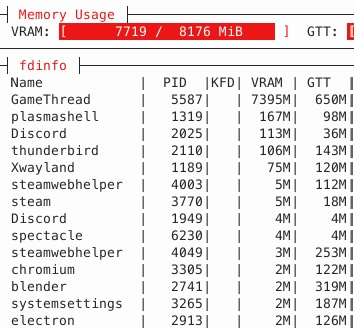
What makes the fix important is that it does not magically create more VRAM. Instead, it changes which applications get priority when memory becomes scarce. Vock explains that the answer comes from cgroups and the dmem cgroup controller, which lets the kernel understand which GPU memory allocations are more important and should be protected from eviction. That allows the active game to keep far more of its useful data in actual VRAM while less important background applications are treated less aggressively. In practical terms, the game gets to use almost every last byte of available VRAM for actual gaming instead of slowly losing performance over time because desktop apps are holding onto memory they do not urgently need.
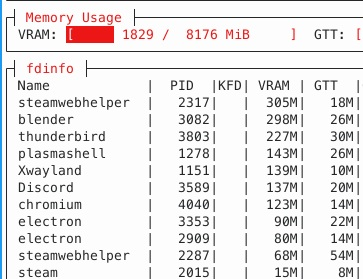
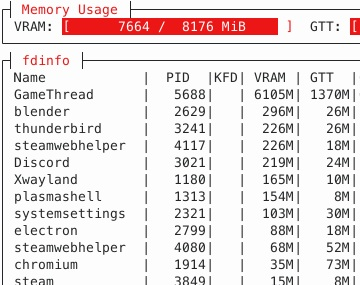
According to Vock, the dmem cgroup controller has already been upstream for a while, but the gaming specific improvement comes from additional kernel patches that make memory protection apply properly in these VRAM pressure scenarios. Without those patches, new allocations can still end up in GTT too quickly even when protection exists. With the patches in place, Vock says the behavior becomes much more aggressive in defending the game’s VRAM allocations, leading to more stable performance as long as the game itself does not exceed the physical memory budget of the card. She specifically says modern games often seem to stay within about 8 GB or slightly less, which is why this work can matter so much for budget and older GPUs.
There is an important limitation here. This is not a universal Windows side tool or a plug and play fix for every PC gamer. Right now, the simplest deployment path described in the post is through specific Linux environments, including CachyOS kernels with the needed patches and supporting user space utilities such as dmemcg-booster and plasma-foreground-booster. Vock also notes that newer versions of Gamescope can make use of the kernel capabilities as well, which helps extend the benefit beyond one exact desktop setup.
Compatibility also matters. Vock says the approach currently applies to AMD and Intel GPUs, while NVIDIA is effectively excluded because its proprietary kernel modules do not support this path. Integrated graphics remain less certain as well, since they do not have dedicated VRAM and rely heavily on system memory by design. That means the biggest short term gain is likely for Linux gamers using discrete AMD or Intel graphics cards in the 6 GB to 8 GB class, where every bit of real VRAM prioritization can make a noticeable difference.
From a broader PC gaming perspective, this is exactly the kind of low level engineering work that can have outsized impact. The market keeps pushing bigger textures, larger assets, and heavier memory footprints, while a huge part of the installed base still relies on modest hardware. If software side intelligence can stop games from being dragged down by needless background VRAM pressure, then older and lower end GPUs stay useful longer. That is especially meaningful now, when replacing a graphics card is far more expensive than most mainstream players would like.
This does not solve every problem tied to modern game optimization, and it will not help when a game genuinely needs more memory than the card physically has. But for Linux users on constrained hardware, it looks like a smart and very practical improvement. It is not flashy, but it targets one of the most frustrating performance killers in modern PC gaming and attacks it in a way that could make low VRAM cards feel far more stable in real play.
Do you think smarter VRAM management like this can extend the life of 8 GB GPUs, or has the industry already moved too far beyond that memory tier?
