
No Man’s Sky Developer Says Switch 2 and Steam Deck Updates Take Up to 3x More Work Due to “Memory Constraints”
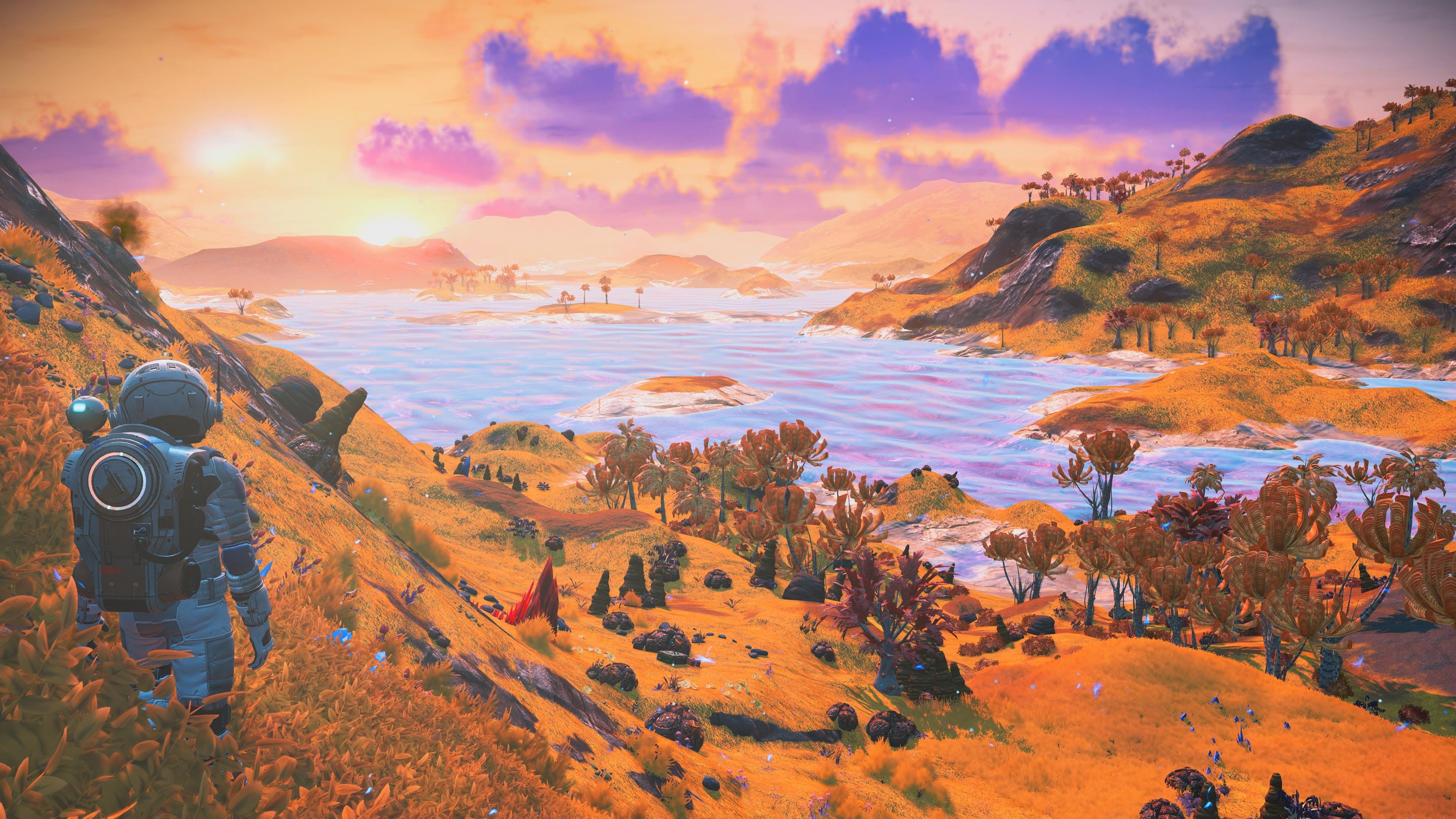
Supporting a game like No Man’s Sky across so many platforms is already a major technical challenge, but Hello Games says the real engineering pressure becomes especially clear on portable hardware. In a post shared by engine programmer Martin Griffiths on X, the developer explained that updates for Nintendo Switch, Nintendo Switch 2, and Steam Deck require a disproportionate amount of extra work compared with other versions of the game. Griffiths said some members of the team spend “2 to 3x more time” making these updates run seamlessly across those systems, while also describing it as a delight to keep overcoming what he called “impossible memory constraints.”
That comment says a lot about the reality of long term live game support in 2026. No Man’s Sky is no longer a small or simple project that can be moved between platforms with minimal effort. It is a constantly growing game with years of systems, updates, interface layers, visual improvements, and content expansions stacked on top of each other. Every new feature has to fit into hardware that was never designed with the same headroom as a PlayStation 5 class console or a modern gaming desktop. In that context, Griffiths’ remark is not just a casual technical complaint. It is a concise summary of the invisible engineering work required to keep parity across a very broad hardware range.
Memory remains one of the biggest constraints in this kind of work. When a game continues expanding over time, memory budgeting becomes a constant battle between maintaining feature completeness and preserving stability. That is particularly demanding on portable systems, where efficiency matters as much as raw performance. Hello Games has clearly chosen not to treat those platforms as secondary. Instead, the team is investing the additional engineering effort needed to ensure that Switch, Switch 2, and Steam Deck players continue receiving the same evolving universe rather than being left behind as the game grows.
What makes this even more notable is that No Man’s Sky now officially spans a remarkably wide ecosystem. Hello Games lists the game across PlayStation, Xbox, PC, Mac, Nintendo Switch, and Nintendo Switch 2, while Nintendo’s own store page for the Switch 2 edition highlights upgrades such as multiplayer and higher resolution visuals on the newer system. That broad platform footprint helps explain why each major update becomes such a substantial optimization exercise behind the scenes. The game is not just being maintained for one or two fixed targets. It is being pushed across radically different hardware profiles at the same time.
From a player perspective, this is also a useful reminder that technical support parity is expensive. Gamers often expect simultaneous updates everywhere, but portable and lower memory platforms can demand far more engineering time per patch than their higher end counterparts. Griffiths’ comments suggest that for Hello Games, this work is not viewed as a burden to avoid, but as a worthwhile technical challenge that allows more players to stay part of the same experience. That attitude has arguably become one of the defining reasons No Man’s Sky continues to stand out as a long term support success story.
In practical terms, this also shows why handheld capable systems remain strategically important for live service and evergreen titles. Even when they require more optimization effort, they expand the reach of a game into more flexible play patterns and different audiences. For No Man’s Sky, the engineering tax appears high, but Hello Games seems convinced that it is still worth paying.
Do you think more studios should commit to this level of handheld optimization support, or is this kind of cross platform parity becoming too demanding for most teams?
