
G.SKILL Brings AMD EXPO ULL to Trident Z5 Royal NeoX With DDR5 6000 CL26
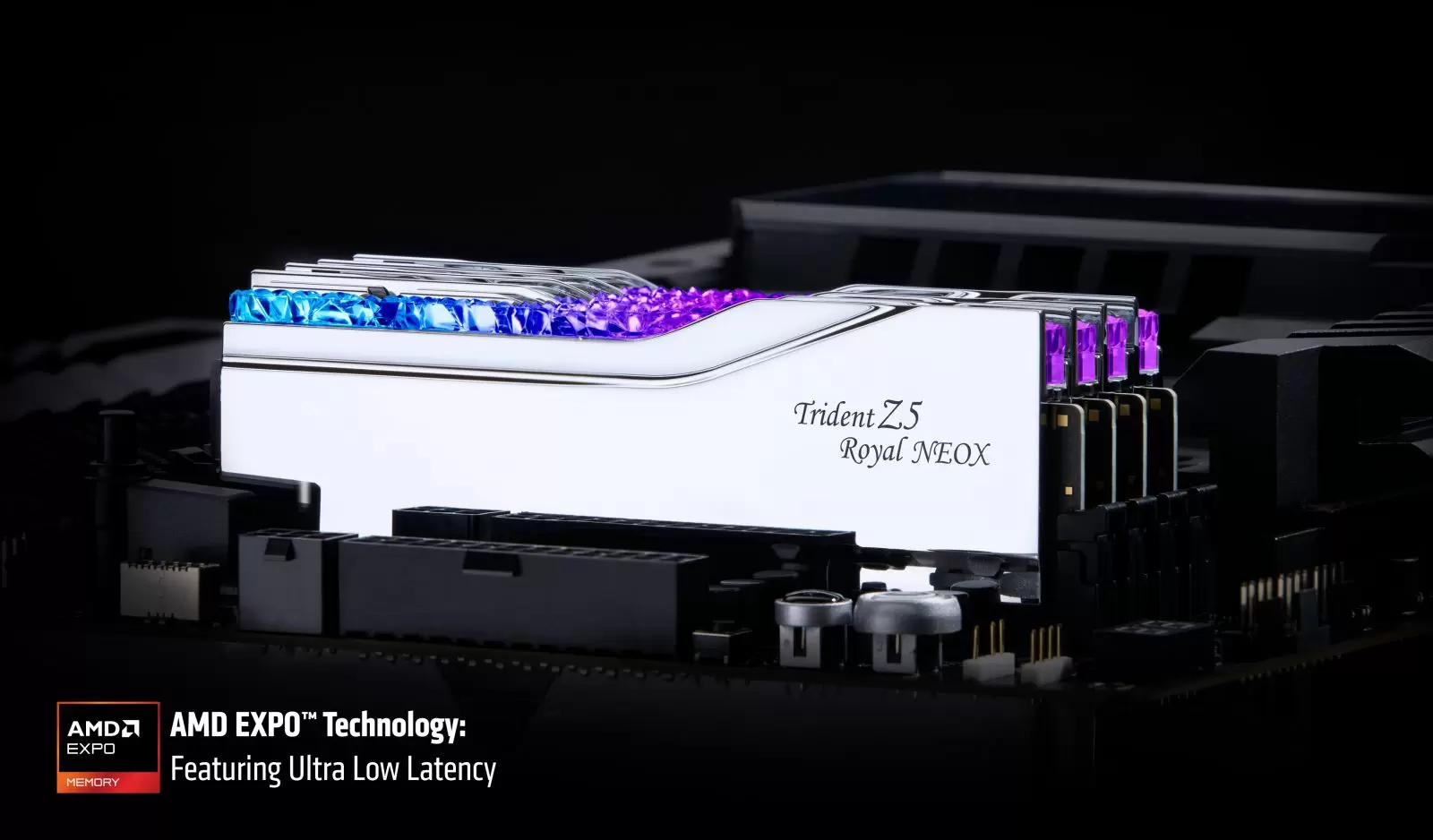
G.SKILL is expanding AMD EXPO Ultra Low Latency memory into its premium Trident Z5 Royal family with the new Trident Z5 Royal NeoX, combining DDR5 6000 speeds, timings as tight as CL26 and the distinctive mirrored design of its flagship Royal series.
According to the official G.SKILL announcement, the Trident Z5 Royal NeoX lineup uses AMD EXPO Technology Featuring Ultra Low Latency, commonly known as EXPO ULL. Rather than simply increasing memory frequency, the technology stores additional fine tuned subtiming values inside the memory profile, allowing a compatible AMD system to apply more aggressive latency settings through the BIOS while maintaining the same DDR5 data rate.
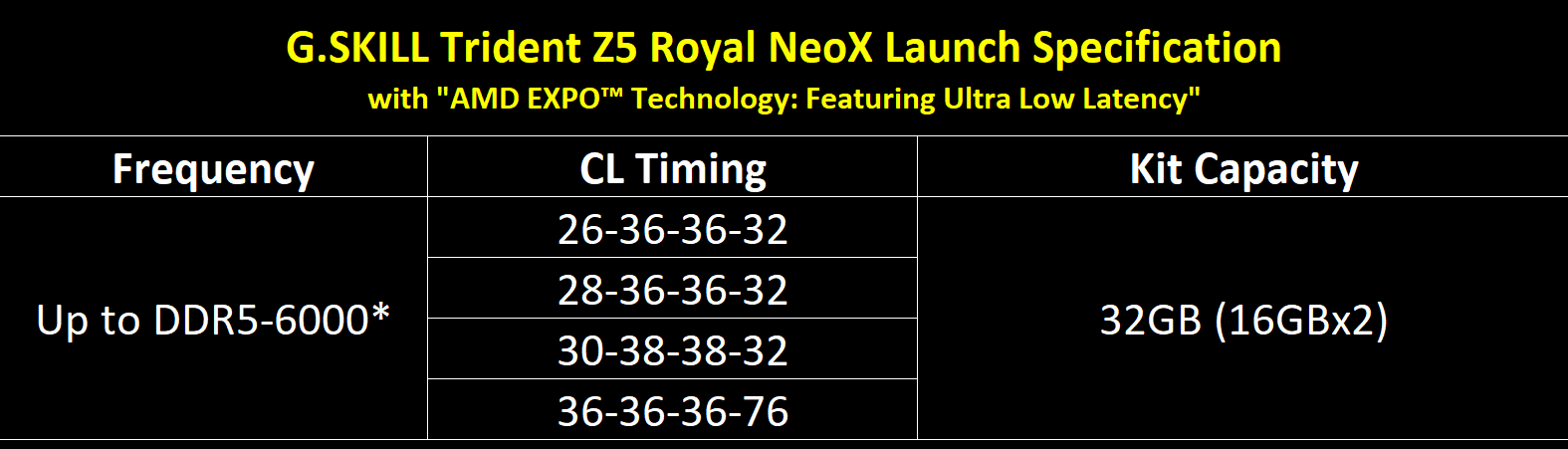
The launch currently focuses entirely on 32 GB kits using 2 × 16 GB modules at DDR5 6000, with 4 latency options covering CL36, CL30, CL28 and CL26. G.SKILL has not announced pricing for the Royal NeoX lineup yet.
AMD introduced EXPO ULL at Computex 2026 as an extension of its existing EXPO memory overclocking technology. AMD claims certified ULL memory can deliver an average 4% higher gaming frame rate than conventional EXPO memory across its selected testing, primarily by reducing memory latency rather than increasing transfer speed. That figure comes from AMD testing and should not be interpreted as a guaranteed improvement across every processor, motherboard or game.
G.SKILL says the new profile requires a compatible AMD processor, motherboard and supported BIOS version. This distinction matters because installing an EXPO ULL kit does not guarantee that its optimized profile will function on every AM5 motherboard. BIOS support and memory validation remain part of the platform requirement.
The Royal NeoX brings the same performance concept previously introduced through G.SKILL's Trident Z5 NeoX lineup into a more premium design. The modules use mirrored silver or gold heat spreaders combined with a crystalline RGB light bar, positioning them above the conventional NeoX family for enthusiasts prioritizing both memory tuning and system aesthetics.
EXPO ULL has already demonstrated that reducing subtimings can meaningfully improve measured memory latency. In previous testing, MSI High Efficiency Mode brought conventional EXPO DDR5 6000 memory close to EXPO ULL latency, reducing AIDA64 latency from 79.4 ns to 71.6 ns on the tested system, while the dedicated ULL kit measured 71.4 ns before additional tuning. That comparison reinforced that much of EXPO ULL's advantage comes from optimized secondary and tertiary timing behavior rather than headline frequency alone.
Pricing will be particularly important for Royal NeoX. The first G.SKILL Trident Z5 NeoX EXPO ULL kits reached prices as high as 1,099.99$, creating substantial premiums over equivalent conventional EXPO kits during their early retail period. G.SKILL later attributed some of that difference to rapidly rising DRAM procurement costs and older standard EXPO inventory being sold at prices established before the latest increases.
The company continues to warn that DRAM pricing remains volatile because of global supply constraints and strong AI driven memory demand, meaning Royal NeoX retail prices may vary considerably between regions and distributors. G.SKILL says the new memory will become available worldwide in phases, with exact availability determined by local retail and distribution partners.
Trident Z5 Royal NeoX shows where AMD memory tuning is heading. DDR5 6000 remains a practical target for AM5, but manufacturers are increasingly extracting additional performance through tighter subtimings instead of chasing frequency alone.
EXPO ULL also makes that type of tuning more accessible. Settings that previously required enthusiasts to manually adjust dozens of memory parameters can now be stored inside a validated profile and activated through the BIOS. The real question remains value. If Royal NeoX carries another large premium, experienced users may still prefer conventional EXPO memory combined with motherboard tuning features. If pricing becomes more reasonable, a certified one click low latency profile becomes much easier to justify.
Would you pay more for a validated DDR5 6000 CL26 EXPO ULL kit, or would you rather tune a standard EXPO kit manually to achieve similar latency?
