
G.SKILL Rejects RAM RMA Over Small PCB Edge Damage, Sparking Warranty Debate
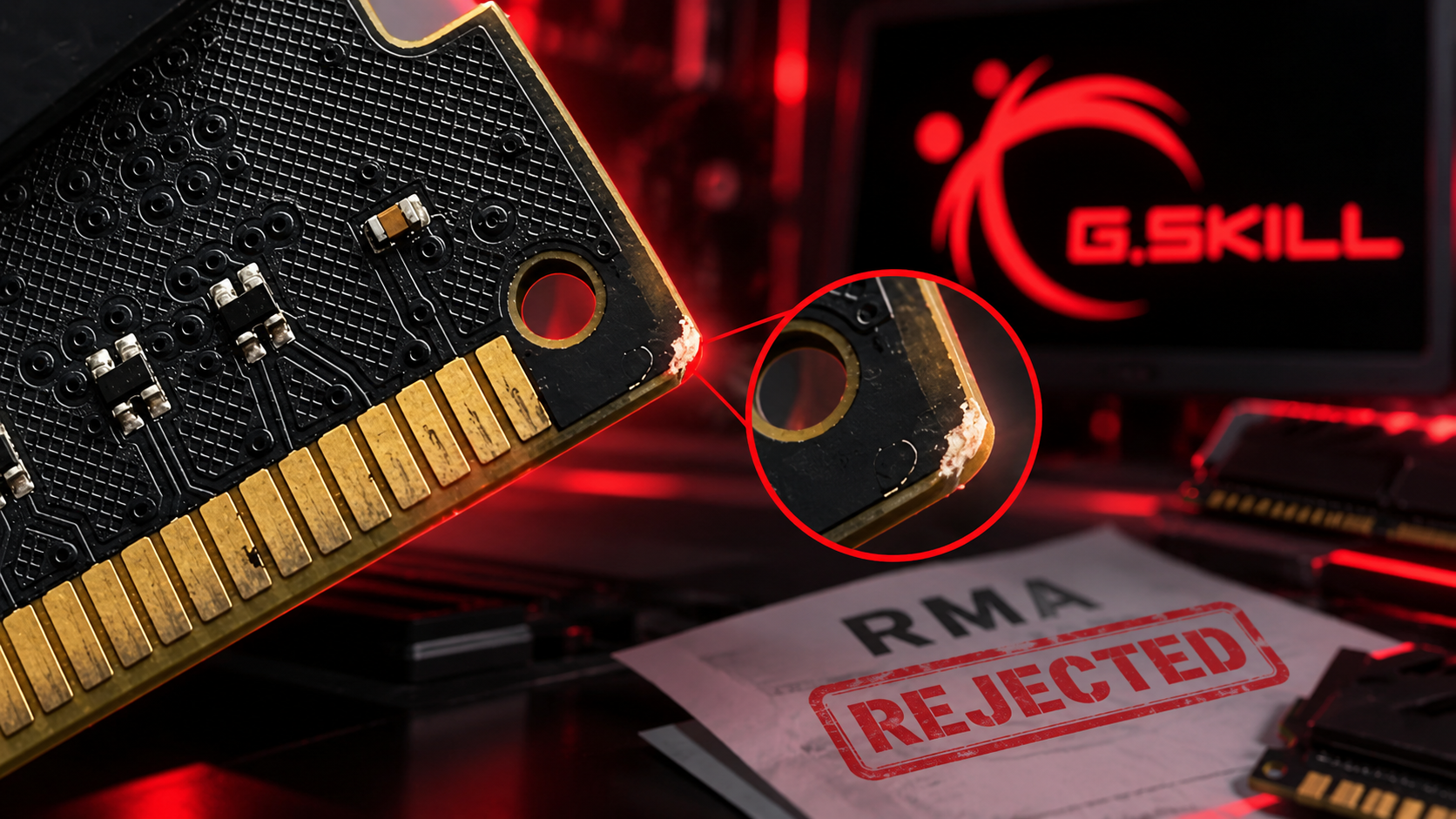
A G.SKILL memory customer says the company rejected an RMA request after identifying physical damage on the edge of 1 RAM module, even though the visible nick appears far from the memory contacts and major electronic components. The case has triggered debate over how strictly manufacturers should apply physical damage exclusions when the damage may have no apparent connection to the reported hardware failure.
The dispute originated from a Reddit post by user Prestigious-Tea-8244, who shared images of a memory module with a small section damaged near one corner of the PCB. According to the customer, G.SKILL rejected the warranty request after classifying the mark as PCB damage. The user argues that the affected area does not involve the gold contacts or visible components and says the module had only recently been removed from the motherboard because it was experiencing problems. The customer also denied dropping the RAM but said they did not know how the edge became damaged.
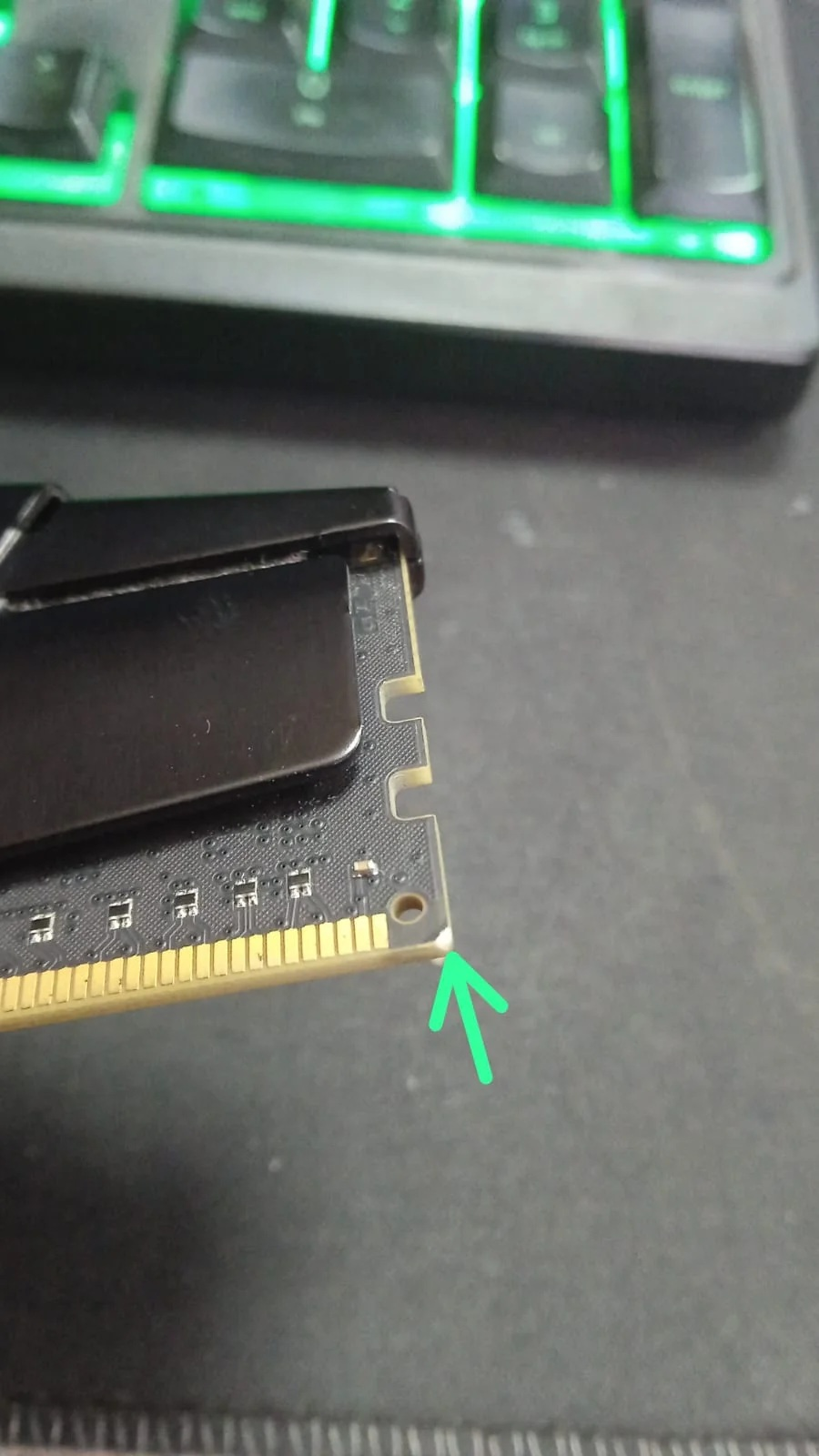

The images make the case less straightforward than a conventional physically damaged RAM module. The affected area appears to be near the outer corner of the PCB rather than around the contact fingers, surface mounted components, DRAM packages, or other obviously functional areas. Several members of the PC Help community argued that damage in this location would be unlikely to interfere with electrical operation, although that conclusion has not been independently verified and no electrical inspection of the affected PCB has been published.
G.SKILL's official limited warranty gives the company considerable scope to reject claims involving physical damage. Its exclusions cover damage caused by the customer or an unauthorized third party, abnormal mechanical conditions, accidents, improper handling, installation, operation, and other causes unrelated to defects in materials or workmanship. Damaged contact pins, chips, casing, connectors, and heat spreaders are also specifically excluded.
The company's separate RMA policy adds another layer. G.SKILL states that products received for replacement undergo individual visual inspection to confirm they are free from physical damage or abuse, and products found to be physically damaged or abused can be returned to the customer with additional administration and shipping fees.
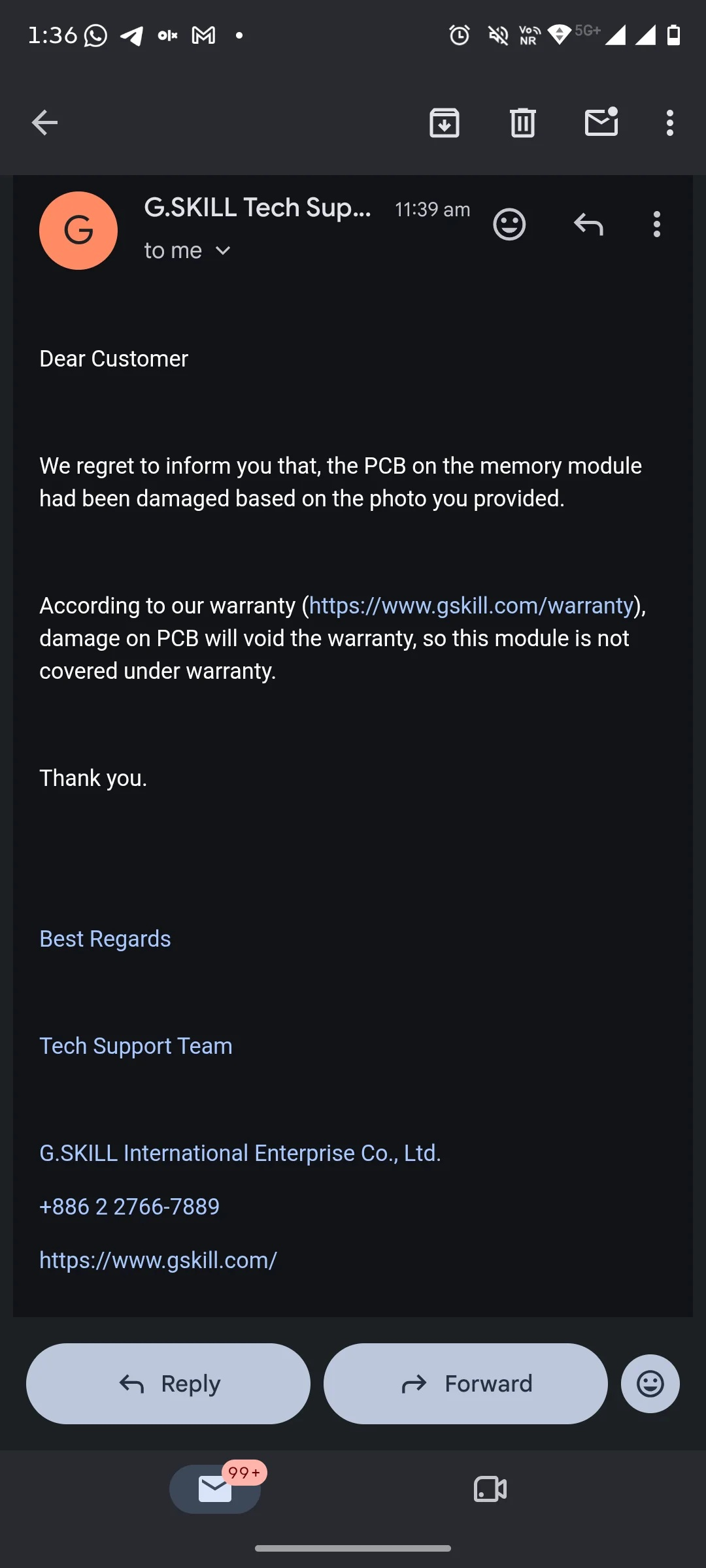
There is still an important distinction between those rules and saying that any visible PCB imperfection automatically invalidates an RMA. G.SKILL's published warranty does not specifically state that every nick or cosmetic mark on the edge of a memory PCB results in automatic rejection. Instead, the policy focuses broadly on physical damage caused by the user, improper handling, installation, accidents, and damage unrelated to a manufacturing defect. This leaves the central question in the current dispute: whether the small edge nick is evidence of customer caused physical damage sufficient to reject the entire claim, regardless of whether it contributed to the memory failure.
The customer could potentially continue discussing the case with G.SKILL and ask whether the module was electrically tested before the RMA was rejected, or whether the decision was based entirely on visual inspection. G.SKILL recommends technical troubleshooting before an RMA is submitted, while its policy directs customers to the original retailer for valid warranty claims during approximately the first 30 days after purchase, depending on the retailer's own return rules.
The situation becomes more significant because many G.SKILL desktop memory products are sold with a limited lifetime warranty. A long warranty can provide considerable confidence when purchasing performance memory, but exclusions for physical damage mean the condition of the module when it reaches the RMA center can become just as important as demonstrating that the memory itself has failed.
The current memory market also makes replacement disputes financially more consequential. In another recent case, a Crucial customer was offered a 259.99$ refund for a failed 128 GB DDR5 kit while comparable replacement memory had climbed close to 1,800$. Although the circumstances and warranty policies are different, both cases highlight how warranty outcomes become much more important when replacing high capacity memory independently can cost substantially more than the customer's original purchase.
G.SKILL has not publicly issued a broader statement addressing this individual dispute beyond the RMA communication shared by the customer. As a result, the reason for the rejection should be understood through the customer's documentation and G.SKILL's existing warranty policies rather than as evidence of a new company wide warranty rule.
G.SKILL appears to have contractual grounds to reject memory damaged through improper handling or installation, but this case exposes an important difference between having physical damage and demonstrating that the physical damage caused the reported failure.
From an RMA processing perspective, visual inspection is necessary because manufacturers cannot reasonably warranty products that have been substantially damaged after purchase. At the same time, rejecting a module over a tiny PCB edge nick that appears unrelated to the electrical circuitry risks creating the impression that cosmetic imperfections can override the functional purpose of a lifetime warranty.
A stronger resolution would be transparency. If the module was rejected because G.SKILL determined that the PCB damage could compromise internal traces or structural reliability, explaining that technical reasoning would make the decision easier to understand. If the rejection was based solely on the existence of any visible physical mark, customers deserve equally clear language explaining that standard before they pay to ship an RMA.
Should a RAM manufacturer be able to reject an entire warranty claim because of minor PCB edge damage when the affected area appears unrelated to the reported failure?
