
G.Skill Points to the AI Industry as the Main Driver Behind Sky High DRAM Prices
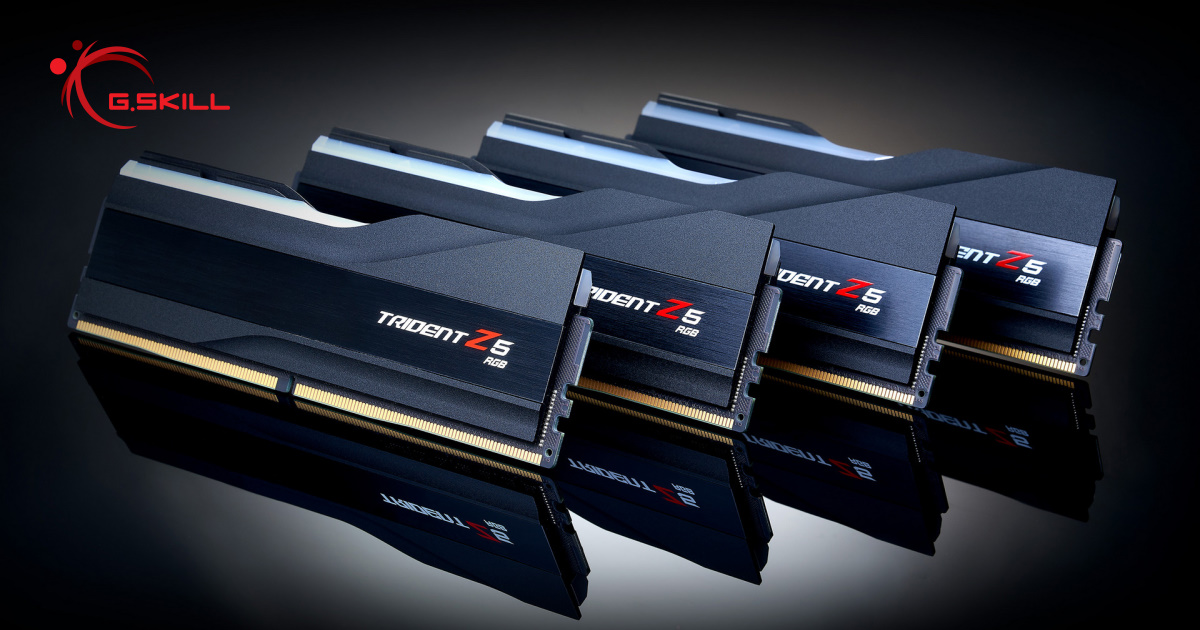
The ongoing surge in DRAM pricing has become impossible for PC builders and system integrators to ignore, and now one of the industry’s most well known memory manufacturers has weighed in directly. G.Skill has released an official statement explaining why DDR5 memory prices have climbed so aggressively in recent months, placing the responsibility squarely on AI driven demand and severe global supply constraints.
In a post published on G.Skill’s official community website, the company addressed growing concerns from consumers who have seen DDR5 prices increase by three to four times in many regions since the fourth quarter of 2025. According to G.Skill, the situation is not isolated to retail memory but reflects deep structural pressure across the entire DRAM supply chain.
G.Skill states that DRAM prices are experiencing significant industry wide volatility due to severe global supply constraints and shortages. These shortages are being driven by unprecedented demand from the AI sector, particularly for server grade and high performance computing memory. As AI workloads expand rapidly, memory suppliers are prioritizing higher margin enterprise and data center contracts, leaving far less capacity available for the consumer PC market.
As a direct consequence, G.Skill confirms that its own procurement and sourcing costs have risen substantially. The company emphasizes that its current pricing reflects increased component costs passed down from DRAM IC suppliers and that pricing may continue to fluctuate depending on broader market conditions. G.Skill also cautions buyers to carefully evaluate pricing before making a purchase, acknowledging the strain these increases place on enthusiasts and system builders.
This explanation aligns closely with broader industry data and analyst reports. Multiple research firms have already warned that DRAM and NAND pricing pressure is likely to persist through 2026 and potentially into 2028. With AI infrastructure absorbing a massive share of global memory output, the mainstream PC market is being pushed into an unusually volatile position. In extreme cases, a high capacity DDR5 kit can now approach the price of a high end graphics card, a scenario that would have seemed unrealistic only a year ago.
The ripple effects extend beyond system memory. Graphics cards are now also expected to feel the impact of memory shortages, particularly as GDDR supply tightens under similar AI related pressures. This creates a compounding problem for PC builders, where CPUs, GPUs, and memory are all being affected by the same upstream demand shift.
G.Skill’s message is clear and notably direct. The AI boom is not just transforming data centers and cloud computing but is fundamentally reshaping the economics of the memory market. While some industry voices suggest prices could stabilize within six to eight months, a full return to pre surge pricing levels appears unlikely in the near term. Capacity expansion takes time, and as long as AI remains the dominant growth engine for semiconductors, consumer hardware is likely to remain a secondary priority.
For now, buyers are left navigating an environment where patience, timing, and careful price comparison are more important than ever. G.Skill’s public acknowledgment of the situation reinforces what many enthusiasts already suspect. The current DRAM pricing crisis is not the result of short term speculation, but a structural shift driven by AI workloads that may redefine PC component pricing for years to come.
Do you think the AI driven memory boom will permanently change how affordable PC building is, or will manufacturers eventually rebalance supply for consumers? Share your thoughts below.
