
GIGABYTE Quietly Launches B850M AORUS Stealth in Black and White
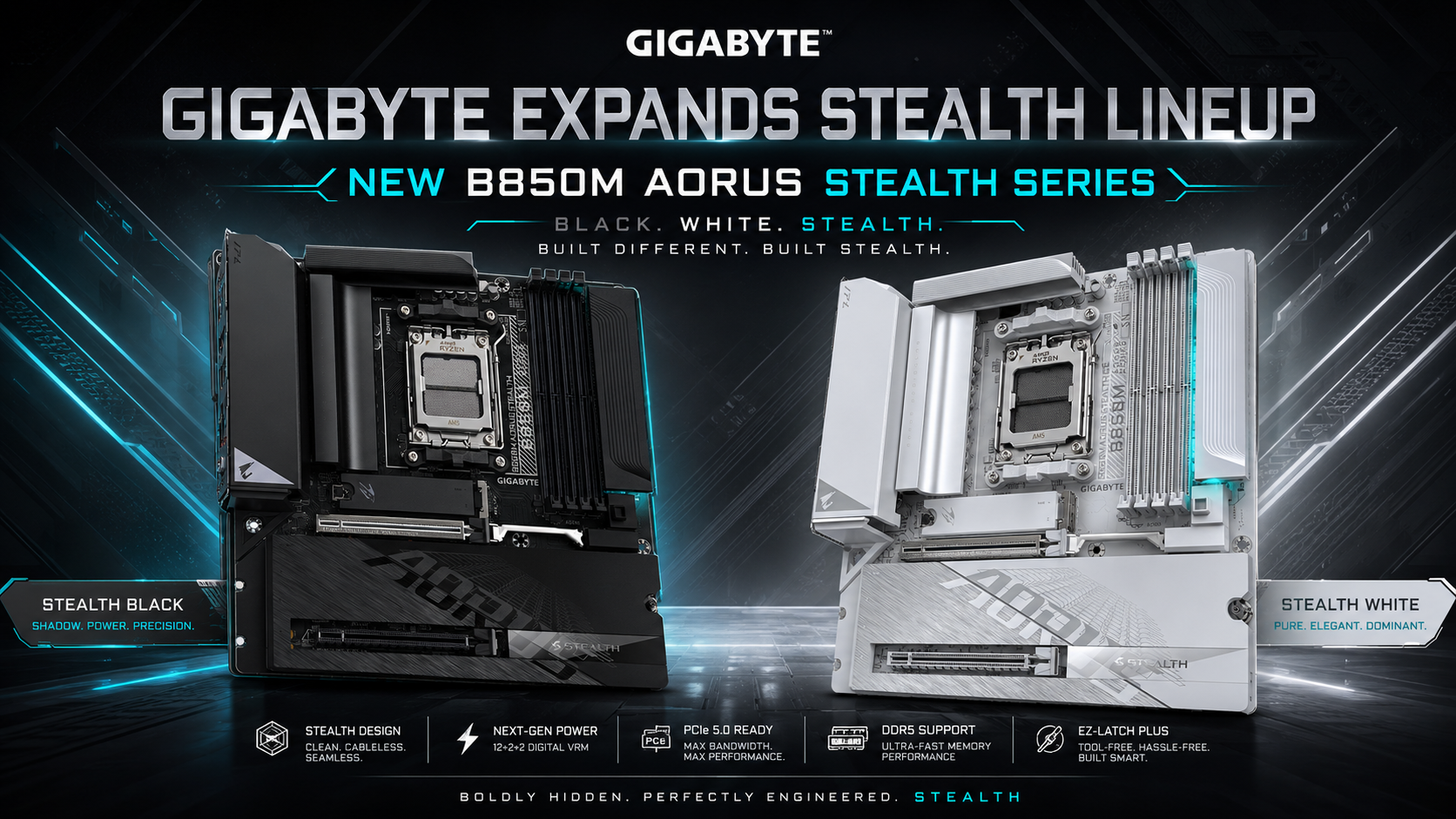
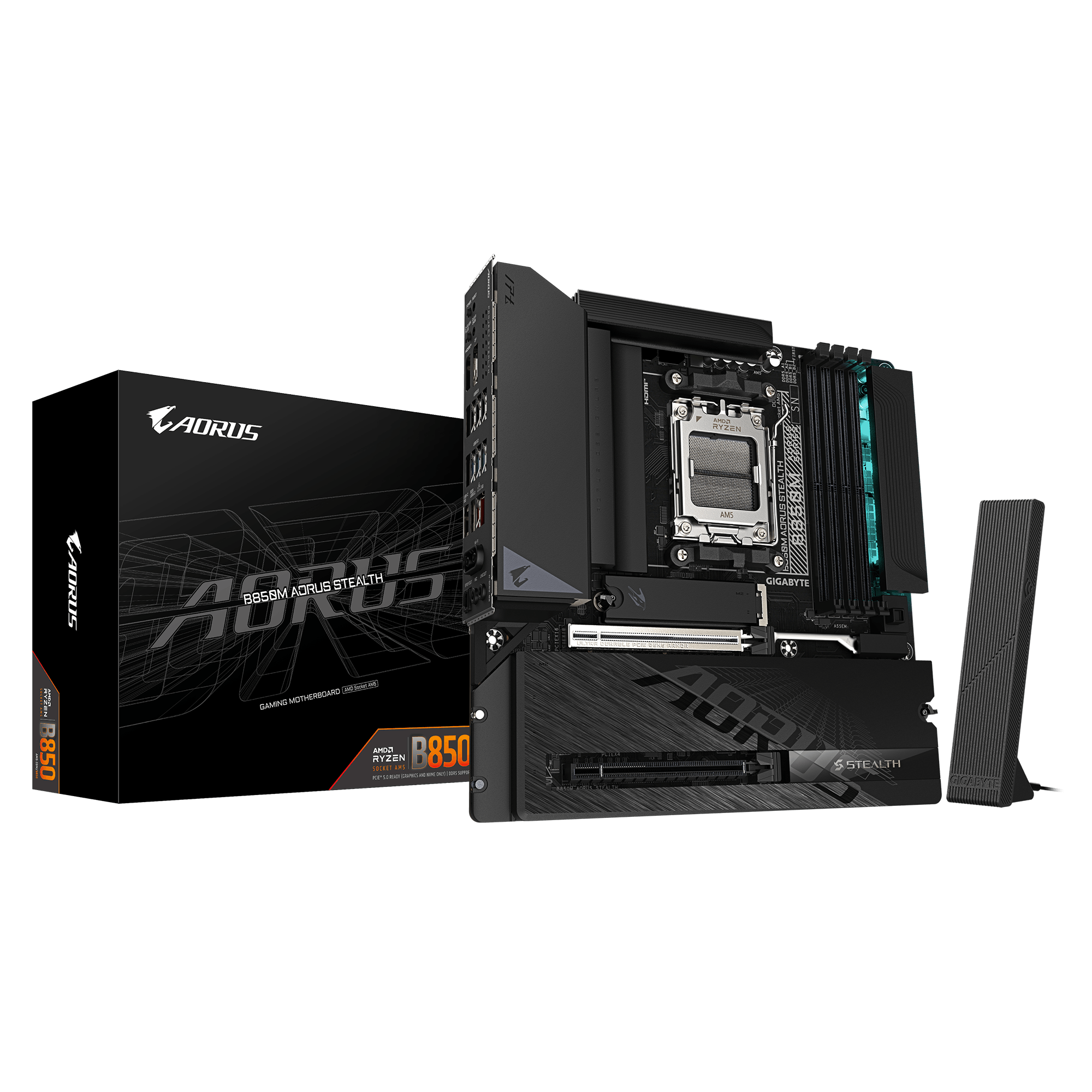
GIGABYTE is expanding its Project Stealth ecosystem with the new B850M AORUS Stealth and B850M AORUS Stealth ICE, bringing its rear connector motherboard design to a compact micro ATX platform in black and white finishes.
Project Stealth was introduced in 2022 as GIGABYTE’s approach to cleaner PC construction, relocating many visible motherboard connections behind the PCB. The concept reduces cable clutter across the main chamber and can improve the presentation of gaming systems, although builders need a compatible case with the required motherboard tray openings.
The B850M AORUS Stealth models retain the DDR5 memory slots and primary PCIe expansion slots on the front while moving major wiring connections to the rear. These include the 24 pin ATX power connector, 8 pin CPU power connector, SATA ports, front USB Type C connection, RGB headers, ARGB headers, fan connections, front panel controls, and internal USB headers.
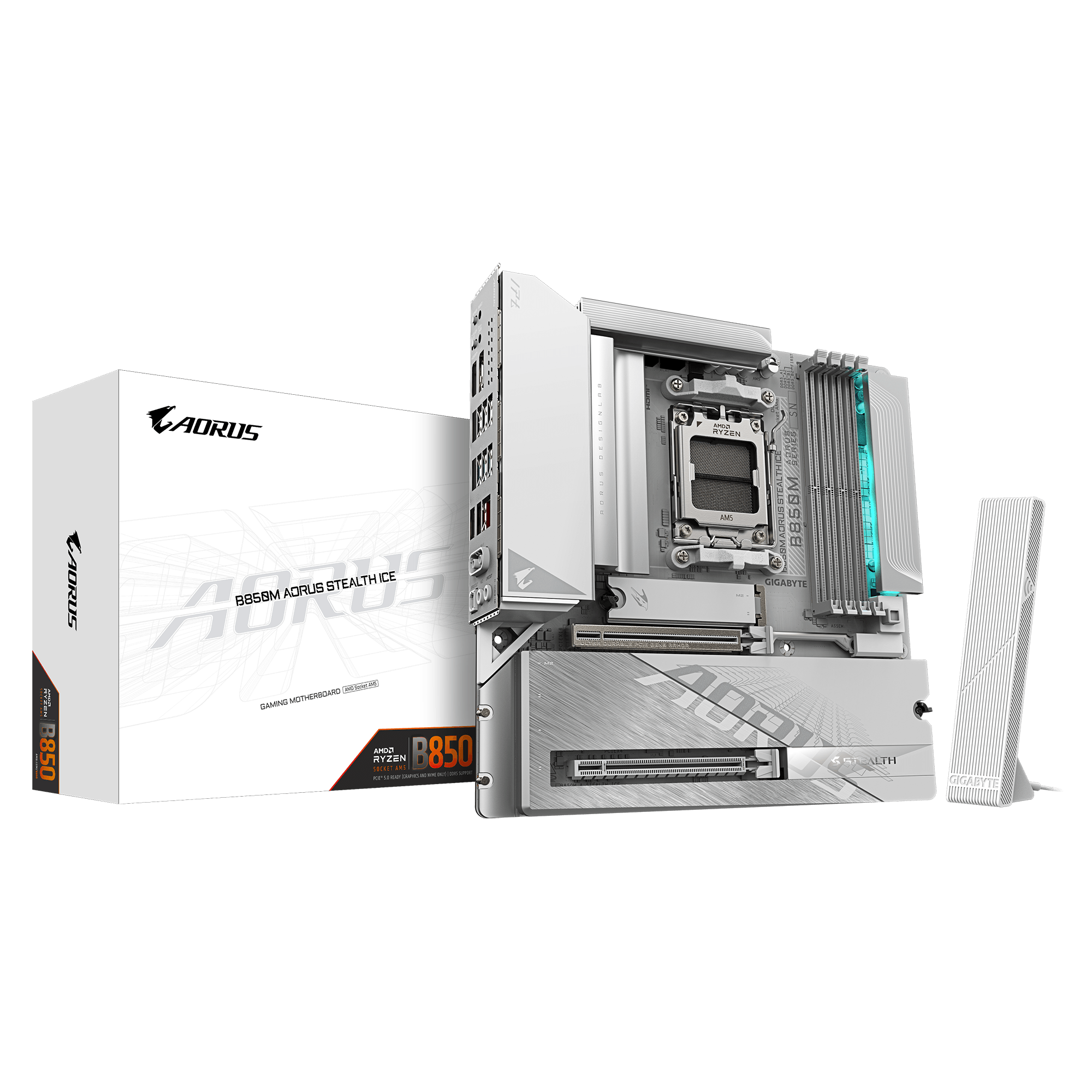
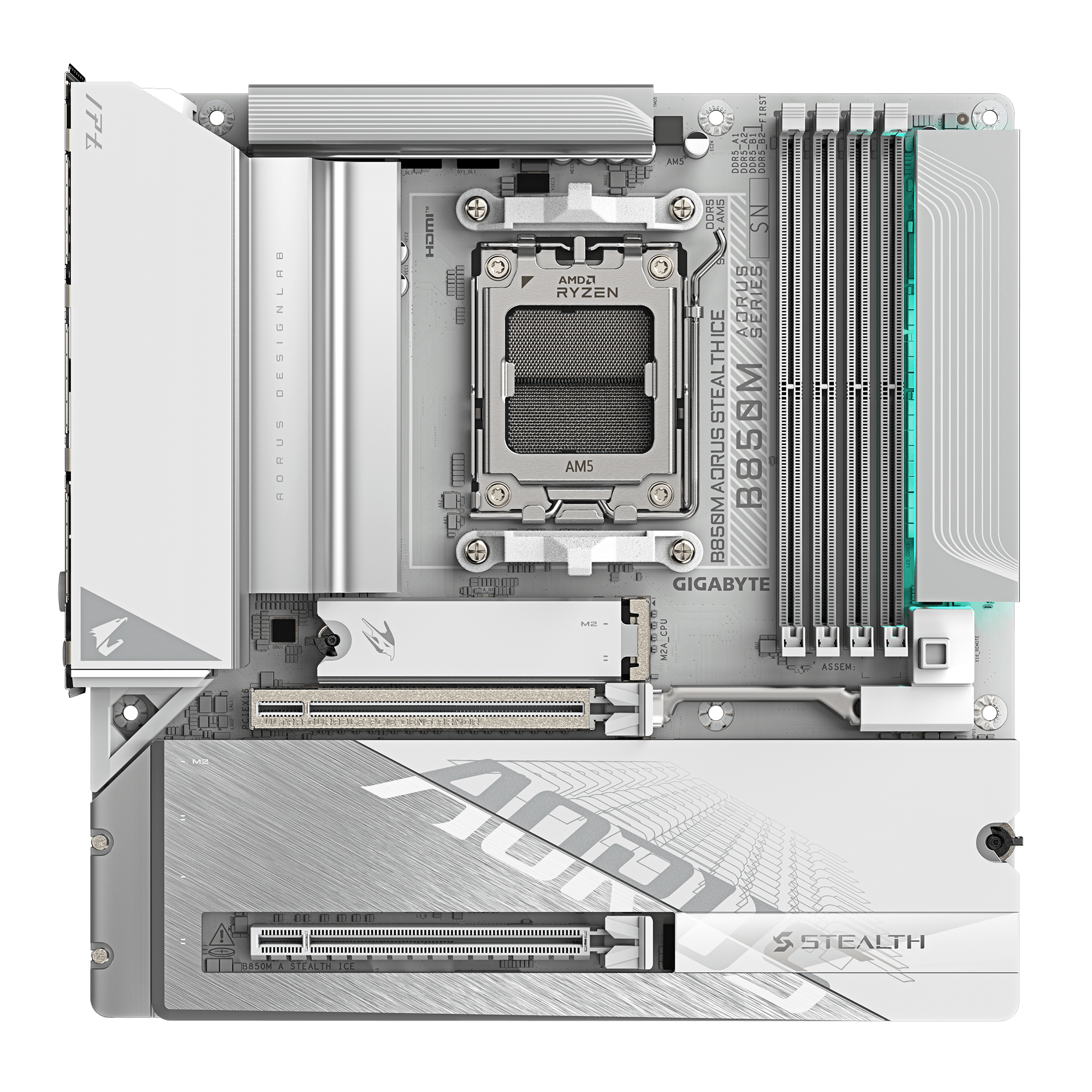
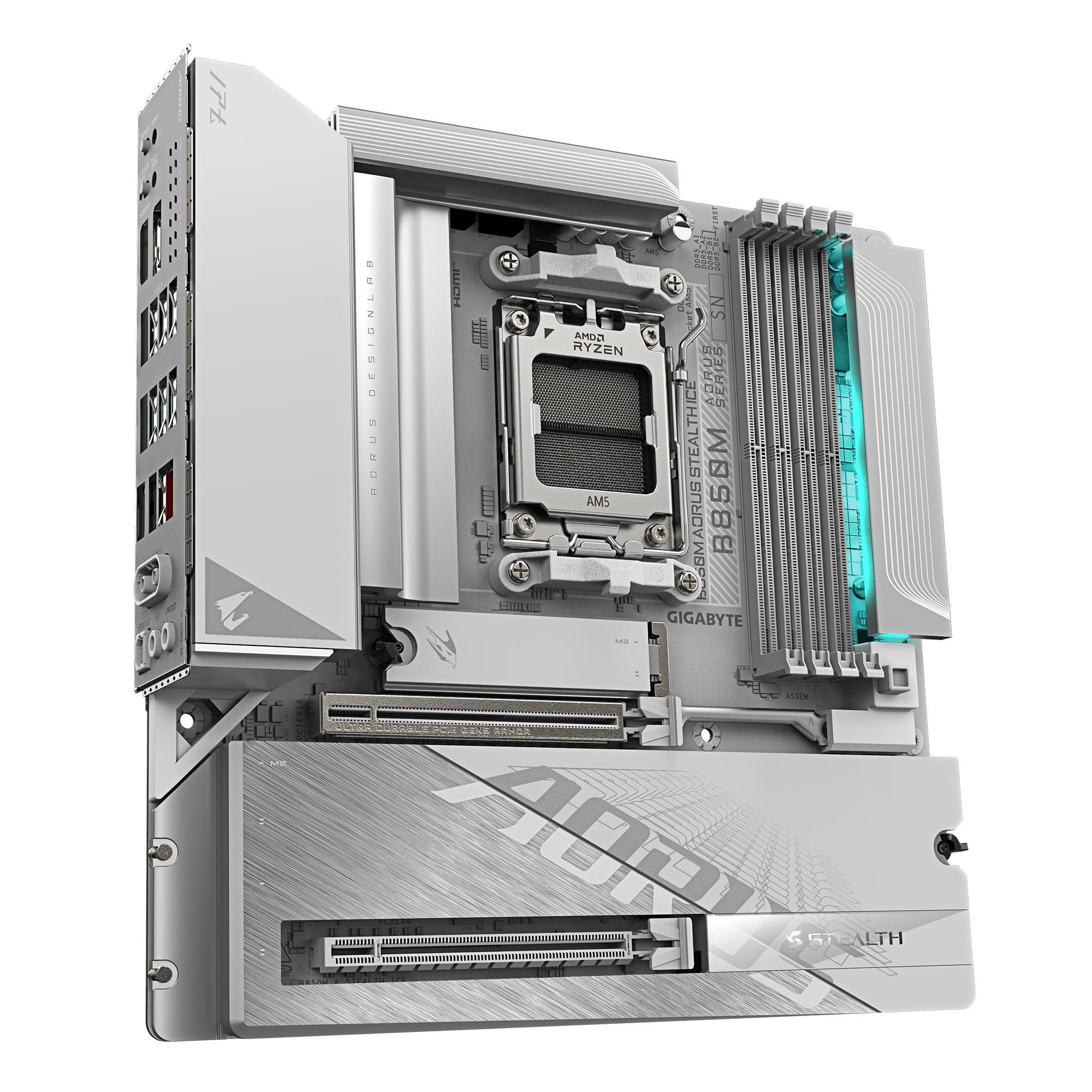
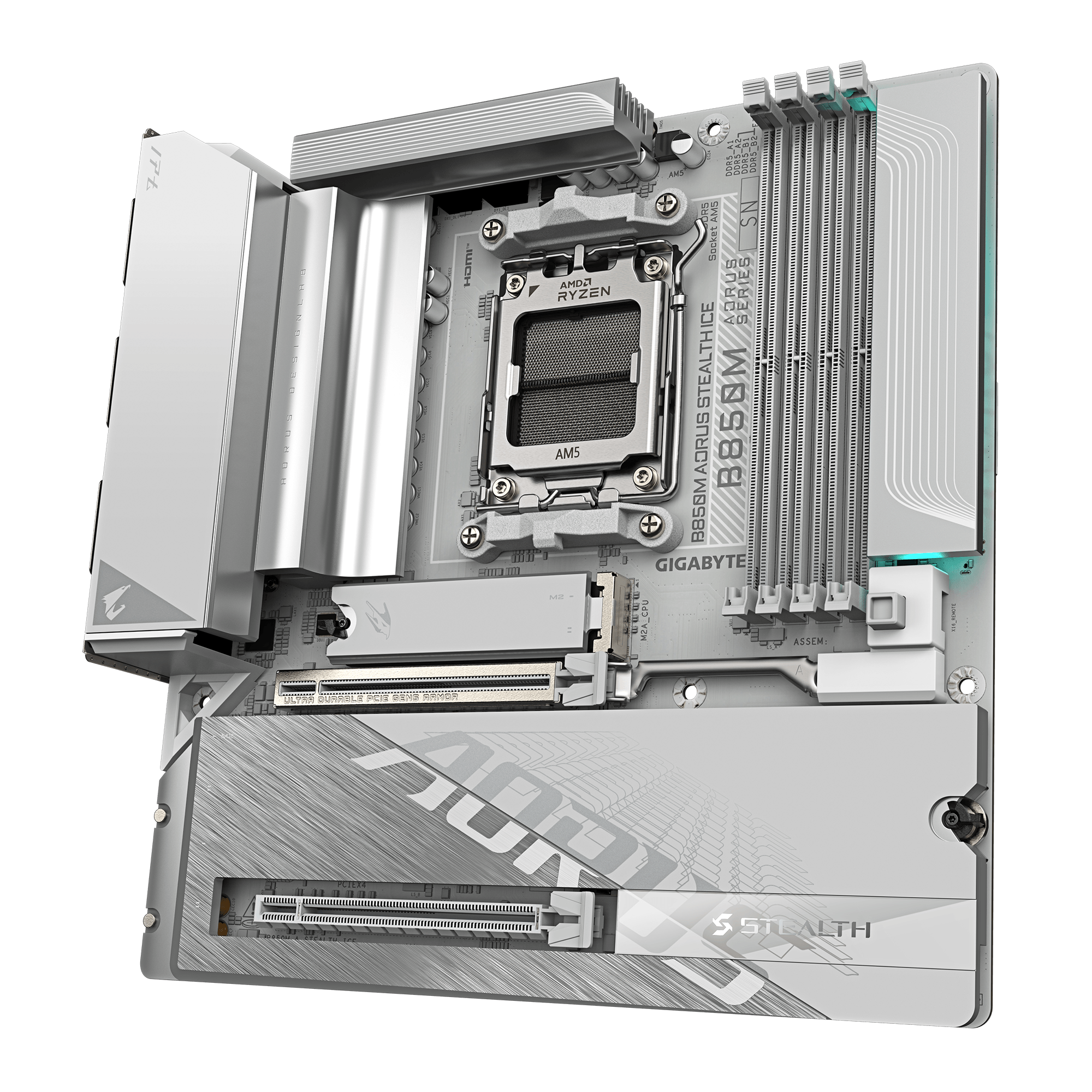
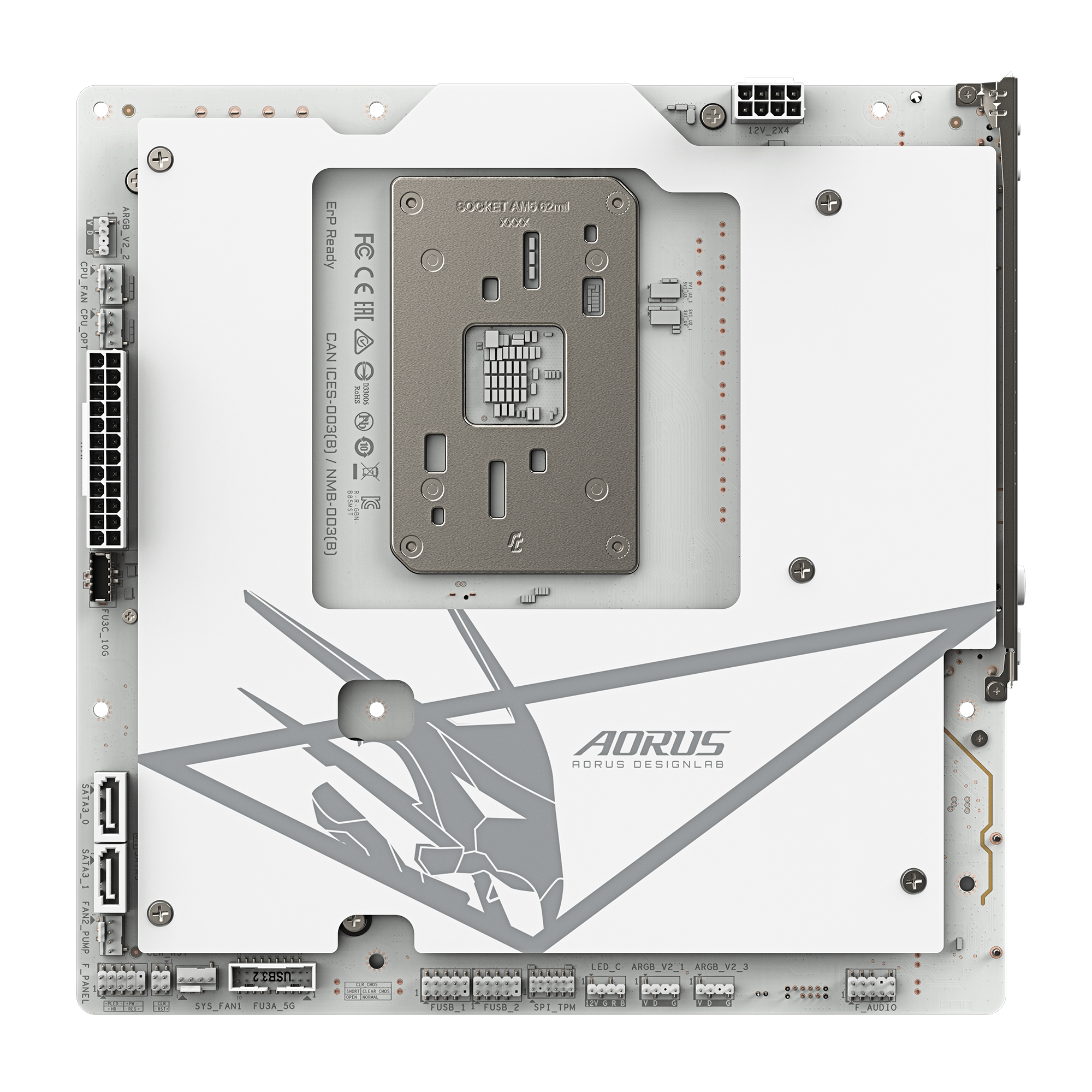
Both boards use an 8 plus 2 plus 2 digital power design with premium chokes, capacitors, a 2X copper PCB, VRM Thermal Armor Advanced, and a 5 W/mK thermal pad. The front is covered by substantial heatsinks, including dedicated M.2 thermal protection and a large lower section covering the chipset and storage area. The ICE model adds a pure white base plate and matching thermal components for white themed builds.
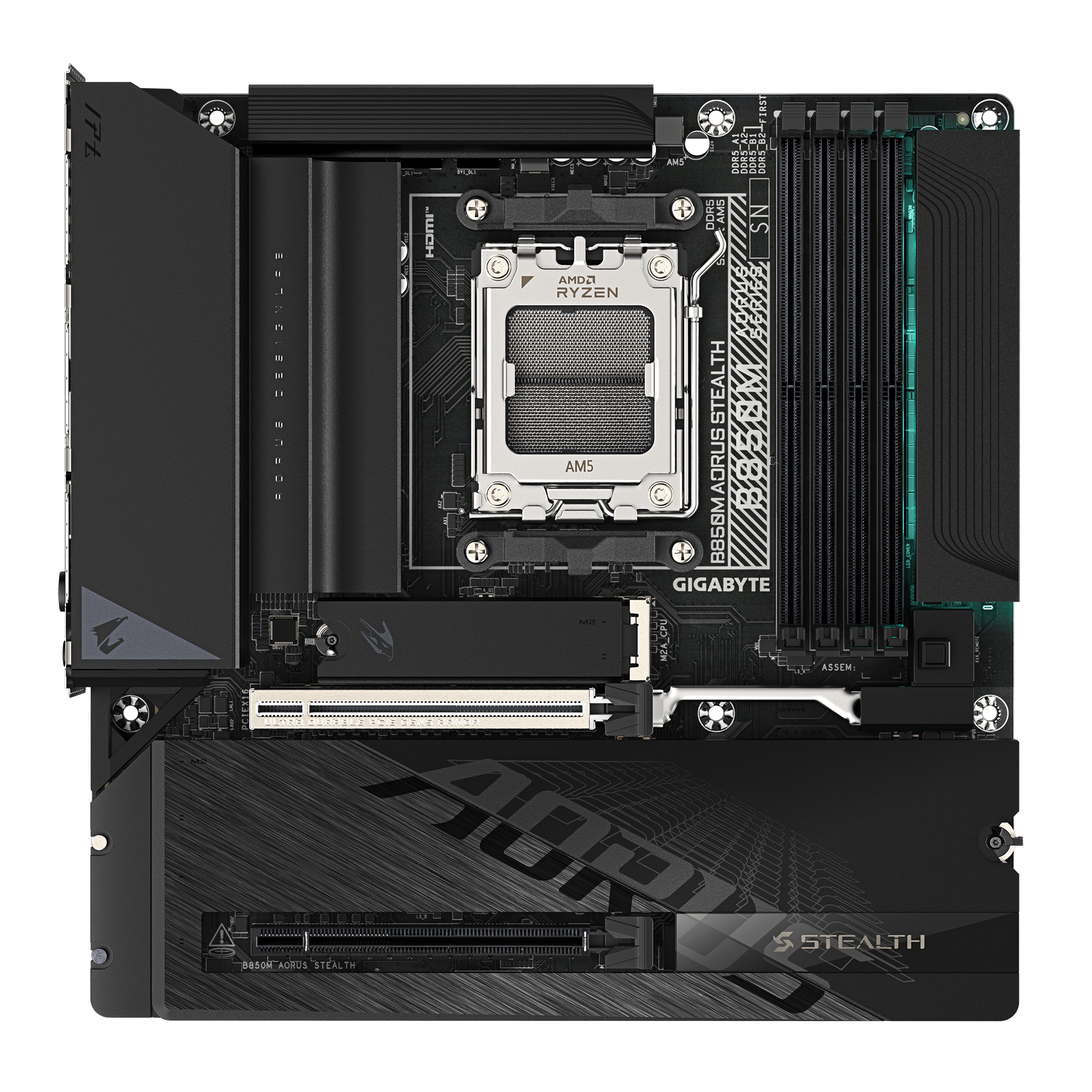
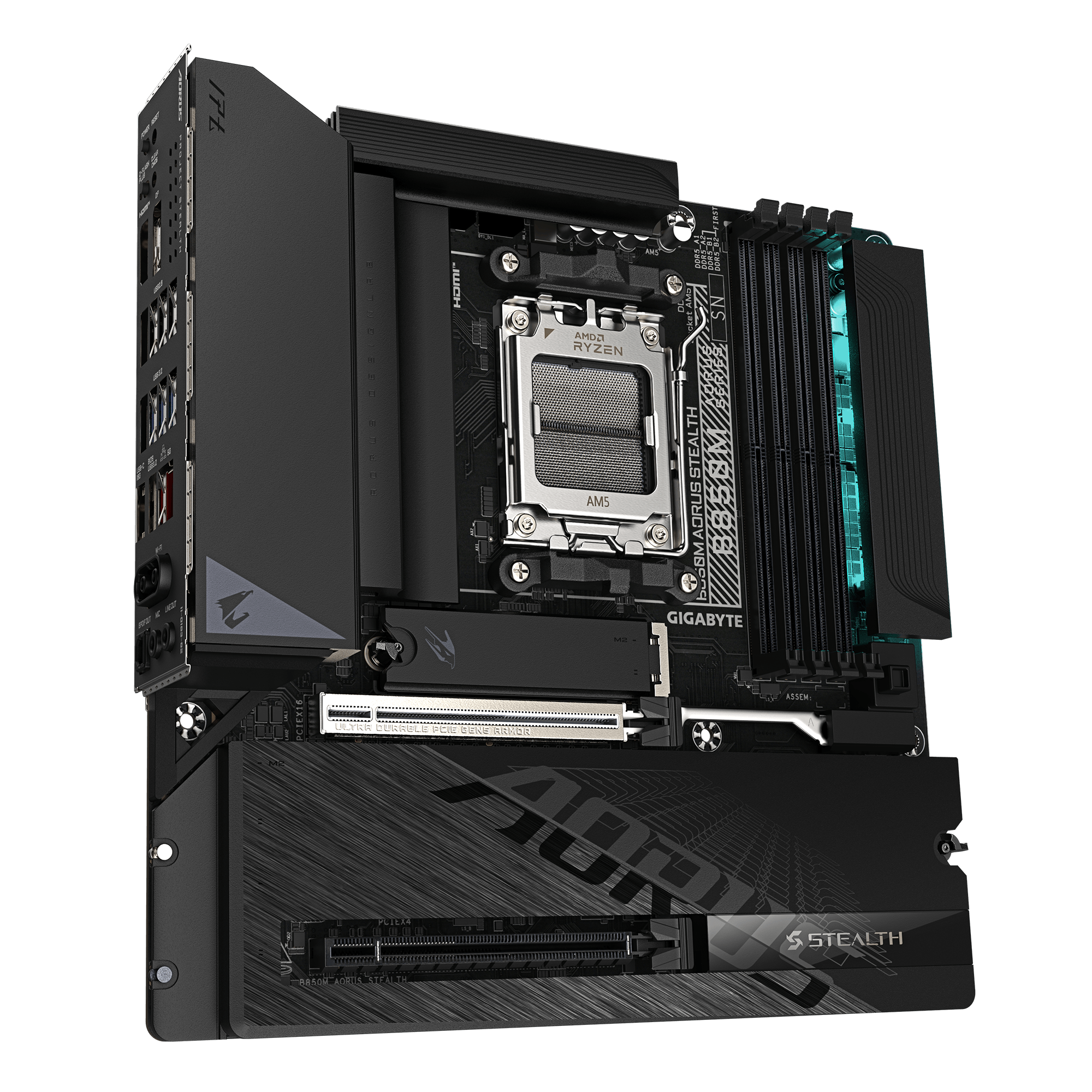
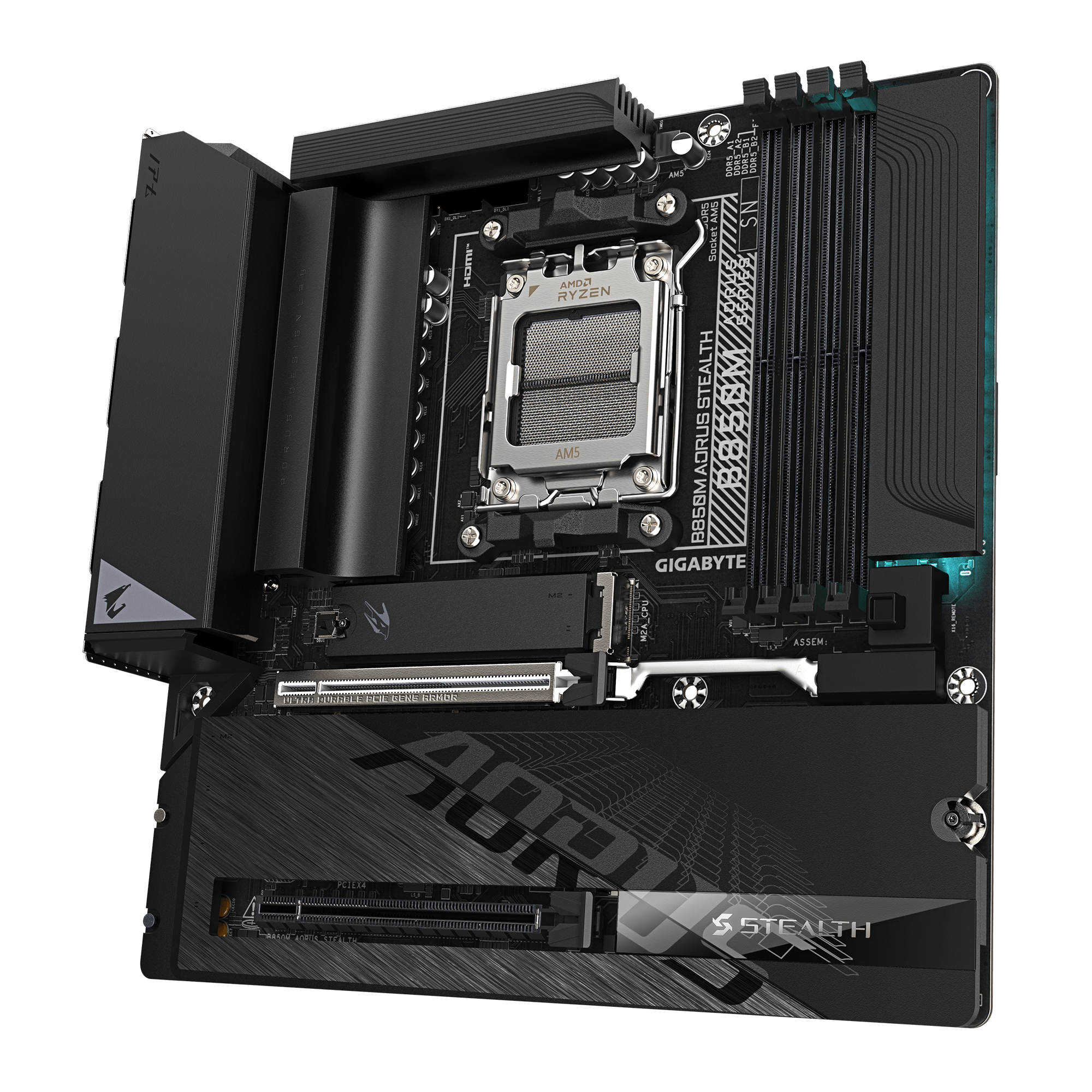
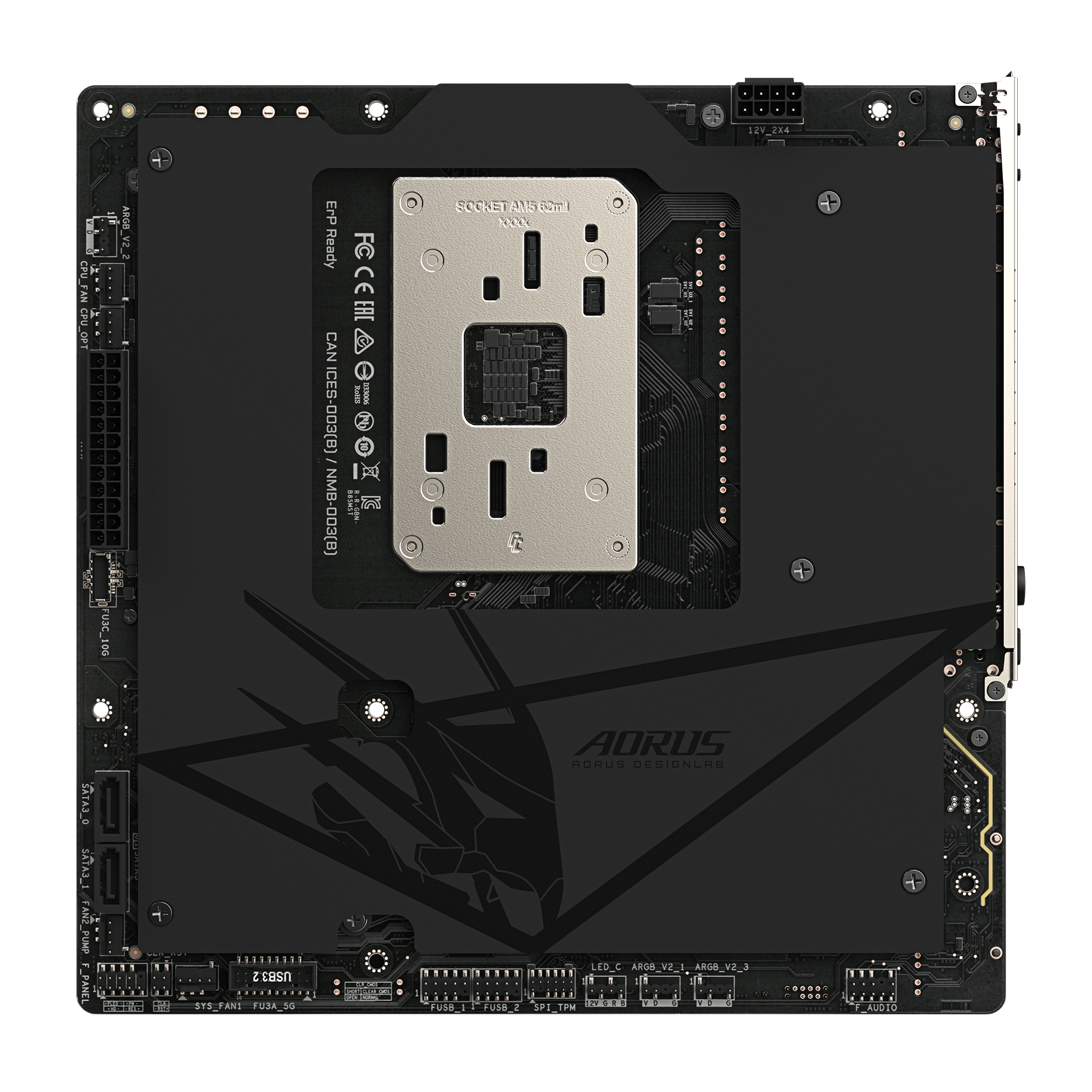
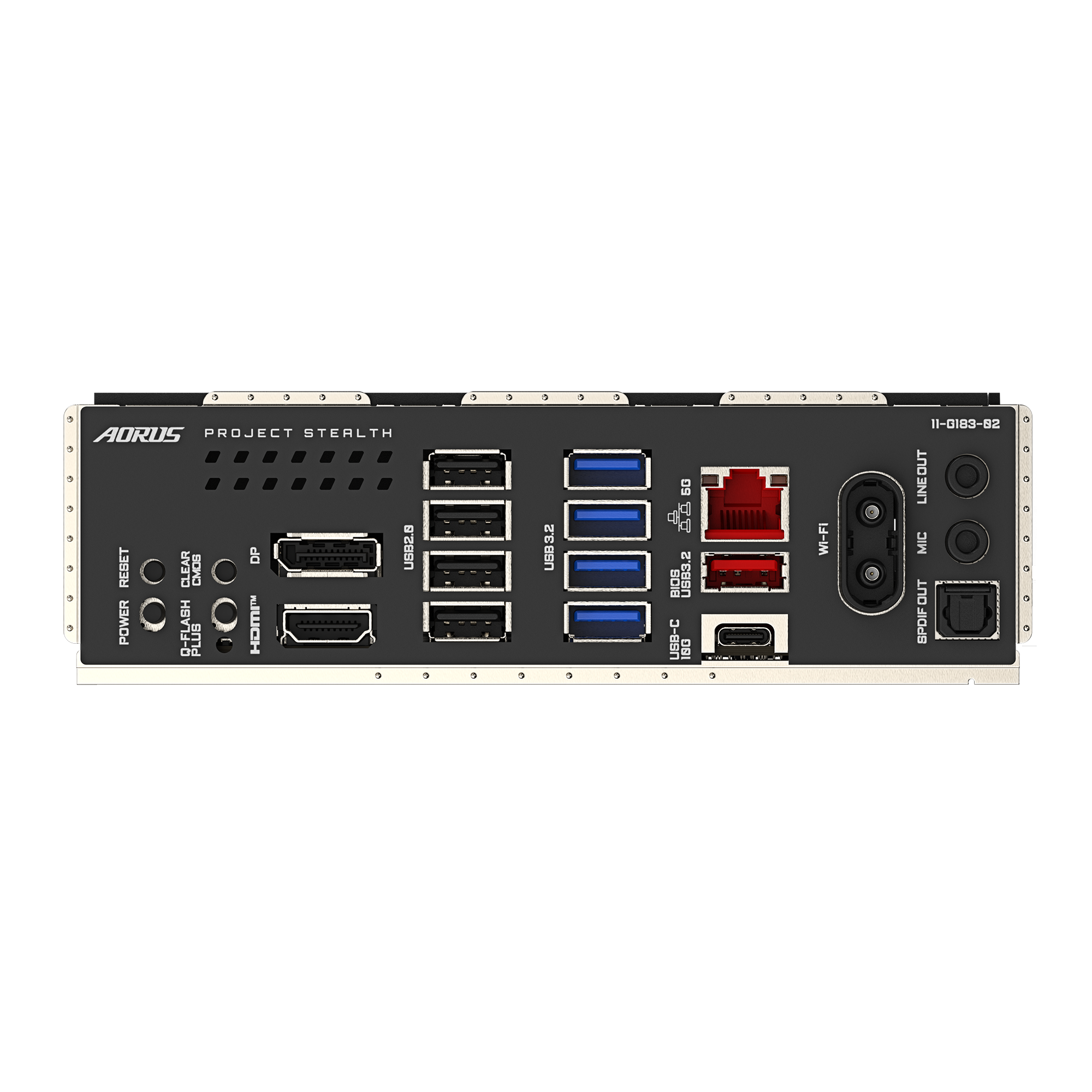
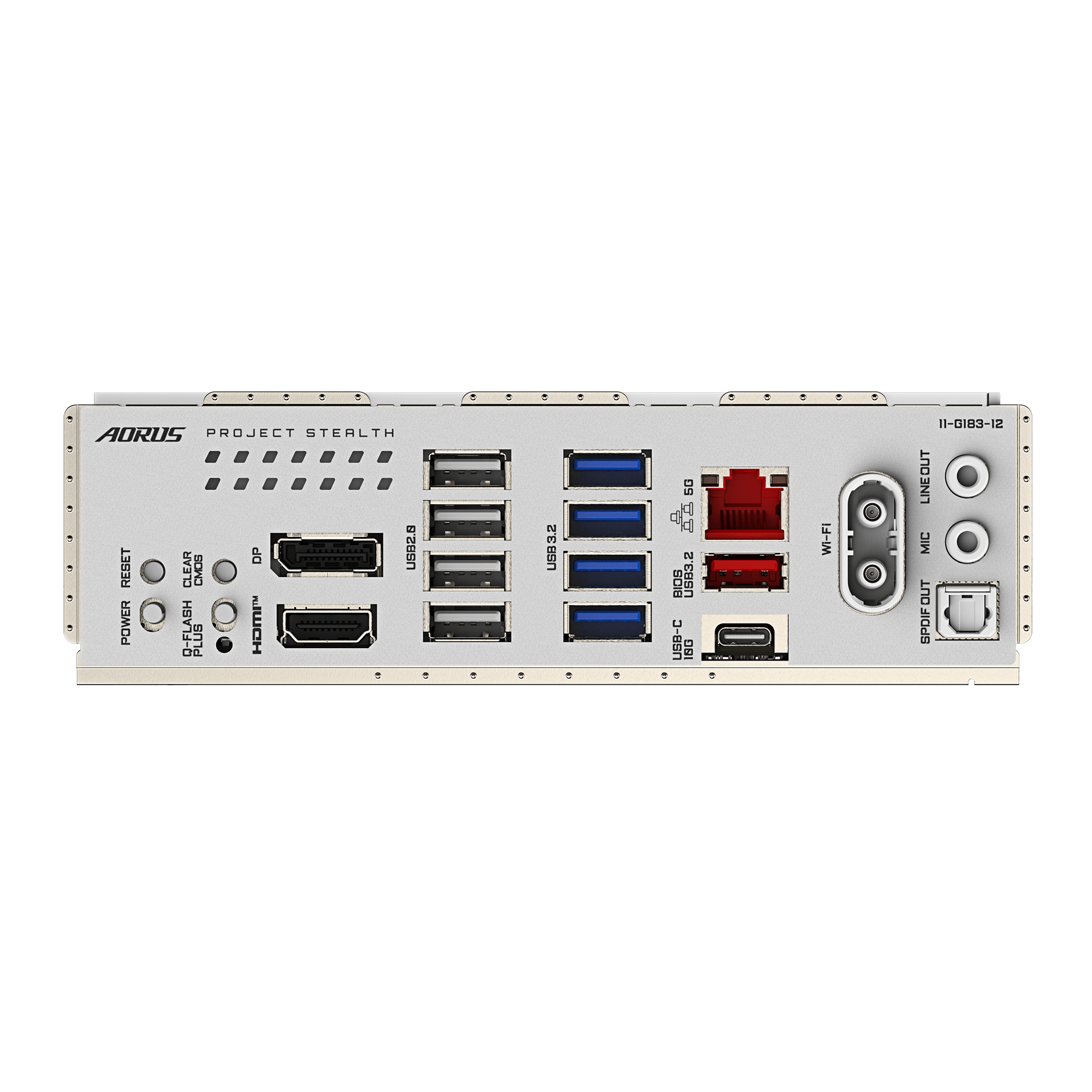
Storage support includes 3 M.2 slots, with 1 operating through PCIe 5.0 and 2 through PCIe 4.0, alongside 2 SATA 6 Gb/s ports. GIGABYTE also includes its M.2 EZ Flex design, M.2 EZ Latch system, PCIe EZ Latch Plus, WiFi EZ Plug, and rear access buttons for power, reset, Clear CMOS, and Q Flash Plus.
The AM5 motherboards support AMD Ryzen processors, DDR5 memory speeds reaching 8200 MT/s through overclocking, up to 256 GB across 4 DIMM slots, a PCIe 5.0 x16 graphics slot, WiFi 7, Bluetooth 5.4, Realtek 5 GbE networking, and Realtek ALC1220 audio.
GIGABYTE has not announced official pricing or regional availability for either model. The company previously displayed both boards during Computex 2026, identifying them as its first gaming B850 micro ATX motherboards using a reverse connector design.
The B850M AORUS Stealth series could make rear connector builds more accessible by combining the cleaner layout with a smaller and potentially more affordable B850 platform. This also strengthens the wider Project Stealth ecosystem, which now includes compatible motherboards, cases, and graphics cards designed to conceal power connections.
The main limitation remains case compatibility. Rear connector motherboards require specific cutouts, meaning users cannot install them into every conventional micro ATX chassis. However, broader support from GIGABYTE, ASUS, MSI, and case manufacturers suggests this layout is becoming a legitimate alternative rather than a temporary design experiment.
Would you choose a rear connector motherboard for a cleaner gaming build, or does limited case compatibility make the traditional layout more practical?
