
GIGABYTE AORUS RTX 5080 INFINITY and INFINITY WOOD Are Now Available
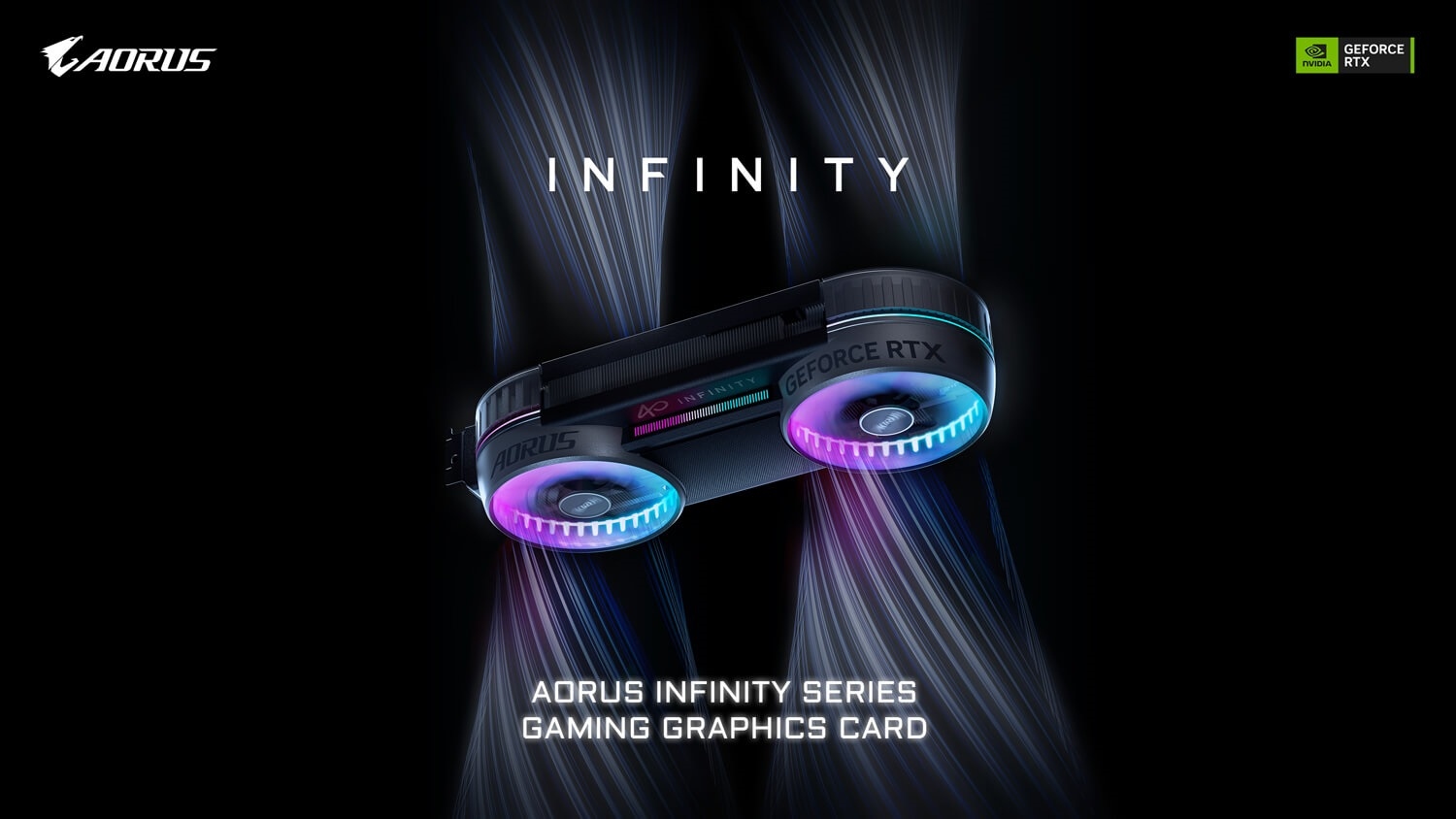
GIGABYTE has officially released the AORUS GeForce RTX 5080 INFINITY 16G and AORUS GeForce RTX 5080 INFINITY WOOD 16G, expanding its premium 40th anniversary graphics card collection beyond the flagship RTX 5090. Both models use the same aerospace turbine inspired design and advanced cooling system, but offer contrasting visual styles intended for different showcase builds.
The standard AORUS GeForce RTX 5080 INFINITY uses a dark black exterior with integrated RGB illumination across the inner and outer rings surrounding its 2 large visible fans. The circular lighting follows the shape of an aircraft turbine, creating a more futuristic appearance that matches conventional black gaming systems.
The AORUS GeForce RTX 5080 INFINITY WOOD replaces the darker finish with an off white body and wood grain inspired elements. GIGABYTE says the natural textures are intended to make the card feel less like a traditional industrial component and more like a design object suited to brighter, cleaner, and more lifestyle focused PC builds. The company describes the finish as wood grain detailing rather than confirming that the exterior uses solid natural wood.
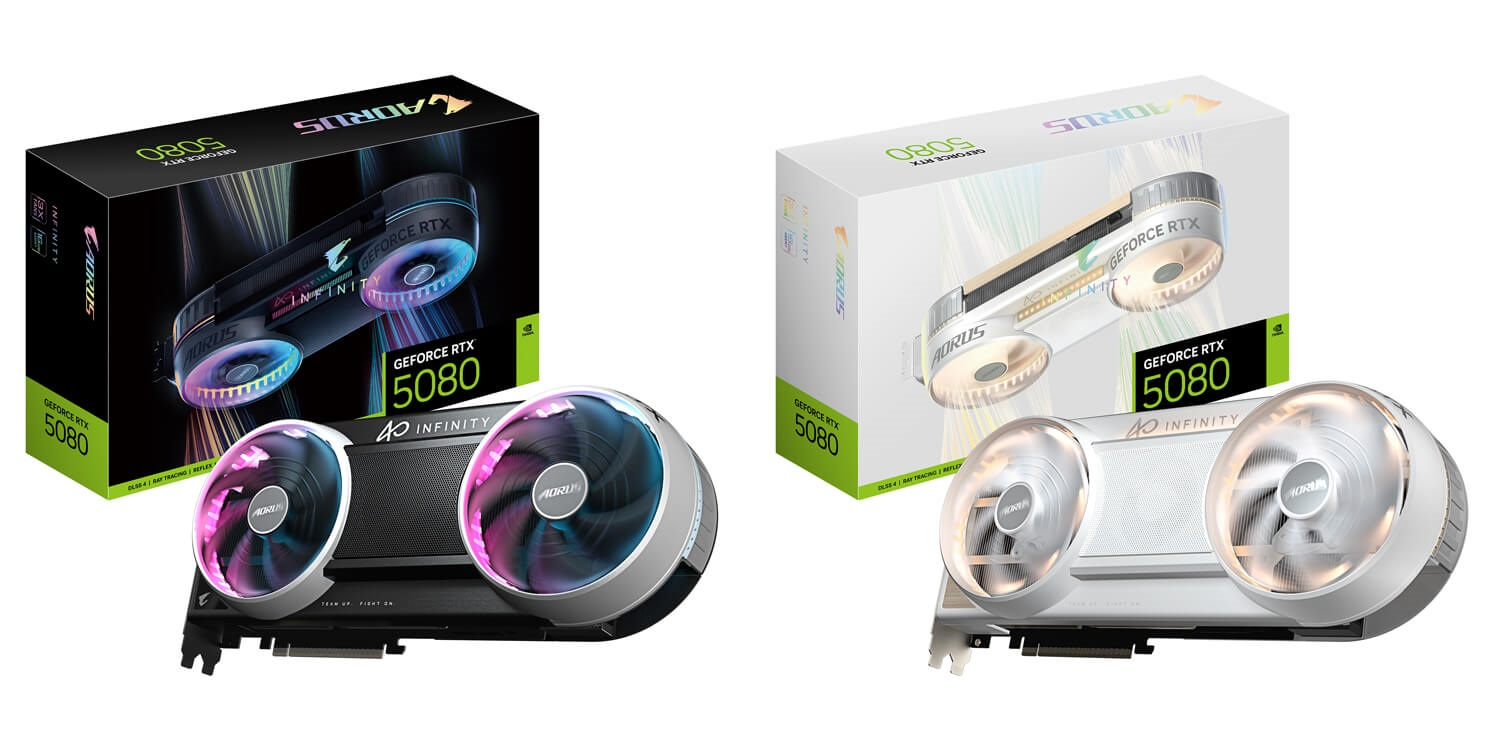
Both models share the same core specifications. Each card uses NVIDIA’s Blackwell architecture with 10752 CUDA cores, 16 GB of GDDR7 memory operating at 30 Gbps, and a 256 bit memory interface. GIGABYTE has set the core clock at 2805 MHz, compared with the 2617 MHz reference specification. The cards measure 330 mm long, 145 mm wide, and 65 mm thick, require a single 16 pin power connection, and carry an 850 W recommended power supply rating.
Cooling is handled by GIGABYTE’s WINDFORCE Hyperburst system, which combines 2 visible Hawk fans with a concealed central Overdrive fan. The Double Flow Through design allows air to pass through openings on both sides of the backplate instead of being trapped against the PCB. GIGABYTE claims this structure increases airflow penetration by up to 58% compared with a traditional closed backplate and by 28% compared with a design using only 1 cutout.
The patented Hawk fans are designed to reduce turbulence while producing up to 53.6% more air pressure and 12.5% greater air volume. The concealed Overdrive fan remains controlled by a separate fan curve and activates automatically when the GPU reaches heavier workloads, adding more airflow without permanently increasing noise during lighter gaming or desktop use.
Additional cooling hardware includes a large vapor chamber with direct GPU contact, composite copper heat pipes, composite metal grease on the graphics processor, and server grade thermal gel for the memory and power delivery components. The main fans can also stop completely during low power operation, allowing the cards to remain quieter when full cooling performance is not required.
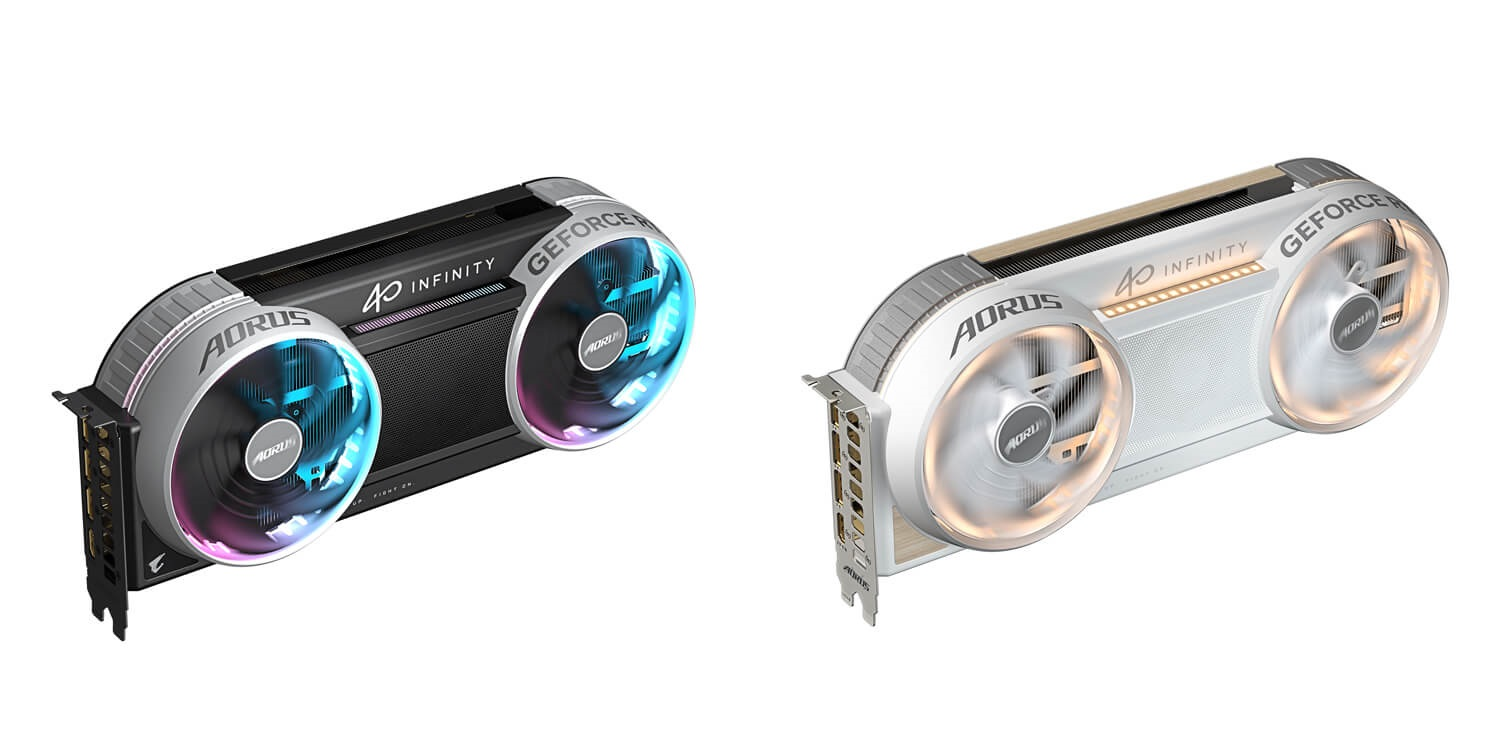
Both graphics cards support GIGABYTE’s Project Stealth ecosystem. The power connector is positioned toward the rear of the card so that compatible systems can route the cable behind the motherboard area instead of across the visible side of the build. A magnetic backplate cover further conceals the connection, helping builders create a cleaner internal layout with less visible cable clutter.
GIGABYTE has not announced official pricing for either RTX 5080 model. Their final retail position will be particularly important after the AORUS RTX 5090 INFINITY appeared at Micro Center for 5299.99$, placing the flagship card firmly within the luxury enthusiast market. The RTX 5080 editions should provide a less extreme entry point into the same design family, although their advanced cooler and anniversary positioning will likely place them above standard RTX 5080 models.
The AORUS GeForce RTX 5070 Ti INFINITY 16G and AORUS GeForce RTX 5070 INFINITY 12G are scheduled to launch in July 2026, extending the visual language and Project Stealth support into more accessible parts of the RTX 50 series.
The RTX 5080 INFINITY cards are clearly designed for builders who consider the graphics card a central visual component rather than hardware that should disappear inside a case. The dual turbine appearance, concealed third fan, circular RGB system, and hidden power connection create one of the most distinctive designs currently available in the RTX 5080 category.
The WOOD edition is particularly interesting because it moves away from the usual black, white, and metallic finishes used across gaming hardware. Whether buyers appreciate the wood grain styling will depend heavily on the surrounding case and components, but it gives showcase builders another option beyond the increasingly common white gaming setup.
Pricing will determine how convincing the launch becomes. The thermal design and factory clock are competitive, but RTX 5080 performance remains fundamentally tied to the same NVIDIA GPU used by less expensive models. Buyers will therefore be paying for cooling, acoustics, cable management, construction, and visual identity as much as additional performance.
Would you choose the black AORUS RTX 5080 INFINITY or the off white INFINITY WOOD for your next gaming build?
