
Valve Wants a Cheaper Steam Machine, but Price Cuts Are Not Coming Soon
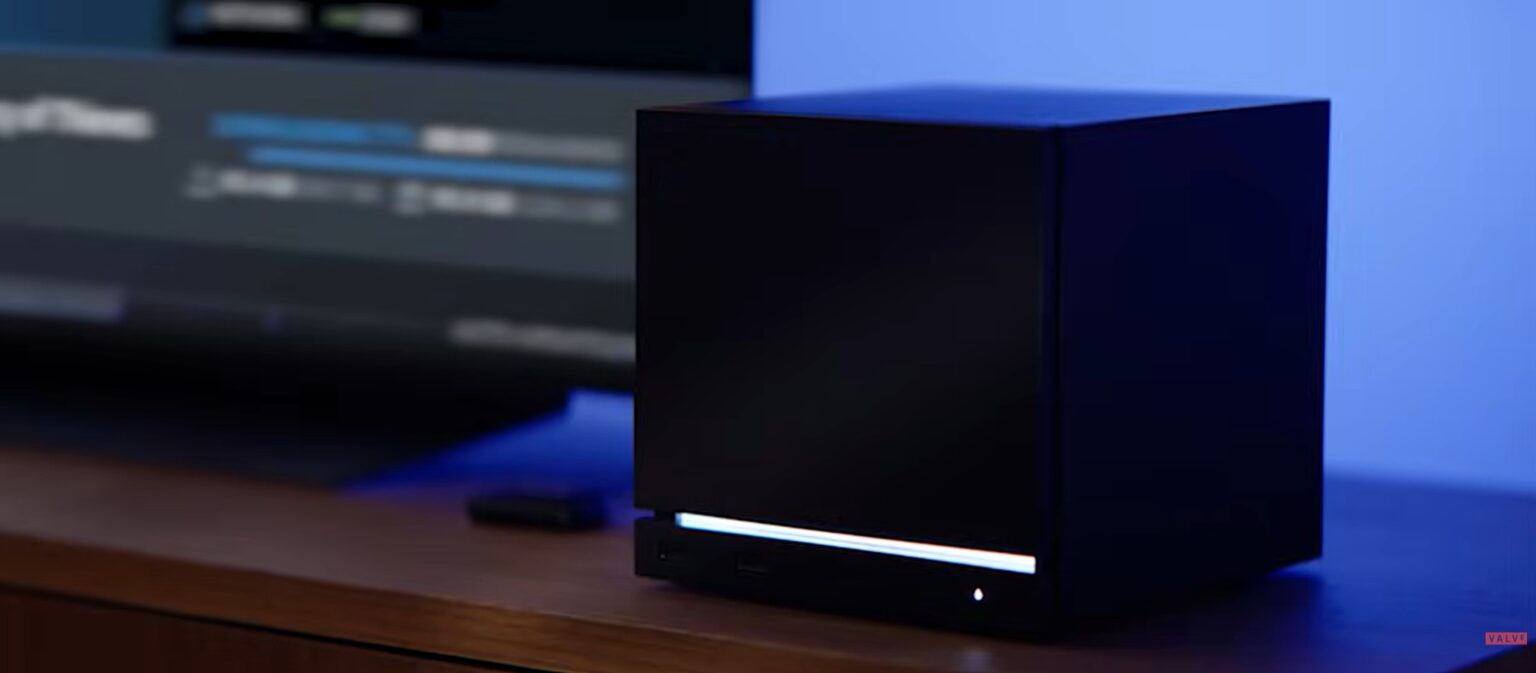
Valve says it would gladly reduce the Steam Machine’s price if memory and storage costs improve, but the company is warning prospective buyers not to expect meaningful relief soon. The statement arrives as the new living room gaming PC officially begins its limited launch, with the entry model priced at $1,049 and reservation positions already appearing across eBay for more than twice the official retail price.
Speaking with Digital Foundry, Valve engineers Pierre Loup Griffais and Yazan Aldehayyat explained that the company has no strategic reason to preserve the current elevated pricing if component conditions improve. Valve views its hardware as a way to strengthen the connection between players, Steam, and their existing PC libraries rather than as a product that must generate the largest possible margin.
"There’s no point for us to keep hardware at a high price. For us, the cheaper the better."
— Pierre Loup Griffais
That position leaves the possibility of a future reduction open, but Aldehayyat was careful not to create expectations for an imminent adjustment. Valve does not expect the wider memory and storage supply situation to improve quickly, and the company is unwilling to promise a lower price before it can secure components at meaningfully better costs. Some reports have estimated that the original entry price may have been between approximately $718 and $789 by applying Valve’s comments about comparable Steam Deck cost increases, but Valve has not officially published a confirmed original target price.
The official Steam Machine launch announcement lists 4 configurations. The 512 GB model costs $1,049, while adding the Steam Controller raises the price to $1,128. The 2 TB model costs $1,349, while the complete 2 TB package with the controller reaches $1,428. Valve began sending the first purchase invitations on June 29, 2026, with selected customers receiving a limited window to complete their orders.
That controlled reservation process was designed to provide a fairer launch and limit automated purchasing, but it has not completely prevented speculative resale activity. Reports tracking Steam Machine reservation listings on eBay found completed listings at $2,700, $2,800, and $2,899. One reported 2 TB reservation was marked as sold for $2,899 despite the official standalone price being $1,349, representing a markup of approximately 115%.
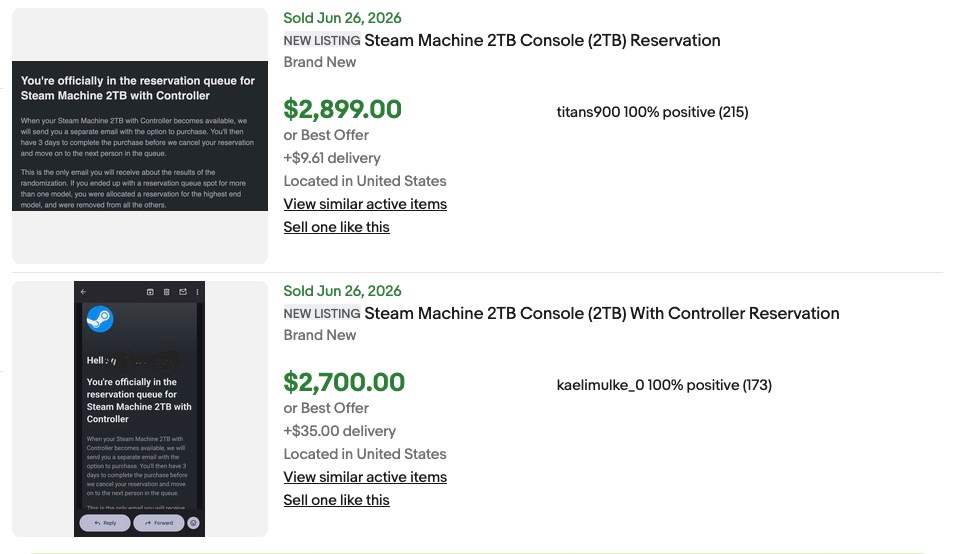
These listings require caution because sellers generally do not have the physical machine in hand. They appear to be offering access to a selected reservation position or an account connected to that position. A completed eBay listing also does not prove that the buyer submitted payment, received the reservation, or successfully completed the later Steam purchase. The prices still show how limited availability can create a secondary market before normal shipments have properly begun.
We previously reported that Steam backend changes pointed toward 4 packages and an anti scalper reservation system. Those 4 packages have now become the official launch selection, confirming that the earlier backend information accurately reflected Valve’s retail preparations. However, the resale listings show that a controlled queue can reduce automated purchasing without eliminating the financial incentive created by restricted supply.
The final price also confirms concerns raised after Valve added initial Steam Machine support to SteamOS. At $1,049, the system sits well above conventional console pricing and competes directly with gaming laptops, compact desktop systems, and custom gaming PCs. Its strongest advantages are the Steam ecosystem, console style interface, access to an existing PC library, free online multiplayer, repairability, and the freedom to use the machine as a complete Linux computer.
Those benefits become harder to defend at resale prices above $2,700. At that level, buyers can consider significantly more powerful desktop hardware rather than paying a substantial premium simply to enter the first reservation wave. Valve may eventually increase supply or open additional purchase opportunities, making patience considerably more sensible than supporting speculative listings.
Valve’s willingness to lower the price is encouraging, but the company’s warning matters more than the intention. The Steam Machine is unlikely to become substantially cheaper until the costs of memory, storage, and manufacturing improve, placing the launch model firmly within the enthusiast market rather than the mainstream console audience.
The eBay situation also demonstrates that reservation systems can only control distribution to a certain point. Valve can limit accounts, randomize purchase positions, and impose short ordering windows, but it cannot completely prevent selected customers from attempting to resell access. Buyers should avoid treating these early listings as the only opportunity to obtain the machine, especially when the resale price approaches the cost of a much faster gaming PC.
Would you buy the Steam Machine at its official $1,049 price, or does Valve need to bring it closer to conventional console pricing first?
