
Gears of War: E Day Launches With DLSS 4.5 and Ray Tracing on PC
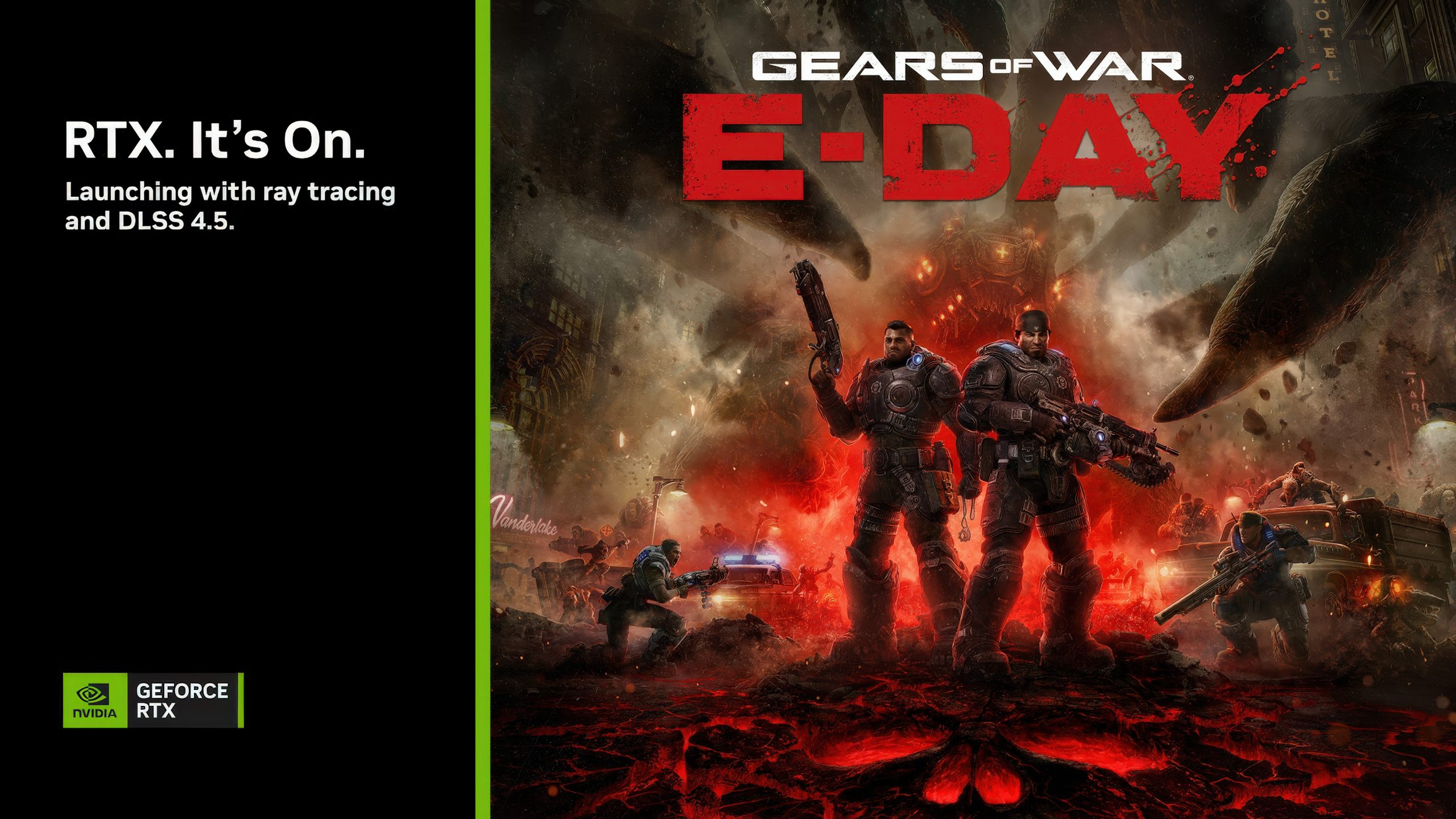
NVIDIA has announced a technical partnership with The Coalition to integrate its latest GeForce RTX technologies into Gears of War: E Day, positioning the upcoming shooter as one of the most technically ambitious PC releases of 2026.
According to the official NVIDIA technical announcement, the PC version will launch with DLSS 4.5 Super Resolution, Dynamic Multi Frame Generation, NVIDIA Reflex, and hardware accelerated ray tracing. DLSS will be used to improve image quality and increase frame rates, while Reflex will reduce system latency and improve input responsiveness during campaign and competitive Versus matches. NVIDIA has not published official performance estimates or benchmark results.
Ray tracing will accelerate Unreal Engine 5.8 technologies including Lumen and MegaLights. MegaLights allows the game to render ray traced shadows from up to 100 individual light sources, while Lumen provides ray traced global illumination and ambient occlusion. Nanite is also being used to increase environmental and object detail by as much as 100 times compared with Gears 5.
The Coalition rebuilt Gears of War: E Day from the ground up using Unreal Engine 5 and DirectX 12. The updated technical foundation also supports real time destruction, larger particle systems, extensive volumetric effects, more detailed environments, and larger cinematic combat sequences. The studio recently demonstrated several of these systems during Unreal Fest 2026 technical presentation.
NVIDIA will serve as the exclusive PC technology partner for the project, but the game will not restrict players to NVIDIA reconstruction technology. The Coalition confirmed through Xbox Wire that Gears of War: E Day will also support AMD FSR, Intel XeSS, and Unreal Engine TSR across compatible hardware.
Advanced Shader Delivery will also be available through supported PC storefronts, including the Microsoft Store and Xbox PC application. This system delivers precompiled shaders with the game, which is intended to reduce initial loading times and eliminate the shader compilation stutter that commonly affects major Unreal Engine releases. Support for additional hardware and storefronts is expected to expand over time.
Players will receive their first opportunity to test the PC version during the early access period for the multiplayer Open Beta, which begins on August 6, 2026. Early access will be available to preorder customers and PC Game Pass subscribers, with the beta currently expected to continue until August 10. NVIDIA has confirmed that the PC test will include DLSS Super Resolution and Reflex, although Dynamic Multi Frame Generation and the full ray tracing package have not yet been confirmed for the beta build.
Gears of War: E Day follows Marcus Fenix and Dominic Santiago 14 years before the original Gears of War as the Locust Horde first emerges from beneath the surface. The game includes a cinematic campaign, refined Versus multiplayer, and Horde Siege, an expanded cooperative mode featuring larger maps, class based combat, shared objectives, and world bosses.
As part of its Summer of RTX promotion, NVIDIA is also giving away a custom Gears of War themed GeForce RTX 5080 Founders Edition graphics card. The unique GPU features artwork inspired by the bond between Marcus and Dom. Players can enter by following the instructions published through NVIDIA’s official accounts on X, Facebook, Instagram, TikTok, Twitch, Reddit, or Discord.
The Coalition has consistently been one of the strongest technical teams working within the Xbox ecosystem, and Gears of War: E Day appears designed to reinforce that reputation. MegaLights, Lumen, Nanite, DLSS 4.5, and Advanced Shader Delivery address both sides of modern PC development by increasing visual complexity while also targeting frame rate stability, latency, and shader performance.
The decision to support FSR, XeSS, and TSR alongside NVIDIA technology is equally important. A major PC release should scale across different graphics hardware rather than treating one vendor as the only viable path to acceptable performance.
The Open Beta will provide the first meaningful test of that strategy. Strong visual demonstrations are valuable, but shader stability, frame pacing, latency, and native rendering performance will ultimately determine whether E Day becomes a genuine Unreal Engine 5 showcase or another visually ambitious release dependent on reconstruction and generated frames.
Do you think Gears of War: E Day will become the new technical benchmark for Unreal Engine 5, or are you waiting for native performance tests before judging its PC optimization?
