
Gears Of War: E Day Rebuilds The Series From Scratch In Unreal Engine 5 With Hundreds Of Shadow Casting Lights At 60 FPS
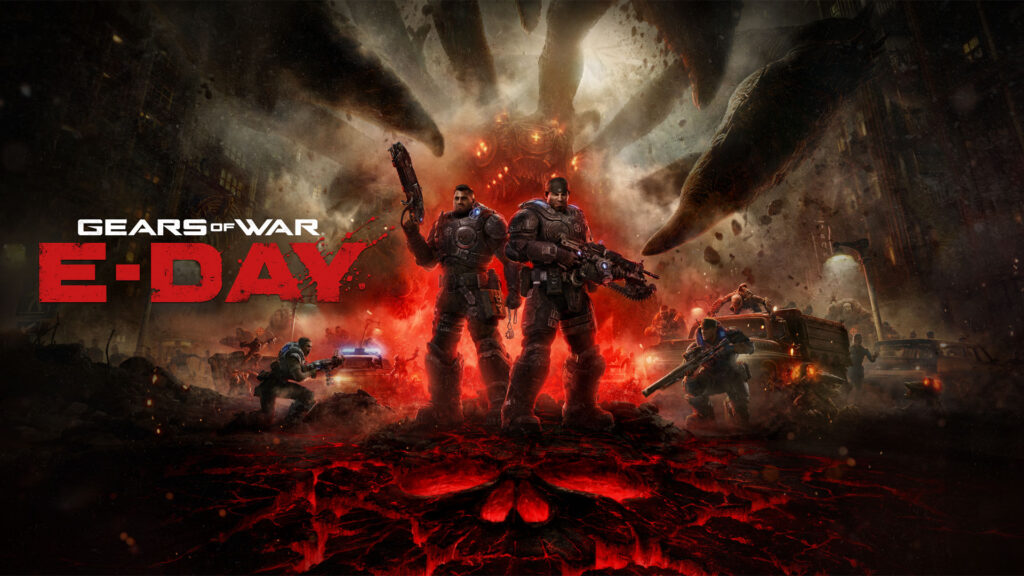
Gears of War: E Day is shaping up to be more than a return to the beginning of the Locust War. It is also one of the most technically ambitious Unreal Engine 5 showcases coming from Xbox Game Studios. During the State of Unreal presentation in Chicago, The Coalition Studio Technical Director Kate Rayner explained how the team rebuilt the game from scratch to capture the horror, scale, and chaos of Emergence Day with a level of visual fidelity that previous Gears entries could not deliver.
The Coalition had already explained through Xbox Wire that E Day started from what Rayner called an empty hard drive. That means the studio did not simply port old assets, animations, weapons, enemies, or lighting systems into a newer engine. Every character, enemy, weapon, animation, sound, and environment was rebuilt in Unreal Engine 5 to support a darker and more believable version of the Gears universe.
"We literally rebuilt everything from scratch."
— Kate Rayner.
The new presentation focused heavily on Kalona, the city where Marcus Fenix and Dom Santiago are located when the Locust Horde erupts from below. The Coalition is using the city as more than a backdrop. Kalona is being treated like a living space that collapses in real time, with stores, streets, homes, freeways, rooftops, and civilian areas all showing the shock of a world being torn open. That matters for Gears because E Day is not set after years of war. It is the first day of the invasion, when people still do not know what the Locust are, what they want, or how bad the catastrophe will become.
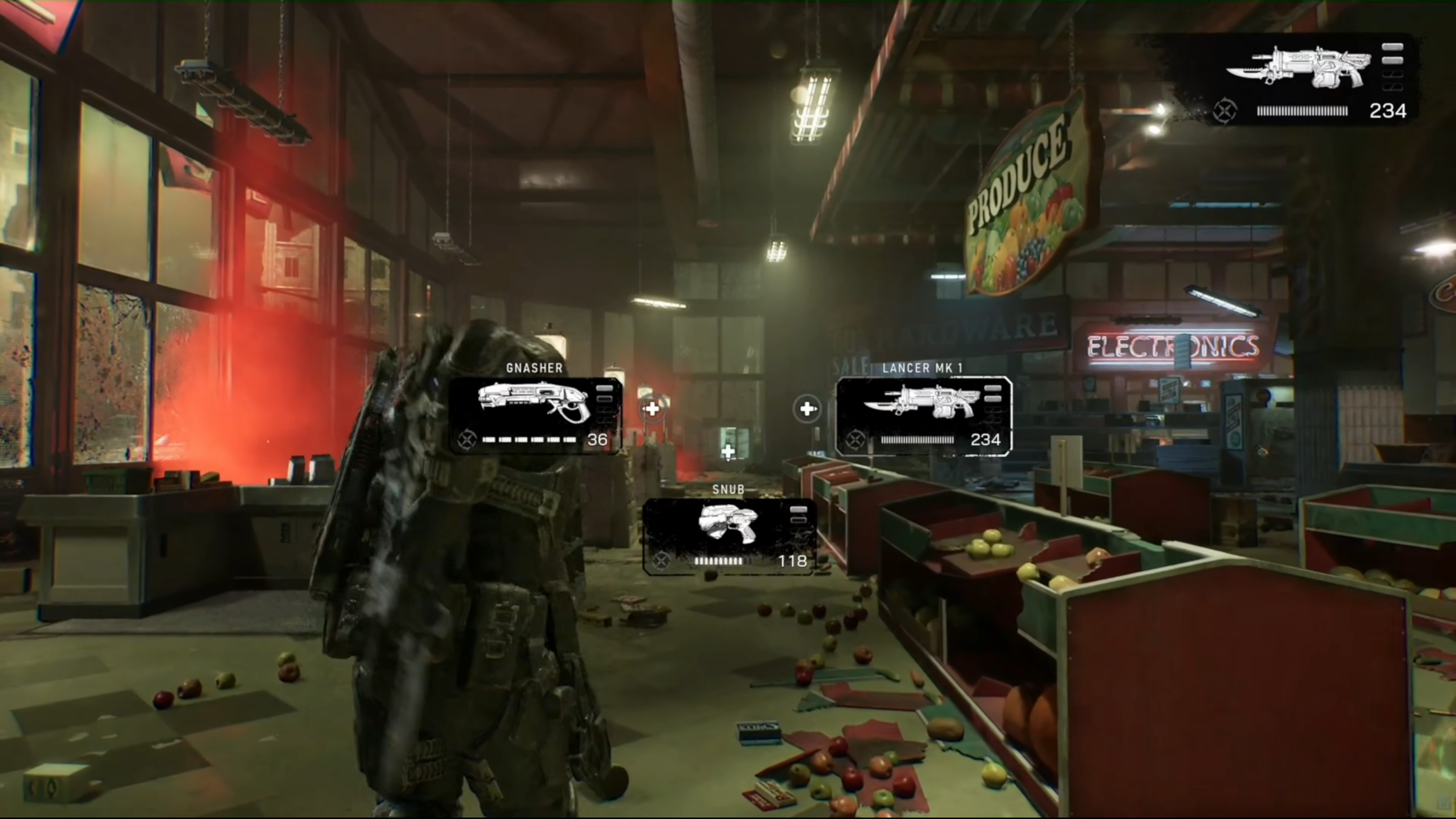
Rayner demonstrated the Pay n Save superstore in downtown Kalona, a scene designed to show how Unreal Engine 5’s MegaLights system changes what the team can do with horror lighting. In older Gears games, a space like this would have been limited to only a few shadow casting lights in view. With MegaLights, The Coalition can use hundreds of dynamic shadow casting lights while targeting 60 FPS on Xbox Series X. The store’s TV walls use animated area lights driven by the video content itself, casting unsettling dynamic shadows across the scene, while freezer sections use multiple internal area lights to create more believable grocery store lighting.
This is not only visual excess. For Gears of War: E Day, lighting is part of the horror language. Dynamic shadows make enemies feel more threatening, make spaces feel less safe, and help restore the darker tone that defined the original trilogy. Gears of War: E Day arrives October 6, 2026 as an Xbox console exclusive on Xbox and PC, and this technical breakdown shows why Microsoft is positioning the game as one of the major Xbox hardware and PC showcases of the year.
The Coalition is also using Unreal Engine 5’s Geometry Collection destructible assets to make environments react more naturally. Dynamic objects can cast and receive light correctly, so destruction stays visually grounded instead of looking disconnected from the rest of the scene. During combat, bullets can create dynamic shatter points in glass, and when the glass breaks, individual pieces collide with the environment using hardware ray traced collisions and physically accurate translucent reflections. In practical terms, destruction is not just an animation layer. It becomes part of the lighting, physics, and material response of the scene.
Rayner also revealed that Gears of War: E Day is the first game in the series to feature dynamic shadows on every single muzzle flash. Across Kalona, players will encounter tens of thousands of shadow casting lights, from small armor lights to ceiling spotlights, street lighting, interior lamps, weapon flashes, screens, fires, and environmental effects. That level of lighting density would have been extremely difficult on current console hardware without MegaLights, and it gives The Coalition far more freedom to build scenes around mood rather than technical limits.
Nanite is another major part of the visual upgrade. Rayner said Nanite’s micro polygon rendering allows 100 times the geometric detail in the game’s assets, helping the team create more detailed characters, enemies, weapons, environments, debris, and surfaces. Combined with hardware ray traced Lumen and MegaLights, The Coalition is trying to deliver a Gears game where every material, shadow, reflection, and broken object feels tied to the same physical world.
The performance target is just as important as the rendering ambition. Xbox Wire confirms that Gears of War: E Day is built for 4K resolution and up to 60 FPS across campaign and multiplayer, while also being designed to scale across Xbox Series X, Xbox Series S, and PC. That scalability matters because Unreal Engine 5 games have often faced criticism around performance, shader behavior, and heavy rendering costs. If The Coalition can deliver this level of lighting and destruction at 60 FPS on console, E Day could become one of the strongest real world examples of UE5 optimization.
For Xbox, this is a strategic showcase as much as a creative one. The Coalition has long been one of Microsoft’s most technically capable studios, and Gears has always been a visual benchmark for Xbox hardware. With Gears 5 launching back in September 2019, the 7 year gap between mainline entries created high expectations. E Day now needs to justify that wait with a campaign that feels emotionally grounded, mechanically modern, and visually ahead of most current generation shooters.
The good news is that the technology appears to support the tone. Gears of War: E Day is not trying to look clean, bright, or overly polished in a generic blockbuster way. The Coalition is using Unreal Engine 5 to return to darkness, panic, weight, and horror. MegaLights gives the game hundreds of dynamic shadows. Lumen gives the world more believable bounce lighting and iteration speed. Nanite gives the city and characters more density. Hardware ray tracing strengthens glass, collisions, and reflections. Together, these systems help sell the idea that Kalona is a real city falling apart around Marcus, Dom, and Bravo Squad.
The most important part of this presentation is that The Coalition is not using Unreal Engine 5 only for spectacle. The technology is being tied to a clear creative purpose. E Day is about the moment humanity realizes the enemy is not a myth, not an accident, and not a simple monster outbreak. It is an organized war beginning under their feet. If the lighting, destruction, sound, and combat all reinforce that feeling, Gears of War: E Day could become the technical and emotional reset the franchise needed.
Gears of War: E Day launches October 6, 2026 for Xbox Series X|S and PC, with cloud support, Xbox Play Anywhere, Steam availability, and day 1 access through Game Pass Ultimate. An open beta begins August 6, giving players an early look at how The Coalition’s rebuilt foundation performs before launch.
Do you think Gears of War: E Day can become the next true Unreal Engine 5 showcase for Xbox, or do you still need to see more gameplay before calling it a technical benchmark?
