
Elon Musk Unveils TeraFab as a Radical New Chip Manufacturing Bet, but the Scale Claims Are Already Raising Serious Questions
Elon Musk has officially introduced TeraFab, a proposed semiconductor manufacturing complex in Austin, Texas that he says will become a cornerstone for Tesla, SpaceX, and xAI, and eventually support his broader vision of a “galactic civilization.” The announcement came through Tesla’s official post on Tesla, and has since been corroborated by multiple major outlets including Reuters, which reported that Musk said Tesla and SpaceX plan to build advanced chip factories in Austin as part of the TeraFab initiative.
Announcing TERAFAB: the next step towards becoming a galactic civilization https://t.co/IDKey07mJa
— Tesla (@Tesla) March 22, 2026
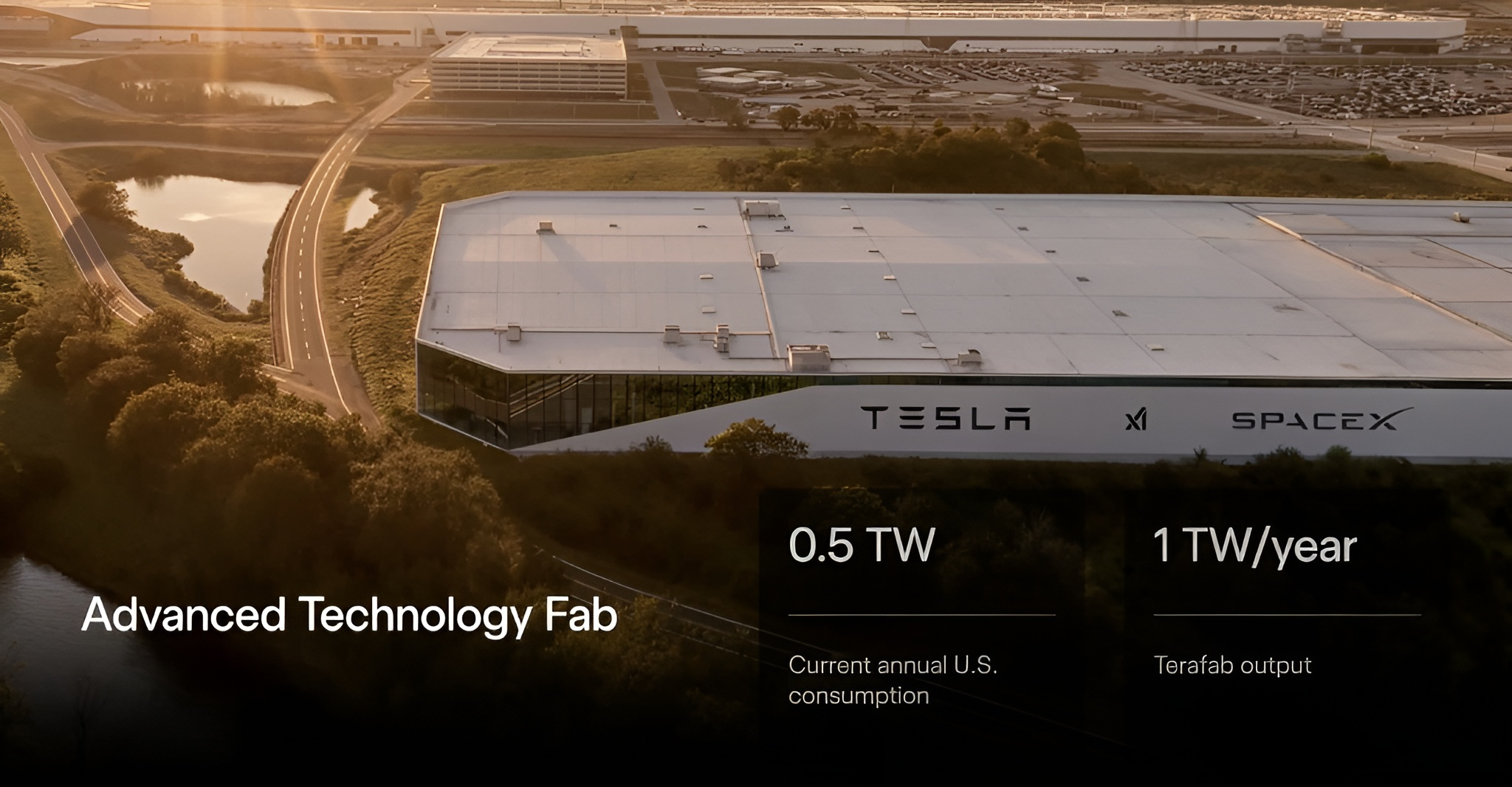
According to Reuters, Musk said TeraFab would eventually produce 1 terawatt of computing capacity annually, a number he framed as dramatically larger than current global output. He also said the project would include 2 separate chip production efforts, with one line focused on Tesla chips for vehicles and Optimus robots, and another aimed at chips for space based artificial intelligence systems. The Verge similarly reported that Musk described a future split of roughly 200 gigawatts of compute deployed on Earth and up to 1 terawatt in space, showing that the orbital compute concept is central to the pitch rather than a side note.
One of the most striking parts of Musk’s presentation is the claim that TeraFab would unify chip design, manufacturing, testing, packaging, and mask iteration in one recursive development loop. That would make the site not just a fab, but a vertically integrated semiconductor complex designed to tighten the cycle between design and production. The Wall Street Journal reported that the project is envisioned as a large Austin facility with dedicated chip lines and integrated production functions, while Axios described it as a record scale manufacturing push aimed at translating Musk’s science fiction style ambitions into physical infrastructure.
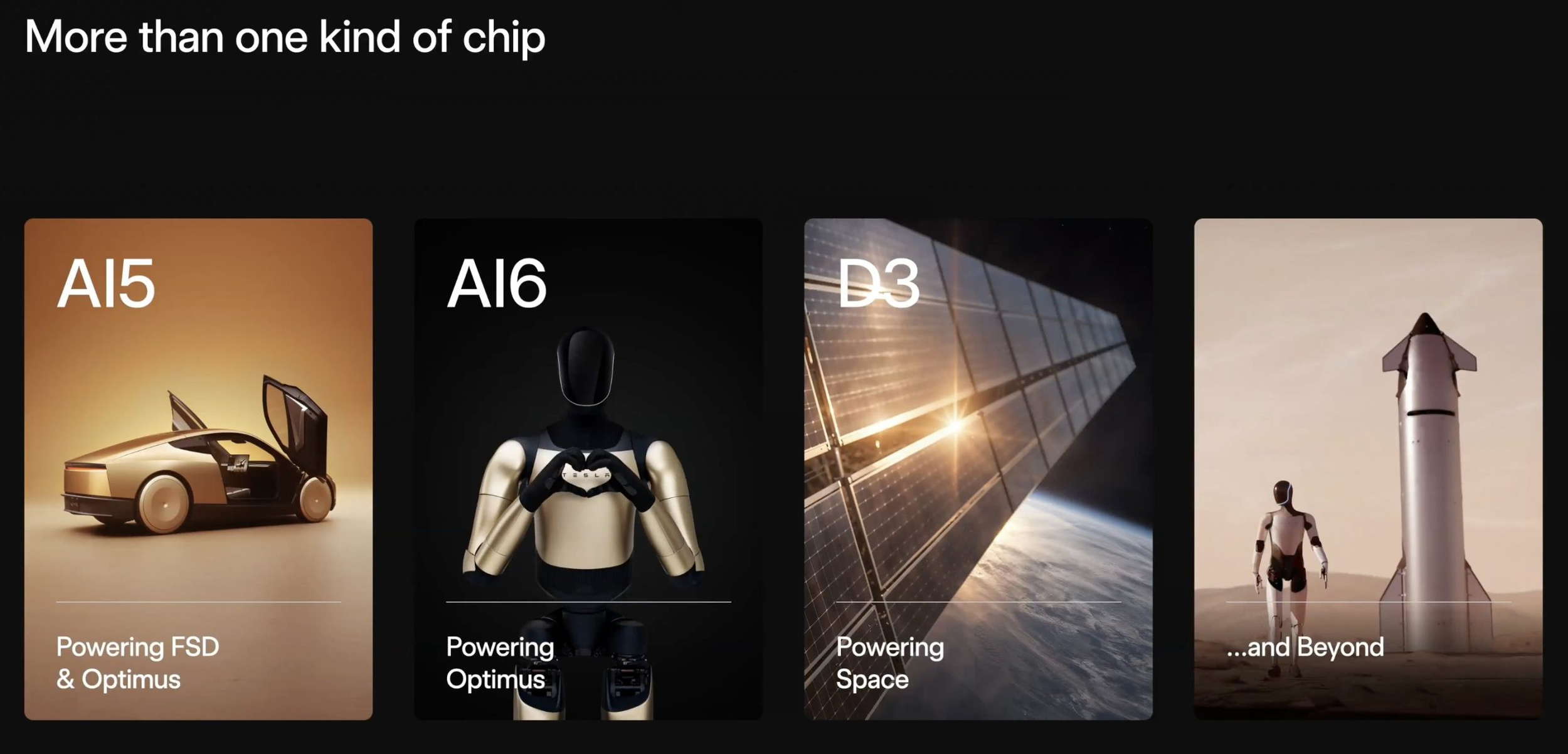
The first major products tied to TeraFab are reportedly Tesla’s next generation automotive and robotics chips, along with a new class of space focused processors. Reuters separately reported earlier this week that Tesla may tape out its AI6 chip by December 2026, with Samsung expected to manufacture those chips on a 2 nanometer process and mass production projected for the second half of 2027 at Samsung’s Taylor, Texas facility. That matters because it suggests Tesla’s near term chip roadmap is still tied to external manufacturing partners even as Musk pushes the long term case for building internal fab capacity.
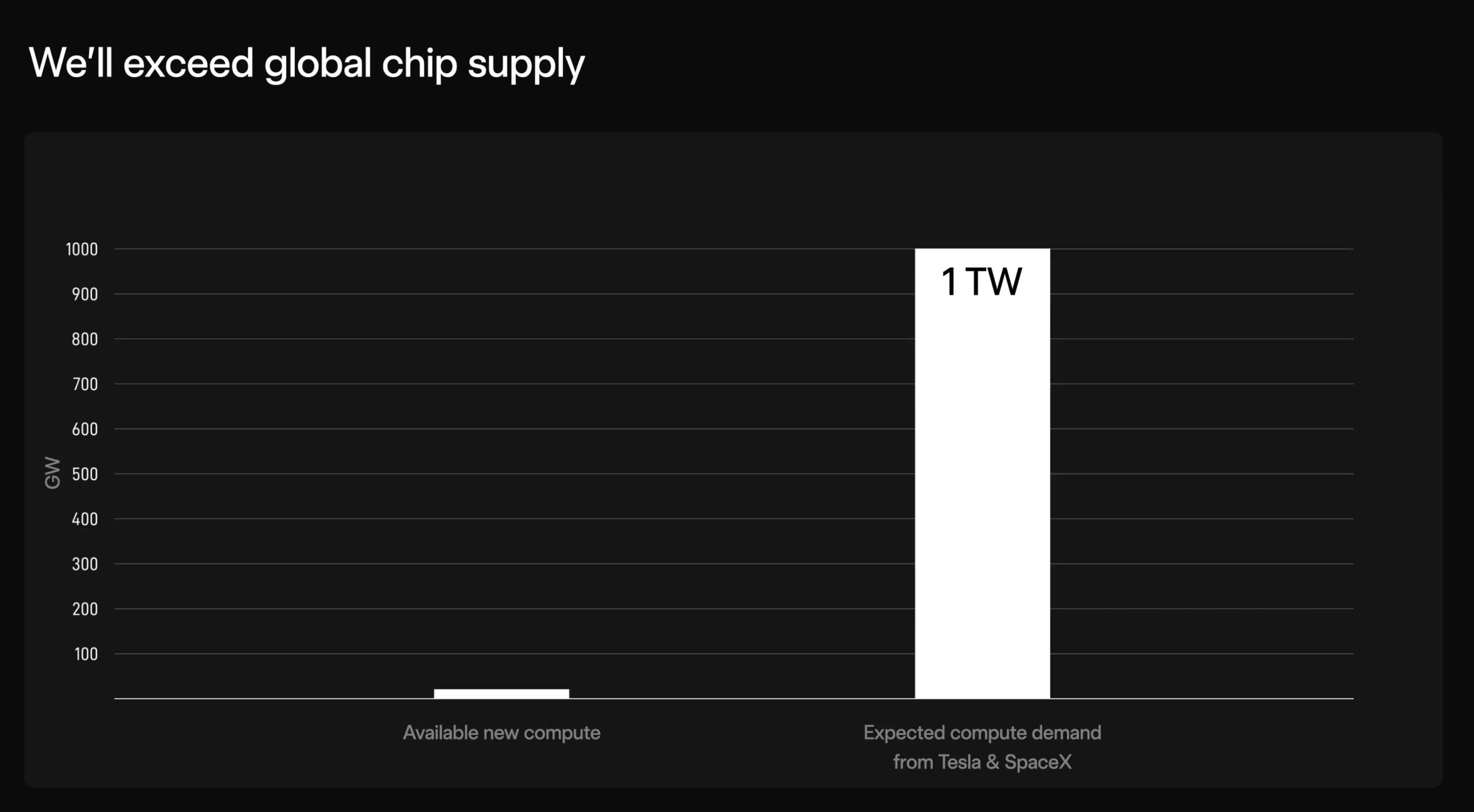
That is also where the skepticism begins. Musk’s comments imply that today’s global supply chain, including partners such as Samsung, TSMC, and Micron, cannot expand quickly enough to meet the compute demand he expects from self driving systems, humanoid robotics, and space based AI infrastructure. Reuters reported that Musk said current suppliers are expanding at a pace “much less than we would like,” which he used to justify building TeraFab. But while that argument may be strategically understandable, the proposed scale still looks extraordinary even by the standards of the modern semiconductor industry, where leading edge fabs routinely require immense capital, long construction timelines, advanced tooling access, and highly specialized talent.
At this stage, there is another important distinction to keep in view. TeraFab is now publicly announced, but many of the biggest claims around output, deployment, and comparative scale still come directly from Musk rather than from a detailed technical roadmap, regulatory filing, or partner level manufacturing plan. Tom’s Hardware reported that Tesla has already begun hiring for a semiconductor fab construction role tied to TeraFab, which suggests the project is progressing beyond pure concept status. At the same time, that report also indicated the company appears to be in a planning and pre final investment stage rather than at a full production commitment point. In other words, TeraFab is real as an initiative, but its most ambitious promises remain far from proven.
From an industry standpoint, this is what makes TeraFab such a compelling story. If Musk can even partially execute, it would represent one of the boldest vertical integration plays the semiconductor sector has seen in years. If he cannot, the project could become another example of a headline grabbing vision colliding with the hard physical limits of fab equipment, process maturity, packaging scale, and power deployment. Right now, the market has confirmation that TeraFab exists as a serious Austin project. What it does not yet have is evidence that the output targets Musk is describing are achievable on the timeline or at the scale being implied.
For now, TeraFab stands as a fascinating mix of strategic necessity, industrial ambition, and classic Musk scale rhetoric. It is clearly designed to reduce reliance on outside suppliers and secure future chip capacity for Tesla, SpaceX, and xAI. Whether it truly becomes the manufacturing backbone of a future “galactic civilization” is a much bigger question, and one the semiconductor industry will be watching very closely.
Do you see TeraFab as the next major leap in vertical chip integration, or does this sound more like another Musk scale promise that will struggle against real world semiconductor limits?
