
CXMT's 4F² DRAM Could Accelerate Transition to 1d Memory, but Manufacturing Yields Raise Concerns
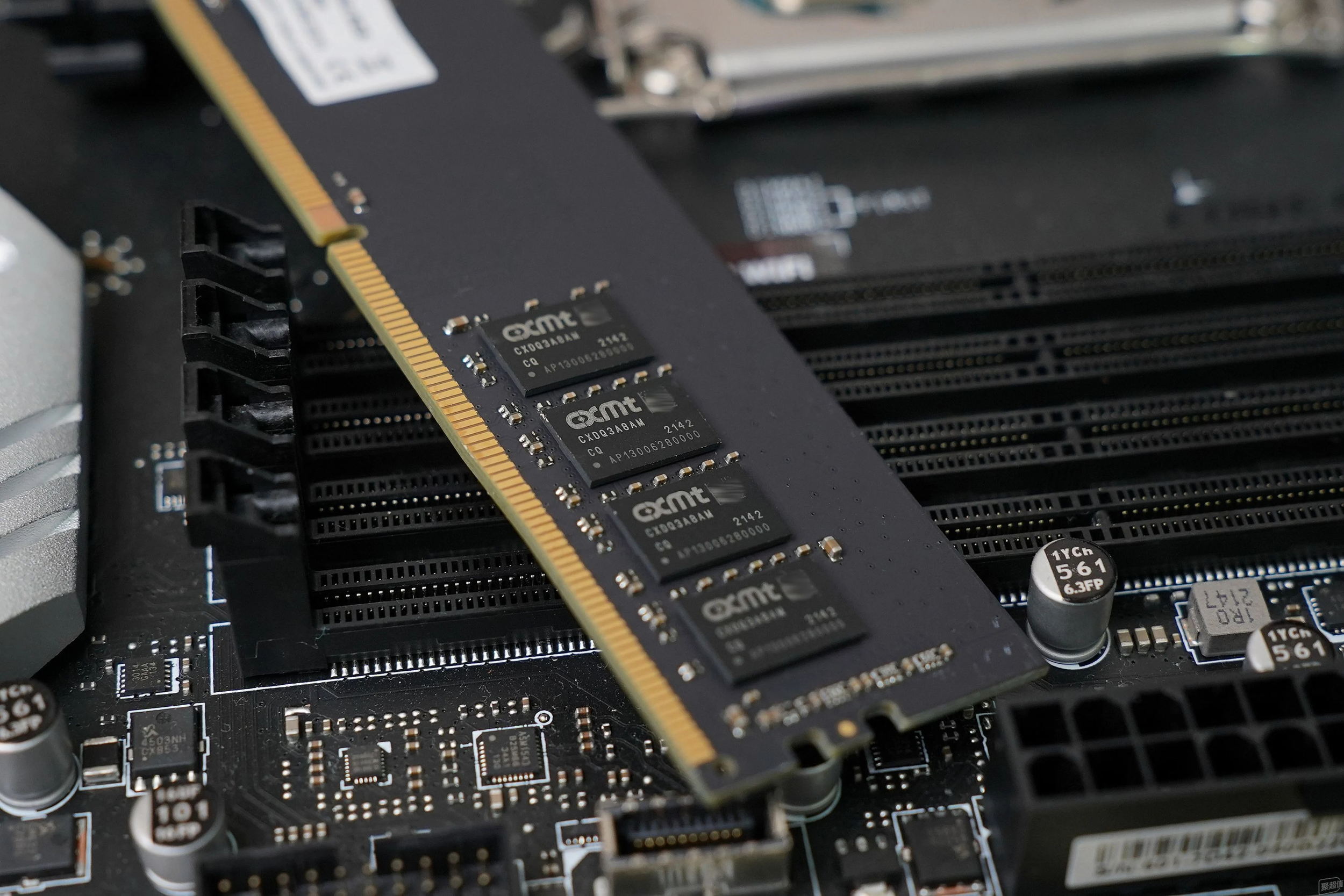
Chinese memory manufacturer ChangXin Memory Technologies (CXMT) is drawing attention across the semiconductor industry as its new 4F² DRAM architecture could accelerate the transition from 1c to 1d memory technology. While the design promises significantly higher memory density and potentially lower manufacturing costs, semiconductor experts remain skeptical about whether CXMT can achieve commercially viable production yields.
The development follows CXMT President Dr. Cao Kanyu's announcement at the 4th Integrated Chip and Chiplet Conference in Shanghai on October 10, where the company outlined plans to introduce DDR5 RDIMM products using 4F² architecture before the end of 2026.
The technology replaces the conventional 6F² memory cell layout with a more compact 4F² structure, using vertically oriented transistors to reduce the silicon area required for each memory cell. CXMT's Vertical Surrounded Gate (VSG) transistor architecture is designed to improve electrical control while reducing leakage, potentially allowing the company to increase memory density without relying exclusively on smaller semiconductor manufacturing nodes.
Conventional 6F² vs Next Generation 4F² DRAM
| Specification | Conventional 6F² | Advanced 4F² |
|---|---|---|
| Memory Cell Area | 6F² | 4F² |
| Cell Structure | Conventional layout | Vertical transistor |
| Theoretical Cell Area Reduction | Baseline | 33% |
| Theoretical Cell Density Gain | Baseline | Up to 50% |
| Manufacturing Maturity | Established | Experimental and emerging |
| Production Challenges | Mature processes | Yield, reliability, structural complexity |
Theoretical improvements assume identical feature sizes and exclude peripheral circuitry, manufacturing overhead, and yield losses.
Despite the potential advantages, semiconductor expert Fred Chen has questioned whether the compact 4F² layout provides sufficient physical space for critical components, including capacitor dielectrics, transistor gates, and insulating layers. These limitations could complicate manufacturing and reduce the practical benefits of transitioning to a smaller memory cell.
Additional industry analysis shared by Semiconductor Insider highlights the potential density improvements, while Omer Cheema notes that CXMT remains approximately 2 to 3 process generations behind Samsung and SK hynix in minimum feature dimensions. Consequently, adopting 4F² does not automatically place CXMT ahead of competitors using more advanced manufacturing processes.
The company reportedly holds more than 300 patents associated with 4F² DRAM and has demonstrated working experimental memory arrays since 2023. However, research progress does not necessarily translate into economical mass production. Samsung, SK hynix, and Micron have also investigated similar architectures, with manufacturing costs, production yields, and customer qualification remaining major obstacles.
Industry analysts, including Bank of America's Simon Woo, have raised concerns about CXMT's ability to commercialize the technology at scale. Although moving from 1c to 1d DRAM could become possible through architectural improvements, CXMT has not confirmed a commercial 1d manufacturing process, production yields, or customer qualification results.
The development comes amid continued DRAM supply constraints expected to extend into 2028. Successfully commercializing denser memory could eventually improve production efficiency and increase available capacity, but CXMT must first demonstrate that the technology can be manufactured reliably and competitively.
CXMT's 4F² development is technically significant because it approaches DRAM scaling through architectural changes rather than relying entirely on smaller lithography nodes. This could provide manufacturers with another path toward higher memory density as conventional scaling becomes increasingly difficult.
However, a 33% reduction in theoretical cell area does not translate directly into cheaper DDR5 modules or greater production capacity. Manufacturing yields, defect rates, reliability, and server platform validation will ultimately determine whether the technology delivers a meaningful commercial advantage.
For the PC hardware industry, successful 4F² production could eventually contribute to more competitive DRAM supply. But with global memory demand remaining strong, it would be premature to expect CXMT's announcement to significantly reduce DDR5 prices in the near term.
Could CXMT's 4F² architecture challenge Samsung, SK hynix, and Micron in advanced DRAM manufacturing, or will production yields prevent it from becoming a serious competitor?
