
CXMT Pushes Hafnium Based DRAM Technology as 1a Node Ambitions Accelerate
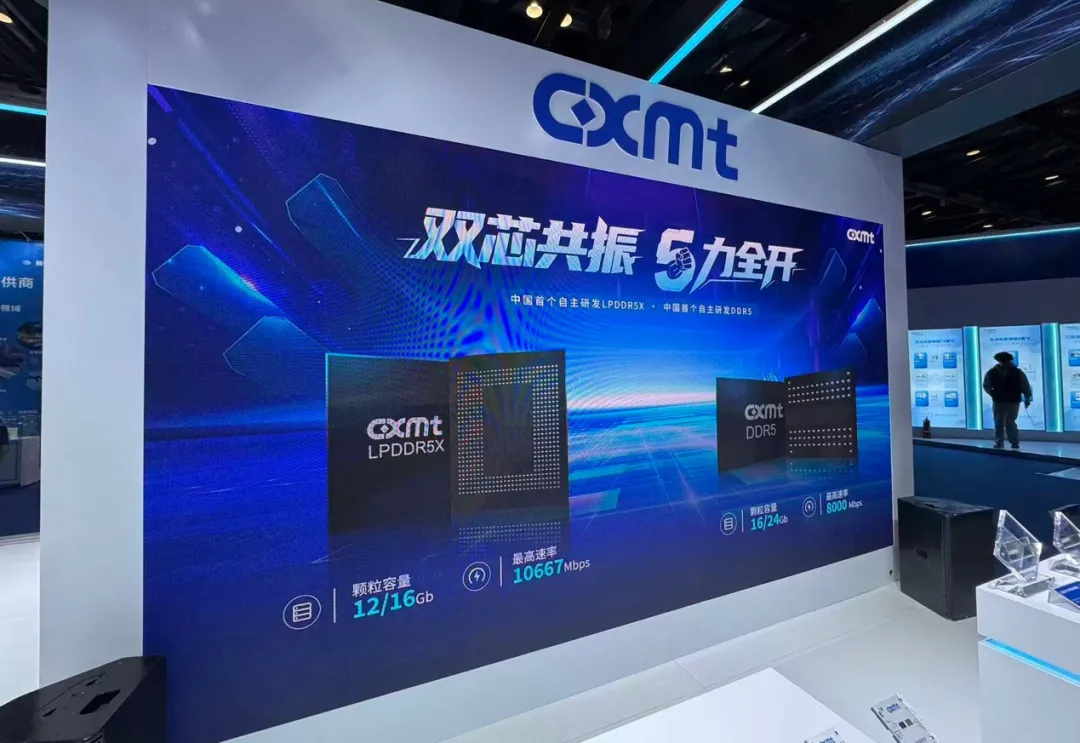
Chinese memory manufacturer CXMT is reportedly advancing its DRAM fabrication technology through the adoption of High k Metal Gate technology, potentially removing one of the major barriers preventing the company from scaling toward more advanced 1a class DRAM processes. The approach uses a high dielectric constant material such as hafnium oxide within the gate dielectric rather than relying exclusively on conventional silicon dioxide, helping reduce electrical leakage as transistor dimensions continue shrinking. CXMT has been researching this direction for years, with a CXMT patent filing from 2021 specifically describing High k Metal Gate technology as a solution for further DRAM device scaling.
The change is important because conventional silicon dioxide becomes increasingly difficult to use as the insulating layer becomes thinner. At extremely small dimensions, electrons can tunnel through the dielectric layer, increasing leakage current and reducing power efficiency. High k materials such as hafnium oxide provide a substantially higher dielectric constant, allowing manufacturers to maintain stronger electrical insulation while continuing to reduce physical dimensions. The accompanying metal gate also replaces traditional polysilicon gate structures, reducing electrical limitations associated with polysilicon depletion and potentially improving transistor switching characteristics.
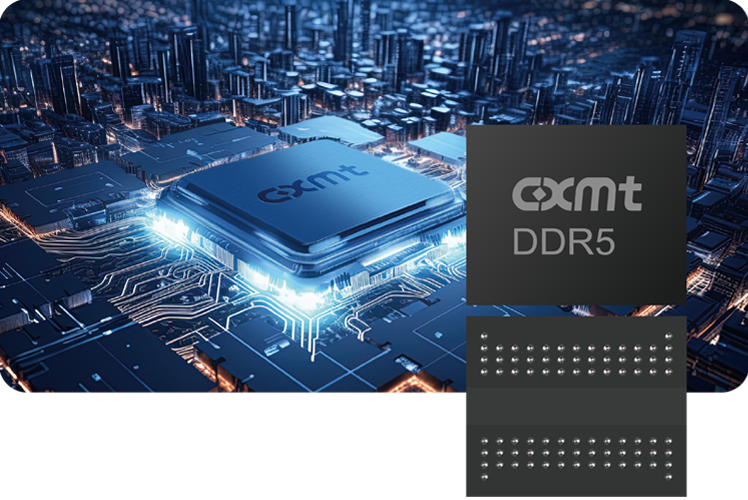
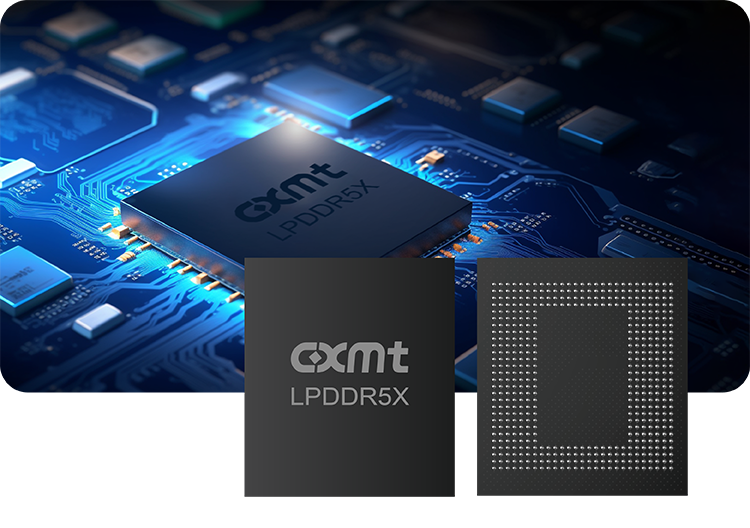
CXMT is reportedly applying the technology to its newer DRAM processes, including products associated with its G4 generation and LPDDR5X development. While CXMT has not publicly identified G4 under the traditional 1z naming convention, the company's commercially available memory portfolio has advanced rapidly. Its current DDR5 product lineup includes 16 Gb and 24 Gb dies with speeds reaching 8000 Mbps, while LPDDR5X reaches as high as 10667 Mbps. CXMT confirmed that 8533 Mbps and 9600 Mbps LPDDR5X entered mass production in 2025, with its 10667 Mbps product entering customer sampling.
The technical significance of High k Metal Gate should not be interpreted as confirmation that CXMT has already entered full 1a production. It does, however, provide an important technological pathway toward smaller DRAM nodes where leakage, power consumption and transistor control become increasingly difficult. Reports also indicate that CXMT is developing a newer G5 process around the 15 nm class, while its longer term research extends toward more advanced architectures including vertically structured DRAM. CXMT is also investigating 3D DRAM structures and domestic lithography technology as China attempts to reduce its dependence on overseas semiconductor manufacturing equipment.
The development comes alongside one of the most aggressive manufacturing expansions currently underway in the memory industry. CXMT already operates major 12 inch DRAM facilities in Hefei and Beijing, while additional projects are being developed as the company increases its production footprint. Reuters reported in August that CXMT is also considering another Beijing facility, adding to its existing network as demand for Chinese memory continues increasing.
Capacity estimates vary depending on the source and how wafer starts are calculated. Counterpoint Research estimated CXMT at around 320,000 wafers per month in 2026, with capacity potentially reaching approximately 420,000 wafers per month during 2027. The research firm expects CXMT to roughly double capacity by 2030 and triple it by 2035. Separate market projections place the company closer to 800,000 wafers per month by 2031 if its current expansion pace continues. That figure should be treated as a forecast rather than confirmed CXMT guidance, but the direction is clear. CXMT is attempting to scale into a manufacturing position capable of competing much more directly with Samsung, SK hynix and Micron.
That expansion is already affecting the wider DRAM market. CXMT has become the fourth largest global DRAM supplier and its products are moving beyond China's domestic ecosystem. Corsair DDR5 modules have already appeared using CXMT DRAM, while enthusiast demonstrations have pushed the company's silicon to increasingly competitive memory frequencies. More recently, CXMT based DDR5 reached more than 8800 MT/s on AMD AM5, showing that Chinese DRAM is moving beyond entry level and mainstream applications into higher performance PC memory segments.
Manufacturing scale alone, however, will not determine whether CXMT can close the technological gap with the established DRAM leaders. Samsung, SK hynix and Micron are simultaneously developing increasingly advanced DRAM nodes, HBM generations and future 3D memory structures. Yield, density, power efficiency, server qualification and the ability to manufacture advanced products consistently at scale will ultimately matter more than wafer capacity alone. CXMT's adoption of High k Metal Gate technology is therefore significant because it addresses the technology side of that equation rather than simply expanding production.
CXMT's biggest threat to the established memory industry is no longer simply lower cost Chinese DRAM. The company is simultaneously increasing manufacturing capacity, improving DDR5 performance, entering higher value server markets and investing in process technologies needed for future DRAM scaling. High k Metal Gate technology is particularly important because adding more fabs only increases volume, while solving transistor scaling problems determines whether those fabs can eventually manufacture memory competitive with Samsung, SK hynix and Micron at advanced nodes.
The 800,000 wafer monthly projection for 2031 is aggressive and remains a forecast, but CXMT does not necessarily need to reach that number to reshape the market. If it can combine several hundred thousand monthly wafer starts with competitive DDR5, LPDDR5X, server memory and eventually HBM, the global DRAM industry could move from a market dominated by 3 suppliers toward a much more credible fourth competitor.
Could CXMT realistically become the fourth global DRAM giant alongside Samsung, SK hynix and Micron before 2030, or will advanced process technology and HBM remain the biggest barriers?
