
Tencent Games Unveils AI Technology Suite for Animation, Gameplay and Automated Testing
Tencent Games has used Gamescom 2026 to formally introduce Tencent Games Central Tech as a unified technology brand, bringing together a portfolio of proprietary systems designed to support game creation, gameplay experiences and long term live operations. The lineup includes Motus AI, GIGA, MagicDawn, Anti Cheat Expert, GVoice and WeTest, reflecting Tencent's broader push to move artificial intelligence beyond isolated experiments and into production workflows used throughout the game development lifecycle. According to the official Tencent Games Central Tech announcement, the company presented the technologies through developer sessions and demonstrations covering 3D animation, autonomous AI agents, rendering, security, communications and game testing.
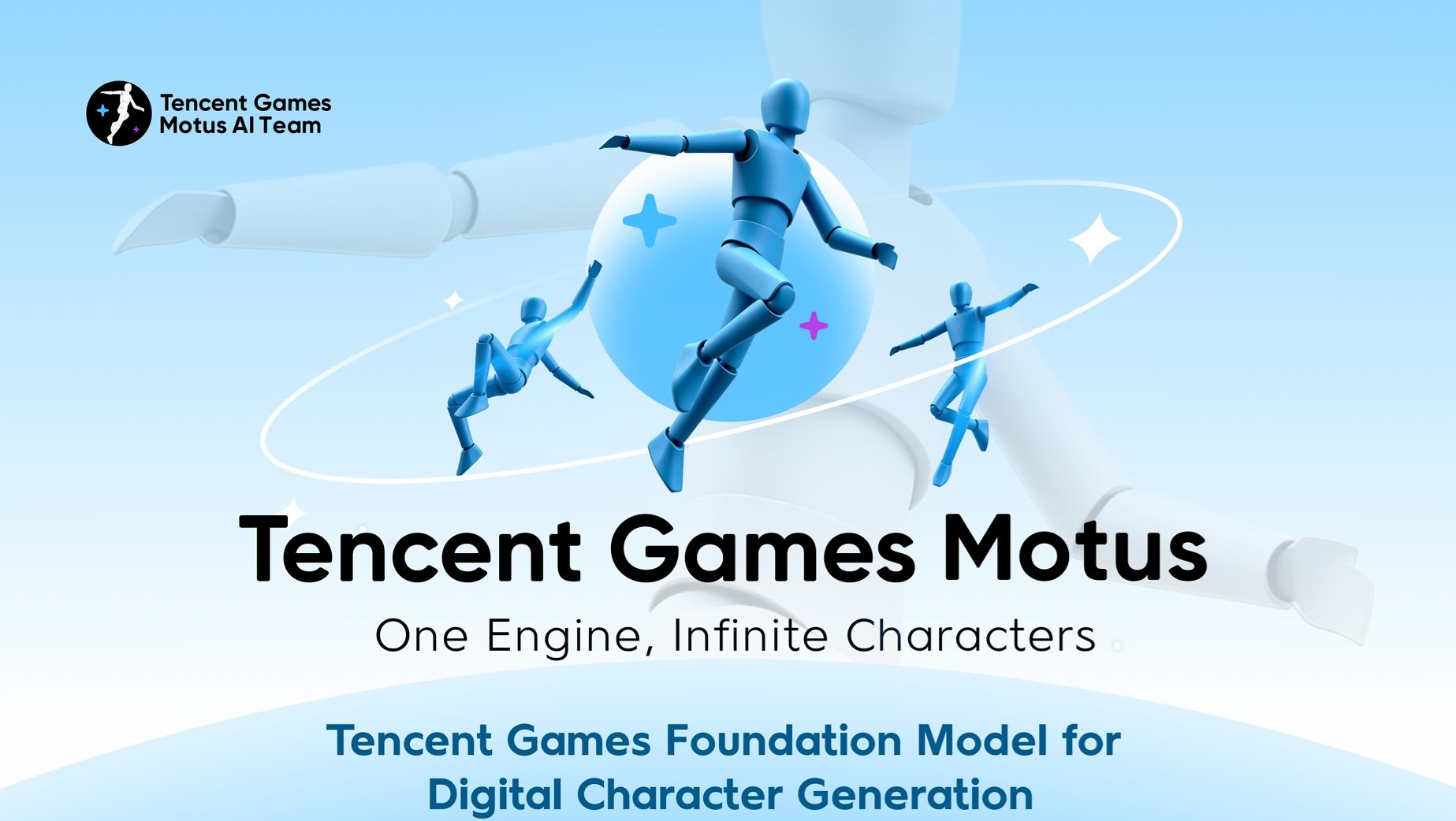
One of the most significant technologies is Motus, Tencent's integrated generative AI system for 3D character animation. Instead of focusing only on generating movement, Motus connects rigging, skinning, motion generation, motion refinement and interactive character behavior within a single production pipeline. It can generate movement from text prompts, video or keyframes and supports interactions involving multiple characters for combat, cooperative sequences and social scenarios. Tencent says Motus can analyze a character's topology and generate a production ready skeleton within seconds before calculating skinning weights for muscles, clothing and other components. Its refinement systems can also detect and correct issues including jitter, mesh penetration, joint abnormalities and foot sliding, reducing the manual cleanup normally required after AI generated animation.
The final stage of Motus extends beyond traditional animation production. Audio or text can drive facial expressions, body movement and interactive responses in real time, giving developers potential tools for more responsive NPCs, digital characters and virtual presenters. Tencent demonstrated the technology at Gamescom Dev, where visitors could convert text prompts into 3D animations. Motus technology has already been deployed across several major games, including Game for Peace, PUBG MOBILE, Delta Force, Honor of Kings, Roco Kingdom, League of Legends and Teamfight Tactics, showing that Tencent is positioning the system as production infrastructure rather than simply a research demonstration.
Tencent's AI strategy also expands into autonomous gameplay through GIGA, which uses games and virtual environments as training spaces for general purpose AI agents. The system focuses on visual decision making, alignment between language and actions, and competitive decision making in dynamic environments. The objective is to move AI models beyond interpreting what is happening on screen and toward taking appropriate actions inside complex game worlds. For developers, that type of technology could eventually influence NPC behavior, automated gameplay evaluation and more advanced simulation systems.
MagicDawn focuses on the underlying virtual environment, combining advanced rendering technology with AI and cloud computing to improve performance, visual quality and audio. Tencent highlighted Roco Kingdom as a Gamescom case study, explaining that global illumination technology and platform adaptation helped transform the original browser game into a 64 km² open world project while maintaining consistent visual presentation across different hardware platforms. The development reflects the increasing technical demands facing studios as modern games expand in scale, something also visible across Tencent's wider portfolio of ambitious projects such as Light of Motiram.
Central Tech also covers several technologies that operate after core content production. Anti Cheat Expert provides protection for PC and mobile games through cheat detection, client security, economic risk management and threat intelligence. GVoice focuses on low latency voice communication with AI noise reduction, Tencent's proprietary AI codec and live speech translation. WeTest Acorn AI Studio takes automation further by allowing AI agents to play games in ways designed to approximate human testers, identify potential issues and perform testing across different genres and platforms. Tencent is also continuing research into world models and interactive video technologies, although the company has not yet disclosed how those projects will be implemented in commercial games.
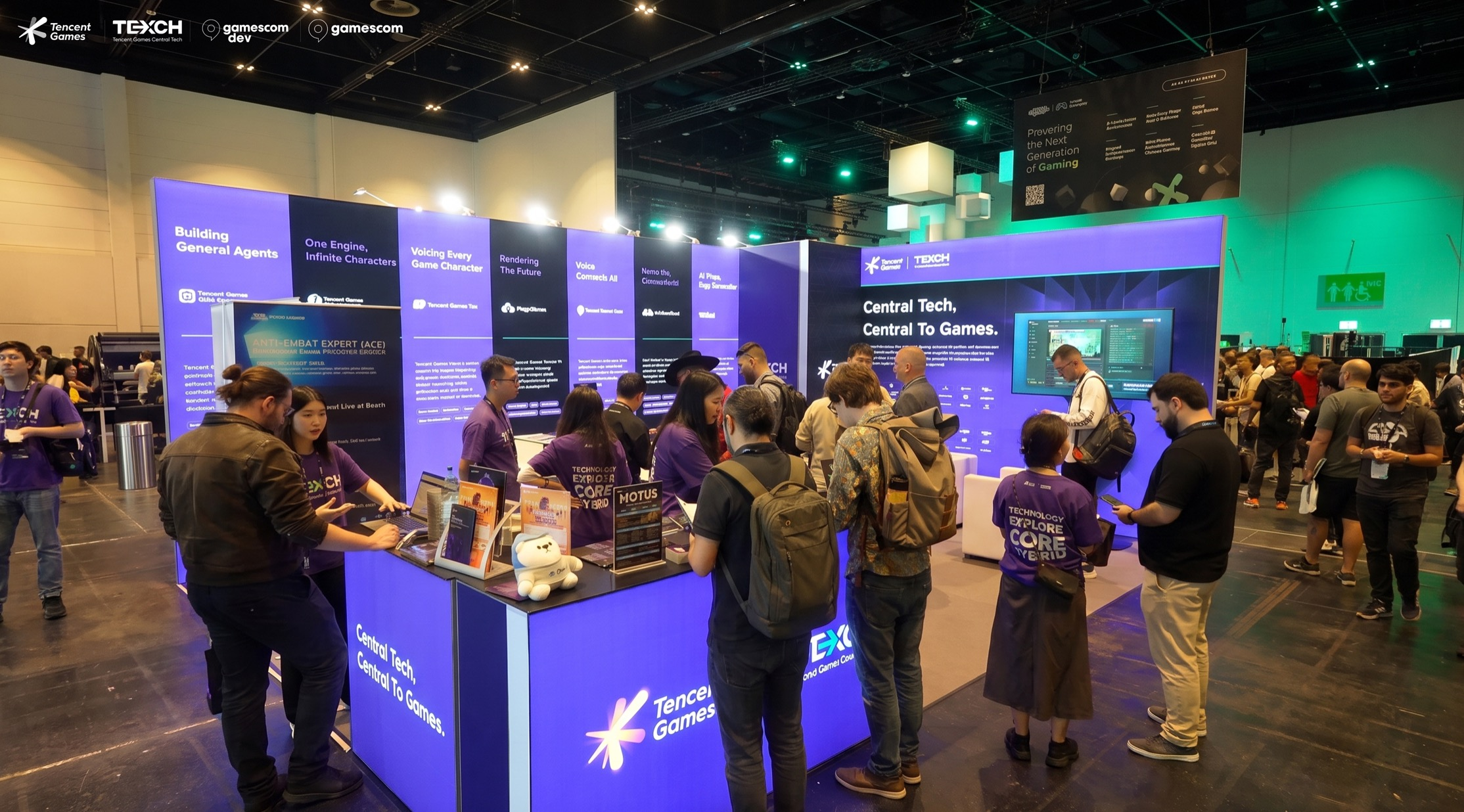
Tencent's Gamescom presentation is notable because the company is not positioning AI as a single content generation tool. Central Tech attempts to connect AI with practically every stage of game production, from building and animating characters to training agents, optimizing rendering, moderating security and testing finished gameplay. Automated testing may ultimately be one of the most commercially significant parts of the portfolio, since modern live service games require enormous amounts of repetitive validation across maps, hardware configurations and continuous updates. The more important question will be how studios use these systems to increase production capacity without allowing automation to replace the creative direction, artistic judgment and handcrafted gameplay that distinguish great games from technically efficient ones.
Do you think AI systems such as Motus and WeTest will primarily help developers build better games, or could increasing automation eventually make game production feel more standardized?
