
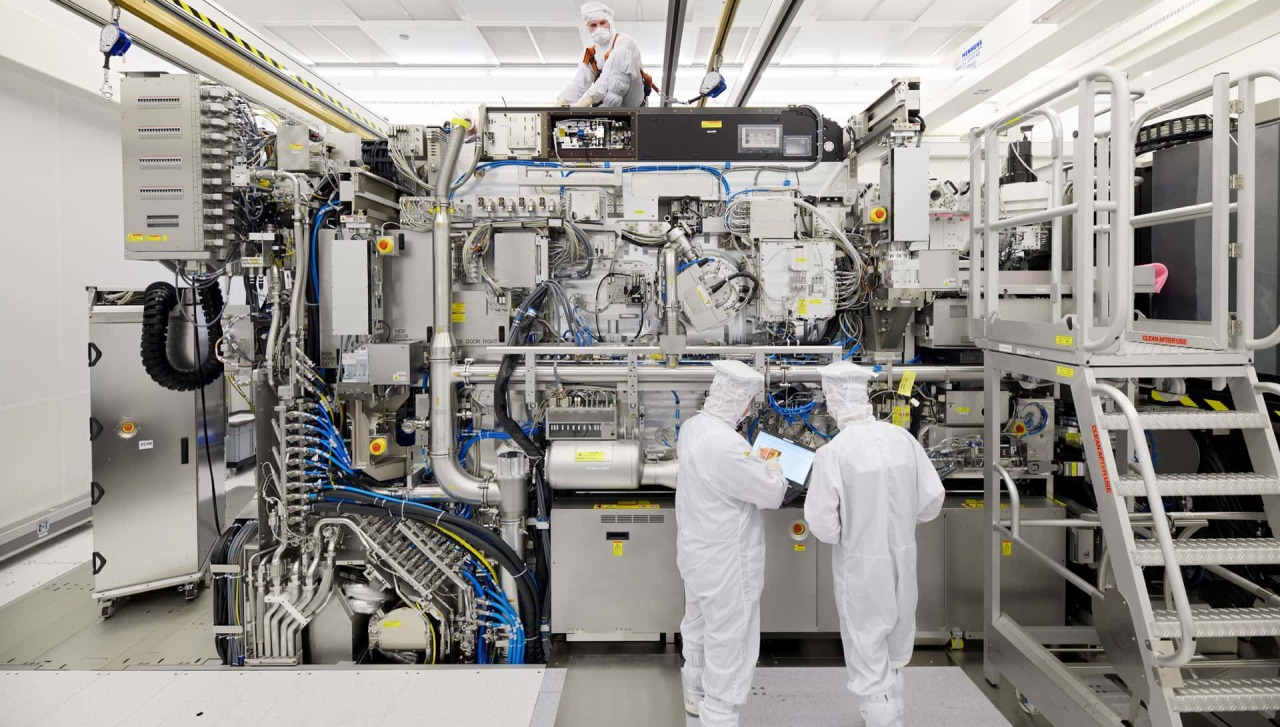
Chinese semiconductor technology developer EUVIC Optics has secured approximately 50 million yuan in preliminary Series A financing to accelerate the development of domestic Extreme Ultraviolet (EUV) light sources. The investment follows the company's reported completion of an engineering prototype for a compact EUV light source based on Laser Produced Plasma (LPP) technology.
According to the financing announcement published by Lighthouse Capital, the investment round was led by Vertex Ventures, with participation from Minsilver International. The funding supports the company's efforts to address critical engineering challenges involving plasma generation, precision optics, contamination management, and EUV light collection.
EUVIC Optics is pursuing an alternative engineering approach to conventional EUV light generation systems. Its technology uses a larger nozzle to generate small, widely spaced tin droplets, reducing the likelihood of nozzle blockage. The company is also collaborating with domestic laser manufacturers to develop solid state laser solutions, reducing its dependence on restricted CO₂ laser technologies.
Another significant development involves an array based EUV collector mirror architecture inspired by compound eyes. The company believes this design can reduce manufacturing and maintenance costs. Its contamination management system combines carbon nanotube protective films with hydrogen purging to protect optical components from debris generated during plasma production.
| Technology | EUVIC Optics Approach |
|---|---|
| EUV Wavelength | 13.5 nm |
| Light Generation | Laser Produced Plasma |
| Laser Technology | Solid state laser development |
| Tin Droplet Generation | Larger nozzle with wider droplet spacing |
| Collector Mirror | Compound eye array architecture |
| Debris Protection | Carbon nanotube film and hydrogen purging |
| Development Status | Desktop engineering prototype |
| Funding | Approximately 50 million yuan |
The company claims its desktop prototype is suitable for semiconductor inspection, metrology, photoresist exposure, and scientific research. However, it has not publicly disclosed sufficient performance metrics to establish whether its technology can support commercial semiconductor manufacturing at scale.
The development comes amid broader efforts to establish an independent Chinese semiconductor manufacturing ecosystem, including domestic immersion DUV lithography development. Despite this progress, industry assessments suggest China remains around 10 years behind ASML in EUV lithography.
EUVIC Optics' approach demonstrates that Chinese semiconductor developers are exploring alternative engineering solutions rather than simply attempting to reproduce existing Western lithography technologies.
While a functional desktop EUV light source is considerably different from a commercial lithography machine, developing domestic expertise in precision optics, plasma generation, and contamination control represents meaningful progress.
Greater competition within the semiconductor equipment industry could eventually diversify global manufacturing capacity, reduce dependence on individual suppliers, and improve semiconductor accessibility. However, commercial viability will ultimately depend on measurable improvements in output power, optical durability, reliability, and manufacturing throughput.
Do you believe China's alternative EUV technologies could eventually challenge ASML's market dominance and improve global semiconductor affordability?
