
Samsung and SK hynix Shift Toward Long Term DRAM Contracts as Questions Grow Around How Much Higher Prices Can Still Go
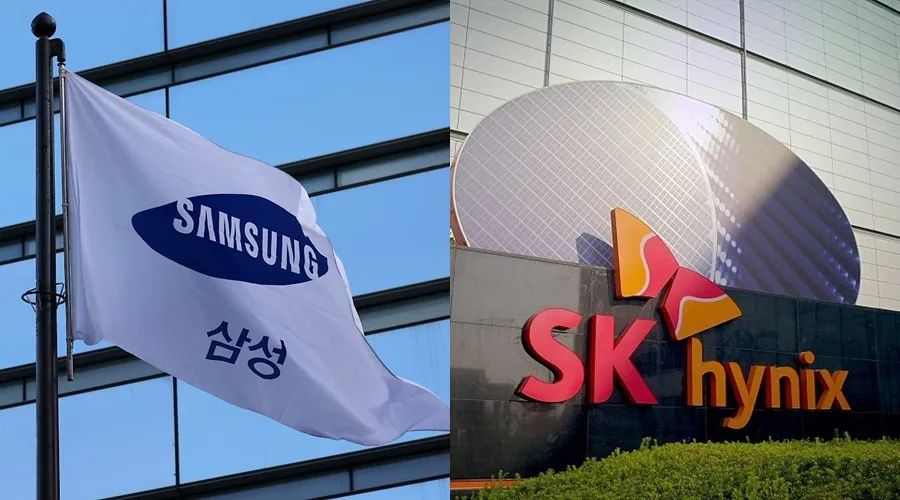
Samsung and SK hynix are reportedly making a major change to how they sell DRAM, and the move is already raising a bigger market question. According to a recent report from Aju News, the 2 South Korean memory giants have effectively moved away from 1 year short term supply contracts with major global technology customers and are now focusing on 3 year to 5 year long term agreements
On the surface, this looks like a rational and even necessary response to a market that has become extremely difficult to manage. AI infrastructure demand continues to distort the memory market, server and hyperscaler customers are taking priority over lower margin consumer segments, and suppliers want clearer long term visibility before making expensive capacity decisions. Reuters has already reported that Samsung expects strong chip demand to continue through 2026 because of AI, while also warning that rising memory prices could start weighing on PCs and smartphones.
But there is another interpretation, and it is the one making this development so interesting. If Samsung and SK hynix truly believed that DRAM pricing still had huge upside left over the next few quarters, it would be fair to ask why they would want to lock in so much supply on multi year terms right now. Long term agreements can give stability and secure customer commitments, but they can also suggest that suppliers see today’s pricing environment as strong enough to capture and defend rather than something they expect to be dramatically better just a little further ahead. That does not prove DRAM prices have peaked, but it does make the idea more plausible than it would have seemed a few months ago. This is an inference based on the contract shift and recent pricing forecasts, not a confirmed statement from Samsung or SK hynix.
That matters because the current pricing backdrop is already extraordinary. TrendForce said on March 31 that conventional DRAM contract prices were expected to rise 58 percent to 63 percent quarter over quarter in Q2 2026, while NAND flash contract prices were forecast to rise 70 percent to 75 percent over the same period. TrendForce also said suppliers were continuing to shift capacity toward server related applications, keeping supply tight even as some end markets faced downside risks. Tom’s Hardware, citing the same TrendForce data, noted that DRAM price growth is still rising, but the pace is slowing compared with the most explosive earlier phase of the cycle.
There is also broader evidence that the market is becoming more structured around long term commitments instead of short term opportunism. Barron’s reported this week that analysts are pointing to long term supply agreements as one reason the memory cycle may now behave differently from older boom and bust periods, because LTAs can give suppliers and buyers more predictability and reduce the violence of downcycles. In other words, these agreements are not only about price. They are also about making AI era memory supply more strategic and less transactional.
Even so, DRAM and NAND may now be on slightly different paths. The recent argument that DRAM may be closer to peak pricing does not necessarily extend to NAND. Current market coverage still points to NAND having more room to run because enterprise SSD demand remains strong, AI related storage needs are still building, and production allocation has increasingly favored higher value enterprise products over consumer segments. TrendForce explicitly said NAND suppliers are prioritizing enterprise SSD output while lower margin consumer categories scale back under cost pressure.
The AI angle remains the biggest reason this story matters. Tom’s Hardware, citing SemiAnalysis, reported that memory is expected to consume 30 percent of hyperscaler AI data center spending in 2026, up from about 8 percent in 2023 and 2024. That is a dramatic change in budget structure, and it reinforces why buyers are increasingly willing to sign longer deals just to secure access. When memory becomes that large a share of AI capex, the problem is no longer only price. It is strategic availability.
So is peak DRAM pricing really in sight? There is not enough evidence yet to call that with confidence. The most defensible conclusion right now is that the rate of upside may be starting to look more limited than before, even though the broader market remains exceptionally tight and structurally bullish. If Samsung and SK hynix keep pushing long term contracts while Q3 pricing stops accelerating meaningfully, then this thesis will start to look much stronger. If Q3 brings another major jump, then the market may still have more upside than this contract shift currently suggests. That is an inference, not a confirmed market outcome.
For now, the smarter read is this: the DRAM market still looks extremely strong, but the behavior of its biggest suppliers is starting to look less like a scramble for the next spike and more like a move to lock in a very profitable plateau.
What do you think matters more here: the possibility that DRAM prices are nearing their high point, or the bigger structural shift toward long term AI era memory contracts?
