
Micron Reportedly Eyes Stacked GDDR Memory for AI, a Move That Could Put Even More Pressure on Gaming GPU Supply
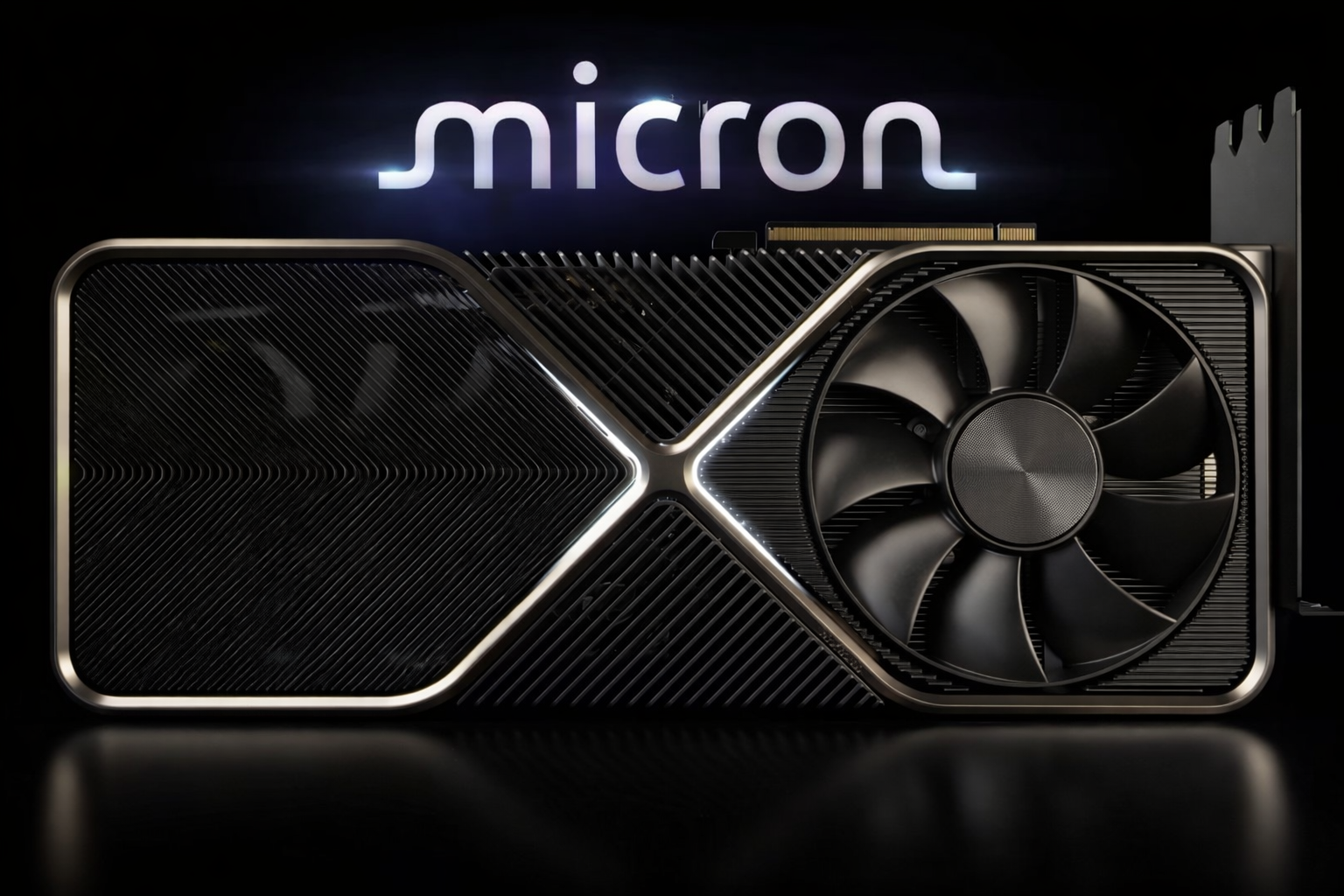
Micron is reportedly developing a new type of stacked GDDR memory aimed at AI workloads, a move that could open an entirely new lane between traditional graphics memory and high bandwidth memory. According to an ETNews report, Micron is studying a vertically stacked GDDR design, with early work said to center on around 4 layers and sample level prototypes potentially arriving as early as 2027. If that direction materializes, it would mark one of the first serious attempts to use gaming class GDDR in a more HBM inspired packaging approach for AI infrastructure.
The timing makes strategic sense. Micron itself said in its March 2026 earnings materials that AI has turned memory into a strategic asset and that growing AI systems are becoming more memory intensive, while the company also pointed to tight industry supply and longer term customer agreements as part of the current market structure. In other words, the pressure to find more scalable memory solutions is not theoretical anymore. It is already shaping product planning across the sector.
What makes this especially interesting is that GDDR has traditionally lived in a very different market role from HBM. Micron’s own GDDR7 messaging has positioned the technology around gaming, graphics, and some AI adjacent acceleration use cases, with over 1.5 TB/s of system bandwidth in the right configurations and clear value for high performance GPUs. But stacked GDDR would suggest a much more aggressive attempt to repurpose that memory family for AI inference and other capacity hungry deployments that do not necessarily need full HBM class behavior at full HBM class cost.
That does not mean stacked GDDR would replace HBM. In fact, the smarter read is probably the opposite. Micron just announced high volume HBM4 shipments designed for NVIDIA Vera Rubin and also highlighted larger 16 high HBM4 samples, showing that it remains deeply committed to the top end HBM roadmap. A stacked GDDR product would more likely sit below that tier as a middle ground option, potentially offering more capacity or a different cost structure for certain AI systems where full HBM is either too expensive, too supply constrained, or simply unnecessary. That is an inference based on Micron’s current HBM4 positioning and the ETNews report about stacked GDDR, not an official product definition from Micron.
For the gaming market, however, the concern is obvious. If Micron starts allocating more engineering effort, packaging capacity, or eventual wafer supply toward an AI focused stacked GDDR product, then the part of the supply chain that feeds graphics cards could come under more pressure. That risk should not be overstated yet, because this is still a reported development effort rather than a launched product. Still, Micron has already told investors that memory markets remain tight and that supply constraints are expected to persist, so any new enterprise pull on GDDR class memory could matter for GPU availability and pricing later on.
There is also a real technical challenge here. Stacking LPDDR or HBM is one thing. Stacking GDDR, which is designed around much higher clocks and a graphics oriented operating profile, raises more difficult questions around thermals, signal integrity, packaging, and power delivery. That means the concept is compelling, but execution will be the real differentiator. If Micron can make it practical and cost effective, it could create a new memory category that serves inference systems very well. If not, it may remain an interesting prototype path rather than a commercial volume product. That is analysis based on the reported concept and the known differences between Micron’s existing GDDR7 and HBM4 product directions.
The broader story is that AI is no longer just consuming more HBM. It is pulling on every viable part of the memory ecosystem. Micron’s reported stacked GDDR exploration fits that reality perfectly. The company appears to be looking for ways to serve a market that wants more memory, more capacity flexibility, and more packaging options than the traditional gaming versus data center divide was built to handle. If this project becomes real silicon, it could end up being one of the more important memory experiments to watch over the next year.
Would you welcome stacked GDDR as a smart middle tier AI memory solution, or do you think anything that pulls more supply away from gaming GPUs is a bad sign for the market?
