
ASUS ExpertBook A7 Launches With Ryzen AI 300, 120 Hz OLED and Up to 21 Hours of Battery Life

ASUS has officially introduced the ExpertBook A7 (AM7406CKA), a new 14 inch business laptop powered by AMD Ryzen AI 300 Series processors. Combining a premium aluminum chassis, a 3K OLED display, and dedicated AI acceleration, the laptop targets professionals seeking portability and enterprise security without sacrificing display quality.
According to ASUS's official announcement, the ExpertBook A7 will be available with 2 AMD processors: the Ryzen AI 5 330 and Ryzen AI 7 345. Both use Zen 5 architecture and integrate an XDNA 2 neural processing unit delivering up to 50 TOPS of AI acceleration, enabling Windows 11 Copilot+ features and compatible local AI applications.
ASUS ExpertBook A7 AMD Specifications
| Specification | Ryzen AI 5 330 | Ryzen AI 7 345 |
|---|---|---|
| CPU Cores / Threads | 4 / 8 | 6 / 12 |
| Maximum Boost Clock | 4.5 GHz | 4.6 GHz |
| Integrated GPU | Radeon 820M | Radeon 840M |
| GPU Architecture | RDNA 3.5 | RDNA 3.5 |
| NPU Performance | Up to 50 TOPS | Up to 50 TOPS |
| Memory | 12 GB or 16 GB LPDDR5X | 12 GB or 16 GB LPDDR5X |
| Maximum Storage | 512 GB PCIe SSD | 512 GB PCIe SSD |
One of the strongest features is the 14 inch OLED display, offering a 2880 × 1800 resolution, 120 Hz refresh rate with variable refresh support, and 100% DCI P3 color coverage. The panel also carries VESA DisplayHDR True Black 600 and Pantone Validated certifications, with glossy and optional anti glare configurations available. These characteristics make it particularly attractive for media consumption, presentations, and creative workloads where color accuracy matters.
The laptop features a CNC machined unibody constructed from 6000 series aluminum alloy, measuring approximately 10 mm at its thinnest point and starting at just 1.2 kg. A 65 Wh battery provides up to 21 hours of battery life under ASUS's internal video playback testing, while fast charging can restore up to 50% capacity in 30 minutes under specified conditions.
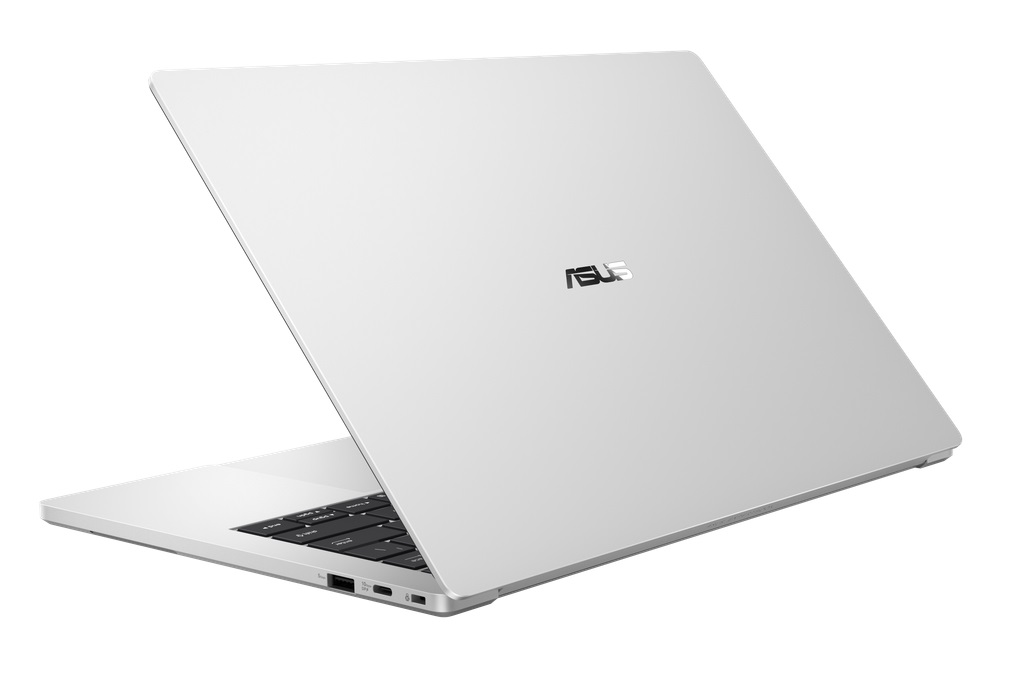
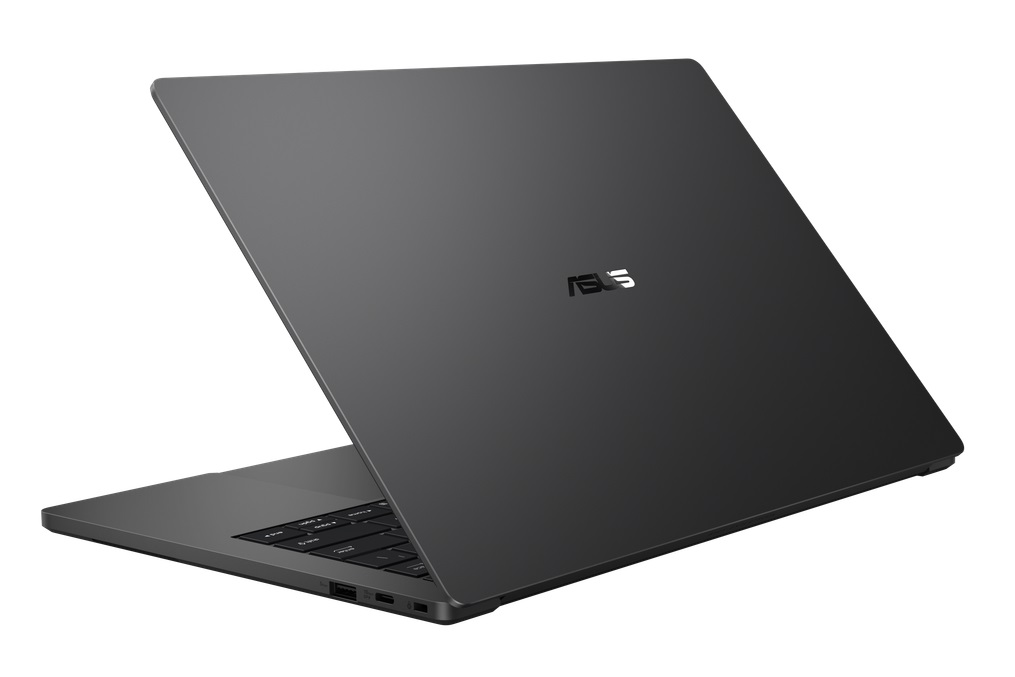
Connectivity includes 2 USB4 Type C ports, USB Type A, HDMI 2.1b, WiFi 6E, and Bluetooth 5.4. ASUS also includes a glass haptic touchpad, backlit keyboard, FHD webcam, and dual speakers.
Security remains a central part of the ExpertBook lineup. The A7 integrates ASUS ExpertGuardian, TPM 2.0, fingerprint authentication, NIST SP 800 193 compliant BIOS protection, and Windows 11 Secured Core PC capabilities. ASUS also promises 5 years of BIOS and driver security updates, reinforcing its positioning for corporate deployments.
However, upgradeability is limited. The LPDDR5X memory is soldered, with a maximum configuration of just 16 GB, while storage is restricted to a single M.2 SSD slot with configurations reaching 512 GB. These limitations could become restrictive for demanding multitasking, larger creative projects, and local AI workloads.
The announcement expands ASUS's ExpertBook business laptop portfolio, complementing the previously introduced P3 G2 and B3 G2 models.
Pricing and availability for the AMD powered ExpertBook A7 have not been confirmed. The Intel version is already available in the United States starting at $1,299.99, while ASUS plans to expand the broader A7 lineup with configurations starting at $899 in January 2027.
The ExpertBook A7 offers an interesting combination of premium display technology and lightweight business computing. Its 3K OLED panel, aluminum construction, and 50 TOPS NPU make it attractive for professionals who prioritize mobility, productivity, and AI assisted applications.
However, the hardware configuration feels unbalanced. A 120 Hz OLED display is an excellent addition, but the Radeon 820M and 840M integrated graphics are better suited to everyday graphics workloads and lightweight gaming than demanding modern titles.
The bigger limitation is memory. Restricting a Copilot+ business laptop to 16 GB of soldered LPDDR5X reduces its flexibility for demanding workloads and long term ownership, particularly when professional applications and local AI tools increasingly benefit from larger memory capacities.
ASUS has delivered an attractive ultraportable design, but the final AMD pricing will determine whether its display and portability justify the limited upgrade options.
Would you choose a lightweight laptop with a premium 3K OLED display and 16 GB of memory, or would you sacrifice some display quality for 32 GB of RAM and better upgradeability?
