
ASRock TempGuard Fails as RTX PRO 6000 Power Connector Melts
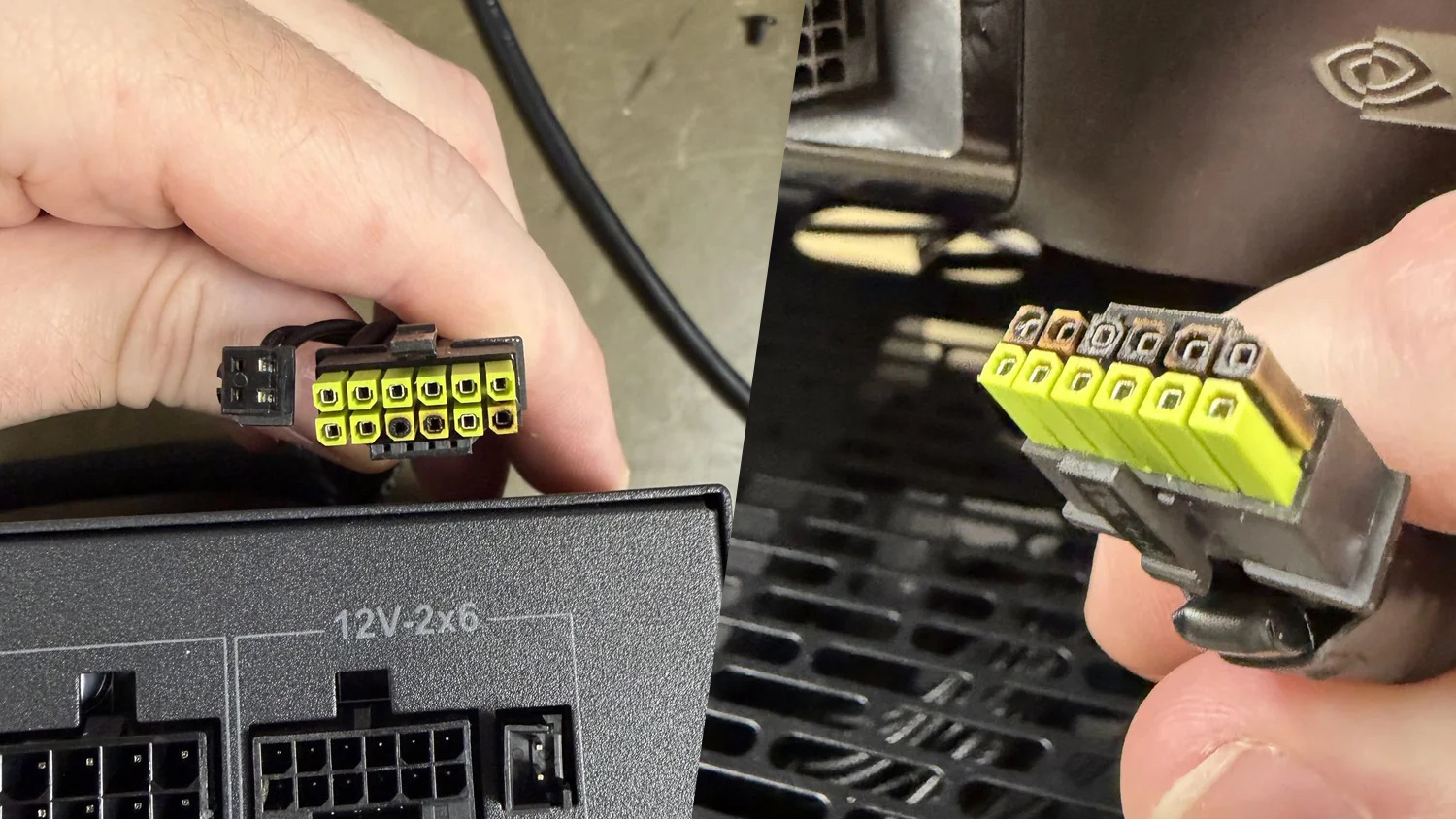
Another serious 16 pin GPU power incident has surfaced, this time involving an NVIDIA RTX PRO 6000 Blackwell Workstation Edition and an ASRock Taichi TC 1650T power supply equipped with TempGuard temperature protection. Despite the PSU using an NTC thermal sensor specifically designed to monitor its 12V 2x6 connection, the connector reportedly suffered severe melting on the power supply side without the protection system shutting the system down.
The incident was documented by a technician through an original Reddit report, who said a customer brought in a workstation using an RTX PRO 6000 and ASRock Taichi TC 1650T. According to the technician, both ends of the 16 pin cable had been completely inserted and the thermal probe was connected, yet the PSU side connector became heavily damaged and melted into the power supply. The RTX PRO 6000 itself reportedly survived.
That GPU is particularly expensive hardware to place at risk. NVIDIA currently specifies the RTX PRO 6000 Blackwell Workstation Edition with 96 GB of GDDR7 ECC memory and a maximum board power of 600 W, all delivered through a single PCIe CEM5 16 pin power connector. The card has also recently reached around 16,000$ through NVIDIA Marketplace, as previously covered on RTX PRO 6000 Blackwell pricing.
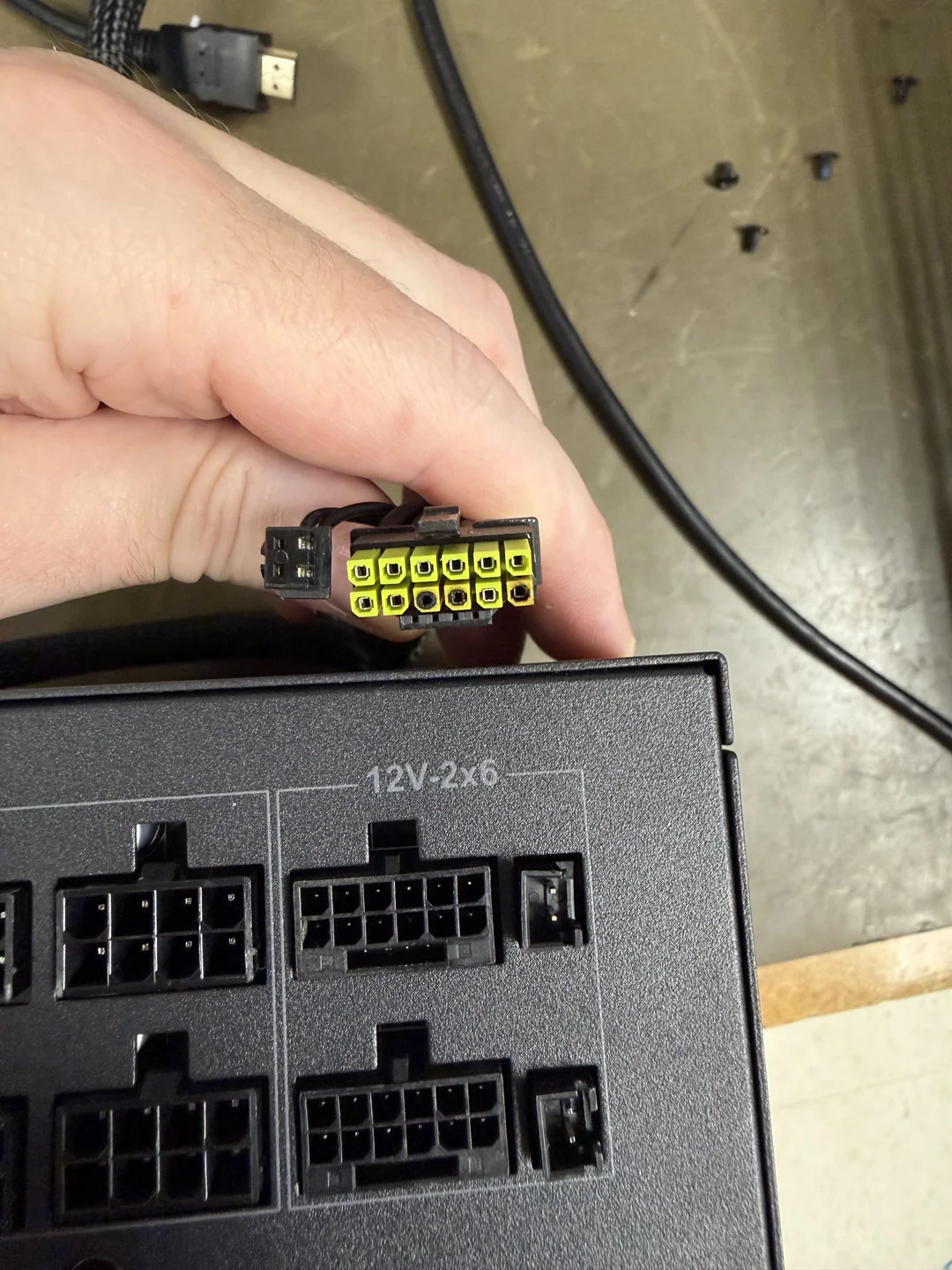
What makes the case particularly interesting is ASRock's advertised protection system. The Taichi TC 1650T is an ATX 3.1 and PCIe 5.1 Titanium rated 1650 W power supply that includes TempGuard and an NTC sensor on its native 12V 2x6 cable. ASRock states that the sensor monitors temperature at the VGA connector and sends a signal back to the PSU to maintain safe operation. The power supply also includes over temperature protection alongside over current, over voltage, under voltage, short circuit, and over power protections.
The problem in this case is where the failure occurred. The Reddit images and technician report indicate that the catastrophic damage developed on the PSU side rather than at the GPU connection where ASRock says the NTC sensor performs its monitoring. The technician also claims the probe on the cable appears to contact the ground side rather than the 12 V conductors, although that observation has not been independently verified. ASRock has not issued a public technical explanation for this specific incident.
The technician later clarified that the thermal probe is positioned beneath the locking area and is held against the cable through heat shrink further down the assembly. They argued that monitoring only one end of the connection leaves the modular PSU connector vulnerable, especially because the severe heating in this case developed at that end.
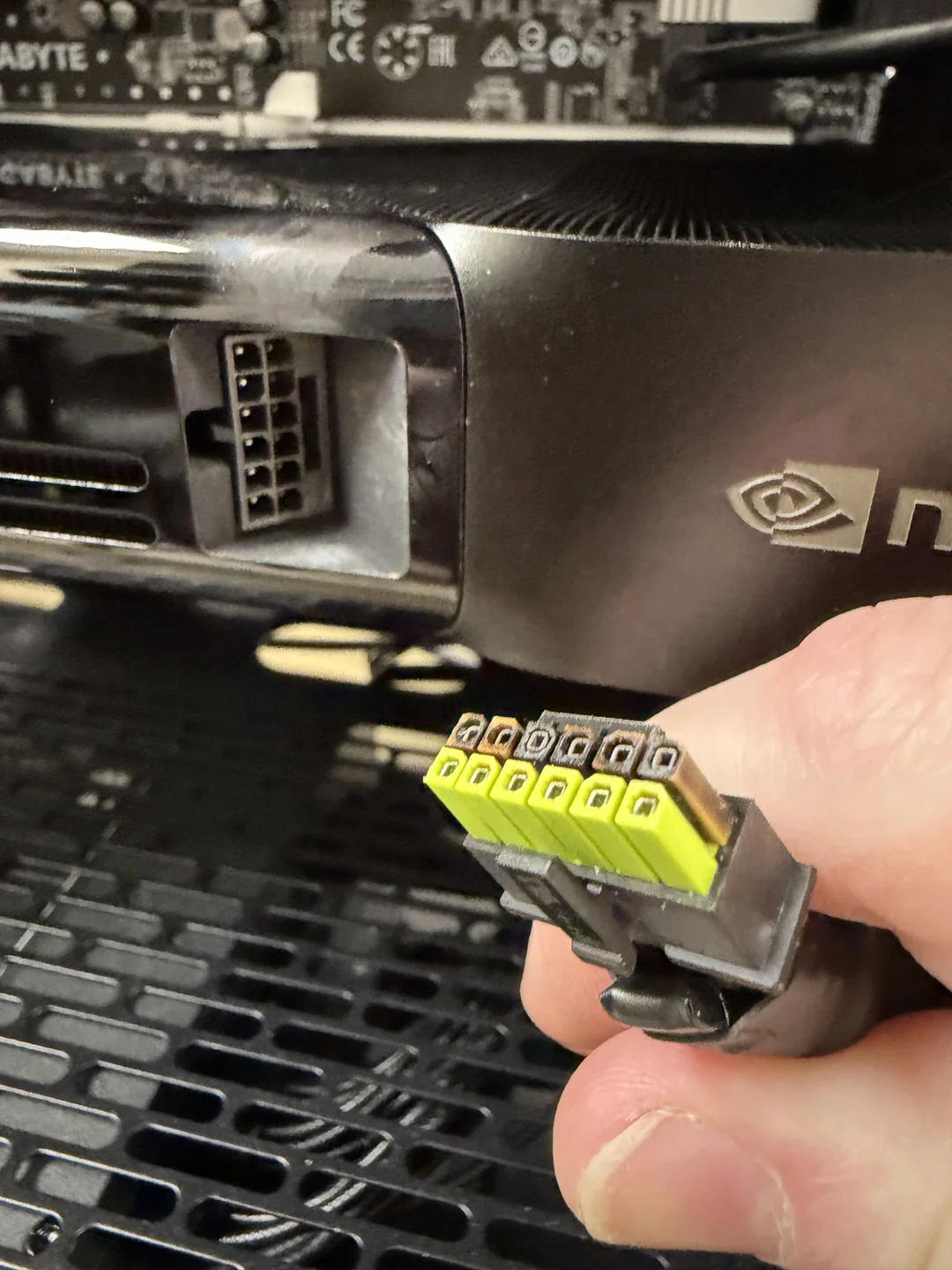
This is also not the first reported problem involving the same PSU family and a high power Blackwell GPU. Another RTX PRO 6000 owner reported earlier in 2026 that an ASRock Taichi TC 1650T cable had become scorched on the GPU side of their workstation card. That owner later moved to a Thermal Grizzly monitoring solution and observed uneven current distribution during 600 W AI workloads. A separate RTX 5090 report from July also claimed ASRock TempGuard failed to shut a system down before visible connector damage occurred. These remain individual reports rather than evidence of a confirmed widespread defect.
The broader issue continues to be the amount of electrical power concentrated through one compact connection. When contact resistance increases on an individual terminal, current can become unevenly distributed across the remaining conductors, creating localized heat that may accelerate further degradation. Temperature monitoring can potentially catch that process, but its effectiveness depends heavily on sensor placement and how rapidly heat reaches the monitored location.
That is why newer mitigation products are increasingly moving beyond single temperature measurements. The Aqua Computer Ampinel actively monitors and balances power distribution across the 12V 2x6 connection, attempting to reduce the concentrated loads that can create dangerous hot spots in the first place.
ASRock itself also sells a dedicated 12V 2x6 L Type cable with the same over temperature protection concept. The company instructs users to fully insert and lock both connectors and avoid bending or applying force near the connection. Its documentation again specifies that the NTC sensor monitors temperature at the VGA connector, reinforcing that the current protection design is focused primarily on the graphics card end rather than independently monitoring both ends of the cable.
This incident exposes an important limitation in temperature based connector protection. Monitoring the GPU side is useful when the failure develops there, but a modular power cable has another high current connection at the PSU, and that connection can fail independently.
The RTX PRO 6000 makes the issue especially difficult to dismiss because it can sustain up to 600 W through one 16 pin connector while costing around 16,000$. A safety feature marketed specifically around preventing connector overheating should ideally protect both ends of that electrical path.
It is still too early to identify the exact cause of this failure. The PSU, cable, individual contacts, manufacturing tolerances, or current distribution could all have contributed. What is clear from the reported damage is that the existing TempGuard implementation did not prevent this particular connector from reaching destructive temperatures.
Should future 12V 2x6 power supplies monitor temperature and current independently at both the GPU and PSU ends of the cable?
