
ASRock Quietly Confirms Radeon RX 9050 in 4 GB and 8 GB Variants
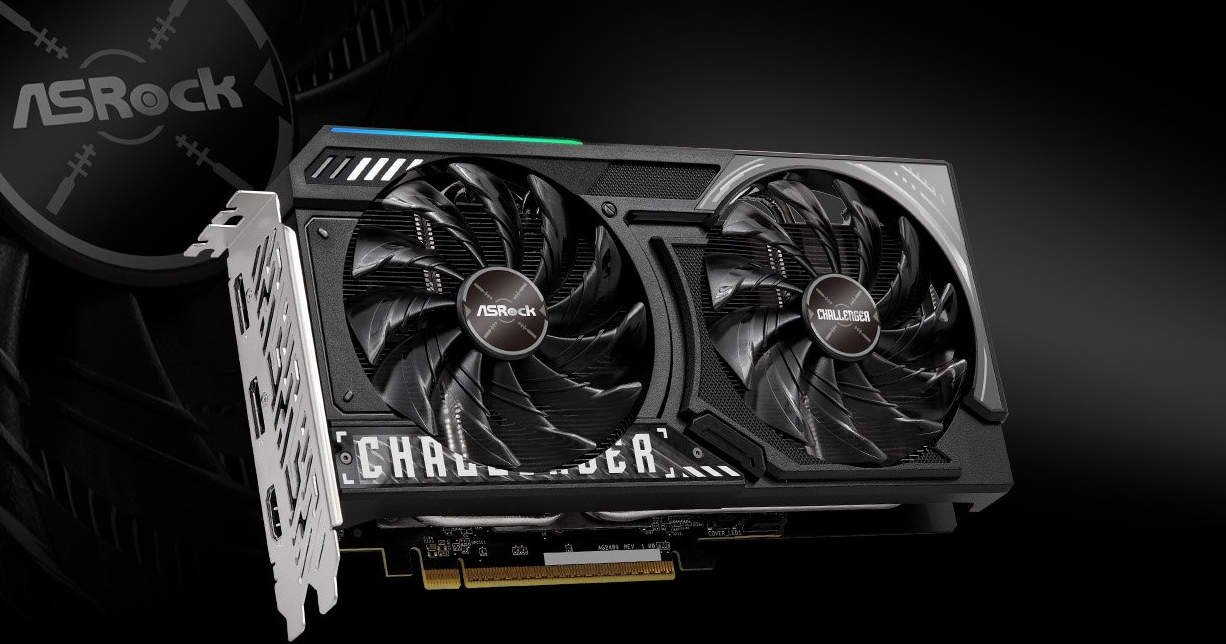
ASRock has quietly revealed 2 versions of the Radeon RX 9050, confirming that AMD’s most affordable RDNA 4 graphics card will be offered with both 4 GB and 8 GB of GDDR6 memory.
The graphics card manufacturer briefly published official product pages for the Radeon RX 9050 Challenger 4 GB and Radeon RX 9050 Challenger 8 GB. The listings initially disappeared before returning intermittently, although the ASRock Radeon RX 9050 Challenger 8 GB page remains accessible at the time of publication.
AMD has since added the RX 9050 to its official Radeon product portfolio, confirming the specifications of the 8 GB model. AMD Software Adrenalin Edition 26.7.1 also introduces official driver support for the card, indicating that availability is approaching in supported regions.
Both ASRock models use AMD’s RDNA 4 architecture with 16 Compute Units, 1024 Stream Processors, 16 third generation Ray Accelerators, and 32 second generation AI Accelerators. This gives the RX 9050 half the Compute Units and Stream Processors found inside the Radeon RX 9060 XT, correcting earlier leaks that suggested the card could carry 2048 Stream Processors.
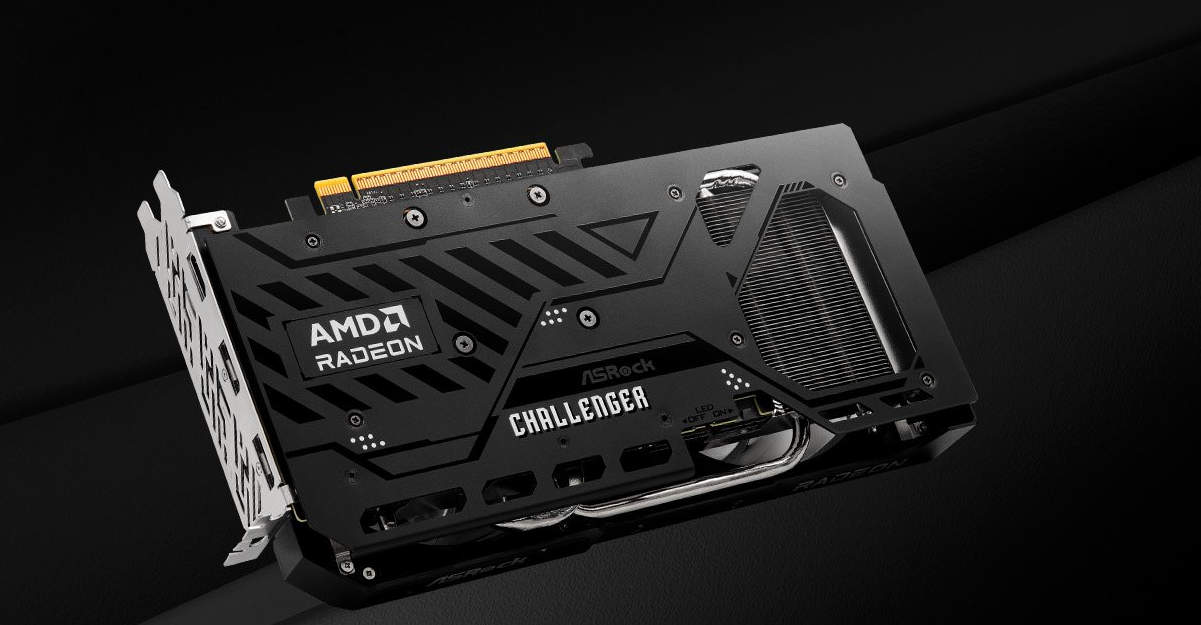
The Radeon RX 9050 operates at a 1920 MHz game clock and can boost up to 2600 MHz. Its GDDR6 memory runs at 18 Gbps, while the card supports PCI Express 5.0, DirectX 12 Ultimate, DisplayPort 2.1a, HDMI 2.1b, AV1 encoding and decoding, ray tracing, and AMD FSR technologies.
The most important difference is the memory configuration. The 8 GB RX 9050 uses a 128 bit interface capable of delivering up to 288 GB per second of bandwidth. The 4 GB model reduces the interface to 64 bit, potentially cutting theoretical memory bandwidth in half despite using the same GPU architecture, clock speeds, and shader configuration.
AMD currently lists only the 8 GB configuration on its official consumer product page. Reports indicate that the 4 GB version is intended primarily for complete desktop systems rather than normal standalone retail sales, while the 8 GB card will be available through board partners in selected markets.
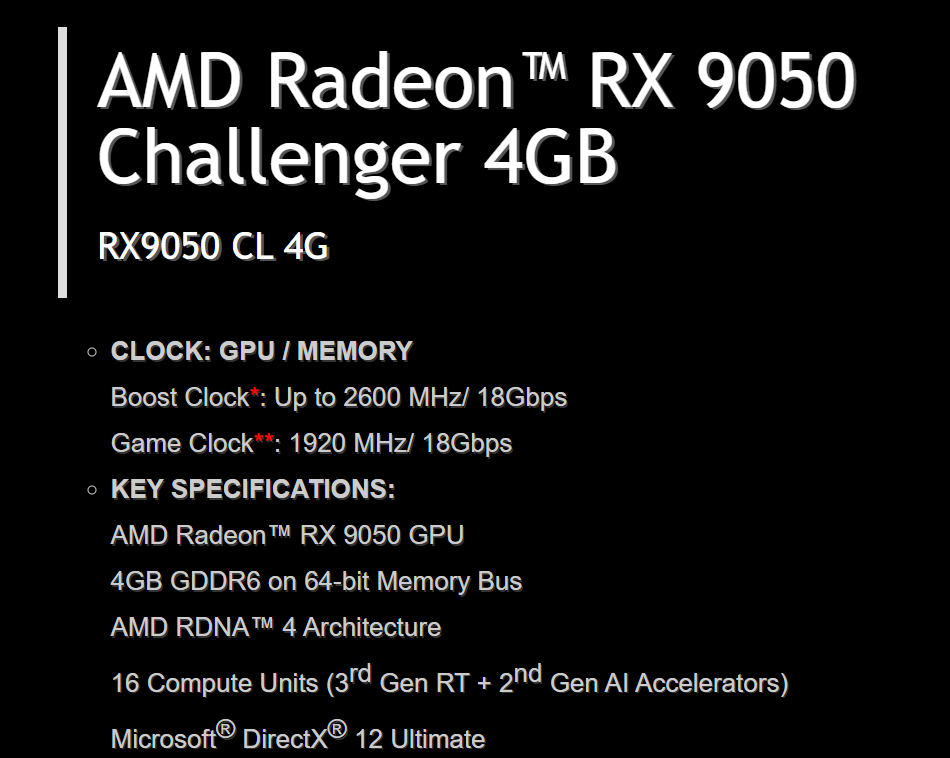
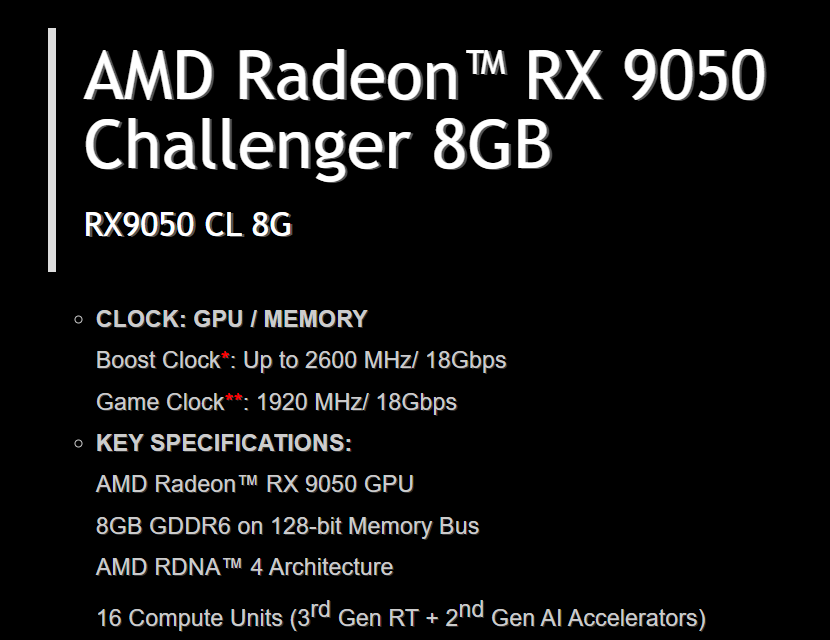
This distinction will be important for consumers purchasing affordable prebuilt gaming computers. Both products carry the Radeon RX 9050 name, but the difference in memory capacity and interface width could produce significantly different results in games that rely heavily on texture streaming, large environments, ray tracing data, or modern rendering systems.
The 8 GB model has a typical board power rating of only 92W and requires a single 8 pin power connector. AMD recommends a minimum 450W power supply, positioning the RX 9050 as a power efficient option for compact computers, affordable gaming systems, and upgrades from older entry level graphics cards.
AMD is reportedly positioning the 8 GB Radeon RX 9050 at $279 in selected Asia Pacific, Japanese, and Latin American markets. Pricing for the 4 GB edition has not been announced, although its reduced memory configuration and focus on complete systems suggest it will be used to lower the cost of entry level gaming computers.
The launch arrives as graphics memory prices continue placing pressure on the Radeon product portfolio. AMD has reportedly warned several graphics card partners about higher GPU and memory bundle costs, making lower capacity products increasingly attractive to manufacturers attempting to maintain affordable system prices.
The Radeon RX 9050 could give AMD a useful entry point below the RX 9060 family, particularly for efficient 1080p computers and esports systems. The 8 GB model offers modern RDNA 4 features, current display connectivity, AV1 support, and a relatively low 92W power requirement.
The 4 GB version is far more difficult to recommend for modern gaming. Its reduced capacity is only part of the problem, since the narrower 64 bit interface also limits memory bandwidth. Even when both versions share the same 1024 Stream Processors and 2600 MHz boost clock, the 4 GB model may encounter more severe texture limitations and inconsistent performance in demanding games.
Using the same RX 9050 name for both configurations could also create confusion within the prebuilt market. Consumers will need to inspect the complete specifications rather than assuming every RX 9050 delivers the same experience.
At $279, the 8 GB model will ultimately be judged by its real gaming performance and retail competition. AMD is describing it as a modern 1080p graphics solution, but independent benchmarks will determine whether its price is competitive enough against discounted Radeon, GeForce, and Intel Arc alternatives.
Would you consider buying a 4 GB graphics card in 2026 if the complete gaming computer was affordable enough?
