
Arm Launches Its First Ever Data Center Silicon With the AGI CPU, Marking a Historic Shift Beyond IP Licensing
Arm has officially entered the merchant silicon business with the launch of its first in house production chip, the Arm AGI CPU. The company announced the processor during its Arm Everywhere event on March 24, calling it the first product in a new data center silicon line built specifically for agentic AI infrastructure. Arm says this is the first time in its more than 35 year history that it is delivering its own silicon products rather than only licensing CPU IP and platform designs.
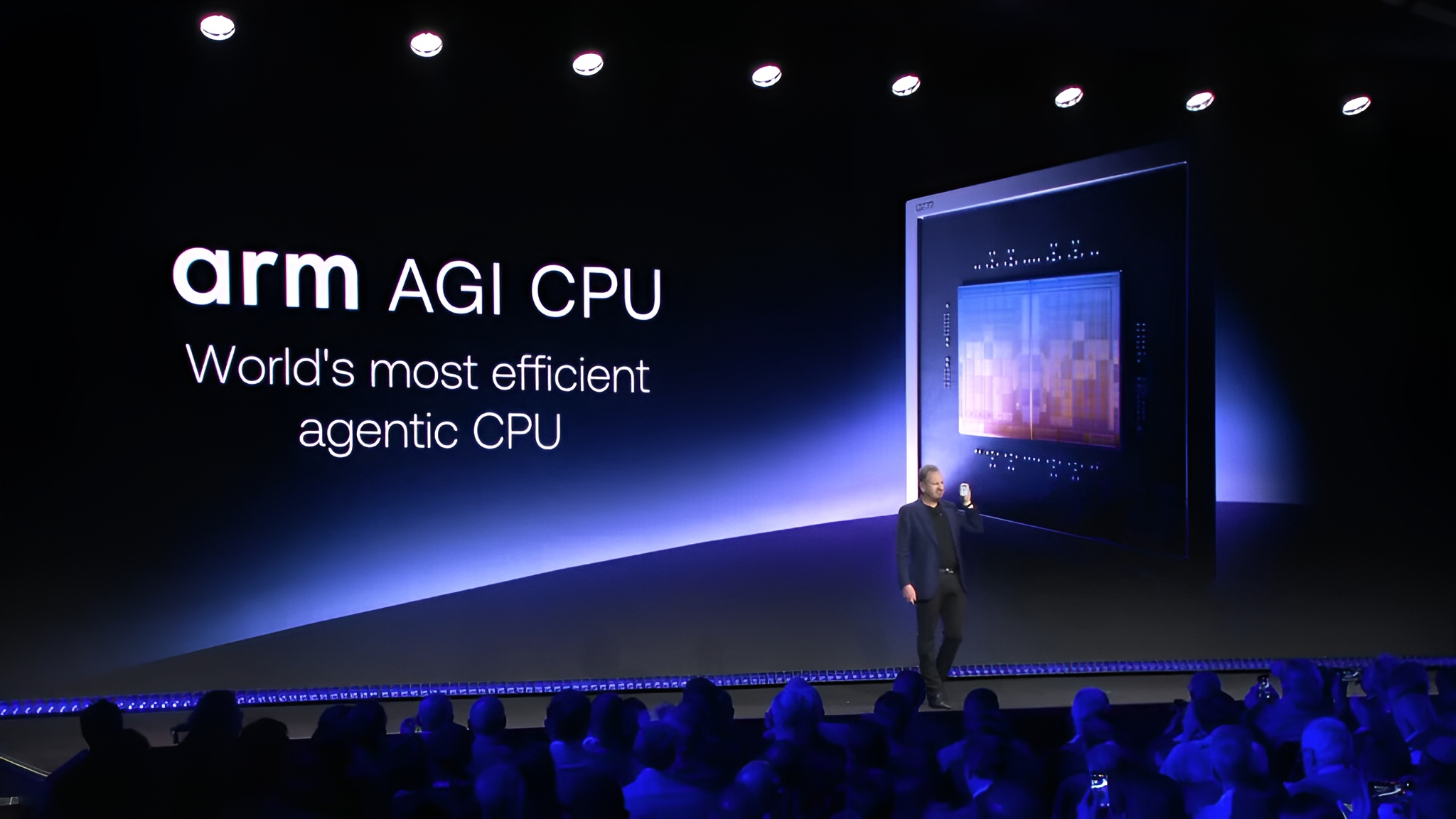
That alone makes this one of the most consequential announcements Arm has made in years. The AGI CPU is built on the Arm Neoverse V3 platform and is aimed at the orchestration layer of modern AI infrastructure, where CPUs are increasingly responsible for managing accelerators, memory, storage, task scheduling, and data movement across distributed systems. Arm argues that in the age of agentic AI, where software agents coordinate and execute work continuously, the CPU becomes the pacing element of the data center rather than just a background component.
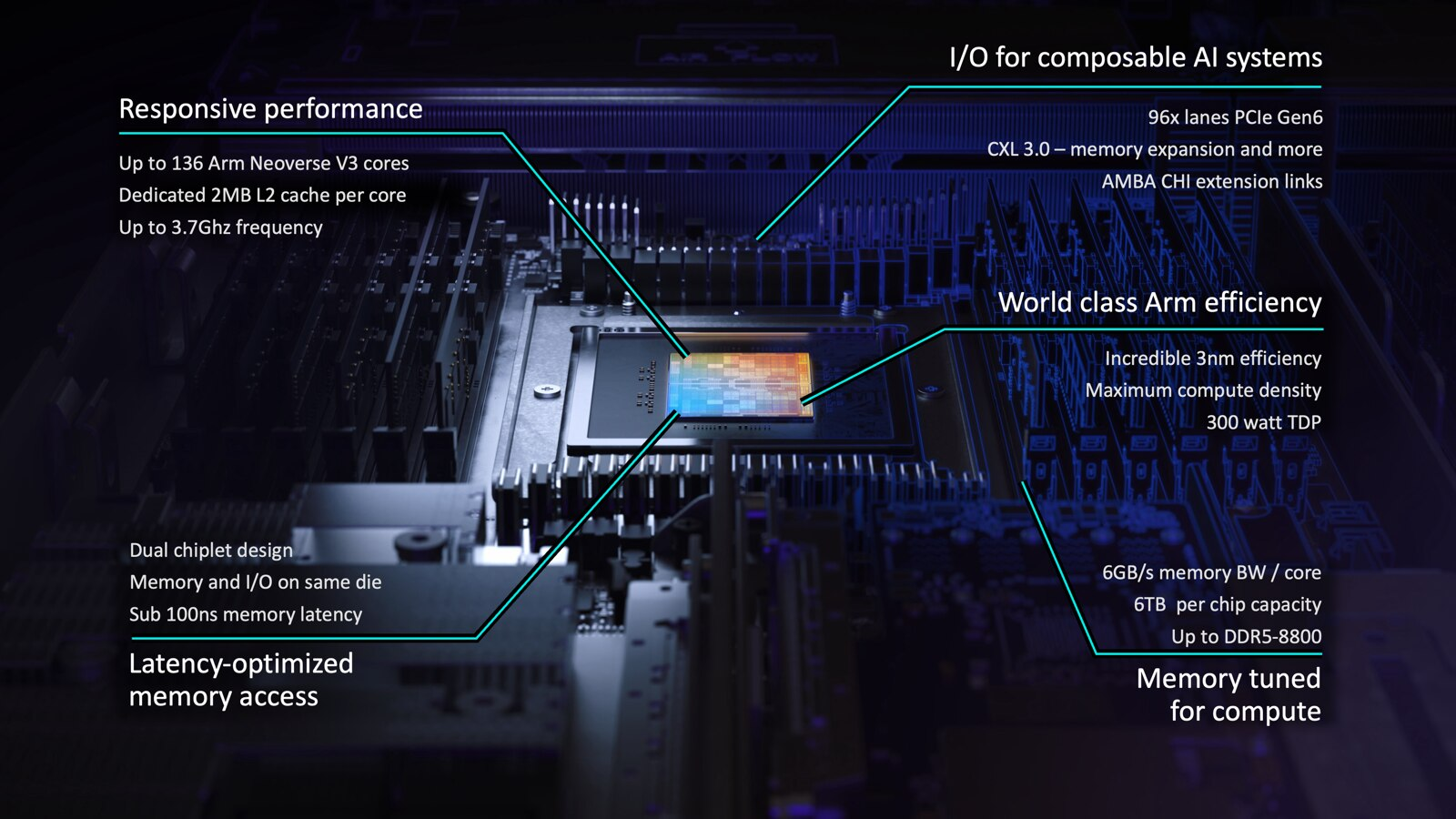
On the hardware side, the new processor is positioned as a high density server CPU for large scale inference and orchestration workloads. Arm says the chip offers up to 136 Neoverse V3 cores, 2 MB of L2 cache per core, up to 3.7 GHz frequency, and a design centered on high memory bandwidth and low latency. It also supports 96 PCIe Gen 6 lanes, CXL 3.0 memory expansion, and DDR5 8800 memory, with Arm and third party reporting placing the chip on TSMC 3 nm manufacturing. Reuters reported that the processor is expected to enter volume production in the second half of 2026.
Below is the disclosed specification overview based on Arm’s announcement and current reporting:
| Category | Specification |
|---|---|
| Core Architecture | Arm Neoverse V3 |
| Core Count | Up to 136 cores |
| Clock Frequency | Up to 3.7GHz |
| Cache | Dedicated 2MB L2 cache per core |
| Manufacturing Process | 3nm |
| Thermal Design Power (TDP) | 300 Watts |
| Packaging / Layout | Dual chiplet design (Memory and I/O on the same die) |
| Memory Supported | Up to DDR5-8800 |
| Memory Capacity | Up to 6TB per chip |
| Memory Performance | 6GB/s memory bandwidth per core; Sub-100ns memory latency |
| I/O & Connectivity | 96x lanes PCIe Gen6 |
| Expansion & Interconnects | CXL 3.0 (for memory expansion) and AMBA CHI extension links |
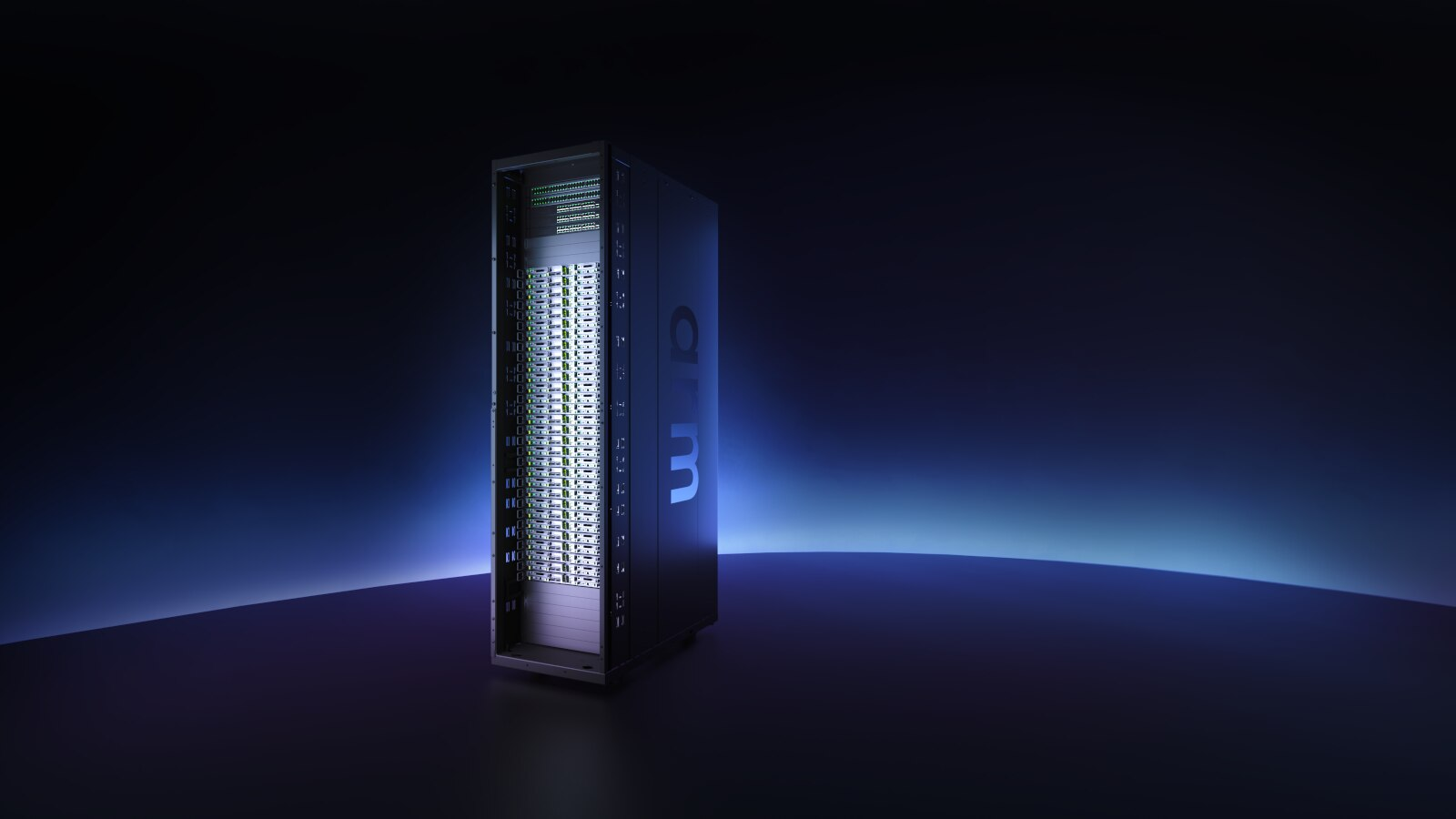
Arm is also framing the AGI CPU as a rack scale product rather than only a single socket story. The company’s reference server design is a 1OU dual node system with 2 chips and 272 total cores per blade. Arm says a standard 36 kW air cooled rack can fit 30 blades for a total of 8,160 cores, while a liquid cooled partner design with Supermicro can scale much higher. Arm claims that in this configuration the AGI CPU can deliver more than 2 times the performance per rack versus the latest x86 systems, though that figure is based on Arm internal estimates rather than independent third party testing.
The partner list is one of the biggest signals that this launch is being taken seriously. Arm says Meta is the lead partner and customer, co developing the AGI CPU to work alongside its MTIA accelerators. It also named OpenAI, Cloudflare, F5, SAP, SK Telecom, Cerebras, Positron, and Rebellions among the launch partners, while commercial systems are already available to order from ASRockRack, Lenovo, and Supermicro. Reuters added that Arm expects the new chip strategy to contribute billions of dollars in annual revenue over time.
Strategically, this is a very big move. Arm is no longer just the company selling the blueprints behind other firms’ CPUs. It is now stepping directly into the product layer and, in some cases, into competition with parts of its own ecosystem. That does not automatically mean it has ended NVIDIA’s server CPU advantage or displaced x86 in the data center. What it does mean is that Arm now wants a bigger share of the value stack, especially in AI infrastructure where demand for orchestration compute is rising quickly. That is an inference based on Arm’s announced business shift and the partner ecosystem around the launch.
The bigger question now is execution. Arm has an enormous ecosystem presence and a strong technical foundation, but selling finished silicon is a very different business from licensing IP. Volume ramps, customer support, platform validation, and long term roadmaps all become much more exposed once the company becomes a direct chip vendor. Even so, the AGI CPU announcement makes one thing very clear: Arm no longer wants to be only the architecture behind the AI data center. It wants to be one of the companies shipping the compute inside it.
Do you see Arm’s AGI CPU as the start of a major power shift in AI infrastructure, or is this still too early to challenge the biggest existing CPU and platform players?
