
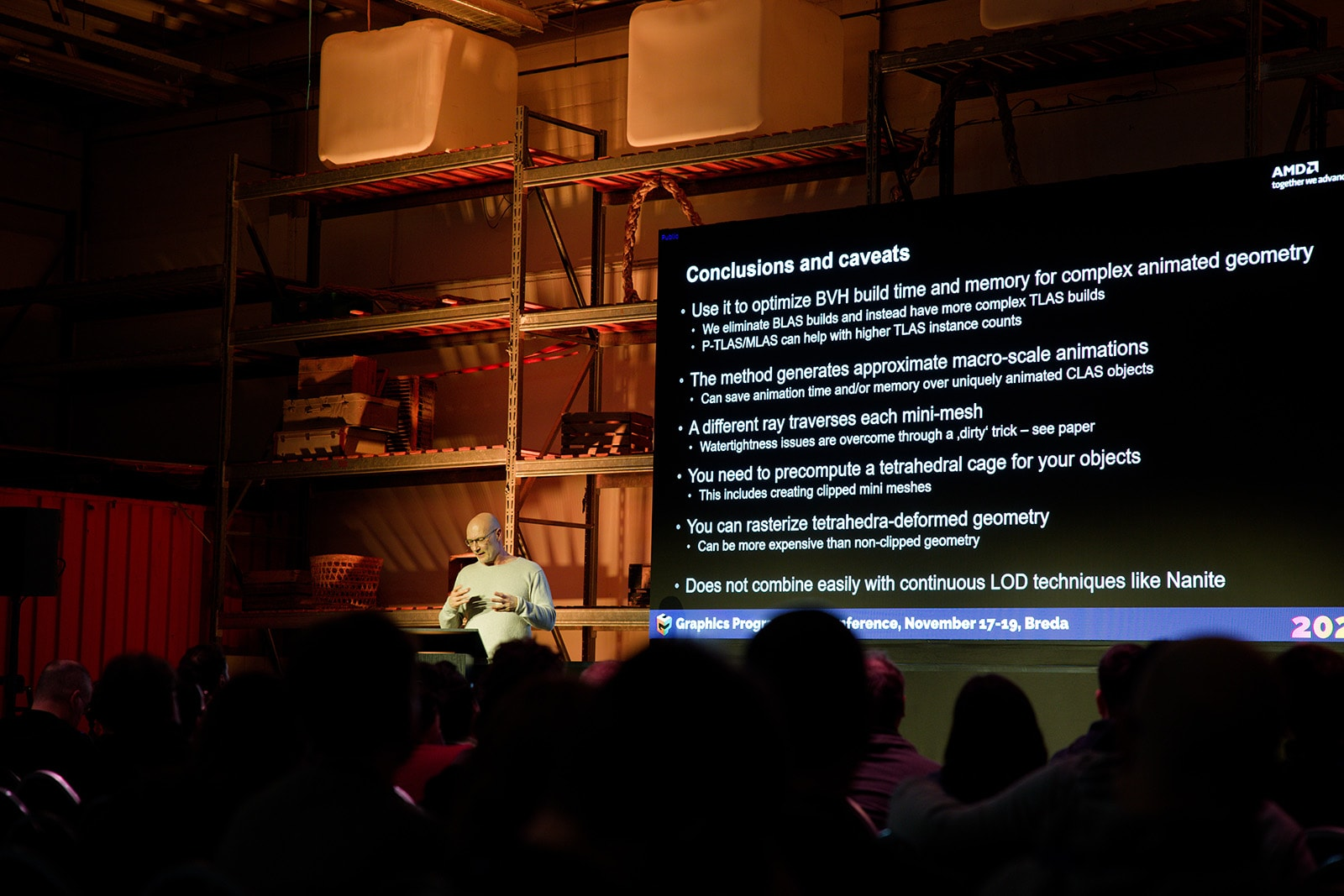
AMD has introduced Ray Tracing Multi Level Acceleration Structures (RT MLAS), a new Vulkan extension designed to reduce memory consumption and acceleration structure rebuild times in complex ray traced environments. Announced on November 24, 2026, the technology is currently available for Radeon RX 9000 series graphics cards and selected Radeon AI PRO GPUs, with DirectX 12 support planned for the future.
According to AMD's official GPUOpen technical announcement, the technology introduces up to 2 additional hierarchical levels between Bottom Level Acceleration Structures (BLAS) and Top Level Acceleration Structures (TLAS). These intermediate structures, known as Mid Level Acceleration Structures (MDLAS), allow developers to reuse groups of geometry and animations across large environments instead of repeatedly storing or rebuilding them.
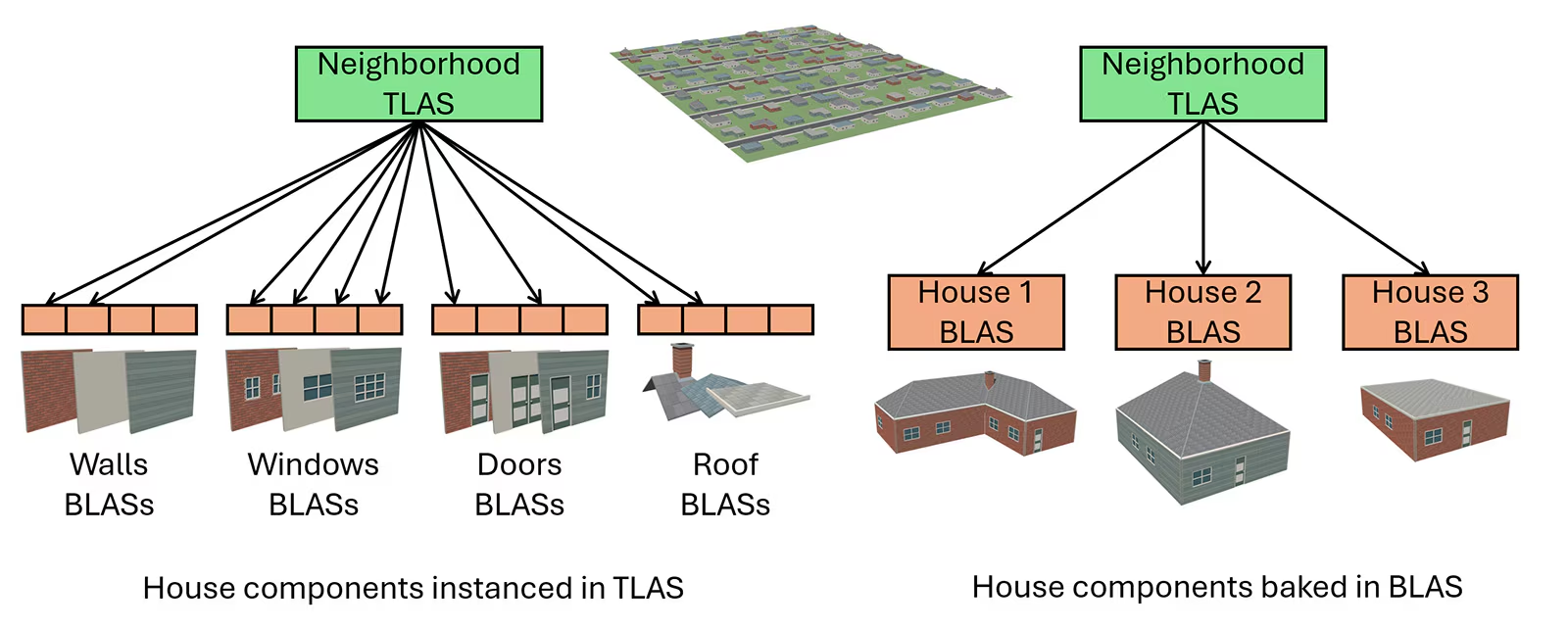
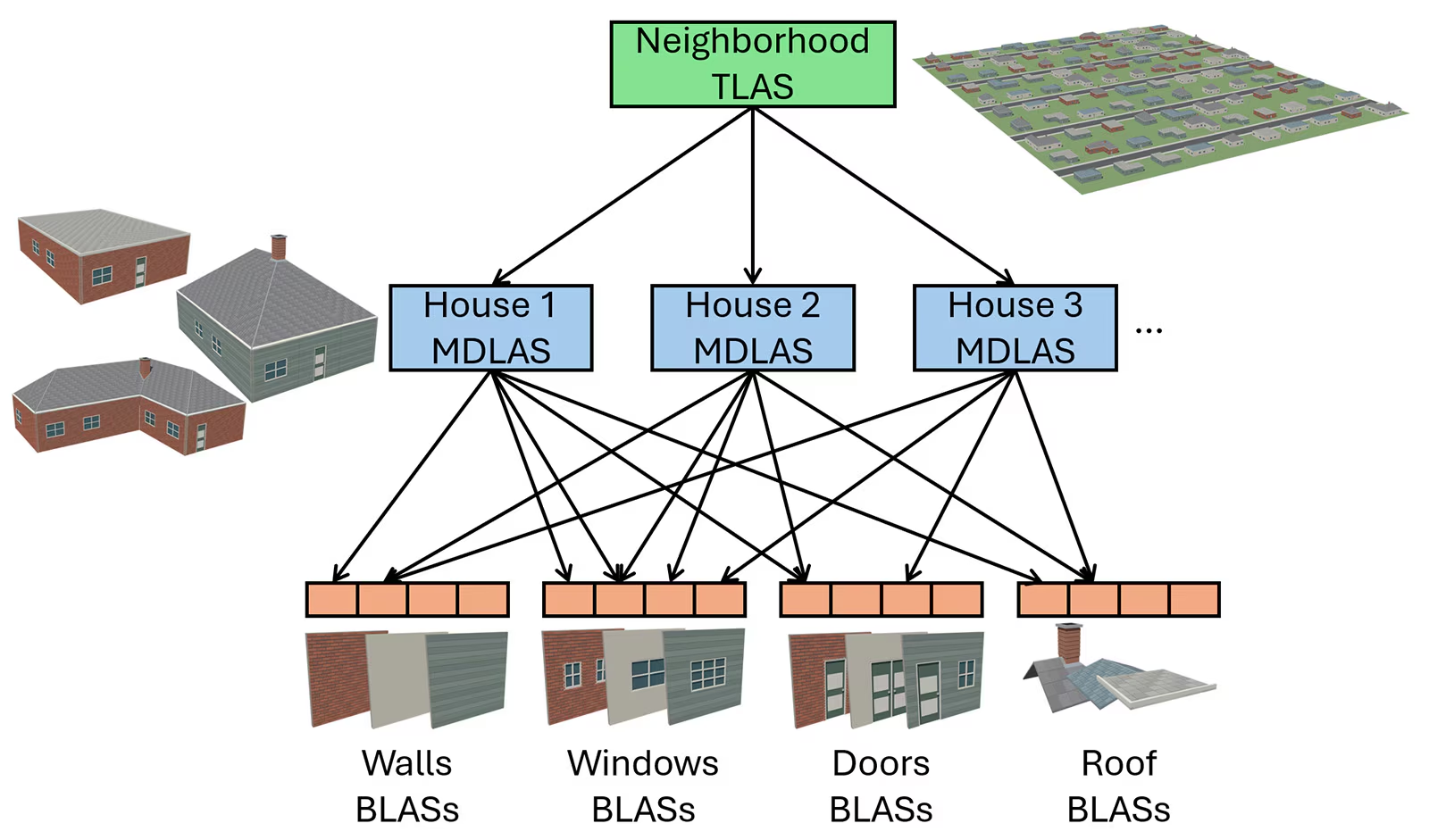
This approach could be particularly beneficial for open world games featuring dense vegetation, complex architecture, animated objects, and numerous environmental assets. By sharing intermediate structures across recurring objects, developers can reduce VRAM requirements and the computational overhead associated with updating dynamic scenes.
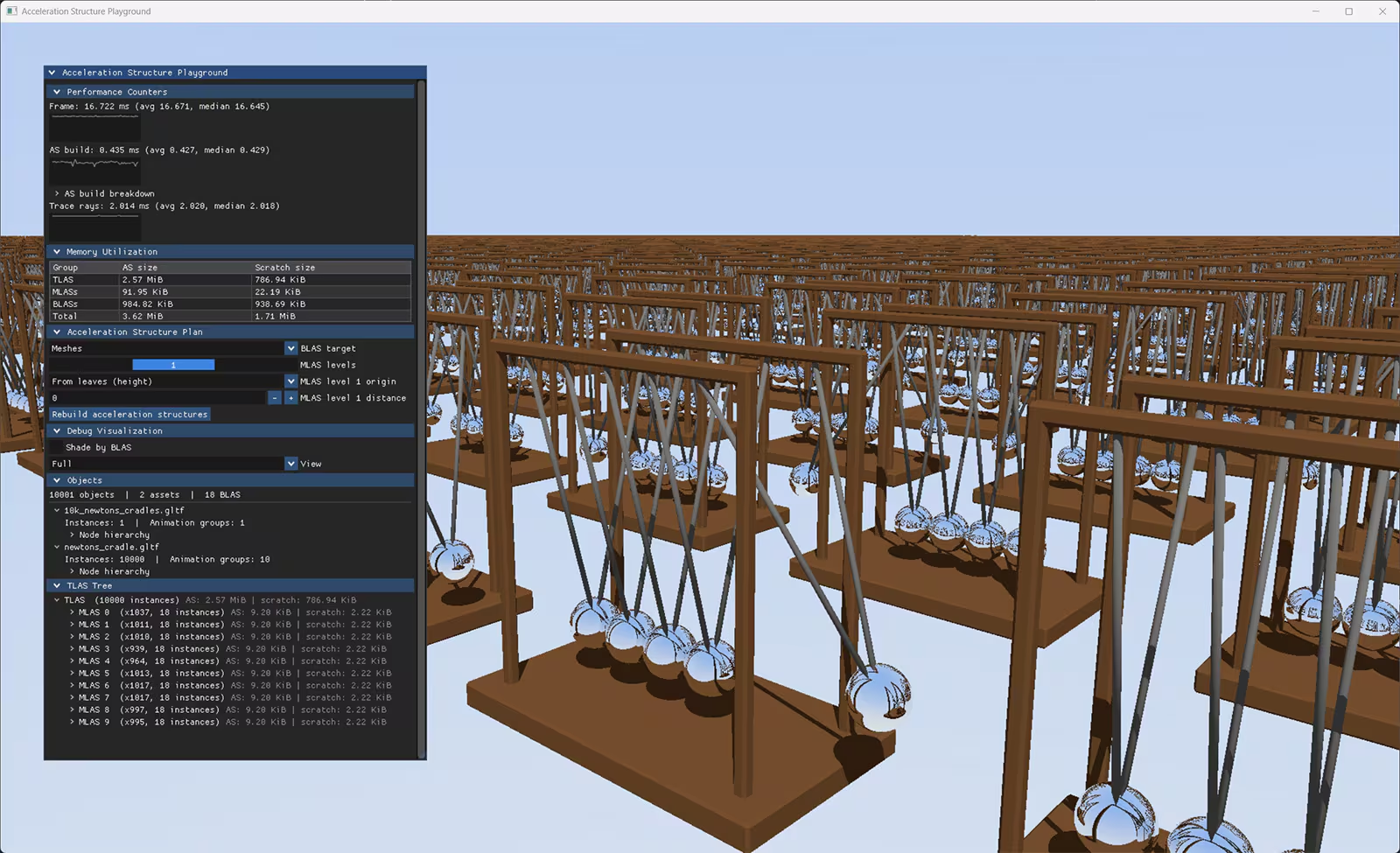
AMD demonstrated the technology using a scene containing 10,000 animated Newton's cradles with 10 different animation offsets, running on a Radeon RX 9070 paired with a Ryzen 7 5800X and 32 GB of RAM.
| Acceleration Structure | Memory Usage | Median Rebuild Time |
|---|---|---|
| Traditional BLAS Per Component | 47.17 MiB | 0.97 ms |
| Traditional BLAS Per Unique Object | 11.55 MiB | 1.60 ms |
| AMD RT MLAS | 3.62 MiB | 0.43 ms |
Compared with the traditional component based configuration, RT MLAS reduced acceleration structure memory consumption by approximately 92.3% and rebuild times by 55.7%. Against the individual object configuration, memory consumption decreased by 68.7%, while rebuild times improved by 73.1%.
The technology complements Microsoft's recent DirectX Raytracing advancements, particularly Partitioned Top Level Acceleration Structures and Clustered Geometry. AMD's implementation focuses on reusable hierarchical structures, offering developers greater flexibility when managing repeated geometry and animated objects.
| Feature | Standard HBM4E | NVIDIA NVHBM |
|---|---|---|
| Memory controller | Located on GPU or XPU | Integrated into HBM base die |
| Base die manufacturing | Varies by supplier | TSMC 3 nm reportedly requested |
| DRAM manufacturing | Supplier dependent | Sixth generation 1c requested |
| Memory bandwidth | Baseline | Up to 30% higher, NVIDIA claim |
| HBM power consumption | Baseline | Up to 15% lower, NVIDIA claim |
| Supplier qualification | Vendor specific validation | Standardized NVIDIA architecture |
Developers can experiment with the technology through AMD's open source Acceleration Structure Playground, alongside the dedicated Adrenalin Edition 26.20.25.01 driver for expanded Vulkan extension support.
AMD acknowledges that additional hierarchical levels introduce some ray traversal overhead, making the technology more advantageous in complex environments. The reported memory savings apply specifically to acceleration structures rather than total VRAM consumption, and commercial gaming performance improvements have yet to be established.
AMD's RT MLAS represents exactly the type of rendering optimization the gaming industry needs. Rather than relying exclusively on increasingly powerful graphics cards, AI upscaling, and frame generation, AMD is addressing the underlying computational and memory requirements of ray tracing.
Combined with AMD's expanding FSR Redstone rendering ecosystem, these developments could make advanced ray tracing and path tracing more practical across mainstream graphics hardware.
With rising memory prices and increasingly demanding PC games, efficient geometry management should become a fundamental priority for developers. AMD should also explore expanding compatibility to previous Radeon generations wherever technically feasible, allowing consumers to benefit from software advancements without requiring premature hardware upgrades.
Do you believe technologies like AMD's RT MLAS could make ray tracing more accessible to mainstream PC gamers, and should AMD prioritize supporting older Radeon graphics cards?
