

Microsoft has introduced its most significant DirectX Raytracing (DXR) upgrade since the technology debuted in 2018, bringing new optimizations designed to improve ray tracing performance, reduce GPU memory consumption, and handle increasingly complex game environments. Announced alongside DirectX 12 Agility SDK 1.620 Retail and 1.722 Preview, the update introduces Clustered Geometry, Partitioned Top Level Acceleration Structures (PTLAS), and GPU driven acceleration structure builds, with support from NVIDIA, AMD, and Intel graphics hardware.
According to Microsoft's official DirectX announcement, the improvements address one of the major performance bottlenecks in modern ray tracing. Traditionally, graphics engines must repeatedly construct and update acceleration structures containing the geometry used to calculate lighting, reflections, and shadows. These operations become increasingly expensive in environments featuring complex animations, large open worlds, and dynamically generated objects.
Clustered Geometry addresses this limitation by dividing 3D models into smaller reusable structures containing up to 256 triangles and 256 vertices. Instead of rebuilding entire Bottom Level Acceleration Structures (BLAS) whenever geometry changes, developers can reuse existing clusters and assemble them more efficiently. Meanwhile, PTLAS allows engines to update only modified sections of a scene rather than rebuilding its entire Top Level Acceleration Structure. Combined with GPU driven construction, these techniques can significantly reduce processing overhead and memory requirements.

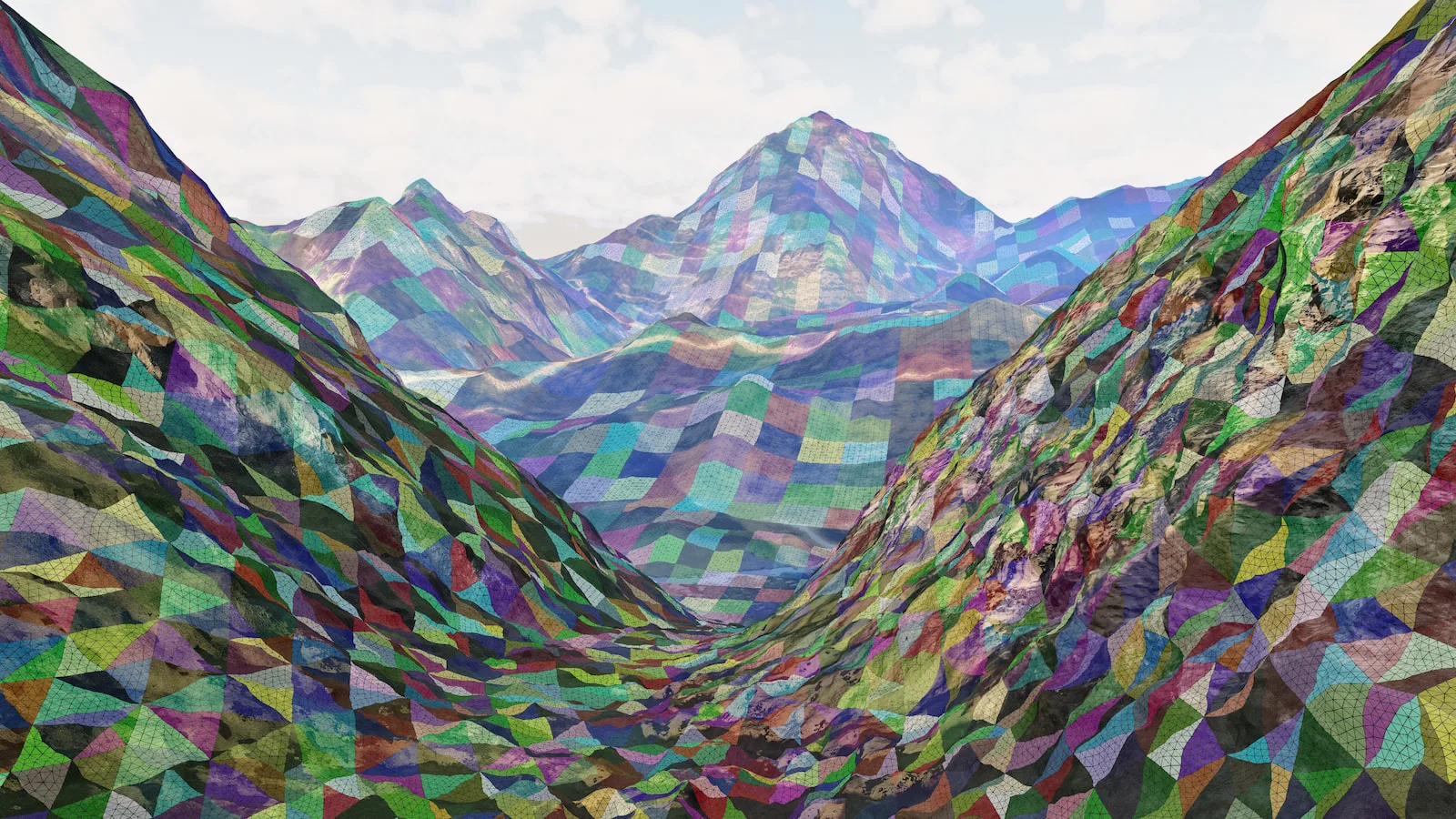
Microsoft demonstrated the improvements using an official DirectX Clustered Geometry sample running on an AMD Radeon RX 9070. In a particularly demanding test configuration, performance increased from 1.2 FPS to 79 FPS, representing approximately 66 times higher performance. Acceleration structure preparation time dropped from 788 ms to 3.11 ms, while total acceleration structure memory consumption decreased by nearly 90%.
DirectX Ray Tracing Performance Comparison
| Metric | Traditional BLAS | Clustered Geometry |
|---|---|---|
| Frame Rate | 1.2 FPS | 79 FPS |
| Acceleration Structure Build | 788 ms | 3.11 ms |
| GPU Ray Tracing Time | 72.6 ms | 9.27 ms |
| Static Geometry Memory | 723 MiB | 527 MiB |
| Animated Geometry Memory | 6,794 MiB | 244 MiB |
| Total Acceleration Structure Memory | 7,519 MiB | 774 MiB |
Results are from a specific Microsoft development demonstration using an AMD Radeon RX 9070. They do not represent expected performance improvements in commercial games. Temporary build memory requirements also increased in the demonstrated configuration.
The new DirectX features do not require fundamentally new ray tracing hardware, although GPU driver implementation determines compatibility. NVIDIA has confirmed support across its entire GeForce RTX lineup, while AMD currently supports Radeon RX 9000 graphics cards. Intel compatibility includes Arc B Series GPUs and selected Core Ultra integrated graphics processors, including the 200V Series and Series 3. Qualcomm is also preparing support for Snapdragon X2 platforms during the first half of 2027.


The technology builds upon concepts already demonstrated through NVIDIA's RTX Mega Geometry, which is being implemented in Gears of War: E Day. Standardizing similar capabilities within DirectX could make advanced geometry processing more accessible across competing GPU architectures. However, the features currently remain in preview, meaning developers must integrate them into their rendering engines before players can benefit.
Alongside the ray tracing improvements, Agility SDK 1.620 introduces additional features for GPU diagnostics, asynchronous command processing, and Advanced Shader Delivery. The latter now supports Partial Graphics Programs, allowing developers to reuse compiled shader components and potentially reduce compilation workloads. These developments complement Microsoft's broader efforts to reduce shader compilation stutter across Windows gaming. Shader Model 6.10 also remains in preview, with its retail release expected in early December 2026.
Microsoft's latest DXR upgrade could become an important milestone for the future of ray tracing, particularly because it focuses on reducing computational overhead rather than simply demanding more powerful graphics cards. The ability to reuse complex geometry and update only modified scene regions could make detailed reflections, shadows, and path traced environments more practical across a wider range of GPUs. However, the impressive 66 times performance improvement comes from a specialized development workload and should not be interpreted as a universal gaming performance boost. The real advantage will emerge when developers integrate these capabilities into modern game engines, potentially improving visual fidelity and GPU efficiency without requiring an entirely new generation of hardware.
Could Microsoft's new DirectX optimizations finally make advanced ray tracing more accessible on mainstream gaming GPUs, or will increasingly demanding graphics continue pushing hardware requirements higher?
