
AMD FSR Redstone Officially Launches with Support for Over 200 Games by End of 2025 and more
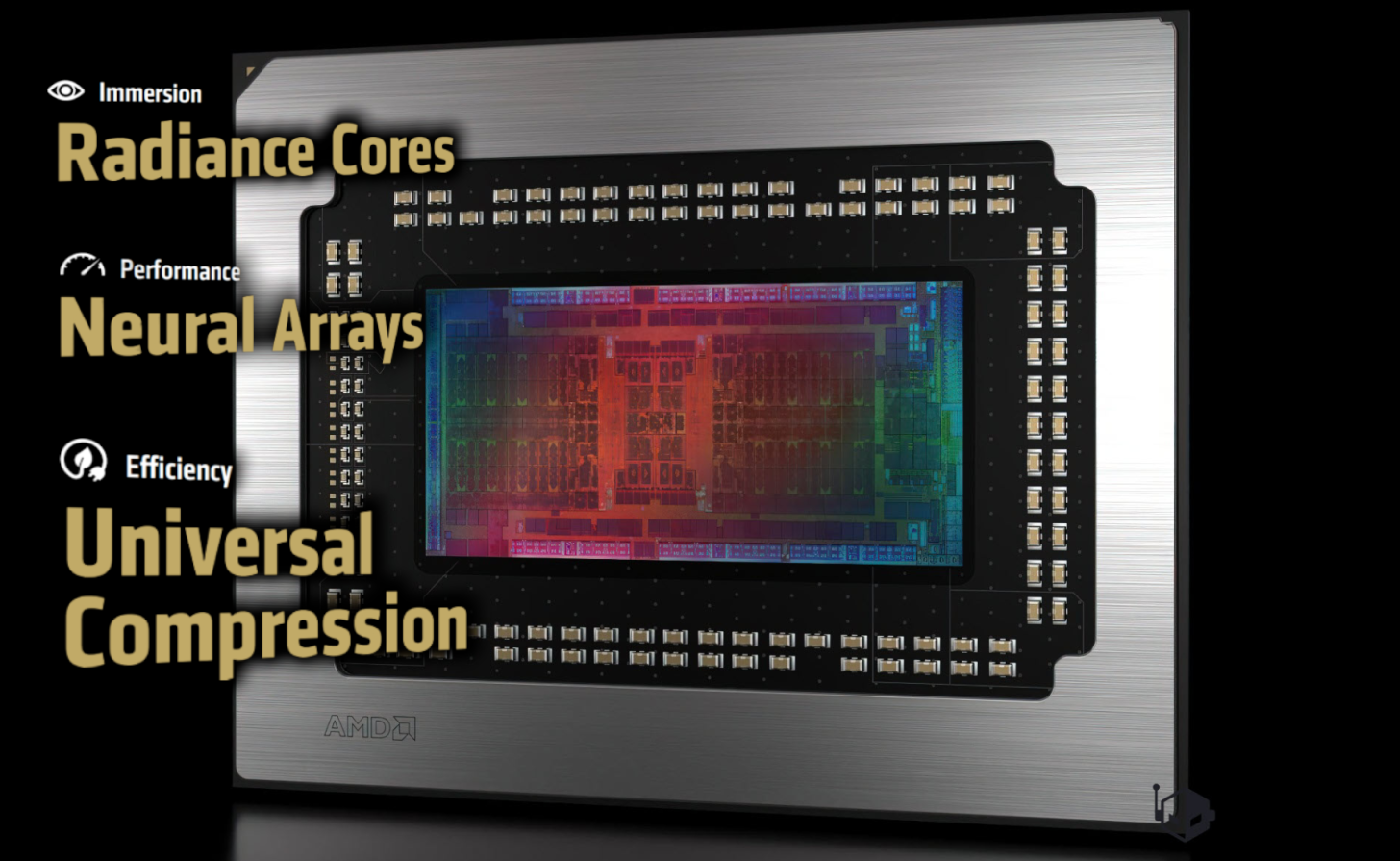
AMD has formally introduced FSR Redstone, the company’s most comprehensive update to the FidelityFX Super Resolution ecosystem to date. Positioned as a next generation ML powered visual enhancement suite, FSR Redstone is engineered exclusively for the new Radeon RX 9000 GPUs based on the RDNA 4 architecture, enabling advanced upscaling, frame generation, ray regeneration, and real time neural caching. AMD confirms that FSR Redstone upscaling support will expand to more than 200 games by the end of 2025, with over forty titles integrating the new Redstone Frame Generation technology.
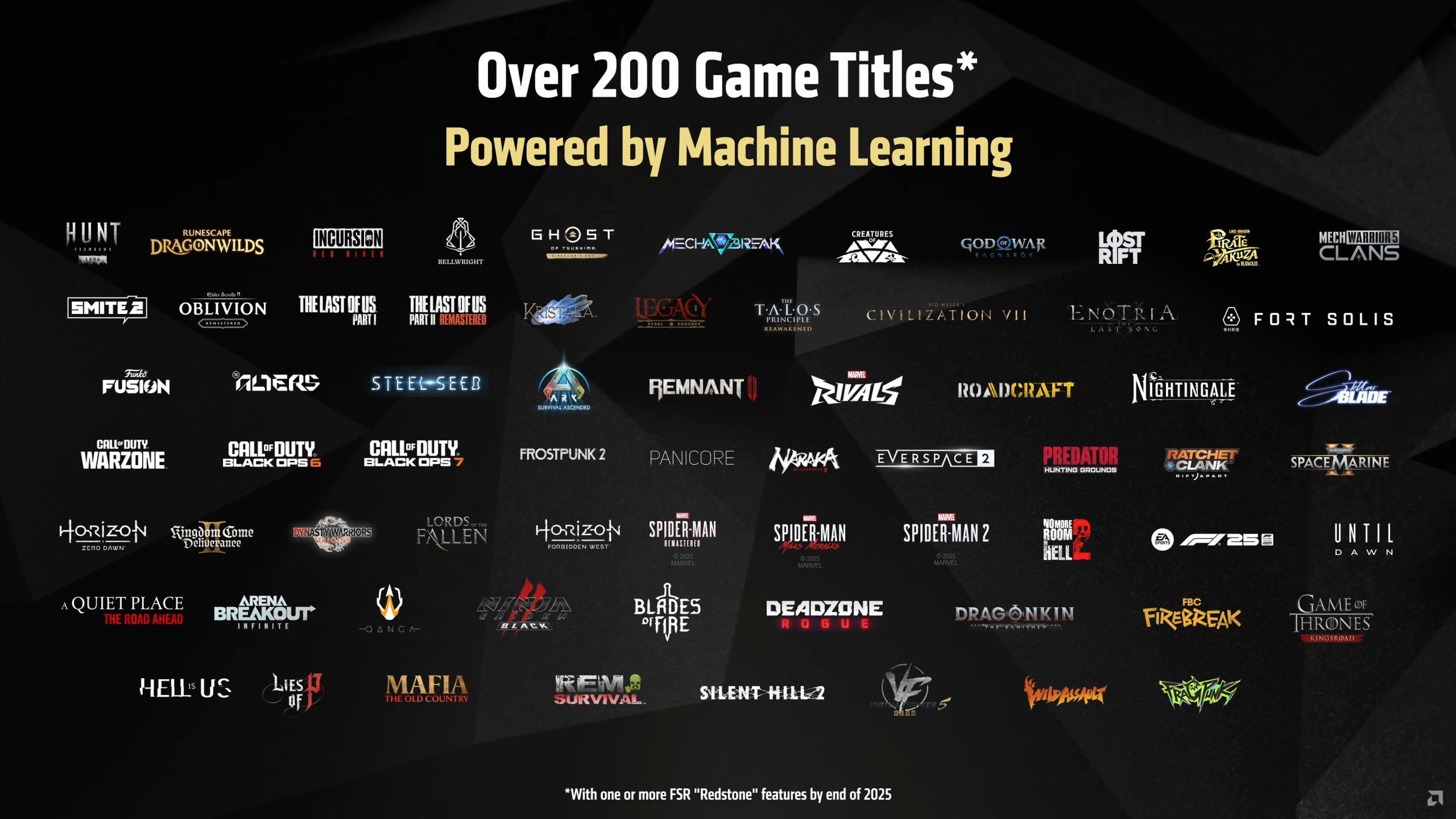
While FSR Redstone is purpose built for RDNA 4 hardware, older GPUs including RDNA 3.5, RDNA 3, and RDNA 2 will continue to operate using FSR 4 upscaling paths when Redstone is activated. This ensures compatibility while maintaining a clear separation between AMD’s ML accelerated and analytical rendering pipelines.
A Four Pillar Upgrade Delivering AMD’s Most Advanced Rendering Pipeline
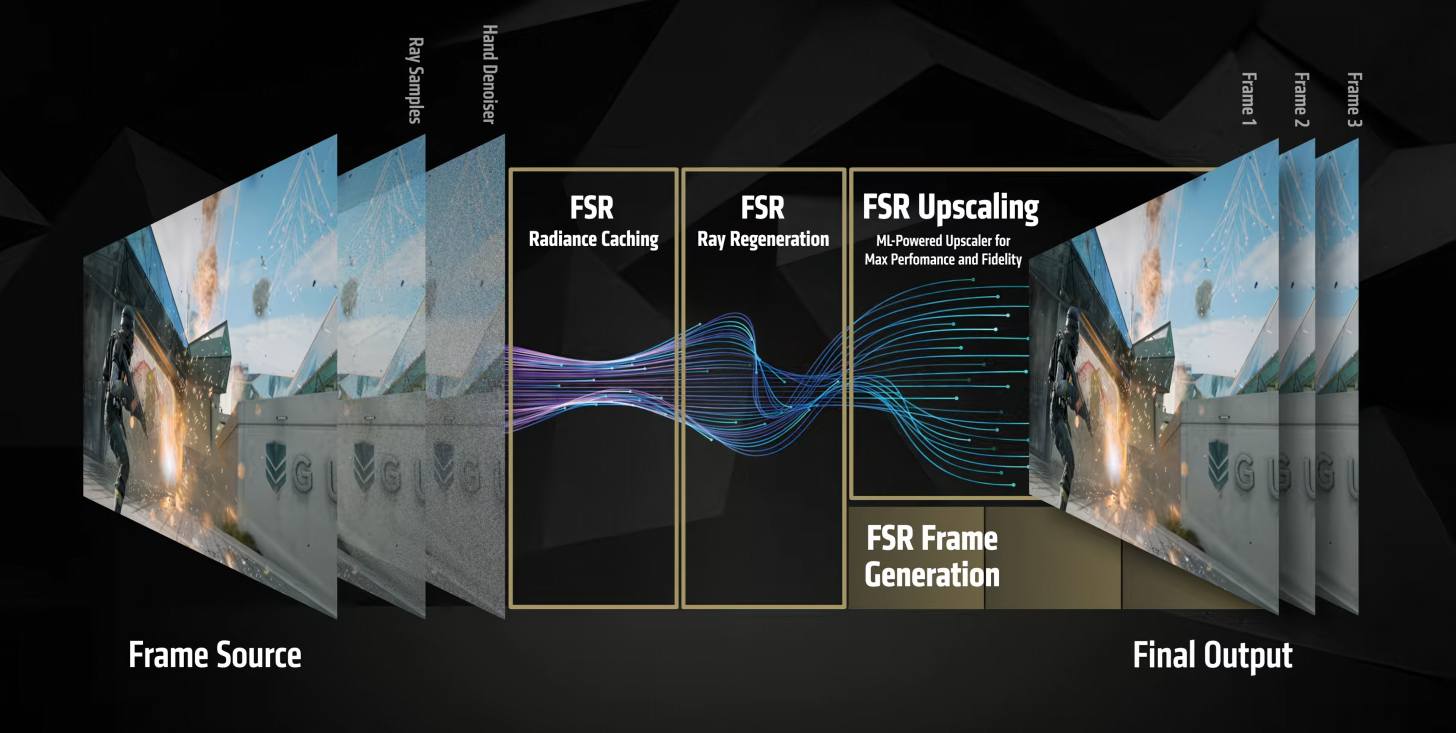
The FSR Redstone platform introduces four foundational components designed to modernize AMD’s rendering capabilities across image quality, performance, and ray traced workloads:
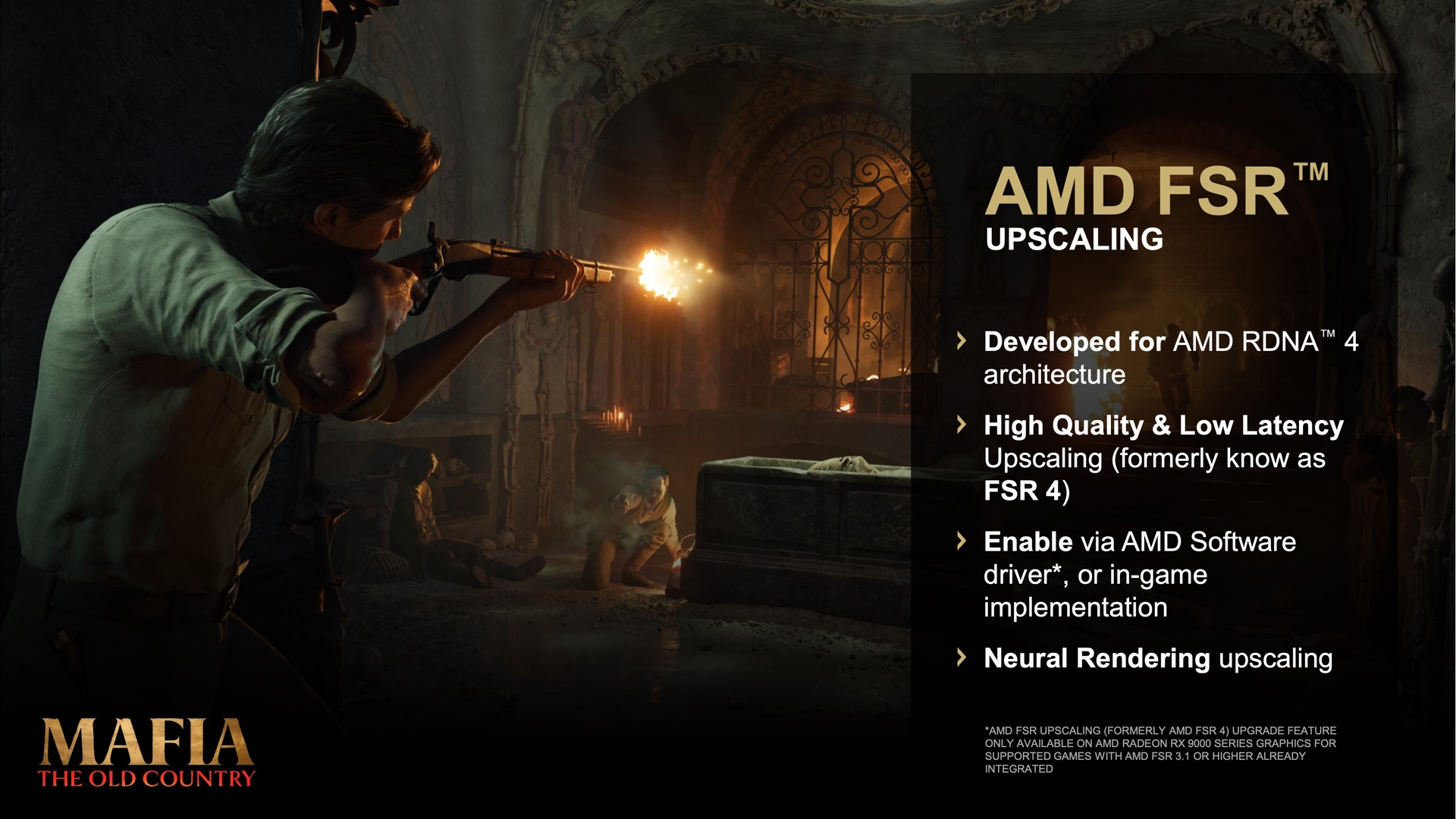
FSR Redstone Upscaling
FSR Redstone Frame Generation
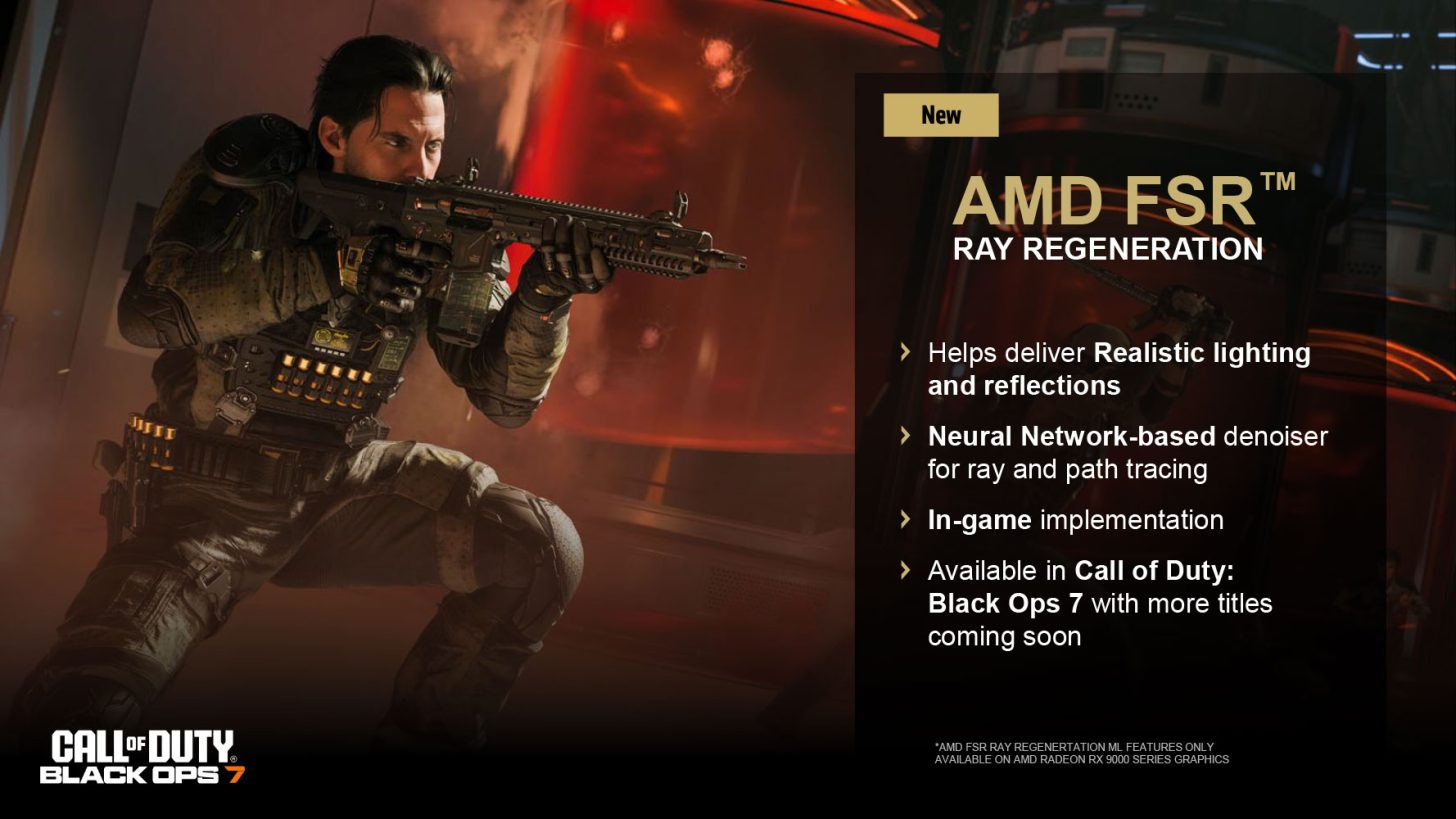
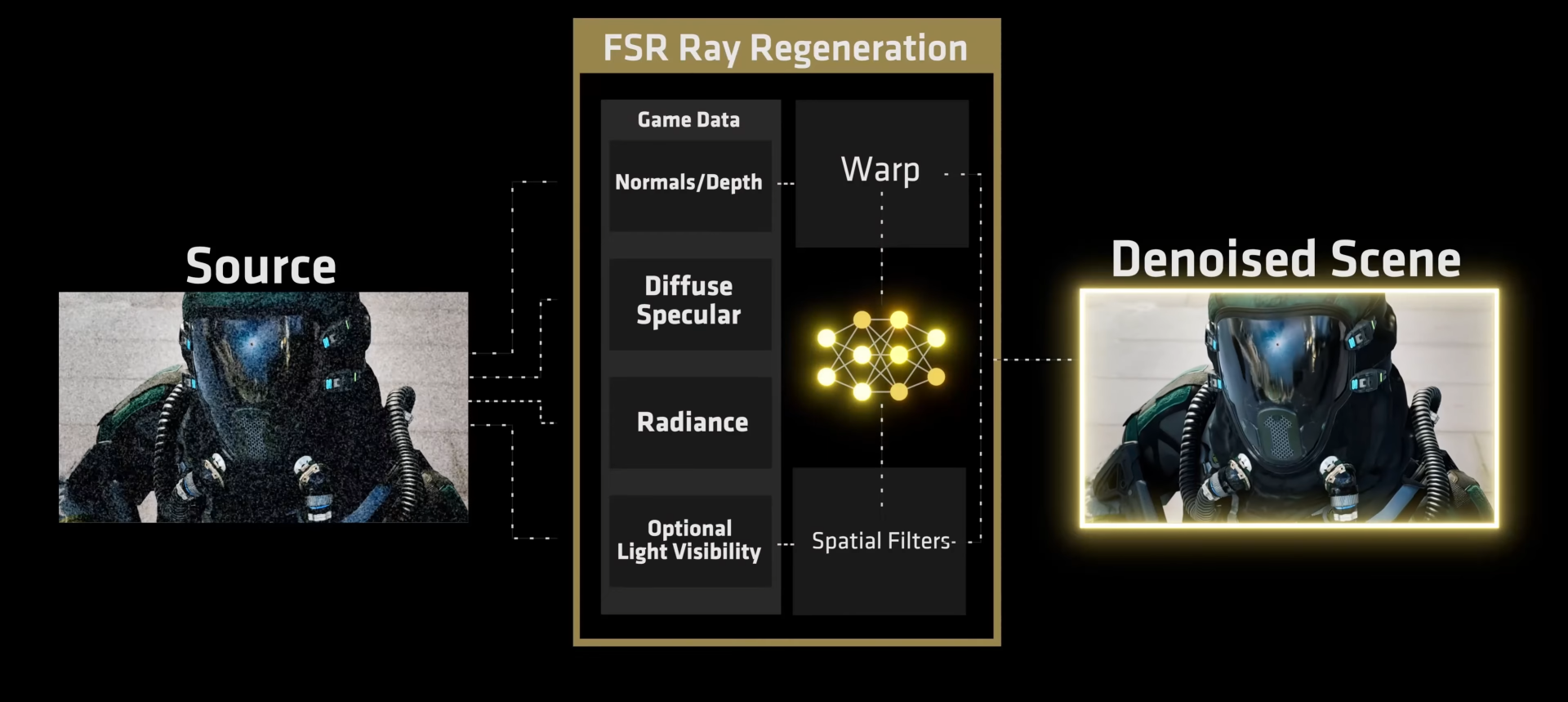
FSR Redstone Ray Regeneration
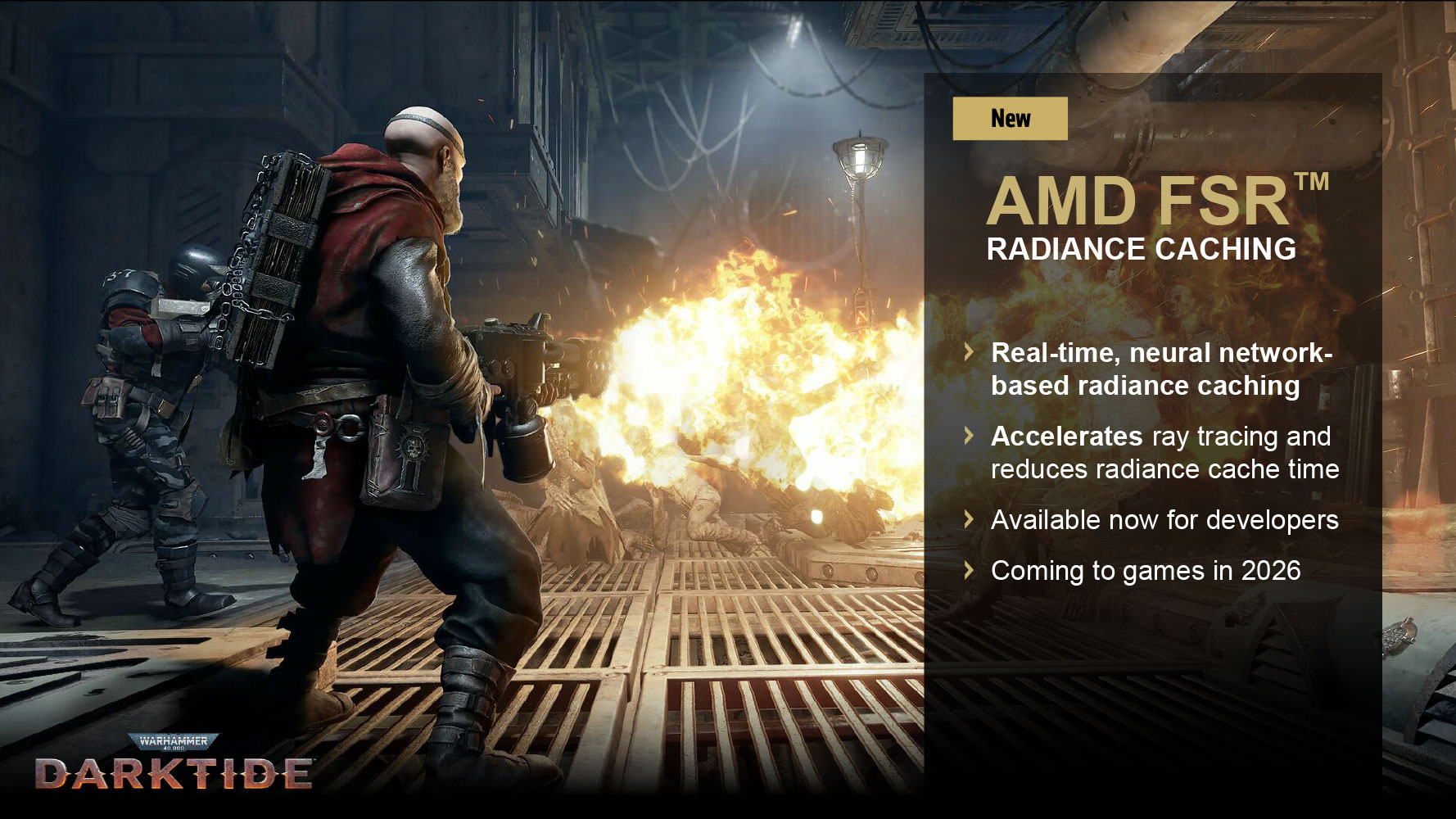
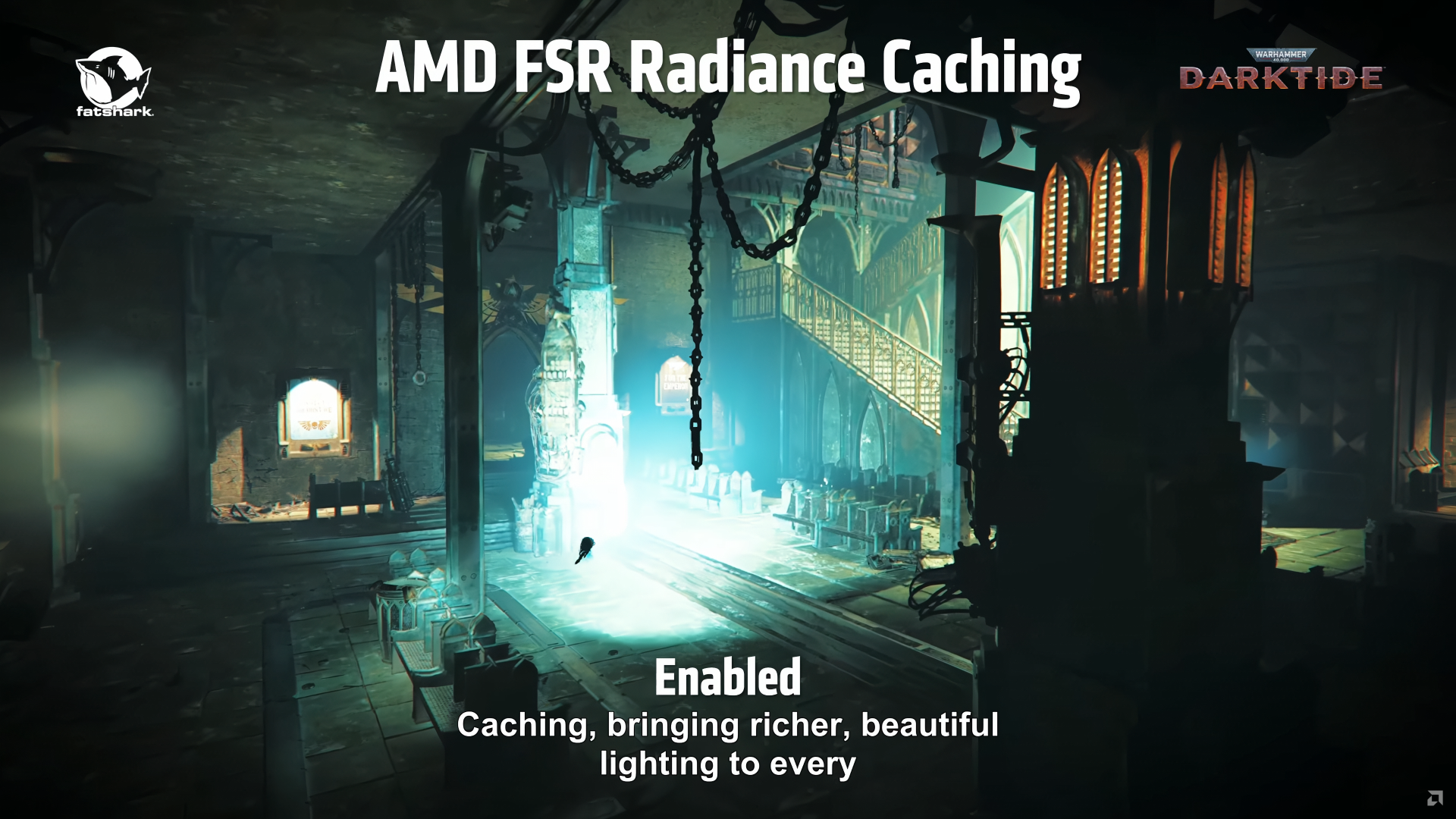
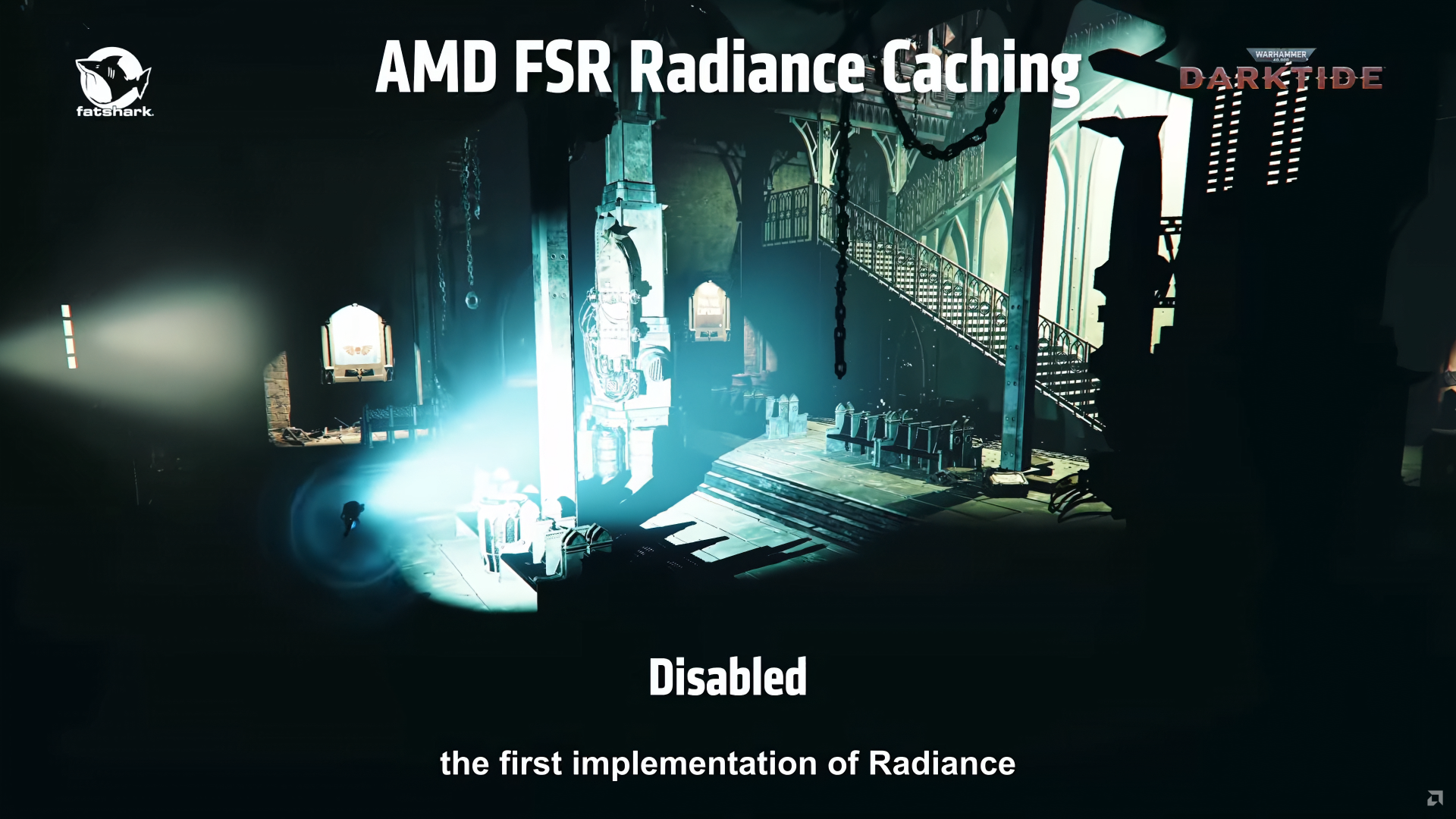
FSR Redstone Neural Caching (Radiance Caching)
The new Redstone Upscaling model significantly improves upon FSR 4 by offering higher fidelity reconstruction with reduced ghosting, enhanced temporal stability, and better preservation of dynamic particle effects. This ML based upscaling solution is trained on large volumes of high quality game data using AMD Instinct GPUs, and it is accessible either through the AMD Software driver layer or via in game integration. Backward compatible analytical paths remain available for earlier GPU generations.
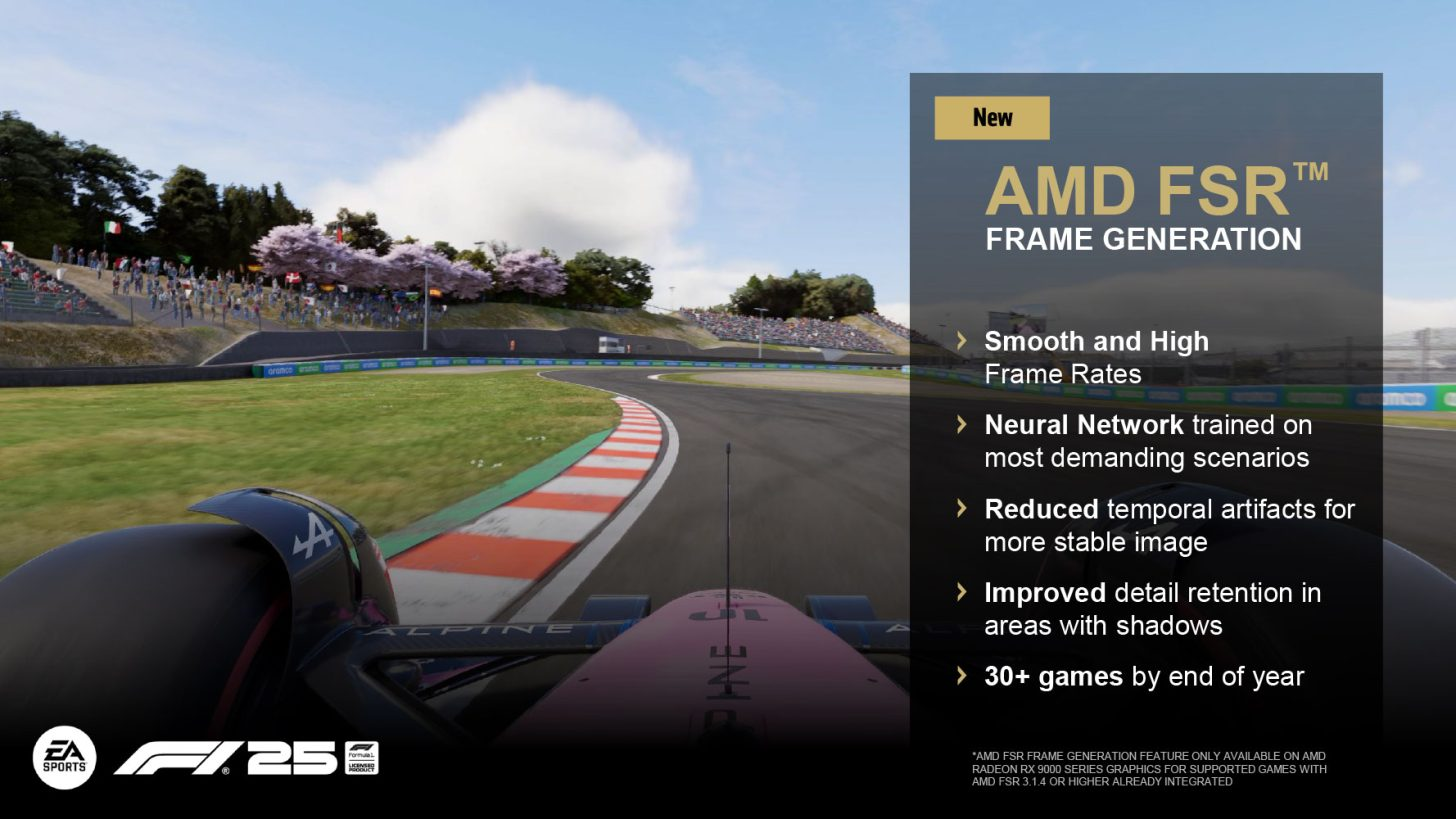
Redstone Frame Generation represents a major evolution from AMD’s prior frame interpolation models. This new ML architecture generates high quality intermediate frames using a neural network trained on challenging motion scenarios. The result is smoother, artifact reduced motion rendering, with AMD specifically noting improvements in titles such as F1 25, where previous frame generation implementations struggled with shadow artifacting around fast moving vehicles.
Ray Regeneration, AMD’s ML driven real time denoiser, is designed to replace traditional in engine denoise filters for ray traced workloads. Much like NVIDIA’s DLSS Ray Reconstruction counterpart, Ray Regeneration reconstructs full quality lighting, shadow, and reflection data from low sample ray traced frames. While early demonstrations such as in Call of Duty: Black Ops 7 still show room for refinement, AMD states that quality will continue to improve as more games integrate the feature.
Rounding out the suite is Neural Radiance Caching, AMD’s real time global illumination accelerator. By leveraging an on device ML model that learns and predicts light transport behavior, developers can achieve significantly higher quality multi bounce global illumination without the computational overhead of conventional GI solutions. While the feature is available now within the FSR SDK, commercial game integration will begin in 2026.
ML Powered Rendering Delivers Over 3x Performance, Up to 4.7x in Select Titles
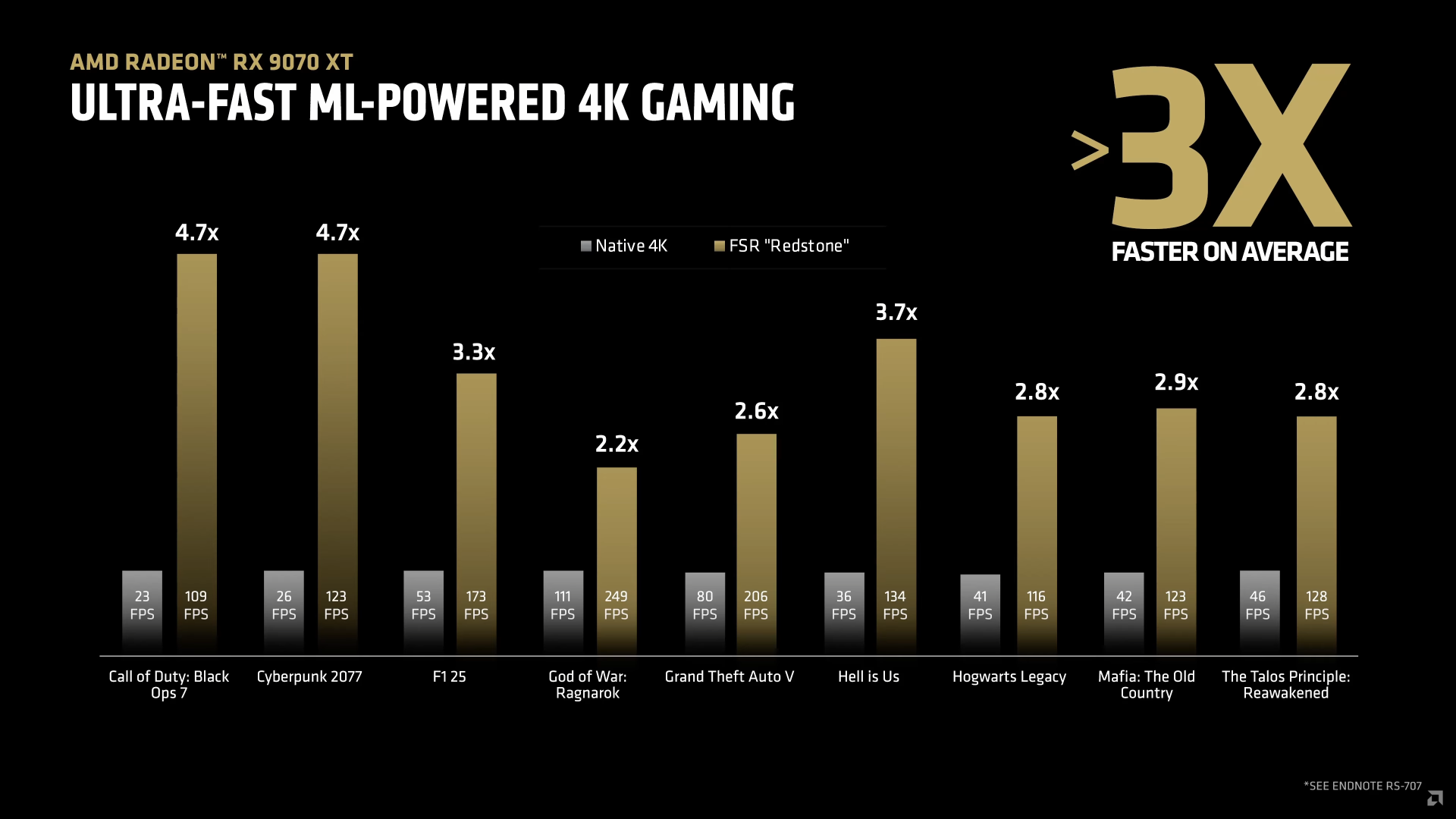
Across RDNA 4 hardware, AMD reports a substantial leap in performance efficiency. According to AMD’s internal data, FSR Redstone can deliver performance increases of more than three times compared to native rendering, with uplift values reaching up to 4.7 times in titles such as Cyberpunk 2077 and Call of Duty: Black Ops 7. These gains highlight the scalability of ML reconstruction across both rasterized and ray traced content.
AMD’s bar chart for Radeon RX 9070 XT Ultra Fast ML Powered 4K Gaming illustrates this uplift across multiple AAA workloads, demonstrating how ML powered upscaling and frame generation combine to deliver transformative performance headroom at 4K resolution.
AMD Software: Adrenalin Edition 25.12.1 Adds Full Redstone Support
AMD has released Adrenalin Edition 25.12.1, the first driver to officially support FSR Redstone.
Driver highlights include:
New Features
Support for AMD FSR Redstone
New Product Support
AMD Radeon AI PRO R9600D
AMD Radeon AI PRO R9700S
Fixed Issues
Corrections to Radeon Anti Lag 2 behavior in Counter Strike 2
Stability improvements for HDMI 2.1 standby events
Resolved application freezes for in game Radeon Overlay
Crash fixes for ARC Raiders on RX 9000 products
Known Issues
Intermittent crashes when loading Cyberpunk 2077 saves with Path Tracing enabled
Driver timeouts in Battlefield 6 on AMD Ryzen AI 9 HX 370
Intermittent instability in Roblox Player
Shadow rendering inconsistencies in Call of Duty Black Ops 7
AMD states it is collaborating with developers to resolve these issues in future updates.
FSR Redstone SDK and Unreal Engine Plugin Now Available for Developers
To accelerate industry adoption, AMD has released the FSR Redstone SDK, enabling developers to integrate Redstone’s ML technologies across current and future game pipelines. This release includes:
FSR Upscaling 4.0.3
FSR Frame Generation 4.0
FSR Ray Regeneration 1.0
FSR Radiance Caching (Preview)
The updated Unreal Engine plugin is available here
Alongside the SDK, AMD has published three research papers outlining its forward looking rendering strategy:
Neural Supersampling and Denoising (NSSD)
Generative AI Model for Global Illumination (GGI)
Dense Geometry Format (DGF)
AMD emphasizes that FSR Redstone capable games will benefit from driver side automatic version upgrades, meaning games already using FidelityFX Super Resolution 3.1 or Frame Generation 3.1.4 can receive new ML features without requiring a full title update.
Technical Requirements and Platform Support
All FSR Redstone ML technologies require AMD Radeon RX 9000 series GPUs or newer, while analytical fallbacks remain available for GPUs supporting Shader Model 6.2 and above. Supported APIs include DirectX 12, and Redstone is fully compatible with Unreal Engine 5 through the updated UE plugin. Supported operating systems include Windows 10 and Windows 11.
AMD positions FSR Redstone as a foundational step toward broader ML driven rendering, with future iterations expected to expand into multi frame generation, next generation lighting models, and real time neural geometry reconstruction.
Which Redstone feature do you believe will have the most transformative impact on future games? Upscaling, Frame Generation, Ray Regeneration, or Neural Caching?
