
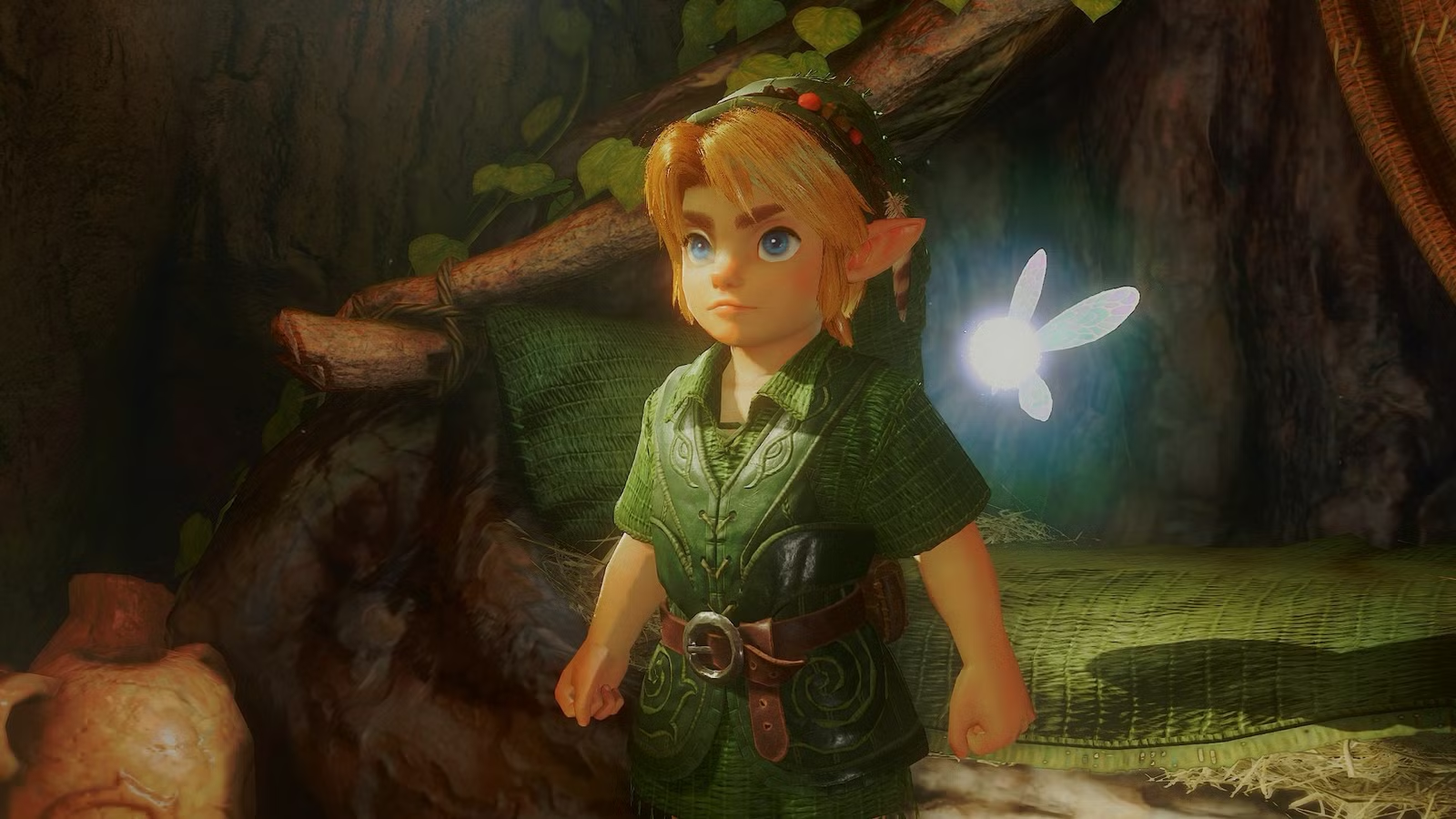
Nintendo's The Legend of Zelda: Ocarina of Time remake is making remarkable progress outside its original Nintendo Switch 2 platform, with 2 unofficial native PC recompilation projects now supporting higher resolutions, improved frame rates, NVIDIA DLSS, and AMD FSR 3.1. Meanwhile, a separate Nintendo Switch 2 emulator has successfully demonstrated the game running on a modified PlayStation 5. These developments arrive just days after the remake's November 5, 2026 release, highlighting the rapid progress of community driven game preservation and compatibility projects.
The first project, Hookshot, developed by modder NotRexed, uses static recompilation to translate the game's original code into a native Windows or Linux application, replacing Nintendo's graphics interface with Vulkan. Unlike traditional emulation, this approach eliminates the need to reproduce the complete console environment at runtime. Hookshot supports resolutions up to 4K, ultrawide displays, customizable graphics settings, controller remapping, and frame generation ranging from 2x to 8x. The developer recommends NVIDIA RTX 20 Series or newer, AMD Radeon RX 6000 Series or newer, and compatible Intel Arc GPUs because the game relies heavily on mesh shaders. The project requires users to provide their own game files, with compilation taking approximately 10 to 45 minutes and temporarily requiring around 60 GB of storage.
Early demonstrations suggest significant performance advantages over conventional emulation. Content creator RJTHEGAME reported that Hookshot maintained approximately 60 FPS using its Ultra graphics preset, with frame generation increasing displayed performance to around 180 FPS. By comparison, the Lichii emulator continued experiencing shader compilation stuttering and compatibility problems on certain AMD GPUs, even when running on powerful hardware such as the Radeon RX 7900 XTX and GeForce RTX 5090. However, these results are community observations rather than controlled performance benchmarks, and generated frames should not be confused with improvements to the game's underlying simulation speed.
A second project, NX2navi, developed by tangerineturtle1, introduces an even broader selection of graphical enhancements. The Windows native recompilation supports NVIDIA DLSS Super Resolution, DLAA, AMD FSR 3.1, frame generation, HDR displays, and resolutions reaching 5K. It also offers native ultrawide support at 21:9 and 32:9, adjustable frame rate limits from 30 to 240 FPS, and 5.1 surround sound. The developer reports 60 FPS or higher in locations including Kokiri Forest, Kakariko Village, Death Mountain Trail, and the Temple of Time. However, graphical glitches, occasional crashes, and hardware compatibility issues remain.
Zelda Ocarina of Time PC Projects Compared
| Feature | Hookshot | NX2navi |
|---|---|---|
| Platform | Windows, Linux | Windows |
| Technology | Native recompilation | Native recompilation |
| Graphics API | Vulkan | Vulkan |
| Resolution | Up to 4K | Up to 5K |
| NVIDIA DLSS | Supported | Supported |
| AMD FSR 3.1 | Supported | Supported |
| Frame Generation | Up to 8x | DLSS and FSR |
| Ultrawide | Supported | 21:9 and 32:9 |
| Performance | 60 FPS reported | 60 FPS or higher in tested areas |
| Development Status | Experimental | Early playable build |
The most unusual development involves EglantinePS5, an experimental emulator adaptation capable of running Nintendo Switch and Switch 2 software on modified PlayStation 5 consoles. The project has demonstrated Ocarina of Time running at approximately 18 FPS, although performance remains extremely limited and stability problems persist. The implementation requires a compatible modified console and should be considered an early technical demonstration rather than a practical gaming solution.
The latest developments build upon earlier PC emulation progress that brought Ocarina of Time to 60 FPS. However, neither native recompilation project has been verified as fully compatible throughout the entire game, and Nintendo has not announced an official PC or PlayStation release.
The rapid development of Hookshot and NX2navi demonstrates the growing potential of native recompilation as an alternative to traditional console emulation. Improving performance while introducing DLSS, frame generation, ultrawide resolutions, and expanded controller compatibility shows how modern PC hardware can enhance games beyond their original platform limitations.
However, higher displayed frame rates do not automatically guarantee smoother gameplay, particularly when frame generation introduces additional latency or graphical artifacts. The priority should remain stable native performance, accurate rendering, and complete compatibility.
These projects also reinforce the importance of game preservation and consumer hardware ownership. Players should have greater freedom to maintain and experience legitimately owned games without being permanently restricted by the lifespan or technical limitations of their original hardware.
Would you prefer playing Zelda Ocarina of Time through a native PC port with DLSS and frame generation, or should Nintendo officially release its games on PC with these technologies already integrated?
