
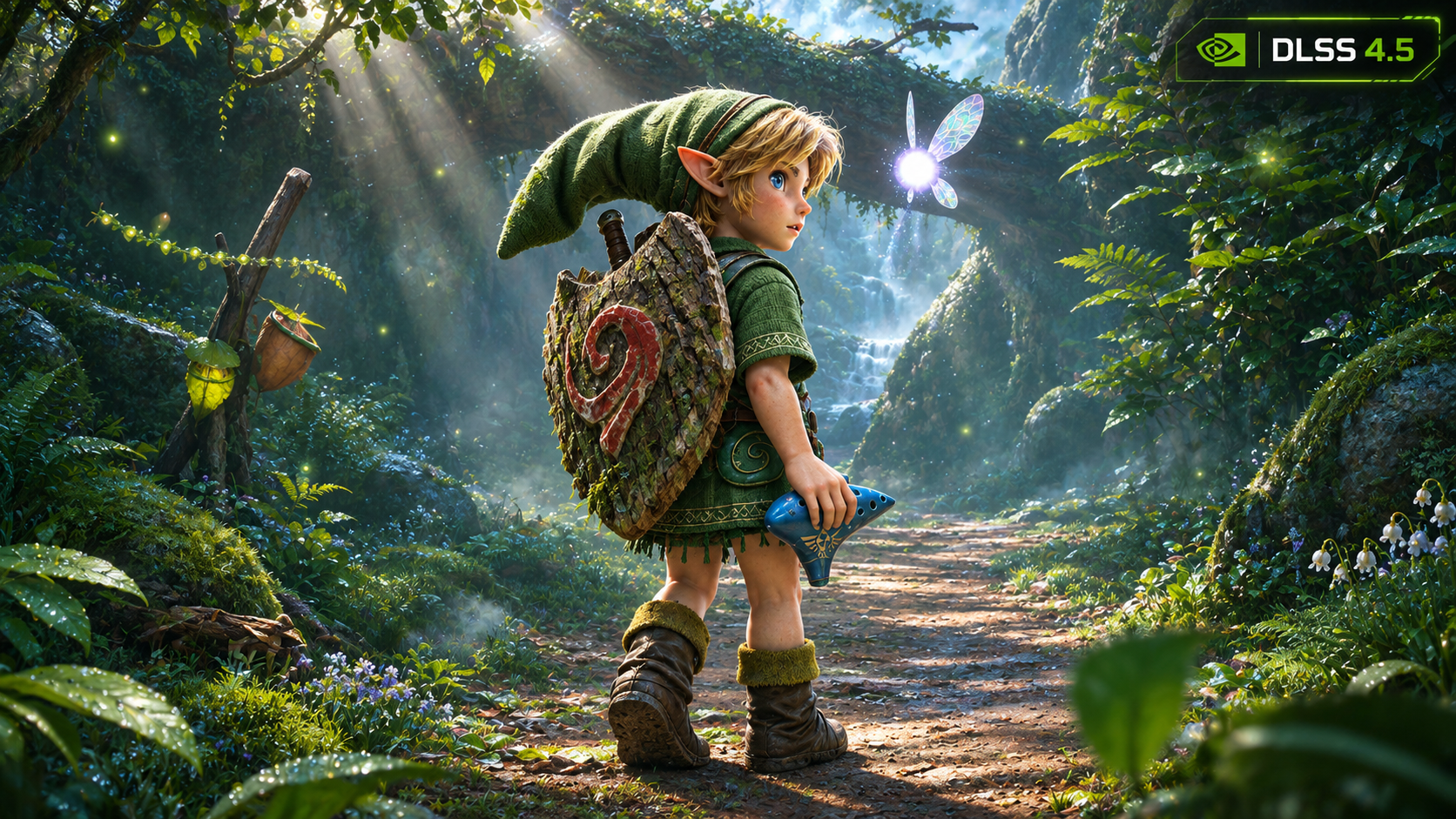
Nintendo's The Legend of Zelda: Ocarina of Time remake has reached another major milestone on PC, with experimental Nintendo Switch 2 emulators now achieving 60 FPS in several gameplay areas, just days after the game's November 5, 2026 release. The improvements arrive remarkably quickly, considering that early demonstrations initially struggled to reach 30 FPS while suffering from severe graphical glitches, missing textures, and unstable performance. Community developers have since made substantial progress through the Lichii and Eglantine emulators, improving both rendering accuracy and overall gameplay responsiveness.
According to DSOGaming, the latest improvements allow the opening sequences and Great Deku Tree area to reach 60 FPS, while some users have reported running the game at 4K with relatively stable performance. However, results still vary considerably depending on hardware and location. Testing with an AMD Ryzen 7 5700X and NVIDIA GeForce RTX 5070 revealed remaining problems with foliage textures, lighting, audio synchronization, and frame rate stability. Other demonstrations show Kokiri Forest averaging approximately 44 FPS, confirming that consistent 60 FPS gameplay has not yet been achieved throughout the entire adventure.
Much of the progress comes from improvements to the emulators' Vulkan rendering pipelines. Developers have corrected shader compilation problems, resolved excessive bloom and white screen artifacts, improved GPU synchronization, and introduced more efficient shader caching. The Eglantine project has been developing fixes specifically for Ocarina of Time, while Lichii's latest releases have integrated additional optimizations, including improved vegetation rendering, dynamic frame rate handling, and reduced GPU processing overhead. By November 7, Lichii developers reported that many users were achieving 60 FPS or higher, although compatibility remains experimental.
Interestingly, graphics analyst ElAnalistaDeBits demonstrated an external NVIDIA DLSS comparison using the Nintendo Switch 2 version. The 4K video compares the game's original FSR image reconstruction against DLSS processing introduced through an external HDMI workflow, demonstrating improvements in image clarity, edge stability, and shimmering. This external demonstration does not modify the game's internal rendering pipeline or provide native DLSS support on the console. However, subsequent Lichii updates have introduced experimental DLSS Super Resolution replacement for compatible RTX GPUs on PC, allowing users to test an alternative to the game's original upscaling solution. Some graphical artifacts remain when this feature is enabled.
Despite these developments, Nintendo has not announced an official PC version of the remake, and emulation performance remains dependent on hardware compatibility, emulator configuration, and ongoing community development. Nevertheless, the improvements demonstrate how quickly experimental emulation technology can advance when developers collaborate on graphics compatibility and performance optimization.
The speed at which Ocarina of Time has progressed from barely running at 30 FPS to reaching 60 FPS in several areas demonstrates the impressive capabilities of modern PC hardware and community driven emulation.
More importantly, the improvements highlight the potential benefits of offering players greater control over rendering resolution, frame rates, and image reconstruction technologies. The DLSS comparison is particularly interesting because it demonstrates how alternative upscaling methods can improve image quality without requiring developers to redesign their original assets.
Game preservation and hardware ownership should remain important priorities. Players who legitimately own their games should have opportunities to preserve and experience them beyond the lifespan of their original consoles. While Nintendo's exclusive ecosystem remains commercially successful, official PC releases with scalable graphics options would provide a more accessible alternative to community emulation.
With Zelda Ocarina of Time already reaching 60 FPS through PC emulation, would you prefer Nintendo to officially release its games on PC with DLSS support, or continue relying on the community to unlock their full potential?
