
US Suspects Restricted NVIDIA Servers Reached China Through Thailand as Supermicro Linked Smuggling Case Expands
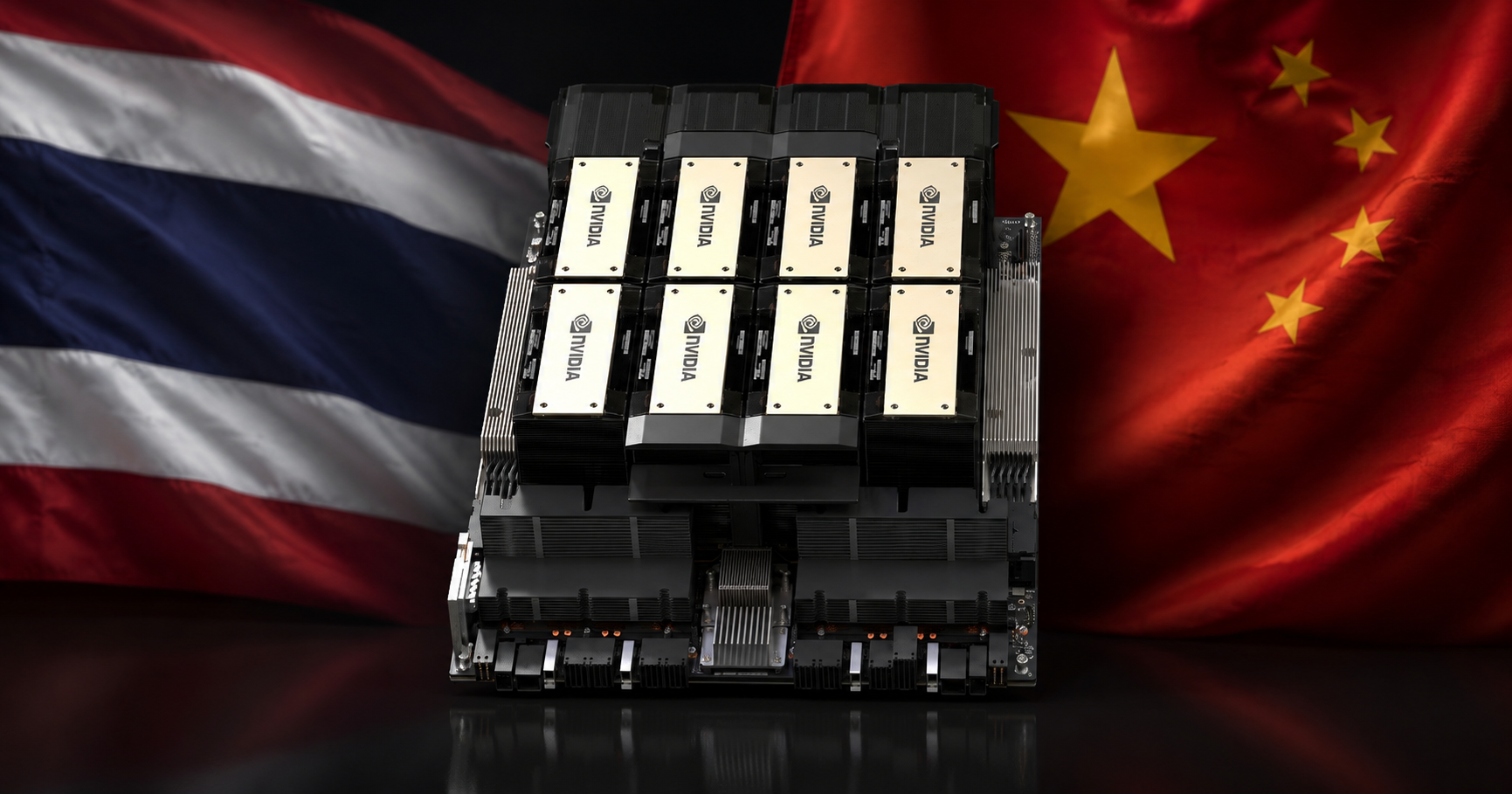
US authorities are reportedly examining a major alleged export control evasion scheme involving Super Micro servers equipped with advanced NVIDIA chips, with Bloomberg reporting that investigators suspect some of the hardware ultimately reached Alibaba in China through Thailand. According to the Bloomberg report, the case centers on servers routed through Southeast Asia and tied to a broader alleged smuggling network that prosecutors say handled billions of dollars worth of restricted AI technology. Reuters separately reported that US authorities suspect a Thai company connected to Thailand’s national AI push helped move billions of dollars worth of Super Micro servers containing advanced NVIDIA chips to China, with Alibaba identified as one of multiple alleged end customers.
The underlying criminal case is already on the record. In March 2026, the US Department of Justice announced charges against 3 people associated with Super Micro, including co founder Yih Shyan Liaw, Taiwan sales manager Ruei Tsang Chang, and contractor Ting Wei Sun, accusing them of conspiring to unlawfully divert cutting edge US AI technology to China. Prosecutors allege the operation involved false documents, dummy servers, and transshipment routes through Taiwan and Southeast Asia to conceal the real destination of restricted systems. Reuters said the alleged scheme involved at least 2.5 billion dollars worth of AI server technology, including more than 500 million dollars moved in only about 6 weeks during 2025.
That is where the Alibaba angle becomes especially significant. Bloomberg’s reporting, echoed by Reuters, says US authorities suspect that hardware sold through Thailand based channels ended up with Alibaba, but Alibaba has firmly denied any involvement. In a statement quoted by Reuters, the company said it has no business relationship with Super Micro, OBON, or any third party brokers mentioned in the indictment, and added that it has never used banned NVIDIA chips in its data centers. That denial is important because, at this stage, the allegations concern what investigators suspect happened in the supply chain, not a proven finding that Alibaba knowingly participated in any illegal activity.
NVIDIA, for its part, has also publicly tried to distance itself from any unlawful diversion. Reuters reported that an NVIDIA spokesperson said the company expects ecosystem partners to follow strict compliance requirements at every level and that it will continue working with the government to enforce the rules. Super Micro itself was not named as a defendant in the criminal case, though Reuters reported in March that the company said it was cooperating with authorities, placed implicated personnel on leave, and later saw Liaw resign from its board following his arrest.
The case also lands at a particularly sensitive moment for the broader China AI hardware market. Reuters reported in January that the United States had revised policy to allow exports of NVIDIA H200 chips to approved Chinese customers, while Beijing then effectively blocked those sales, contributing to Jensen Huang’s statement that NVIDIA’s share of China’s AI chip market had fallen to zero. That context matters because it shows how fractured and contradictory the current market has become. Even with policy changes, the combination of US restrictions, Chinese countermeasures, and intense demand for advanced accelerators appears to be sustaining strong incentives for gray market or illegal procurement routes.
From an industry perspective, the larger issue is not only whether this specific alleged route through Thailand reached Alibaba, but what it says about export control enforcement across the region. Reuters has already reported other cases in which Chinese institutions, including universities linked to the People’s Liberation Army, obtained Super Micro systems containing restricted NVIDIA chips despite US controls. That suggests this is not being viewed by Washington as an isolated leak, but as part of a broader pattern in which advanced AI hardware can still move through intermediaries, repackaging networks, and weak points in regional compliance.
For NVIDIA, Super Micro, and the wider AI server ecosystem, the fallout could be substantial. The legal risk is obvious, but there is also a reputational and policy consequence. Every case like this strengthens the argument from regulators that current export controls are too easy to evade, while also reinforcing Beijing’s determination to reduce reliance on foreign accelerators. At the same time, the story underlines a reality the market keeps running into: demand for top tier AI compute in China remains high enough that even aggressive controls do not automatically shut off access.
What do you think, does this case show that current AI chip export controls are fundamentally too porous, or is it mainly a compliance failure by specific actors in the supply chain?
