
US-UAE 5GW AI Campus Nears First 200MW Launch as First Batch of Advanced Chips Arrives
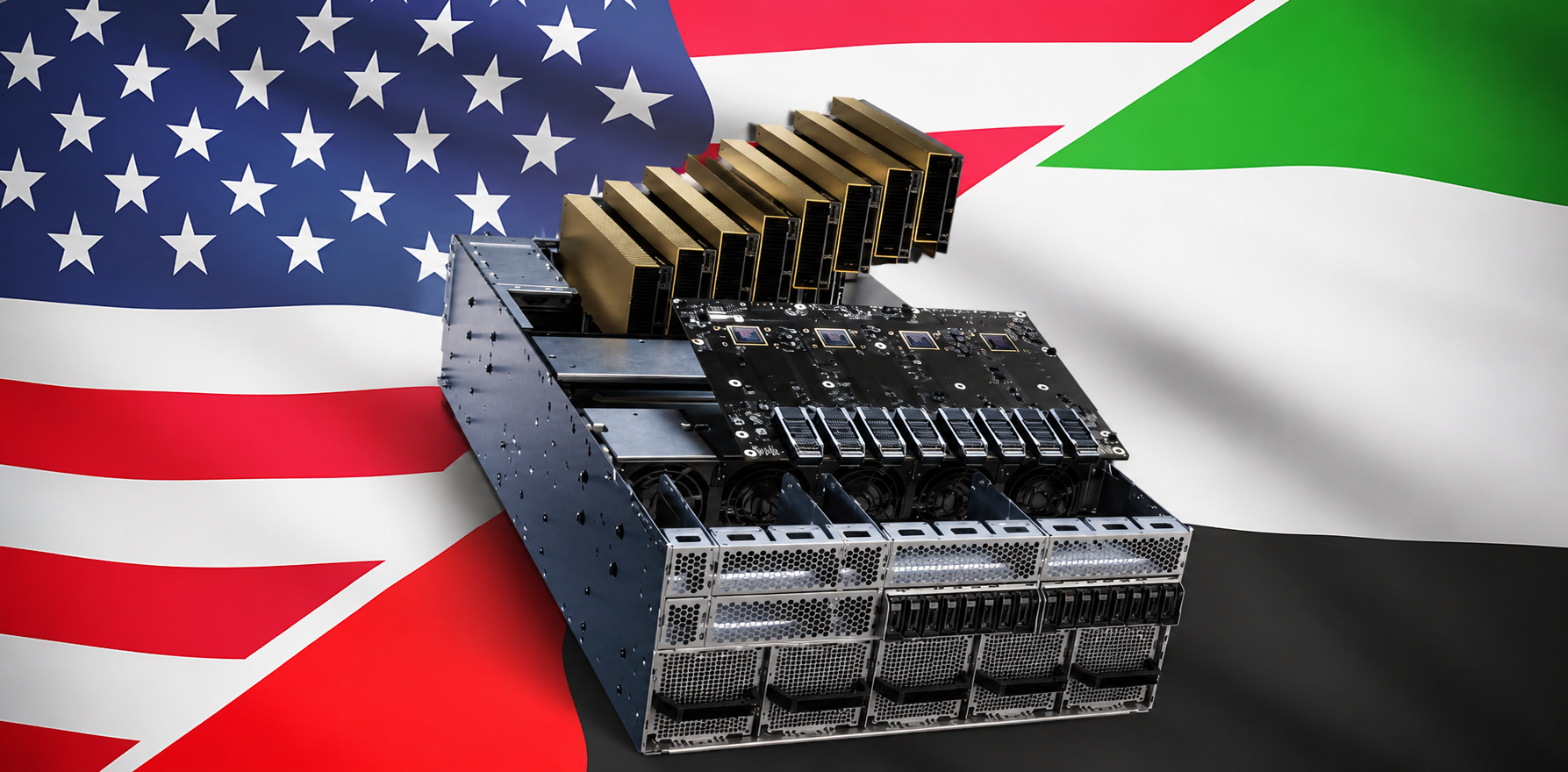
The United Arab Emirates has confirmed that the first 200 megawatts of its jointly planned 5 gigawatt AI campus with the United States will come online very soon, marking an important step in one of the most ambitious AI infrastructure projects now under development outside the US. In remarks published by the UAE Embassy in Washington, Ambassador Yousef Al Otaiba said the 5GW US-UAE AI Campus is already under construction, that the project broke ground during President Donald Trump’s visit exactly a year ago, and that the first 200MW phase is close to activation. He also said the US approved the export of thousands of next generation chips in November to enable the project and confirmed that the first batch of advanced chips has already been delivered to the UAE, with more shipments on the way.
That gives the project real momentum at a time when the global AI race is increasingly being defined by access to power, accelerated compute, and trusted supply chains rather than software alone. The embassy remarks frame the campus as part of a much broader UAE commitment to the United States, with 1 trillion dollars already invested and 1.4 trillion dollars committed over the next decade across AI infrastructure, energy, and manufacturing, alongside more than 30 deals signed in the past year. In other words, this is not being presented as a standalone data center build. It is part of a wider long term technology and industrial alignment between Abu Dhabi and Washington.
Amb. Al Otaiba: “The first batch of advanced AI chips have been delivered to the UAE & more are on the way.”
— UAE Embassy US (@UAEEmbassyUS) May 8, 2026
🇦🇪🇺🇸A year since @POTUS' visit to Abu Dhabi—chips approved & delivered, the U.S.-UAE AI Acceleration Partnership isn't slowing down. Full remarks: https://t.co/JHx08La0WQ pic.twitter.com/SmGr8uTKHN
The most immediate development is the arrival of the chips themselves. The UAE did not name the exact processors or accelerators that have been shipped, so any attempt to identify the vendor would still be speculation at this stage. What is confirmed is that the first batch of advanced chips is already in the country and that these shipments are directly tied to the upcoming 200MW phase of the campus. That matters because it turns a diplomatic announcement into a real deployment story. This is no longer only about future plans or memorandums. Hardware is moving, power is being prepared, and the first operational slice of the campus is nearing launch.
The embassy also emphasized why the project matters strategically. From Abu Dhabi, Al Otaiba said, American technology can potentially serve roughly half of the world’s population, positioning the campus as a regional platform for AI access and deployment. That is a significant claim because it shows how both sides are framing the buildout, not only as domestic infrastructure for the UAE, but as a broader hub for trusted AI services across multiple global markets.
There is also a geopolitical layer behind this expansion. In the same speech, Al Otaiba tied the project to the UAE’s participation in Pax Silica, which he described as a framework covering AI, critical minerals, and supply chains for what he called the silicon age. A separate State Department release from December 11, 2025 described Pax Silica as a US led effort focused on AI and supply chain security, reinforcing the idea that this campus is being built inside a larger trusted technology architecture rather than as a purely commercial venture.
For the AI industry, the bigger signal is scale. A 5GW campus is massive by any standard, and even the first 200MW phase represents substantial compute density once it is fully populated. The project shows that the next stage of AI competition is increasingly about who can secure land, power, cooling, advanced chips, and international policy support all at once. The UAE clearly wants to be one of the countries operating at that level, and the latest update suggests it is moving from headline ambition into real physical deployment.
What stands out most is how quickly these plans are starting to materialize. Ground was broken a year ago, export approvals followed in November, the first chips have now arrived, and the first 200MW is nearing activation. For a market still dealing with power shortages, chip allocation battles, and AI infrastructure bottlenecks, that is a meaningful timeline. It also adds another major data point to the growing global pattern of gigawatt scale AI campuses becoming central to national technology strategy.
Do you think projects like this will accelerate the global AI race by expanding compute access, or will they deepen the divide between countries that can secure large scale infrastructure and those that cannot?
