
TSMC Chairman C.C. Wei Says Capital Alone Cannot Win Advanced Node Manufacturing, Implying Intel Foundry Still Faces Execution Gaps
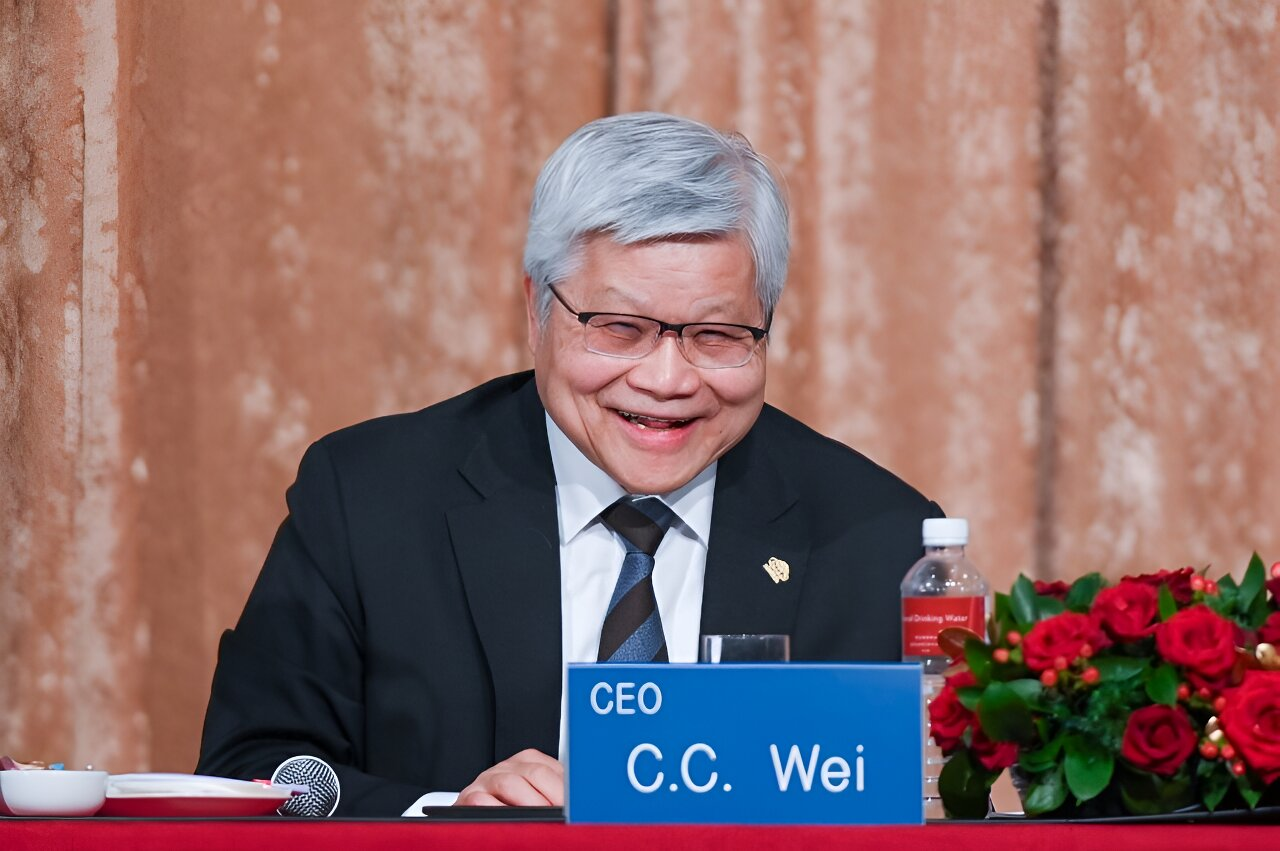
TSMC is using its latest earnings conference to reinforce a message it has repeated for years, that advanced process leadership is not something competitors can buy overnight. During the call, TSMC Chairman C.C and reported by United Daily News. Wei was asked whether the company feels threatened by Intel, especially as Intel Foundry pushes hard to attract United States based customers and promote progress on its 18A and 14A roadmap. Wei responded that he is not worried, emphasizing that TSMC does not underestimate any competitor, but remains confident in maintaining its operating growth targets after more than 30 years of competing in a brutal environment.
The sharper edge of Wei’s answer is the idea that competitors cannot surpass TSMC by throwing capital at the problem. He framed advanced manufacturing leadership as a multi dimensional execution challenge, not a single line item budget contest. In his view, scaling leading edge production requires preparing production lines with repeatable high yield output, certifying partner designs so they can move from tape out to reliable mass production, and building enough capacity that external customers can confidently commit critical products to the node. That combination of manufacturing discipline, ecosystem enablement, and customer facing capacity planning is what creates a moat, not simply the amount of investment pledged.
This comment lands at a moment where TSMC’s dominance is being amplified by AI demand, but also tested by capacity constraints. When the world’s largest foundry reaches allocation limits, spillover demand naturally becomes an opening for Samsung and Intel Foundry to chase customers who want diversification, faster access, or geopolitical risk reduction. Intel Foundry in particular has been pushing a confidence narrative around 18A progress, and industry chatter suggests interest from major chip designers, even if interest does not automatically translate into high volume orders without proven yield and predictable delivery.
Wei’s stance also reads as a broader signal to governments and policy makers who are using subsidies to accelerate domestic semiconductor capability. The point is not that investment is irrelevant, but that funding only matters when paired with operational mastery, ecosystem trust, and the ability to consistently deliver at scale. That is also why TSMC has been preparing United States capacity, including Arizona lines tied to high demand nodes, as part of a longer term competitiveness plan rather than a short term publicity move.
Looking ahead, the rivalry between TSMC and Intel is likely to become more complex rather than more binary. The AI supply chain is now so large that more than 1 foundry will be needed to meet total demand, but the winners will be the ones who can convert roadmap promises into stable production, predictable lead times, and customer confidence across multiple product cycles. Wei’s message is essentially a reminder that the scoreboard is written in yields and shipments, not press releases.
Do you think Intel Foundry’s biggest hurdle is node technology, ecosystem validation, or proving long term reliability at scale for external customers?
