
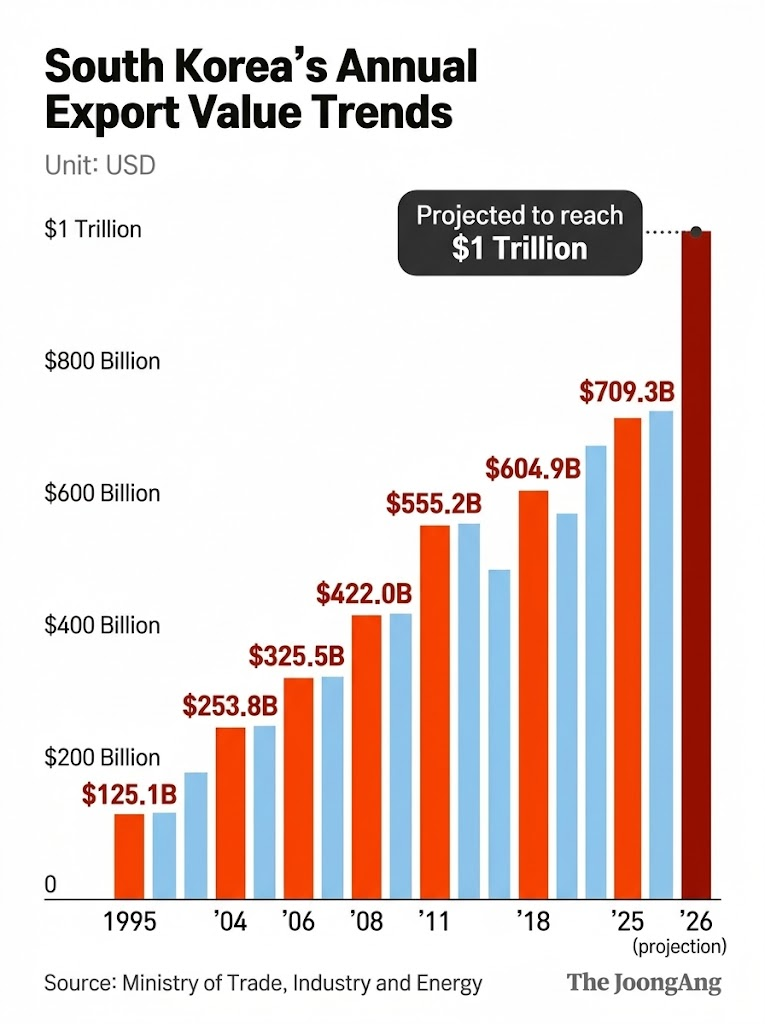
South Korea is approaching a historic $1 trillion annual export milestone, driven by extraordinary demand for semiconductors and memory products used in artificial intelligence infrastructure. According to the Ministry of Trade, Industry and Resources, exports reached $115.28 billion in October 2026, representing a 93.7% increase compared with the previous year. Cumulative exports from January through October totaled $930 billion, leaving the country just $70 billion away from becoming the 4th nation to surpass $1 trillion in annual exports, following the United States, China, and Germany.
The semiconductor industry has emerged as the primary driver of this growth, with chip exports increasing 259.4% annually to $56.44 billion in October. Semiconductors accounted for approximately 49% of the country's total monthly exports, highlighting how heavily South Korea's economy now depends on global demand for advanced computing hardware. According to Korea JoongAng Daily, memory chips alone generated $50.14 billion in October exports, representing an extraordinary 360.5% increase compared with the same period in 2025. The surge reflects both higher memory prices and increasing shipment volumes as major technology companies continue expanding AI data centers.
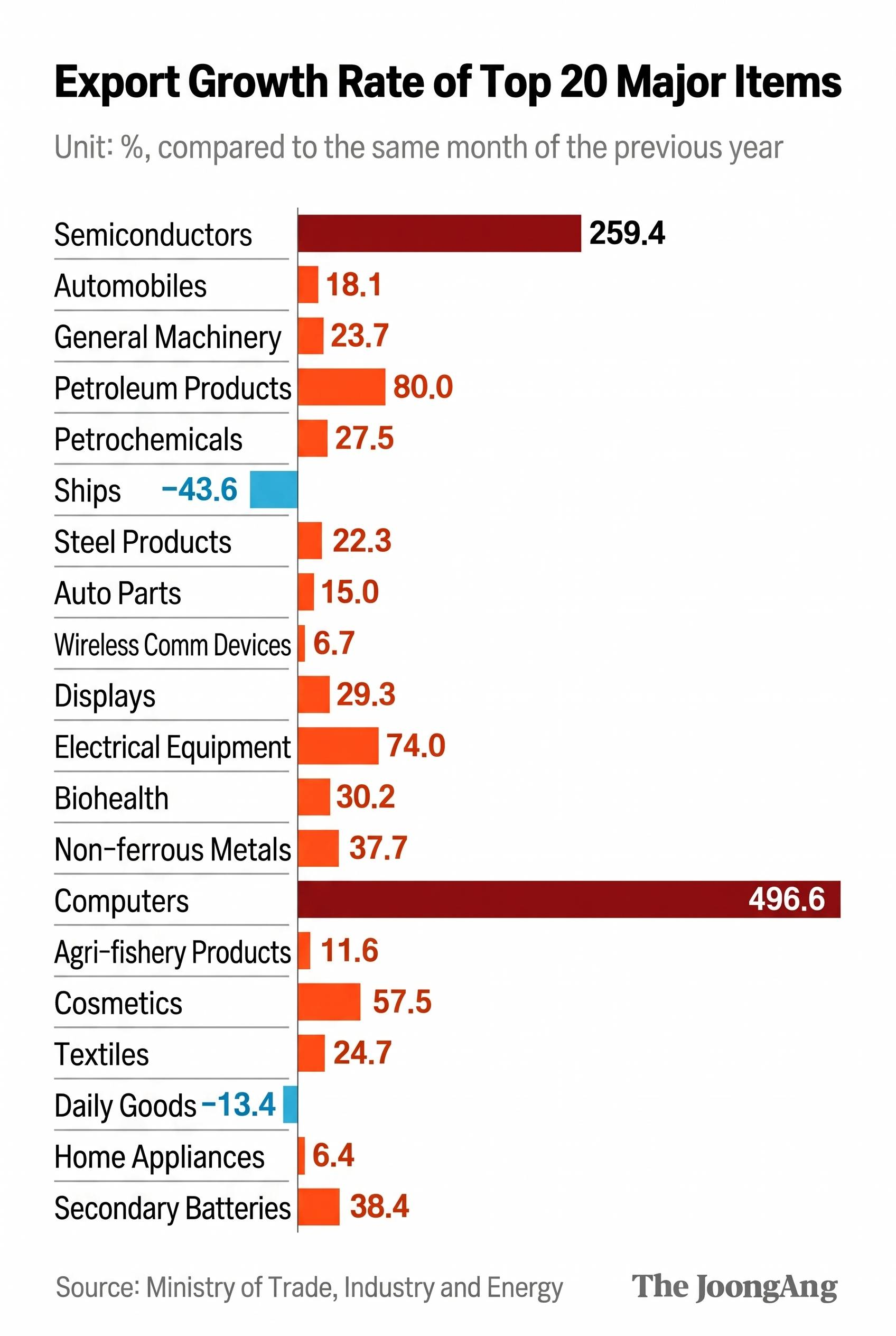
The rapid expansion of AI infrastructure has also accelerated demand for server SSDs, networking equipment, and electrical components. Computer exports increased 496.6% to $5.85 billion, while electrical equipment shipments climbed 74%, supported by growing demand for transformers, cables, and power infrastructure used in data centers. The results reinforce the importance of South Korean manufacturers such as Samsung Electronics and SK hynix, whose DRAM and High Bandwidth Memory technologies have become critical components of modern AI accelerators.
However, the semiconductor boom presents considerable challenges. As Samsung recently warned about memory shortages potentially extending through 2028, manufacturers are increasingly prioritizing high value enterprise products and securing long term supply agreements with major technology companies. This concentration of demand could continue affecting conventional DDR5 availability, graphics card memory, and consumer hardware pricing, even as memory manufacturers report substantial revenue growth.
The economic benefits are also unevenly distributed. South Korea's trade minister acknowledged that many small and medium sized businesses continue facing difficulties related to international trade restrictions, supply chain restructuring, and geopolitical uncertainty. Nevertheless, the latest government figures for smaller exporters show that SME exports increased 8.8% during Q3 2026, indicating that some smaller companies are benefiting from overseas demand even while others face pressure. The country's broader export growth has therefore not eliminated the challenges affecting domestic businesses and consumers.
The government expects South Korea to surpass $1 trillion in annual exports during November if current momentum continues. However, the growing dependence on AI related semiconductor demand also introduces long term risks, particularly if major cloud providers eventually reduce infrastructure spending or memory prices begin declining.
South Korea's remarkable export performance demonstrates the enormous economic influence of the AI infrastructure boom, but it also highlights an increasingly concerning imbalance within the technology industry. Samsung and SK hynix are generating exceptional revenue from memory demand, while gamers, PC builders, independent developers, and smaller hardware manufacturers continue facing higher component costs and uncertain availability.
Strong semiconductor exports are positive for South Korea's economy, but sustainable industry growth requires balanced investment, diversified production, and fair access to essential components. Greater supply transparency and appropriate competition oversight could become increasingly important if concentrated purchasing agreements restrict access for smaller businesses and consumers.
The success of AI should not come at the expense of affordable personal computing, hardware ownership, and the freedom to build and upgrade our own systems.
Should governments introduce stronger safeguards to ensure affordable consumer memory remains available as AI companies continue securing larger portions of global semiconductor production?
