
Sony Doubles Down on AI Across PlayStation Studios, but Says Human Creativity Will Stay at the Center
Sony has shared a clearer look at how artificial intelligence is already being used across PlayStation Studios, and the company’s message is direct. AI will play a growing role in game development, but Sony says it is being deployed to support human creators, not replace them. In its latest Corporate Strategy presentation, Sony Group CEO Hiroki Totoki said that “human creativity must remain at the center,” adding that AI is “a powerful tool” and “not a replacement for artists or creators,” but instead “an amplifier of human imagination and a catalyst for new possibilities.”
That same creator first position was reinforced by Sony Interactive Entertainment President and CEO Hideaki Nishino, who framed AI as a practical production tool for both developers and the wider PlayStation ecosystem. Nishino said PlayStation sees AI as a way to create more immersive player experiences while also giving publishers a more efficient production environment and better discovery tools to connect games with the right audience. Sony also presented AI as a force that will increase the volume and diversity of content on the platform, while arguing that trusted first party franchises and established studio IP will remain a key differentiator as the market becomes more crowded.
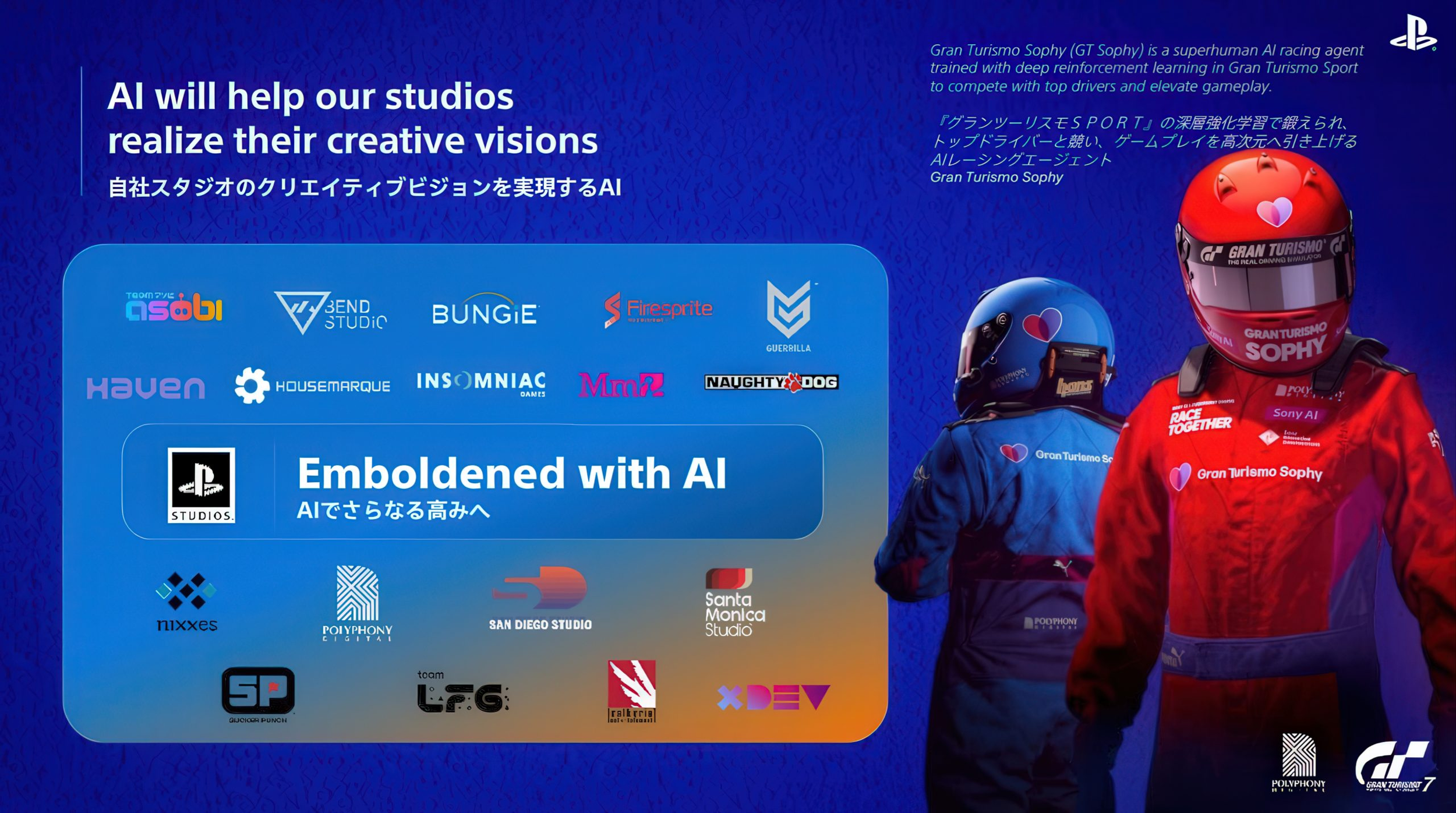
Inside PlayStation Studios, Sony says developers are already using AI powered tools to automate repetitive workflows, improve software engineering productivity, and accelerate areas such as quality assurance, 3D modeling, and animation. That is one of the most important takeaways from the presentation, because it shows Sony is not talking about AI as a distant experiment. The company is describing it as an active part of the development pipeline today.
One of the clearest examples Sony provided is a tool called Mockingbird. According to Nishino, Mockingbird quickly animates 3D facial models based on performance captures. Sony explicitly said the tool is not replacing human performers, but is instead optimizing how live capture data is processed. The company claims animation work that would previously take hours can now be completed in a fraction of a second. Sony also said the tool has already been adopted by teams at Naughty Dog, San Diego Studio, and others, including use in Horizon Zero Dawn Remastered.
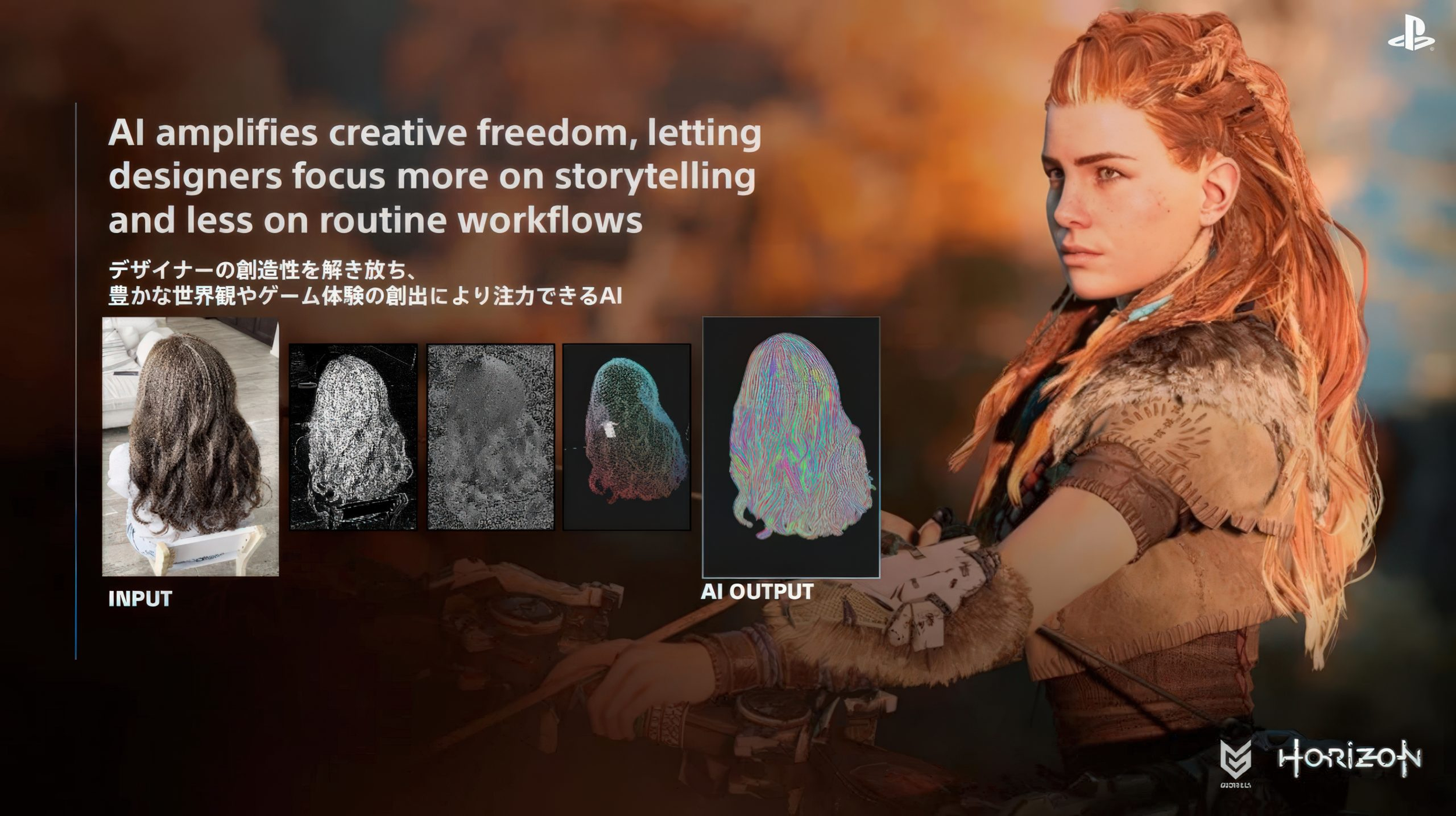
Sony also detailed an AI driven hair animation tool that takes videos of real hairstyles and outputs a 3D model with hundreds of strands. In the presentation, this was shown alongside Horizon Zero Dawn Remastered material, underscoring that Sony is using AI assisted workflows not only for back end automation but also for visually important production tasks that affect the final presentation of first party titles. Sony says these practical applications allow developers to spend less time on labor intensive manual tasks and more time building richer worlds and gameplay.
On the gameplay side, Sony again pointed to Gran Turismo Sophy, its AI racing agent trained with deep reinforcement learning, as an example of how AI can create new player experiences rather than only improve internal production. Nishino said Sophy has already added a higher level of competition for experienced Gran Turismo players. He also said Sony’s creatives have already built prototypes where NPCs with their own personalities can create a more dynamic world for players to explore, which hints at broader ambitions for AI driven gameplay systems in future PlayStation titles.

Strategically, Sony appears to be taking a balanced position. The company wants to benefit from the efficiency gains and creative experimentation that AI can offer, while also publicly drawing a line around authorship and artistic ownership. That matters in today’s industry climate, where AI remains controversial across game development, especially when discussions shift from workflow support to actual content creation. Sony’s current language suggests it wants to position AI as an augmentation layer inside established studio pipelines rather than as a substitute for performers, artists, writers, or designers. That is an inference based on the company’s wording and examples in the presentation.
For PlayStation, the business logic is clear. Sony expects AI to lower barriers to creation, accelerate development cycles, and enable more creators to enter the market. At the same time, it believes that as more content floods the ecosystem, players will continue to gravitate toward premium franchises and high quality experiences they already trust. In other words, Sony sees AI as both a productivity engine and a market multiplier, but still believes its biggest competitive moat will be the strength of its studios, characters, and worlds.
What do you think about Sony’s approach here? Is AI in game development acceptable as long as it stays focused on helping artists and developers rather than replacing them?
