
SK Hynix Warns DRAM Supply Tightness Will Persist Through 2028 as AI Demand Reshapes the Memory Market
The global PC and consumer electronics market is facing a longer and more severe memory supply crunch than previously anticipated. According to internal analysis attributed to SK Hynix, one of the world’s largest memory manufacturers, constrained DRAM supply conditions are now expected to persist through 2028, extending well beyond earlier projections and placing sustained pressure on consumer pricing and availability.
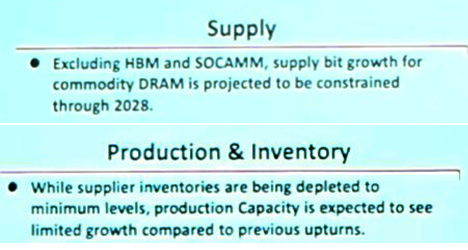
Screenshots of the internal analysis were shared publicly by BullsLab on X, revealing SK Hynix’s outlook on the future of commodity DRAM. The data suggests that, with the exception of high bandwidth memory and SOCAMM modules, growth in commodity DRAM production will remain limited for at least the next several years. This imbalance is expected to make it increasingly difficult for mainstream PC manufacturers to meet demand at affordable price points.
At the core of the issue is a structural shift in memory manufacturing priorities. Major DRAM producers have increasingly reallocated capacity toward high margin segments such as AI servers, data centers, and accelerator platforms. As a result, traditional consumer focused DRAM products used in desktops, laptops, and entry level systems are no longer receiving aggressive capacity expansion. The likelihood of meaningful production growth for the consumer market remains low under current market conditions.
Compounding the situation, supplier inventories are reported to be at historically low levels. Allocation pressure has intensified as memory makers adopt conservative capacity expansion strategies that prioritize profitability over volume. Rather than flooding the market to stabilize pricing, manufacturers are deliberately limiting output to maintain margins, a strategy that further tightens supply for PC OEMs and system integrators.
Server DRAM demand, driven largely by artificial intelligence workloads, continues to grow at an accelerated pace. Internal projections estimate that server DRAM’s share of total memory production will rise from 38 percent in 2025 to 53 percent by 2030. This rapid expansion is being fueled by aggressive AI training and inference data center buildouts across major cloud service providers, effectively locking in capacity years in advance.


Some industry reports indicate that key DRAM production slots for 2026 are already sold out, leaving little flexibility to increase output for traditional PC DRAM. As a result, consumer oriented memory production is expected to fall short of demand for multiple consecutive years, reinforcing the likelihood of elevated pricing through the remainder of the decade.
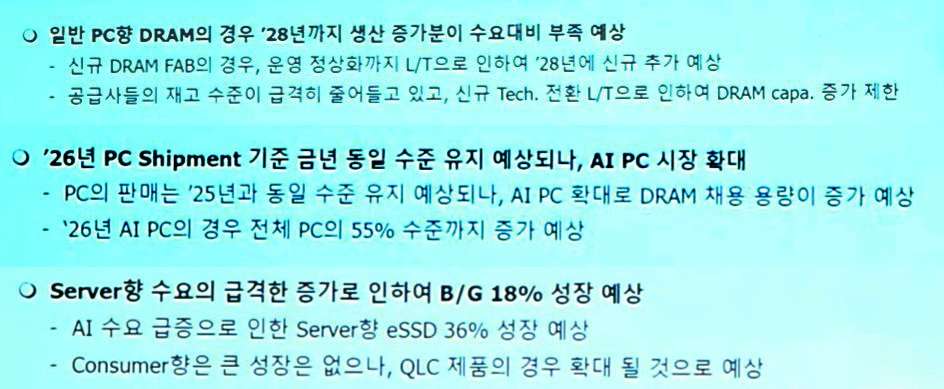
The rise of AI PCs adds another layer of complexity. While overall PC shipment volumes in 2025 are projected to remain flat, AI capable systems are expected to account for around 55 percent of total PC market share by 2026. These systems typically require higher memory densities, further increasing pressure on already constrained DRAM supply pools.
SK Hynix’s internal assessment also points to similar challenges on the NAND side. NAND flash supply growth for the consumer market may lag behind demand as manufacturers continue to prioritize higher margin server and enterprise applications. This could translate into sustained pricing pressure for SSD upgrades and higher capacity storage options in consumer systems.
Taken together, the analysis paints a troubling picture for the consumer market. Expectations that memory supply issues might ease by 2027 now appear overly optimistic, with current projections suggesting relief may not arrive until after 2028 at the earliest. Unless there is a significant shift in capacity investment strategy or a slowdown in AI infrastructure expansion, consumers should brace for several more years of elevated memory and storage costs.
Do you think the consumer PC market can adapt to long term memory shortages, or will rising costs permanently change how people upgrade and buy systems?
