
Singapore Startup Acrab Claims Gelix 1 Beats M4 Pro in AI Prefill

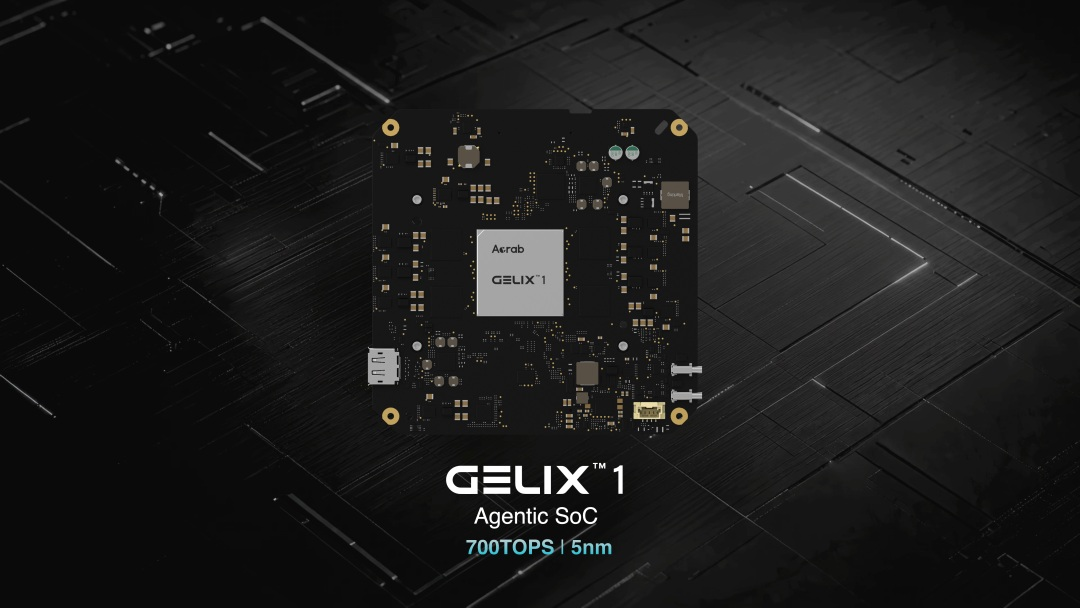
Singapore based startup Acrab has introduced GELIX 1, a compact edge AI processor designed to run large language models and autonomous agents locally without depending entirely on cloud infrastructure. The company claims its first generation chip can support models containing up to 100 billion parameters while outperforming Apple’s M4 Pro in a specific prompt processing benchmark.
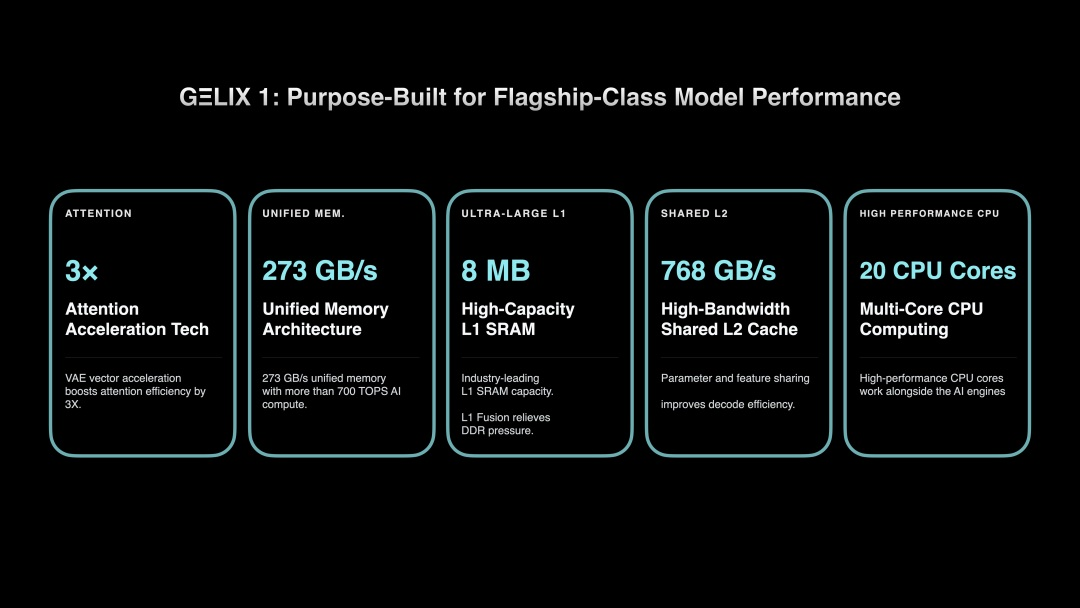
According to the official Acrab announcement, GELIX 1 is manufactured using a 5 nm process and combines a 20 core Arm CPU, integrated GPU resources, a multicore neural processing unit, and unified memory delivering 273 GB/s of bandwidth. Acrab has paired the processor with Agent Box, a compact personal AI system designed for local language models, multimodal processing, persistent memory, and agent orchestration.
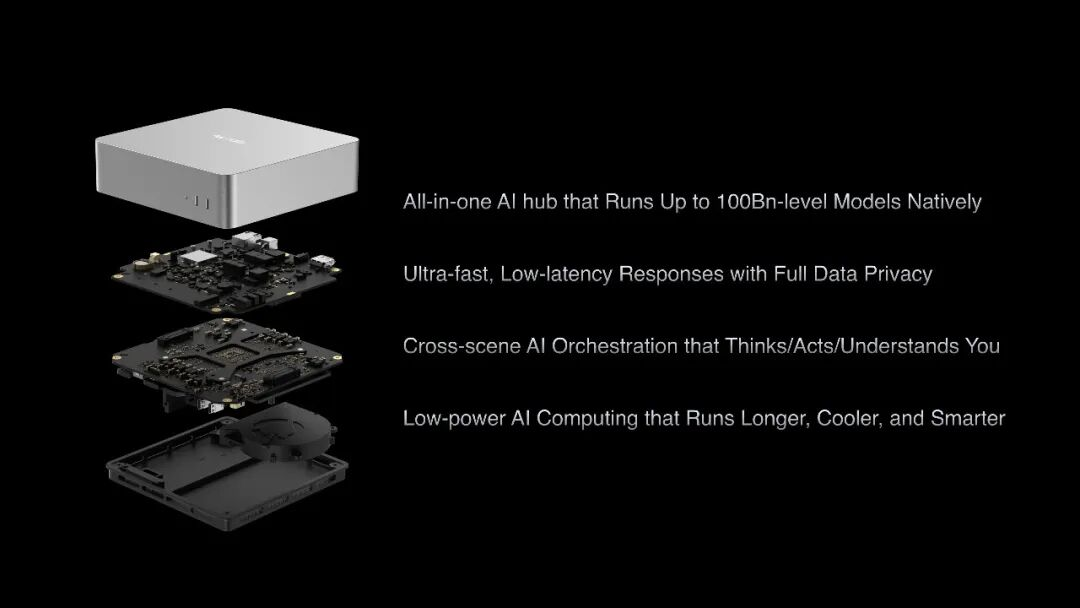
The memory bandwidth matches the 273 GB/s provided by Apple’s M4 Pro, although the platforms may differ significantly in compute architecture, software optimization, memory capacity, and model execution. Apple offers the M4 Pro Mac mini with up to 64 GB of unified memory, while Acrab has not publicly disclosed the maximum memory capacity available inside Agent Box.
Acrab’s headline performance claim comes from company testing using a Gemma 26B A4B model with a 40,000 token KV cache and a 10,000 token input. GELIX 1 reportedly reached a prefill rate of 1,416.8 tokens per second, compared with 188.9 tokens per second on an M4 Pro Mac mini. That represents an advantage of up to 7.5 times under Acrab’s selected configuration.
However, the result should not be interpreted as proof that GELIX 1 is 7.5 times faster across every AI workload. Prefill measures how quickly a system processes the original prompt and builds the KV cache before generating an answer. Decode performance measures how quickly the model produces each new output token. Both stages contribute to the user experience, but they place different demands on the hardware. Acrab has not published detailed decode rates, time to first token results, power consumption, thermal data, or independently reproduced benchmarks.
The company also claims GELIX 1 can support open models within the 100 billion parameter class. That capability will depend heavily on the installed memory capacity, quantization format, active parameter count, context length, and software optimizations. A dense 100 billion parameter model could require approximately 100 GB at 8 bit precision or around 50 GB at 4 bit precision before accounting for the KV cache, runtime overhead, and supporting applications.
Acrab has not revealed which specific 100 billion parameter models it tested or the precision used to fit them into memory. Its official product material states that the platform natively supports models within this class, but complete configuration details have not yet been published.
The specifications also resemble the broader category of compact unified memory AI systems entering the market. NVIDIA’s GB10 platform, used inside DGX Spark and related products, similarly combines a 20 core Arm processor with 128 GB of unified LPDDR5X memory and 273 GB/s of bandwidth. Acrab has not stated that GELIX 1 uses GB10 technology, and the similarity alone is not enough to establish a connection between the platforms.
GELIX 1 instead appears to be part of a wider movement toward local AI workstations that prioritize large shared memory pools over conventional desktop architecture. As previously explored of unified memory computing, AMD, NVIDIA, Apple, and several system manufacturers are increasingly positioning compact machines as private alternatives to cloud inference.
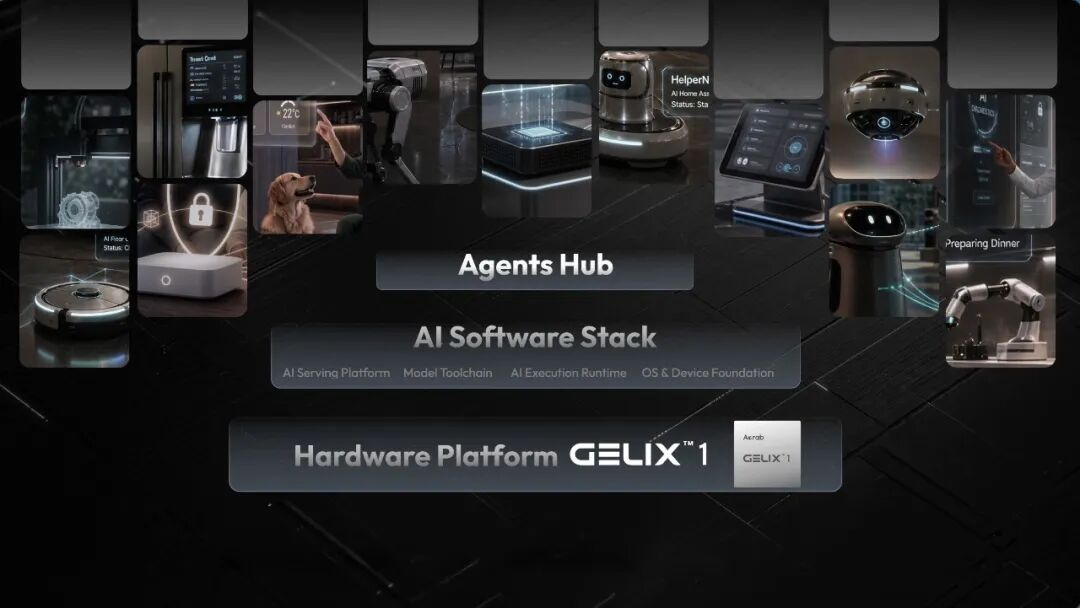
Running AI models locally can reduce latency, preserve sensitive information, maintain functionality without constant internet access, and remove recurring cloud inference charges. Acrab plans to offer its technology beyond Agent Box through AI personal computers, network storage systems, vehicles, industrial equipment, and robotics platforms. Pricing and commercial availability have not been announced.
GELIX 1 is an intriguing entry into the rapidly expanding compact AI workstation market, but the 7.5 times performance claim requires context. Acrab demonstrated an impressive advantage in prefill speed, which could make long prompts and large context windows feel significantly more responsive. It has not yet demonstrated the same advantage during token generation or across a broader selection of models.
The unanswered questions are equally important. Memory capacity will determine whether 100 billion parameter support is genuinely practical, while power consumption, software compatibility, cooling, pricing, and independent testing will decide whether Agent Box can compete with established Apple, AMD, and NVIDIA platforms.
Acrab has presented an ambitious first product. The next step is providing enough technical transparency to prove that GELIX 1 is more than a strong company benchmark.
Would you choose a dedicated local AI system like Agent Box over a Mac mini or conventional GPU workstation?
