
AMD Sees Unified Memory Architectures as a Major Future Direction for AI, Desktop, and Next Generation Computing
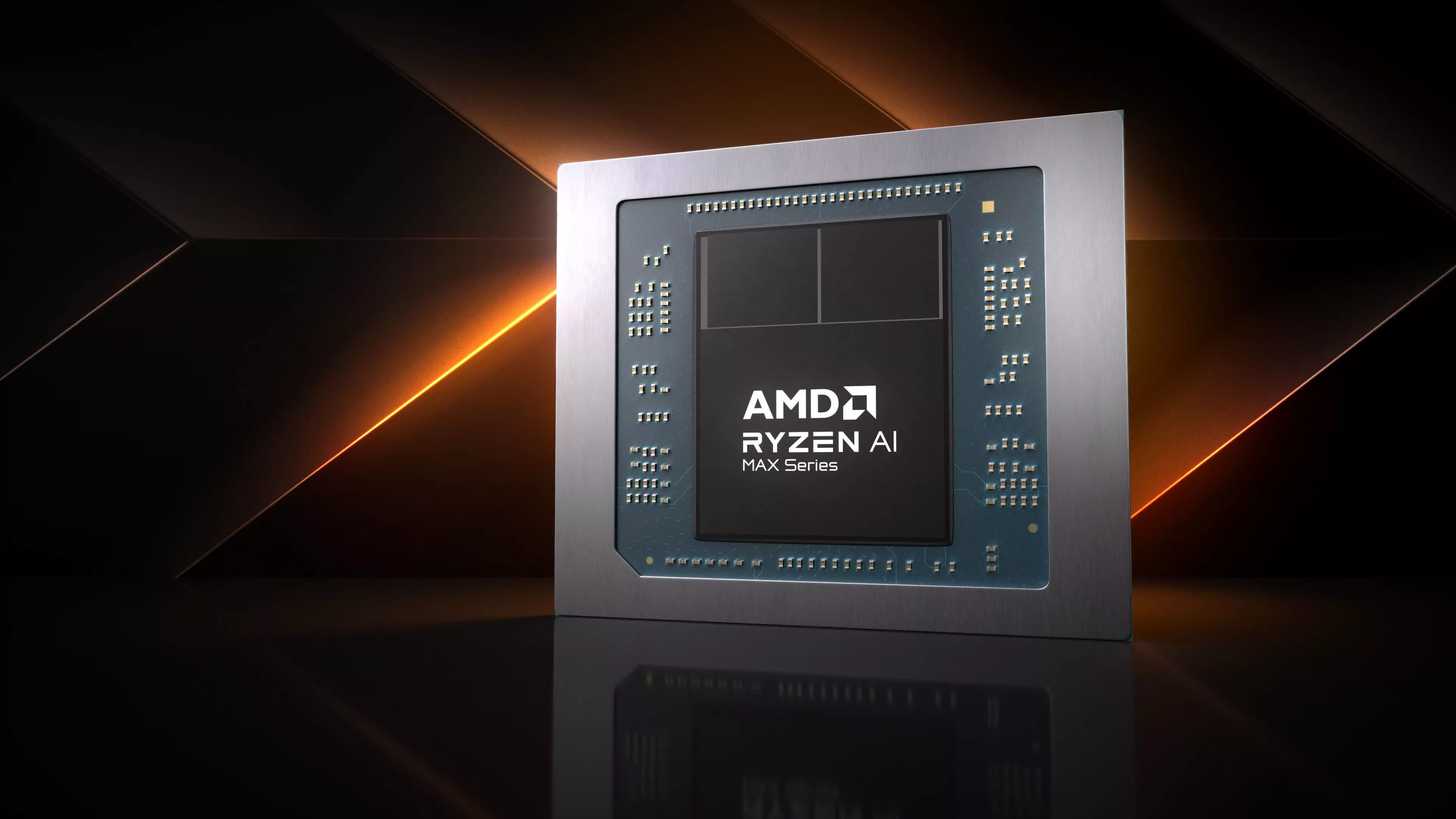
Unified Memory Architectures are quickly moving from niche platform design to one of the most important directions in modern computing, and AMD believes the industry is only at the beginning of what this approach can unlock. With agentic AI workloads growing rapidly, systems that tightly connect CPU, GPU, and memory into a unified compute platform are becoming increasingly relevant for AI development, local inference, high performance desktops, and future product roadmaps.
The discussion has gained momentum with AMD’s Ryzen AI MAX family, also known through platforms such as Strix Halo, and with NVIDIA entering a similar space through RTX Spark. These systems are designed around the idea of sharing a large memory pool across CPU and GPU resources, allowing workloads to dynamically access memory based on what the application needs. This is especially valuable for AI models, where memory capacity can be just as important as raw compute power.
AMD’s first Ryzen AI MAX offerings supported up to 128GB of memory, with up to 112GB configurable for GPU use. NVIDIA’s RTX Spark follows a similar direction by dynamically allocating memory between CPU and GPU depending on workload demand. For AI inference, agentic compute, creative workflows, and large local model execution, that flexibility can offer a major advantage compared with traditional platforms where GPU memory is more isolated and limited.
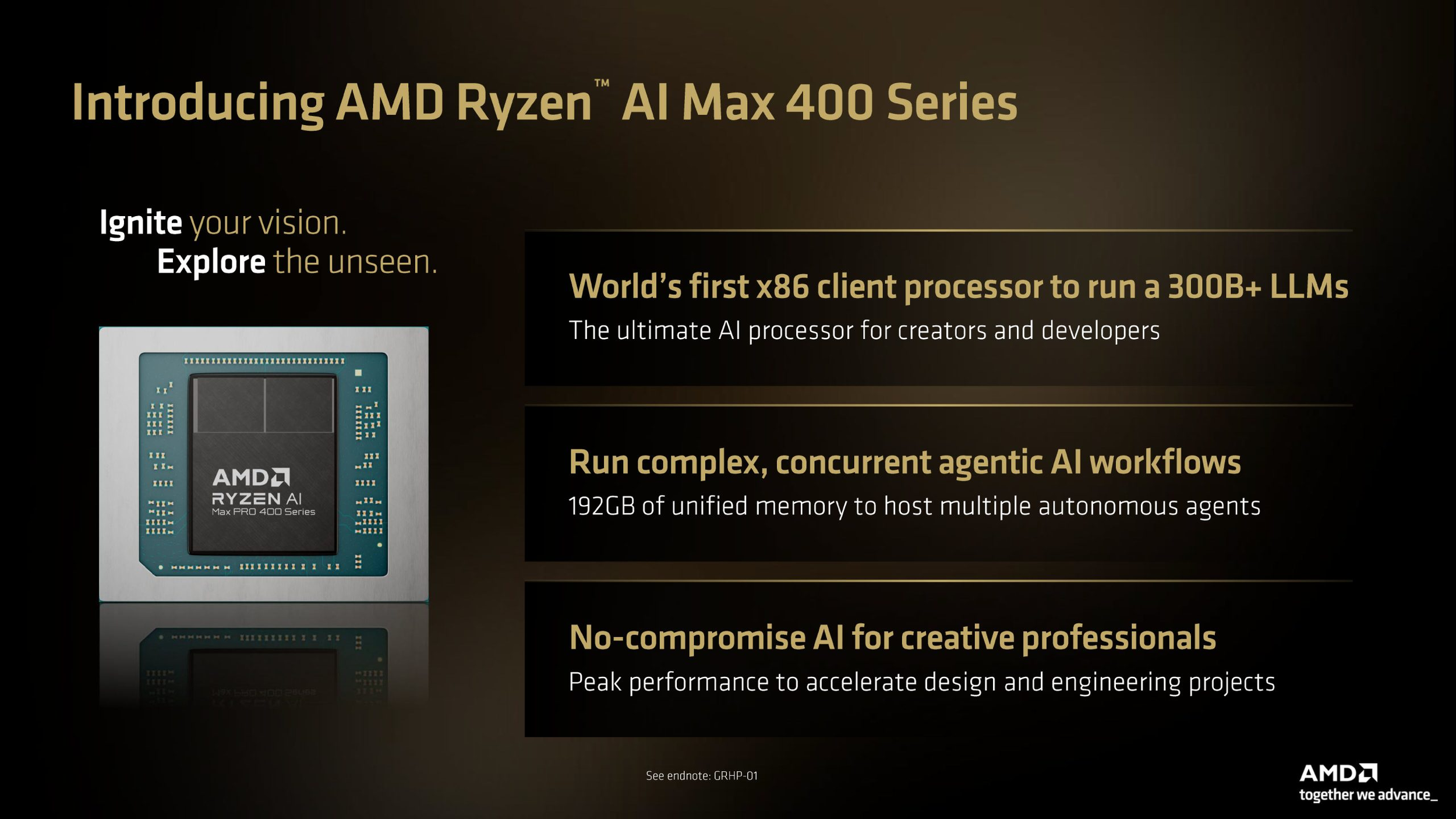
AMD is already preparing to push this concept further with the Ryzen AI MAX 400 series. According to the information shared, the platform is expected to offer up to 192GB of memory, with up to 160GB available for GPU allocation. This could enable support for 300B plus AI large language models, positioning unified memory systems as a practical option for users who need large model capacity without moving entirely into enterprise scale accelerator infrastructure.
During a roundtable discussion, AMD’s David McAfee was asked whether the company could eventually bring UMA concepts into Ryzen gaming CPUs or future Strix Halo style platforms with 3D V Cache or premium on package memory designs.
"I have no idea, so I'll start with that. But I do think that with Strix Halo, with NVIDIA entering the space as well, there's going to be a lot of focus on UMA systems, there's going to be a lot of focus on identifying the right architecture for what these UMA systems can do, as well as enhancements to, let's call it, the existing state of the art that exists in these platforms."
— David McAfee
While McAfee did not confirm any specific gaming CPU or desktop UMA product, his comments make it clear that AMD sees unified memory as a major area of exploration. The important takeaway is not that a Ryzen desktop UMA processor is confirmed, but that AMD believes the architecture could influence future product choices, roadmaps, deployment models, and platform strategy.
"And I don't know which direction that goes over the next couple of years, but I think that it opens a world of possibilities, because I think this is a totally new workload, this is a totally new computing space that we're solving for here, and I think it will shape lots of things around our product choices, our roadmap products, our deployment options, all of those things."
— David McAfee
This is an important shift for AMD because UMA platforms are no longer only about efficiency or compact system design. They are increasingly tied to how future AI PCs, workstations, and high performance desktops may handle large memory intensive workloads. AI models are growing, local inference demand is increasing, and enterprises are looking for more flexible ways to deploy compute without relying only on cloud data centers or discrete GPU memory.
McAfee also pointed to NVIDIA’s RTX Spark as a form of validation for the direction AMD took with Strix Halo. Rather than treating NVIDIA’s entry as only competitive pressure, AMD sees broader ecosystem adoption as beneficial because it strengthens software support, developer interest, and market confidence around unified memory architectures.
"The exciting part to me is I think that we're at the threshold of what will be an incredibly exciting period that transforms how we think about high performance desktops and unified systems like this. I think that improving support for unified memory architectures and continuing to have more players in the ecosystem adopt that type of architecture just builds on the story or builds on the ecosystem support for what these devices are capable of and what value they can bring."
— David McAfee
McAfee further explained that AMD still believes the unified architecture built with Halo is the right approach for these types of platforms. He also described NVIDIA’s announcement as an endorsement of the same general architectural direction.
"I think we still believe that the unified architecture that we built with Halo is the right architecture for those types of platforms. I think what NVIDIA did with their announcements is an endorsement of that architecture, that they also see that it's the right architecture for those types of systems. I think that the emergence of Agentic Compute and running, let's call it, supersized models because of the unified memory pool of these types of systems is an incredibly unique value that they bring to the overall computing space. And to us, systems like this play 2 roles in our overall portfolio strategy."
— David McAfee
The biggest advantage of UMA is the ability to reduce the traditional separation between CPU memory and GPU memory. In a standard discrete GPU system, VRAM capacity can become a hard limit. Even if the system has a large amount of DRAM, the GPU cannot always use that memory in the same direct and efficient way. Unified memory platforms are designed to make memory access more flexible, which can be especially useful for large AI models, creative applications, simulation workloads, and future gaming scenarios that demand larger shared asset pools.
For gamers, the most exciting long term question is whether UMA could eventually influence mainstream Ryzen desktop or gaming platforms. A desktop chip with a large unified memory pool, advanced integrated graphics, 3D V Cache, and premium on package memory could create a very different kind of gaming PC. It could also help small form factor systems, living room gaming PCs, and compact workstations deliver stronger performance without relying on traditional discrete GPU configurations.
However, that future is not confirmed yet. AMD’s comments should be read as strategic direction rather than product confirmation. The company clearly sees UMA as a growing opportunity, but it has not announced a Ryzen gaming CPU with unified memory or a Strix Halo variant with 3D V Cache. The current focus remains AI, agentic workloads, high performance integrated platforms, and systems where large shared memory pools create immediate value.
The AI angle is especially important. Agentic AI workflows require systems that can handle larger models, longer contexts, more local data, and faster response times. Unified memory architectures give these systems a way to run larger workloads locally by making more memory available to GPU compute. That could make UMA platforms more attractive for developers, creators, researchers, and enterprises that want local AI capability without investing in large scale server infrastructure.
AMD’s position also reflects a larger industry trend. As AI PCs evolve, the traditional boundaries between CPU, GPU, NPU, system memory, and storage are becoming less rigid. Future platforms may be judged not only by peak compute performance, but by how intelligently they move data, allocate memory, and support different workloads across the full system.
Unified Memory Architectures are still early in their mainstream journey, but AMD’s confidence shows that this approach may become one of the defining platform strategies of the next several years. With Ryzen AI MAX, future Ryzen AI MAX 400 series products, and growing ecosystem validation from NVIDIA, UMA is becoming a serious pillar for local AI, compact high performance computing, and potentially future gaming systems.
If AMD can continue improving memory capacity, latency, bandwidth, software support, and platform scalability, unified memory could open a new category of PCs that sit between traditional desktops, AI workstations, and compact creator systems. For now, the message from AMD is clear: UMA is not just a feature. It is a direction that could shape the company’s future roadmap.
Do you think Unified Memory Architectures could become the future of gaming PCs and local AI systems, or will traditional discrete GPU platforms remain the better choice?
