
Shuhei Yoshida Criticizes Steam Machine Performance and Price but Praises Its Quiet Living Room Design
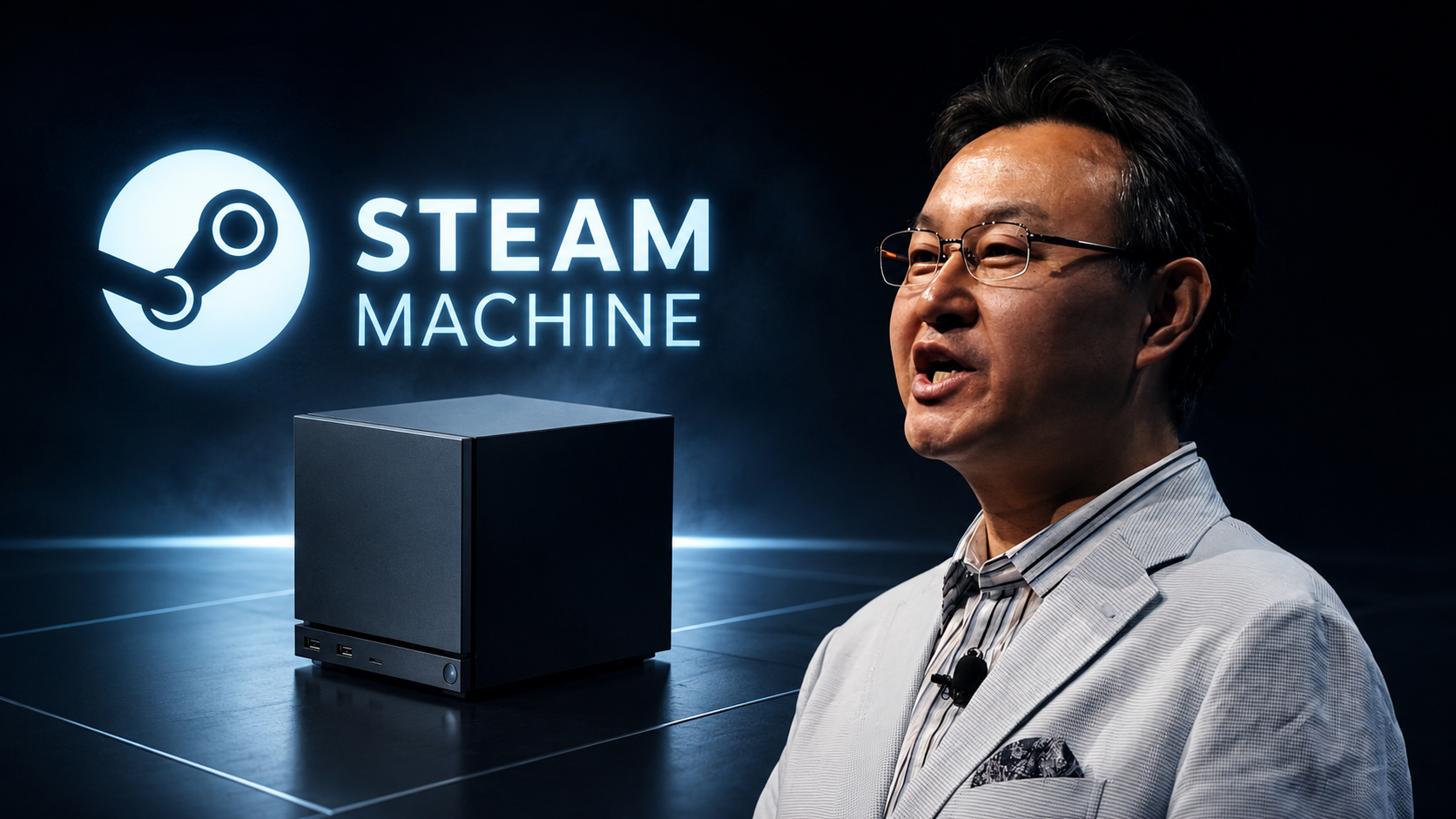
Former PlayStation Studios president Shuhei Yoshida has shared a mixed early reaction to Valve’s new Steam Machine, calling out its performance, 1080p default behavior, slow game boot times, and difficult price point, while still admitting that the compact SteamOS hardware has a charm that makes it easy to keep in the living room.
Yoshida posted his impressions after spending a few hours with the device, and his comments read less like a full review and more like a candid hardware reality check from someone who has spent decades inside the console business. According to PC Gamer, he described the 3D performance as underwhelming, questioned why the system recommends 1080p by default, and compared that feeling to returning to the PlayStation 4 era.
"3D performance is just meh."
— Shuhei Yoshida
The 1080p comment is especially important because Valve initially positioned Steam Machine as a living room PC capable of strong 4K gaming through AMD FidelityFX Super Resolution. The official Steam Machine page now describes the device as offering up to 4K gaming with FSR 4.1, while reporting from Windows Central noted that Valve had previously used stronger 4K 60 FPS wording before softening the claim.
Yoshida also criticized some game boot times, asking what the system was doing during the longer waits. That concern matches the wider criticism around Steam Machine, which is trying to simplify PC gaming for the living room but still has to deal with the reality of shader work, compatibility layers, per game settings, and SteamOS behavior that does not always feel as instant as a traditional console experience.
The price may be the largest barrier. Valve’s official Steam Hardware launch announcement lists the 512GB Steam Machine at $1,049 and the 2TB model at $1,349 before adding the Steam Controller. Valve says wants a cheaper Steam Machine but does not expect fast price cuts, with Valve pointing to memory and storage costs as part of the problem.
"But the price was very unfriendly. Hard to recommend to people unless for research."
— Shuhei Yoshida
That price places Steam Machine in an uncomfortable market position. It is more expensive than mainstream consoles, yet it does not match the raw flexibility or performance ceiling of a full gaming PC. Tom’s Guide reached a similar conclusion in testing, praising the small cube design, quiet thermal behavior, SteamOS interface, and console style features, but arguing that the system becomes difficult to recommend at $1,049 because modern AAA performance does not consistently match the asking price.
Yoshida’s impressions of the new Steam Controller were also mixed. He liked the idea of the touchpads but felt they were too sensitive for precise control, while the analog sticks felt looser than he preferred. That reaction is notable because Valve’s controller strategy is central to making Steam Machine feel like a console rather than simply a Linux PC connected to a TV.
Still, Yoshida did not dismiss the hardware completely. He praised the SteamOS interface as easy to use, liked the ability to power on the system directly from the Steam Controller, and appreciated smaller personality driven touches such as changeable faceplates and randomized boot videos. In a later post, he leaned more positive, saying that the Steam Machine’s compact design and quiet operation made it surprisingly pleasant to keep in the living room.
"The small form factor and quietness is super good."
— Shuhei Yoshida
That is where Valve’s hardware story becomes more interesting. Steam Machine may not beat PlayStation 5 Pro, Xbox Series X, or a custom gaming PC in pure value, but it is offering a very specific living room proposition: SteamOS, PC library access, free online multiplayer, controller based startup, a small chassis, low noise, and a cleaner interface than a normal Windows gaming setup.
SteamOS support for Steam Machine had already appeared before launch, with Valve adding initial hardware support, wake from sleep through the Steam Controller, preliminary HDMI VRR support, improved VRR frame pacing, and broader compatibility work. That software layer remains the strongest part of Valve’s console style push.
Yoshida’s reaction captures the core Steam Machine problem perfectly. Valve has built a device that many players want to like, but the price forces every weakness to become louder. At $600 or $700, underwhelming 4K performance would be easier to accept. At $1,049, players naturally compare it with consoles, gaming laptops, and compact desktops that may deliver better frame rates or more upgrade flexibility.
The biggest win is not raw power. It is user experience. SteamOS on a TV, instant controller startup, quiet acoustics, a small footprint, and access to an existing Steam library are legitimate advantages. For players who already live inside Steam and want a console style setup without Windows, the concept is strong.
The biggest risk is that Valve may have created a premium niche device while trying to sell a mainstream living room dream. Yoshida’s split verdict shows exactly why Steam Machine is both fascinating and difficult to recommend. It feels good to use, it looks good beside a TV, and it solves real couch gaming friction, but its performance and pricing make the business case harder than the design case.
Valve does not need Steam Machine to beat PlayStation overnight. It needs to prove that SteamOS belongs in the living room. The first hardware generation may achieve that, but wider adoption will likely depend on future price cuts, stronger AMD hardware, and more consistent 4K performance.
Would you buy a Steam Machine for the SteamOS living room experience, or does the $1,049 starting price make a traditional console or gaming PC the smarter choice?
