
Samsung Foundry Losses Could Narrow as HBM4 Drives 4 nm Demand
Samsung Electronics may be making measurable progress in reducing losses at its foundry business, with stronger internal demand from HBM4 and new external AI projects helping improve the outlook.
According to Digital Today, Kiwoom Securities expects Samsung Foundry and System LSI to record an operating loss of approximately 777 billion won in Q3 2026. That figure should be viewed within the company's more recent performance rather than directly against early 2025. During 2026, quarterly losses have reportedly fluctuated between roughly 700 billion won and 1.2 trillion won, with the Q3 estimate representing an improvement after losses widened again in Q2.
The clearer year over year comparison comes from the full year outlook. Kiwoom expects the combined Foundry and System LSI operating loss to fall to approximately 3.92 trillion won in 2026, compared with 6.74 trillion won in 2025. For historical context, losses had exceeded 2 trillion won in each quarter during the first half of 2025, showing how significantly the scale of the deficit has already come down.
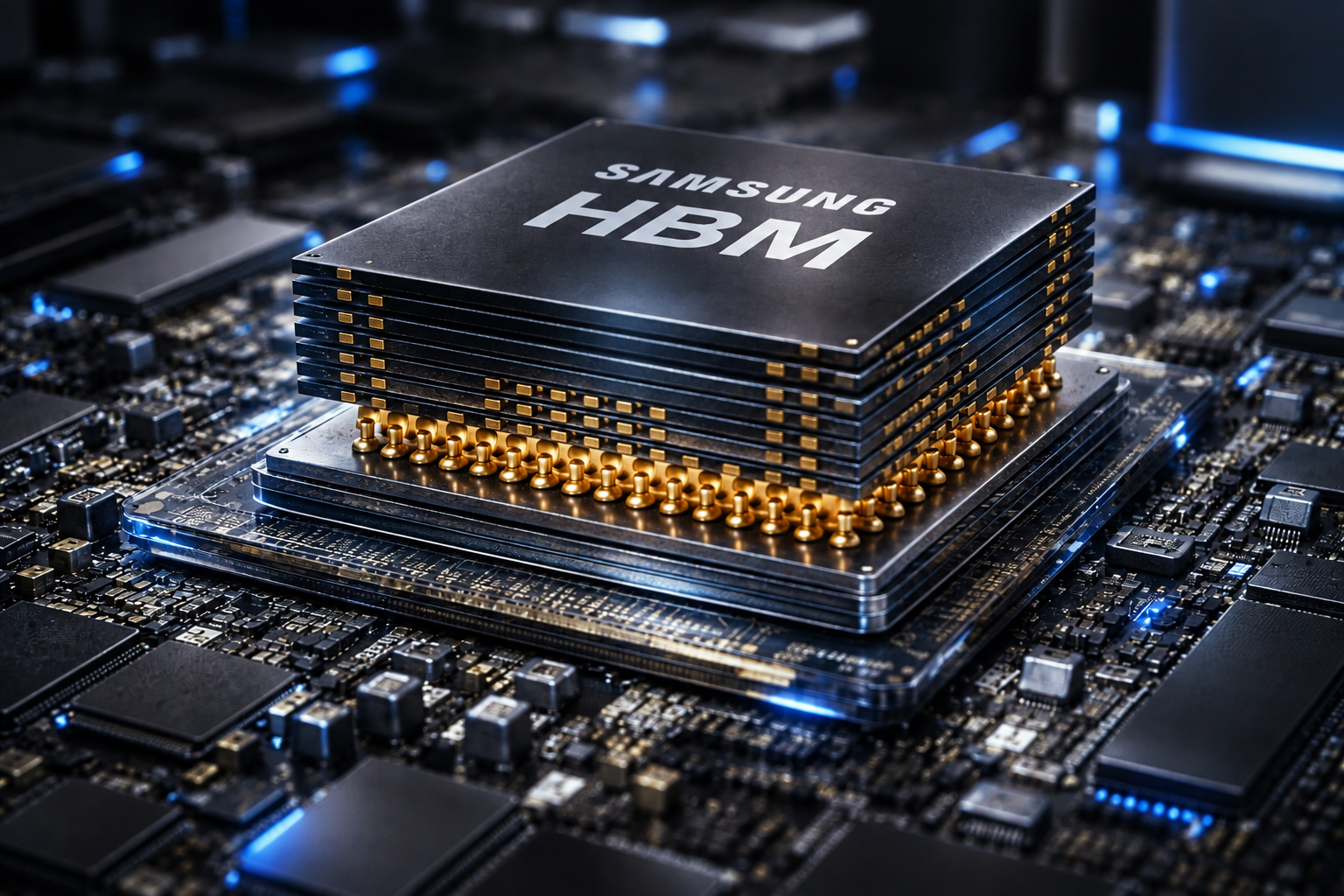
One factor behind the improvement is Samsung's HBM4 production. The company manufactures the logic base die used in its HBM4 stacks on its own 4 nm process, creating internal foundry demand as AI memory shipments increase.
Samsung 4nm lines reached full utilization while HBM4 base dies reportedly consumed between 50% and 60% of available capacity. Samsung also expects HBM4 revenue during Q3 to increase more than 3 times compared with Q2, while HBM4 is projected to represent well above 60% of its total HBM revenue during the second half of 2026.
During its Q2 2026 earnings announcement, Samsung said foundry earnings improved significantly before incentive related provisions, supported by HBM base die demand and stronger orders from customers in the United States. The company expects foundry revenue during the second half of 2026 to grow at a double digit rate.
The more important long term question is whether Samsung can convert that momentum into sustained external business. Internal demand can support the recovery, but profitability will ultimately depend on customers committing meaningful production volume to Samsung's advanced process nodes.
That makes Samsung's growing AI partnerships particularly important. In July, Samsung and Broadcom signed a memorandum of understanding covering memory, foundry manufacturing, and advanced packaging for next generation AI infrastructure. The companies estimate that the collaboration could exceed $200 billion through 2030, including HBM4 and HBM4E supply alongside advanced logic manufacturing using processes at 2 nm and below.
Samsung and Broadcom agreement combines HBM, advanced foundry manufacturing, and packaging under a single supplier. Samsung also said it secured additional 2 nm projects from major cloud, AI, and high performance computing customers during Q2, with customers beginning product design work.
Those external projects are likely to matter more to the overall turnaround than any single source of internal volume. If Samsung can turn its 2 nm design wins into recurring production orders, the company could begin addressing one of the biggest weaknesses of its foundry business: maintaining a broad and consistent external customer base.
The timing of a full return to profit remains uncertain. Q3 results should provide a clearer indication of how quickly Samsung's improved order mix and advanced process demand are changing the economics of the business.
Samsung Foundry appears to be moving in the right direction, but the financial comparison needs perspective. A projected 777 billion won Q3 loss would still represent a substantial deficit, even though the broader trend is considerably better than the multitrillion won quarterly losses seen during early 2025.
The more important signal is whether Samsung can keep reducing those losses through external AI projects rather than relying primarily on demand generated within its own semiconductor business. Its ability to combine memory, advanced logic manufacturing, and packaging gives it a potentially valuable position as AI hardware becomes more integrated.
The next phase will depend on execution. If Samsung can convert current 2 nm projects and partnerships such as Broadcom into sustained production volume, the foundry business could move from stabilization toward a more durable recovery.
Could Samsung's combination of memory, foundry manufacturing, and advanced packaging become its strongest advantage in the AI semiconductor market?
