
Samsung Faces Major Labor Pressure After Union Rally Reportedly Disrupts Foundry and Memory Output
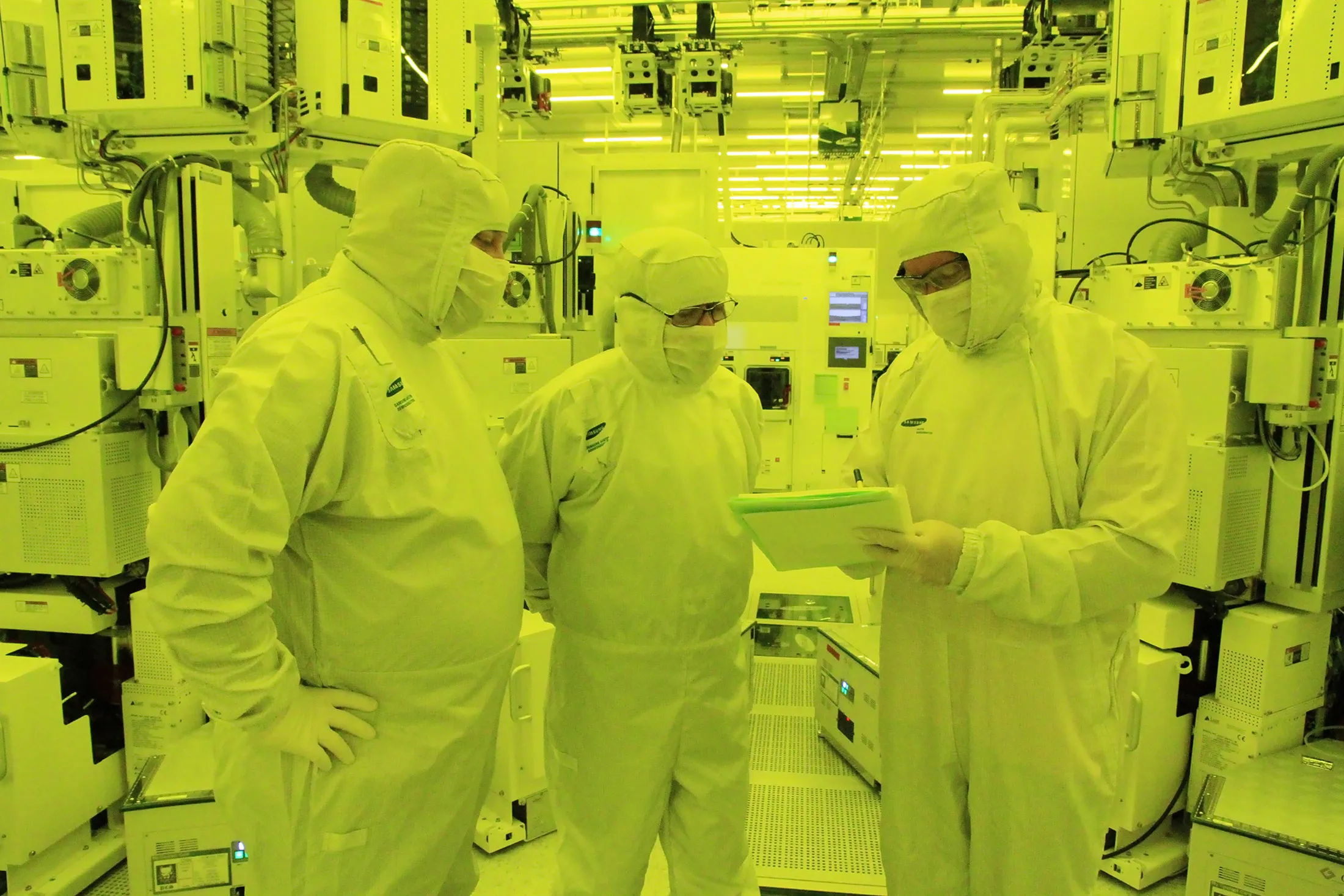
Samsung is facing a major labor escalation in South Korea after unionized workers reportedly disrupted production across both memory and foundry operations during a large rally on April 23. According to the report from Seoul Economic Daily, the rally attracted as many as 40,000 people and caused a significant short term impact on Samsung’s chip production lines.
The reported disruption is especially serious because Samsung’s semiconductor business is currently at the center of the global AI, memory, foundry, and advanced manufacturing supply chain. According to union estimates cited in the report, Samsung’s highly automated memory fabs saw output fall by 18.4% during the disruption, while its more labor intensive foundry lines suffered a much sharper 58.1% drop in output for the day.
The difference between memory and foundry impact is important. Samsung’s memory fabs are heavily automated, which means production can continue with fewer workers compared to other parts of the semiconductor business. Foundry operations, however, can involve more labor dependent steps, tighter customer schedules, more complex process management, and more sensitive production coordination. A 58.1% output disruption in foundry operations, even for a single day, sends a very clear signal about the pressure Samsung could face if labor action expands.
The latest rally appears to be part of a broader standoff between Samsung management and unionized workers. The union is reportedly demanding bonuses equivalent to 15% of Samsung’s annual operating profit, estimated at around $30 billion. If the demand is not addressed, workers are threatening an 18 day strike beginning on May 21 and lasting until June 7.
That threat is now far more serious after this week’s rally. If a one day absence can reportedly reduce foundry output by more than half, an 18 day strike could create a much larger operational and financial shock. Samsung’s semiconductor customers depend on stable output, predictable delivery timelines, and consistent production execution. Any extended disruption could affect internal business units, external foundry clients, memory customers, and broader supply chain planning.
Samsung has experienced labor action before. Workers previously held a 3 day strike last year, but that disruption was far more limited compared with the potential impact of the currently threatened 18 day strike. This time, the stakes are higher because Samsung’s semiconductor business is entering a major profitability cycle, driven by demand for AI memory, advanced chips, and high value semiconductor manufacturing.
The timing also adds pressure. Samsung recently issued an extremely strong outlook for Q1 2026, expecting total sales of 133 trillion won, or about $88.273 billion, compared with a consensus estimate of 116.81 trillion won. Even more striking, Samsung expects operating profit of 57.2 trillion won, or around $37.8 billion, representing 700% year over year growth and 184% sequential growth compared with the 20.1 trillion won operating profit reported in Q4 2025.
Those figures give workers more leverage. When a company is projecting record level profitability, union demands for stronger profit sharing become harder to dismiss publicly. The argument from labor is straightforward: if Samsung’s semiconductor business is benefiting from the AI and memory boom, employees want a larger share of that upside.
Analysts at KB Securities reportedly believe Samsung could earn 327 trillion won in operating profit in 2026 and 488 trillion won in 2027. If that forecast proves accurate, Samsung could become one of the most profitable companies in the world, potentially surpassing even NVIDIA’s expected operating profit by a narrow but meaningful margin. That kind of projection changes the labor conversation from ordinary annual compensation negotiations into a much larger debate over how semiconductor wealth is distributed inside one of the world’s most important technology companies.
For Samsung, the challenge is strategic as much as financial. The company is fighting to strengthen its position in HBM memory, advanced logic manufacturing, foundry services, mobile chips, AI hardware, and next generation semiconductor nodes. Any prolonged labor instability could weaken confidence at a time when customers are already comparing Samsung closely against TSMC, SK hynix, Micron, and other major semiconductor players.
The foundry side is particularly sensitive. Samsung has been working for years to close the competitive gap with TSMC in advanced manufacturing. Foundry customers need confidence that wafers will move through production reliably, especially for high performance chips, AI accelerators, mobile SoCs, and custom silicon. A major strike could create uncertainty around delivery schedules and push some customers to consider alternative capacity where possible.
The memory business is also exposed, even if its fabs are more automated. AI demand has sharply increased the value of DRAM, HBM, and other advanced memory products. Samsung is already under pressure to compete with SK hynix in HBM leadership, and any production disruption could affect its ability to fully benefit from the current memory cycle.
This puts Samsung management in a difficult position. Accepting a massive bonus demand could create a major financial precedent. Rejecting it could trigger a prolonged strike with potentially larger financial consequences. The April 23 rally appears to have shown that workers can meaningfully disrupt production, especially in foundry operations, giving the union a stronger negotiating position ahead of the May 21 deadline.
The broader semiconductor industry will be watching closely. Samsung is not a small isolated supplier. It is one of the pillars of the global chip market, with influence across smartphones, PCs, servers, AI infrastructure, consumer electronics, storage, memory, and foundry manufacturing. A serious labor disruption at Samsung could ripple across multiple industries, especially if it affects advanced production capacity during a period of tight global demand.
For now, the situation remains a high stakes negotiation. Samsung has time before the planned strike begins, but the April 23 rally has already changed the tone. What was once a labor dispute is now a production risk with potential consequences for the semiconductor market.
If Samsung can reach an agreement before May 21, it may avoid a much deeper disruption. If negotiations fail, the company could face one of the most consequential labor actions in its modern semiconductor history.
Should Samsung meet the union’s profit sharing demands to avoid a major production shock, or would that create a dangerous precedent for future semiconductor labor negotiations?
