
Saltycroissant Breaks DDR5 World Record at 13,606 MT/s on GIGABYTE Z890 AORUS Tachyon Duo X ICE
Extreme overclocker saltycroissant has pushed DDR5 memory beyond the 13,600 MT/s barrier for the first time, establishing a new officially validated memory frequency world record at 13,606 MT/s.
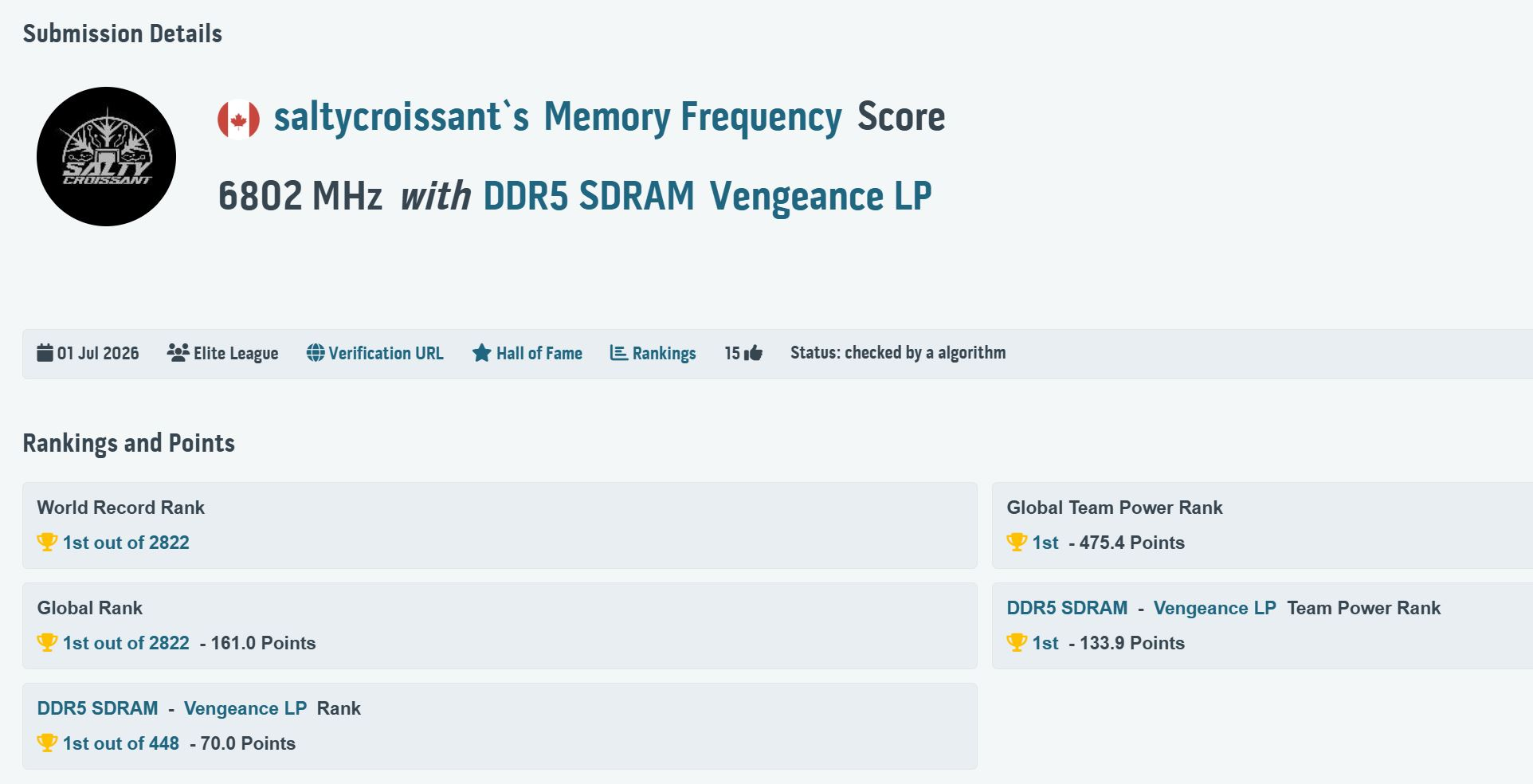
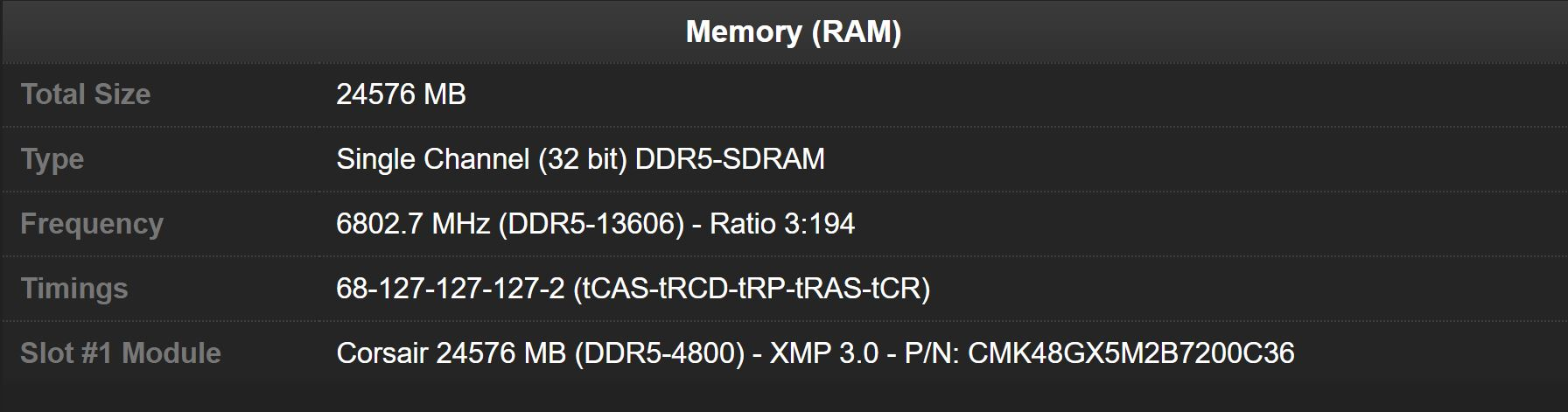
According to the official HWBOT submission, the Corsair DDR5 module reached a reported memory frequency score of 6802 MHz, placing saltycroissant first in both the world record and global rankings among 2,822 entries. The accompanying CPU Z validation provides the more precise figure of 6802.7 MHz, which is reported as DDR5 13606 because DDR memory transfers data twice during each clock cycle.
The record was achieved using a single 24 GB Corsair Vengeance LP DDR5 module operating in single channel mode. CPU Z identifies the module as part number CMK48GX5M2B7200C36, which corresponds to a Corsair Vengeance 48 GB kit configured as 2 modules of 24 GB with an XMP 3.0 profile.
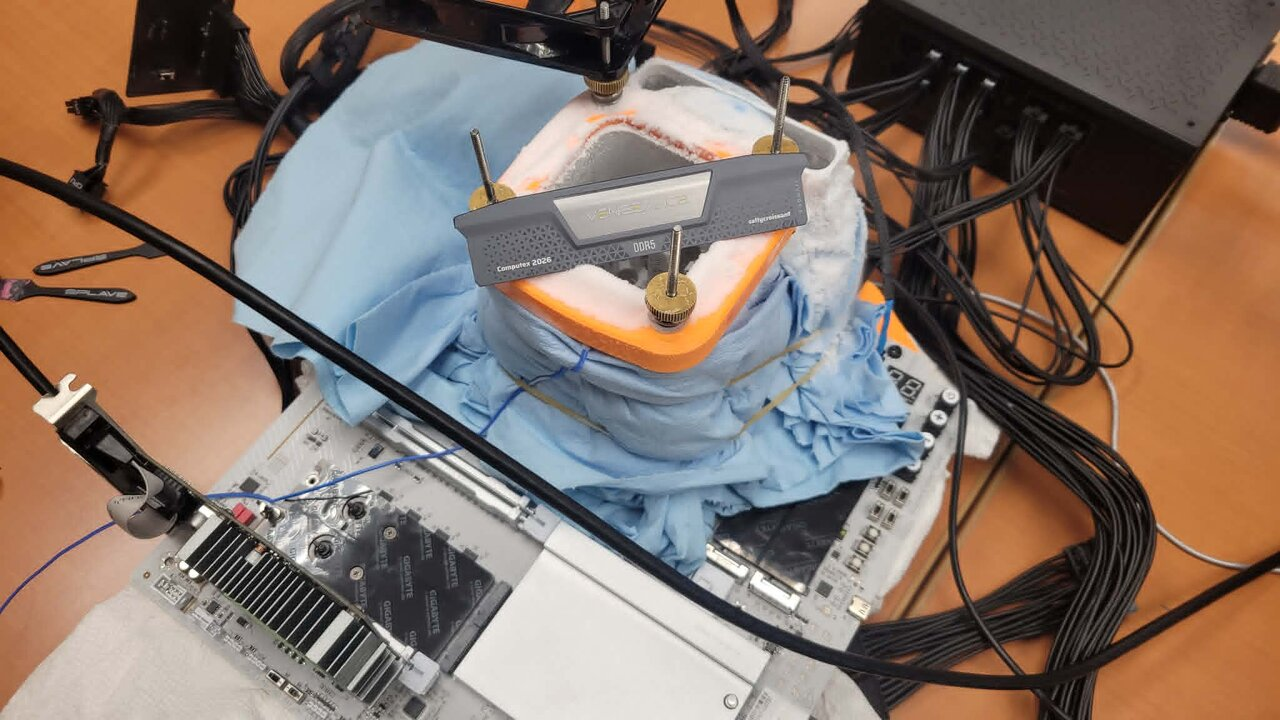
The memory was installed on the GIGABYTE Z890 AORUS Tachyon Duo X ICE, paired with an Intel Core Ultra 7 270K Plus processor. Both the processor and memory were cooled with liquid nitrogen during the record attempt, while the motherboard itself used its standard air cooling configuration.
Saltycroissant ran the DDR5 module at timings of CL68-127-127-127-2. These timings are extremely loose compared with conventional gaming memory profiles, but frequency records focus on achieving the highest validated transfer rate rather than balancing latency, stability, power consumption, and everyday application performance.
The Intel Core Ultra 7 270K Plus was also operated far below its normal boost frequency during the validation. CPU Z recorded the processor at 2103.94 MHz with a reduced number of active cores, allowing the platform to focus on memory controller stability and signal integrity rather than general processor performance.
The Z890 AORUS Tachyon Duo X ICE has also developed a strong competitive record. During Computex 2026, GIGABYTE announced that HiCookie, Sergmann, saltycroissant, Madness777, and Exaberries had reached 13,556 MT/s using the same motherboard, Corsair Vengeance DDR5, and Intel Core Ultra 7 270K Plus processor combination. The new 13,606 MT/s result improves that milestone by another 50 MT/s.
GIGABYTE designed the Tachyon Duo X ICE specifically for extreme memory tuning. The motherboard uses only 2 DDR5 slots, a 10 layer printed circuit board, optimized memory trace routing, dedicated overclocking controls, and an LN2 operating mode. Its reduced slot count helps limit unnecessary electrical interference between the memory controller and installed module, creating a cleaner signal path when operating at frequencies far beyond standard consumer specifications.
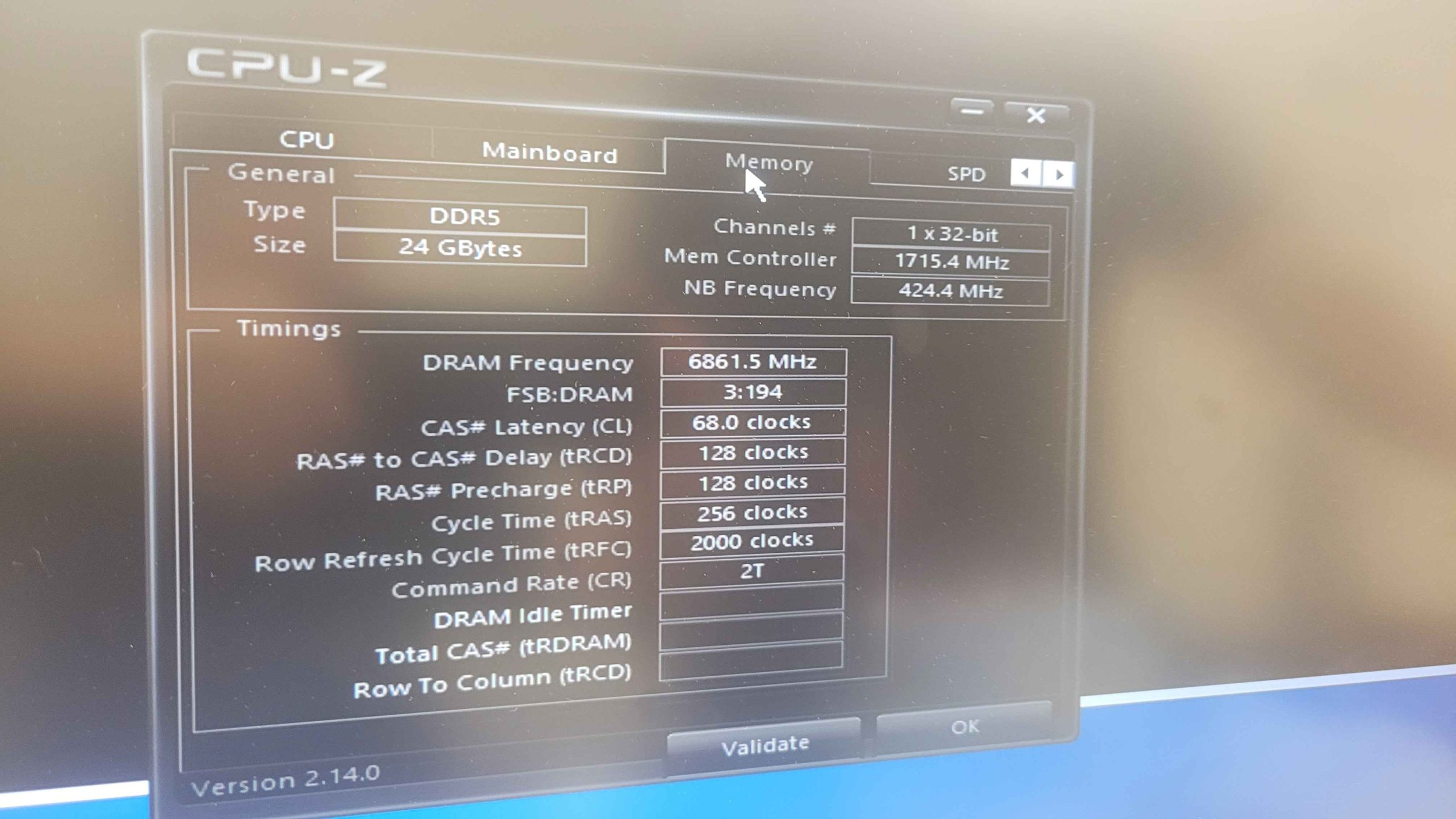
A separate screenshot reportedly shared by saltycroissant shows the memory reaching 6861.5 MHz, equivalent to approximately 13,722 MT/s. However, that result has not received an official CPU-Z or HWBOT validation, meaning 13,606 MT/s remains the recognized world record.
The most important part of this record is not the direct gaming performance of 13,606 MT/s memory. This configuration requires liquid nitrogen, heavily relaxed timings, disabled processor resources, and extensive BIOS tuning, making it unsuitable for normal gaming systems or workstation deployments.
Its real value is as an engineering demonstration. Extreme memory overclocking exposes the capabilities and limitations of the processor memory controller, motherboard trace design, BIOS training algorithms, memory integrated circuits, clock generation, power delivery, and thermal management.
The rapid progress from 13,556 MT/s to 13,606 MT/s also shows how competitive the DDR5 overclocking ecosystem has become. GIGABYTE, Corsair, Intel, and elite overclockers are now operating in a frequency range that appeared unreachable during the early DDR5 generation.
For everyday enthusiasts, more realistic demonstrations such as the ASUS ROG DDR5 memory test at 8800 MT/s provide a better view of how high frequency memory can be tuned while still completing stability testing. However, records such as 13,606 MT/s remain important because they define the technical ceiling of current DDR5 hardware.
How long do you think the 13,606 MT/s DDR5 world record will survive before another overclocker reaches the unvalidated 13,722 MT/s result or pushes beyond 14,000 MT/s?
