
Ryzen 9 9950X3D Fails on ASUS X670E Hero After BIOS Memory Preset Change
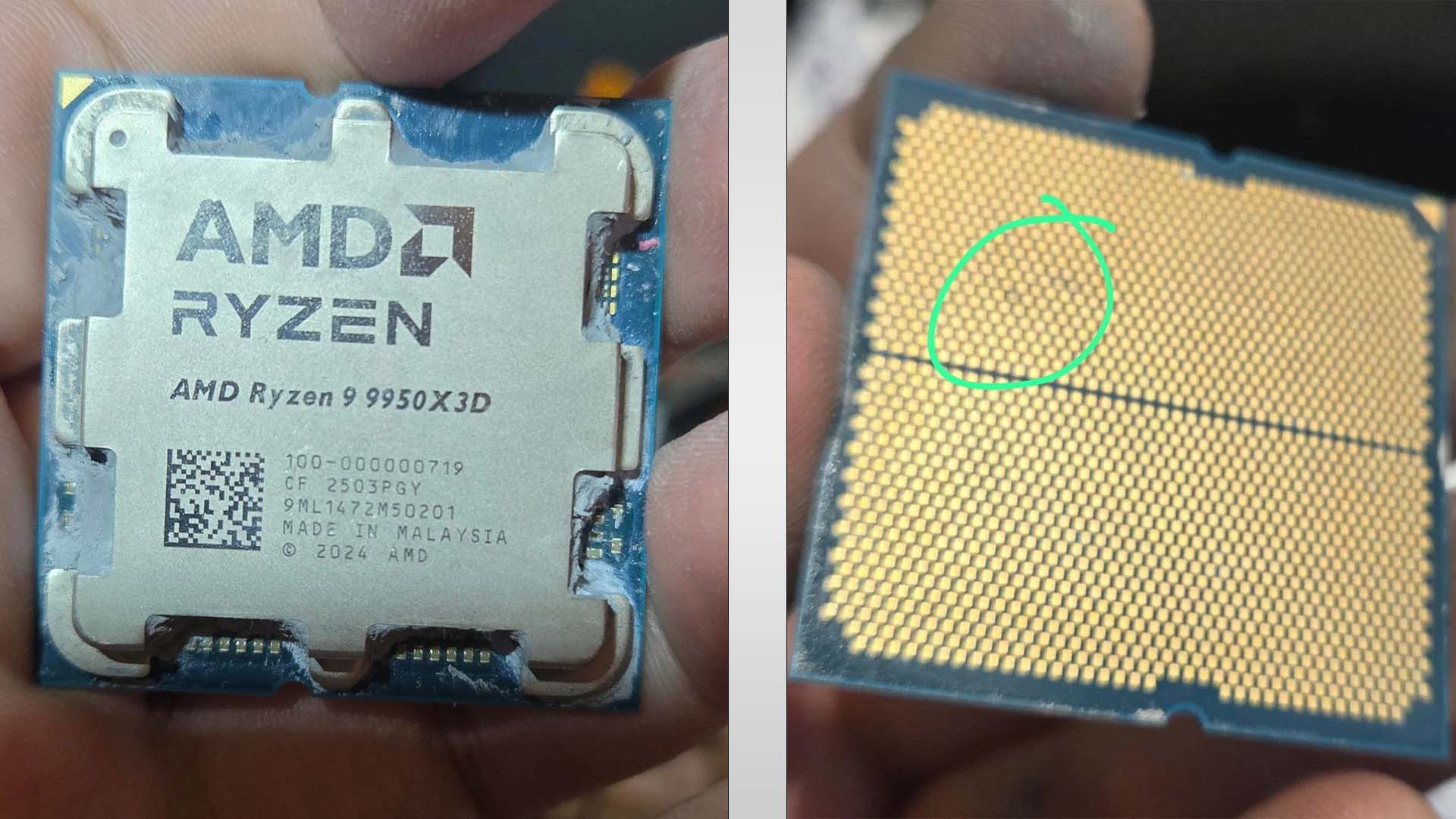
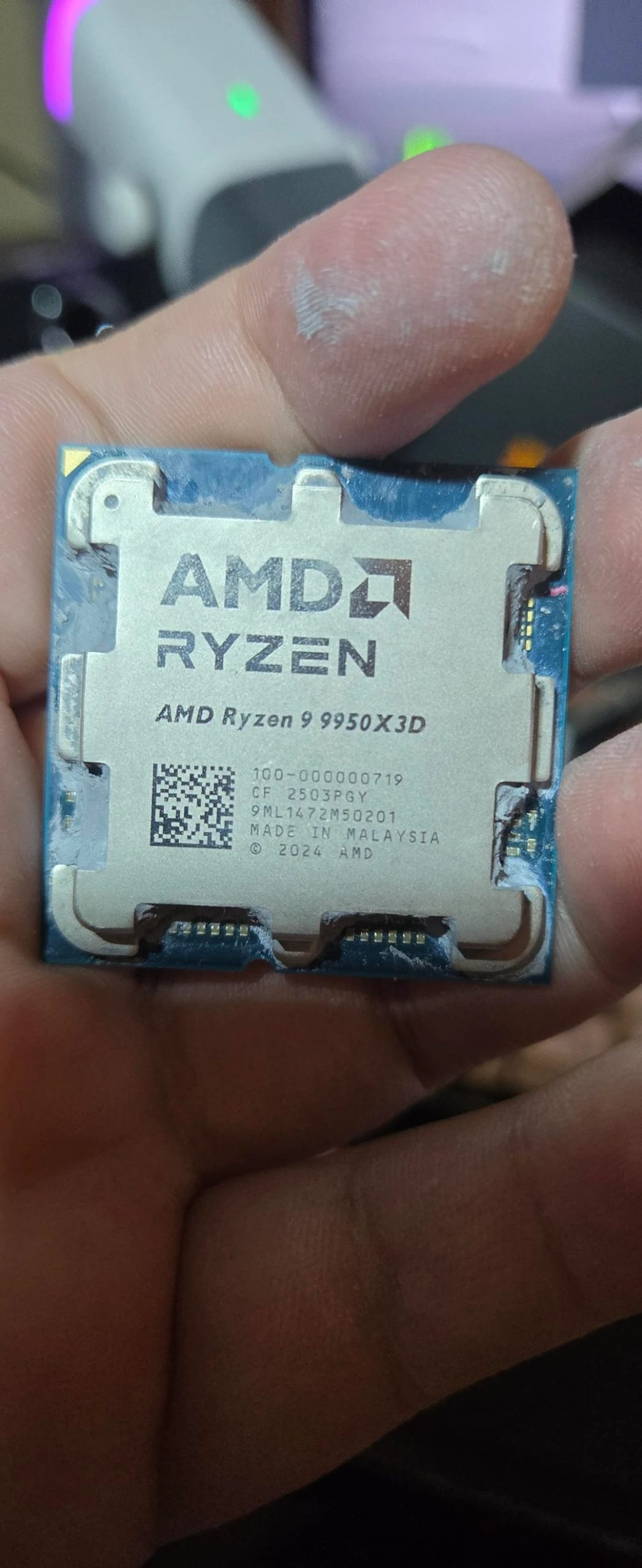
A Ryzen 9 9950X3D owner has reported a serious hardware failure after moving the processor from an ASRock X670E Taichi Carrara to an ASUS ROG Crosshair X670E Hero. According to the original Reddit report, the Ryzen 9 9950X3D had reportedly operated for more than 1 year in the ASRock motherboard without CPU related problems. The processor initially booted normally after being installed in the ASUS board, entered Windows 11, and appeared functional until the owner returned to the BIOS and selected an ASUS memory preset intended for a 2 × 32 GB dual rank SK hynix DDR5 6200 configuration. After saving the setting, the motherboard immediately displayed Q Code 00 and would no longer boot.
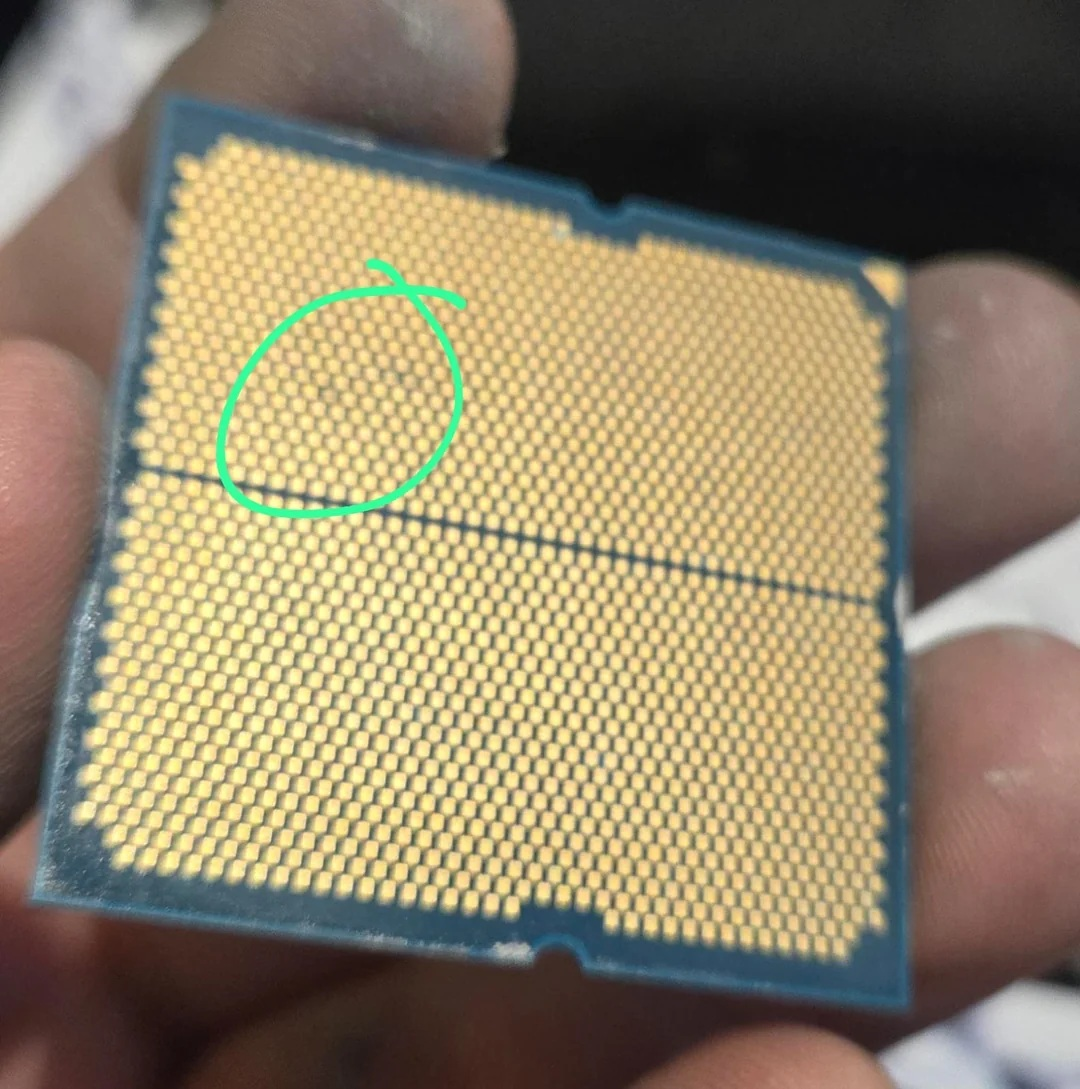
After removing the processor, the owner discovered 2 brown marks on the Ryzen 9 9950X3D package. A Ryzen 5 8500G that had previously been used with the same motherboard was then reinstalled for troubleshooting, but the system reportedly became stuck at Q Code 4D. The user says no bent socket pins were visible and has contacted AMD regarding an RMA for the Ryzen 9 9950X3D. However, the 4D result alone does not prove that the Ryzen 5 8500G was permanently damaged, since memory training or firmware related failures can also prevent an AM5 system from completing POST.
The motherboard was running ASUS BIOS 3902, released on July 16, 2026 and currently listed by ASUS as the latest stable BIOS for the ROG Crosshair X670E Hero. Version 3902 uses AMD AGESA ComboAM5 PI 1.3.0.1b Patch A and specifically lists enhanced memory performance, system stability, and compatibility improvements. An earlier BIOS, version 3603, also introduced additional stability margin during high frequency DDR5 training and addressed potential boot failures affecting certain Ryzen 9000 configurations. None of those firmware notes establish a connection to this failure, but they provide relevant context because the reported problem occurred immediately after changing a memory tuning preset.
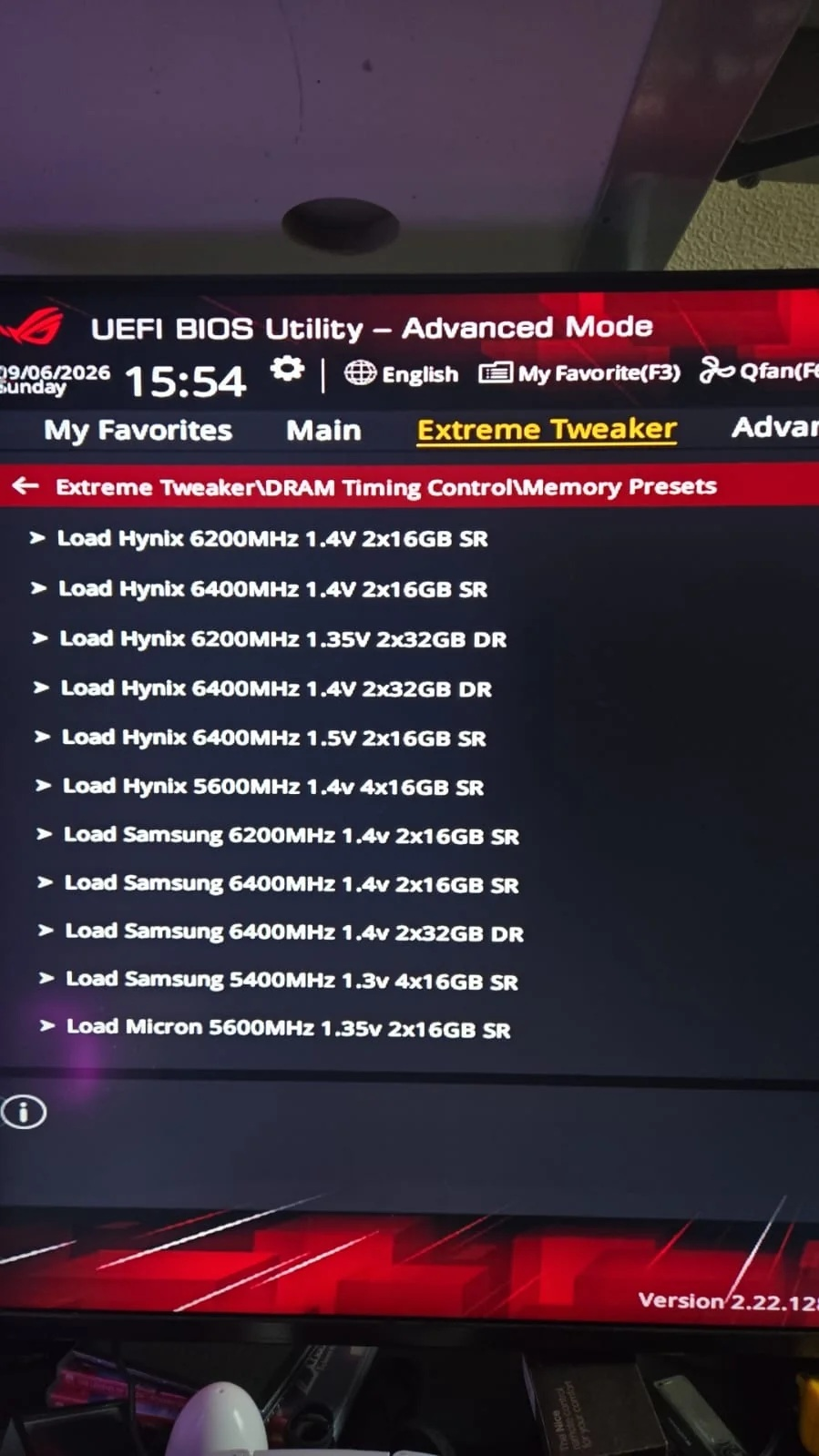
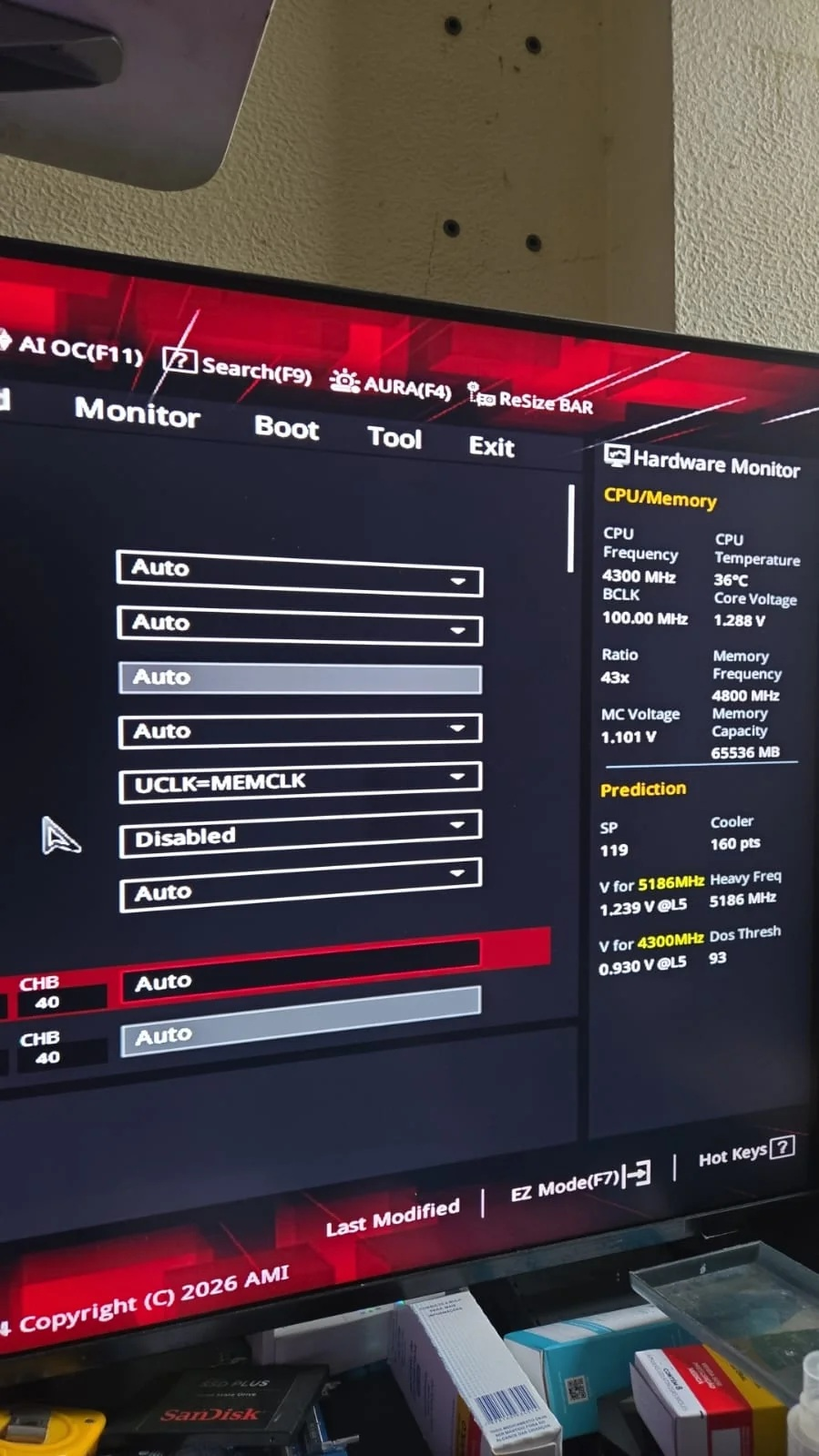
It is also important to distinguish between manually changing CPU voltage and selecting an automatic memory preset. The owner says no CPU or memory voltages were manually configured, but ASUS itself categorizes the Extreme Tweaker section as containing overclocking related settings and warns that incorrect values can cause system malfunction. A DDR5 6200 preset can modify multiple memory controller and supporting parameters automatically, meaning the absence of manual voltage adjustment does not necessarily mean every electrical parameter remained at stock values. At the same time, there is currently no evidence showing which voltage, current, temperature, or motherboard behavior actually caused the Ryzen 9 9950X3D to stop working.
Another important detail emerged from the owner's subsequent follow up report. The user said the ASUS X670E Hero had previously undergone a USB related repair and BIOS rewrite before returning to service as a backup motherboard. The ASRock X670E Taichi Carrara that previously hosted the 9950X3D had also developed unrelated USB connectivity problems before the motherboard swap. These additional variables make it difficult to attribute the CPU failure conclusively to BIOS 3902, the memory preset, the motherboard itself, or another electrical issue without engineering analysis of the affected hardware.
The incident nevertheless arrives against a broader backdrop of Ryzen 9000 reliability reports across multiple AM5 motherboard manufacturers. Earlier cases included a Ryzen 7 9800X3D and AM5 socket showing burn damage, while more recent reports have involved multiple Ryzen 9 9950X failures on the same ASRock X870 Steel Legend WiFi. ASRock subsequently confirmed that it was investigating Ryzen 9000 CPU failure reports and working with AMD on platform verification and BIOS optimization. None of those cases establish a common root cause with this ASUS incident, and there is currently no evidence of a confirmed platform wide defect.
The timing makes the DDR5 preset an obvious area for investigation, but correlation is not enough to identify the failure mechanism. A motherboard controlled memory profile can adjust considerably more than frequency alone, yet the history of this particular board, including its previous repair, adds another significant variable.
The more concerning detail is that the Ryzen 9 9950X3D reportedly worked in the ASUS board before the memory setting was applied and immediately stopped posting afterward. If AMD or ASUS receives the affected hardware, voltage telemetry, socket inspection, and electrical testing would be considerably more valuable than speculation based only on Q Codes and burn marks. Until that happens, this should be treated as a serious individual failure report rather than evidence that ASUS X670E Hero boards or Ryzen 9 9950X3D processors have a widespread compatibility problem.
If a CPU failed immediately after applying a motherboard provided memory preset, would you RMA both the processor and motherboard before trusting the system with replacement hardware?
