
Tech Yes City Reports Back to Back AMD Ryzen 9 9950X Failures on an ASRock X870 Motherboard
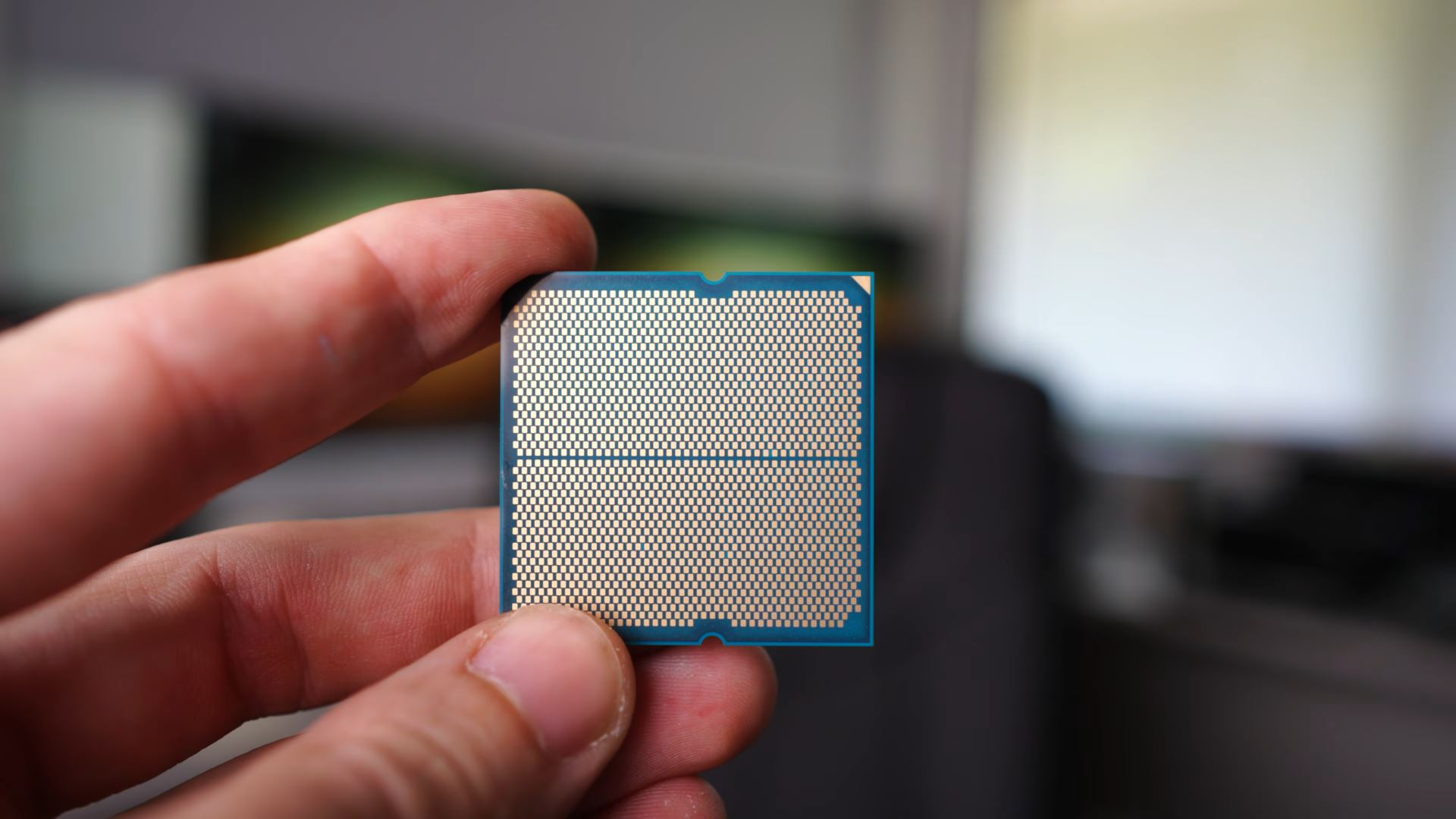
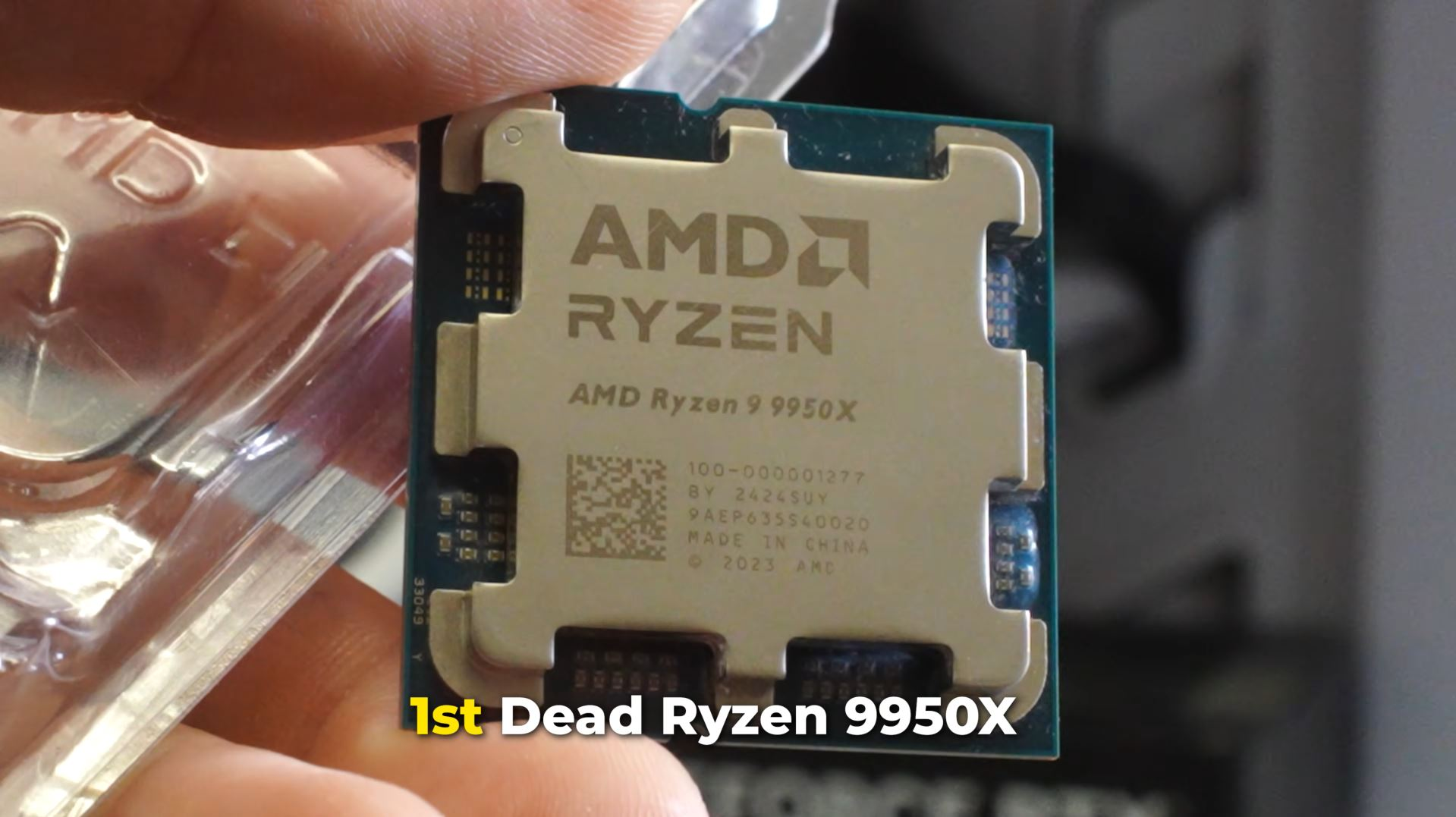
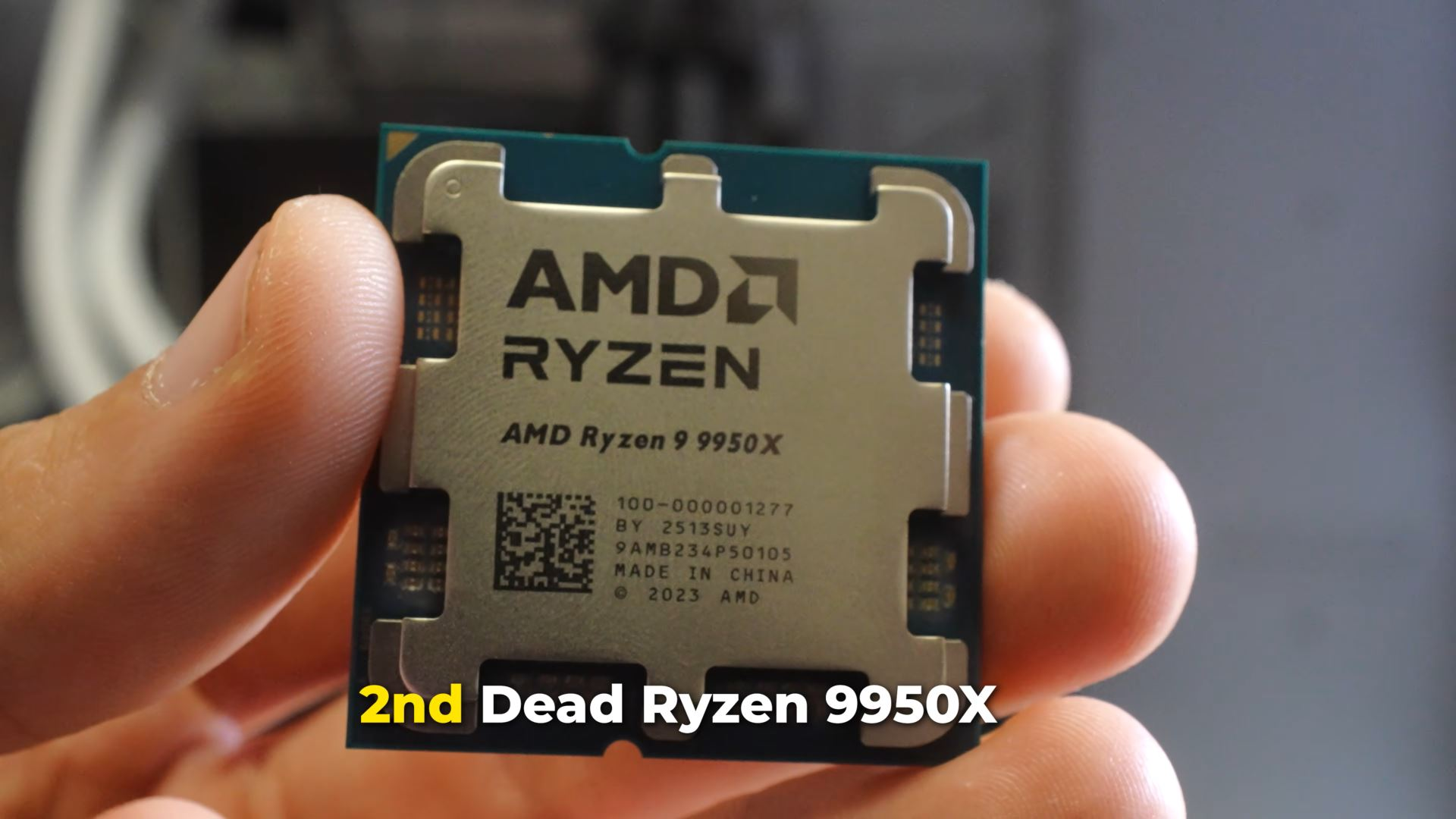
Popular tech YouTuber Tech Yes City has reported the failure of 2 AMD Ryzen 9 9950X processors within a few months while using the same ASRock X870 Steel Legend WiFi motherboard, raising fresh concerns around potential motherboard level reliability issues rather than a widespread CPU defect.
According to the report, the first Ryzen 9 9950X ran for roughly 3 to 4 months in Bryan’s configuration before dying unexpectedly. After replacing it with a second Ryzen 9 9950X sourced separately, the replacement CPU reportedly failed in a similar timeframe on the same board. Because Bryan has access to multiple AM5 motherboards, he was able to validate the failures by swapping boards, attempting to boot with different models, and applying the latest BIOS updates that were intended to mitigate Ryzen 9000 series related issues. Even after those steps, both CPUs were confirmed dead, which shifted the suspicion away from an isolated CPU batch problem and toward a possible issue tied to a specific motherboard or motherboard batch.
A key detail in the story is what Bryan says he was told by a major Australian retailer: Ryzen 9000 series CPU failure rates were described as normal in their internal view, but the retailer also reportedly avoided stocking higher end ASRock boards due to failure related concerns. That contrast is the part that will stick with enthusiasts, because it implies the risk may be concentrated around certain board models or specific production runs rather than the CPU platform at large.
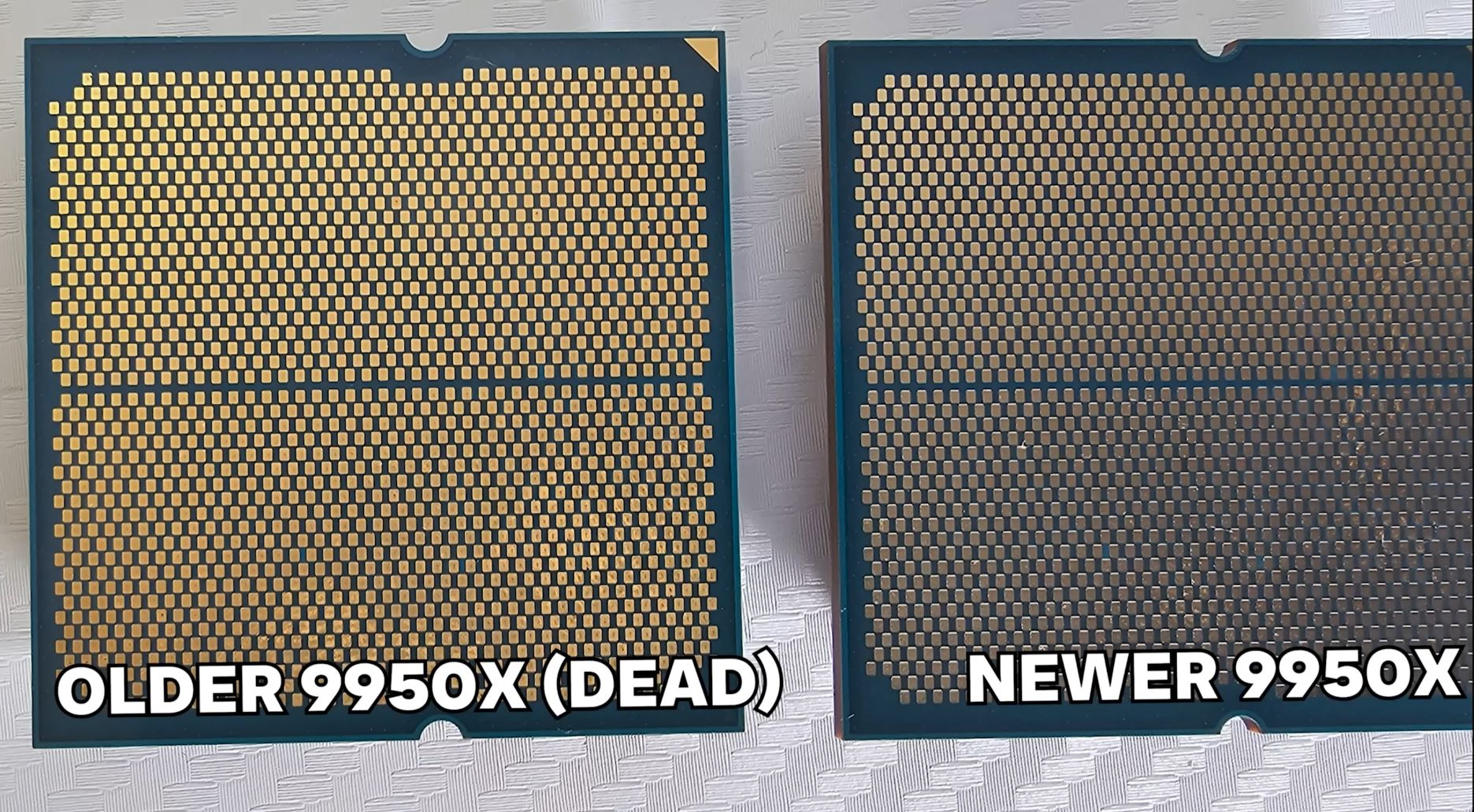
From an engineering perspective, the failure pattern described sounds less like a sudden catastrophic event and more like gradual electrical degradation. Bryan’s theory is that voltage overshoot tied to VRM regulation could be accelerating wear over time, rather than instantly killing the chip. This aligns with the fact that both processors reportedly survived for months before failing, which is consistent with a slow burn stress scenario instead of a single hard spike event. He also notes that other ASRock AM5 builds in his lineup, including B850 and X870 based systems, have been stable, which further supports the idea that the issue may be limited to certain boards rather than an across the board ASRock or AM5 platform problem.
The practical takeaway for builders is simple and cautious. BIOS updates can address boot training behavior, compatibility tuning, and voltage behavior within firmware constraints, but they cannot repair defective VRM components or other physical power delivery faults. If a motherboard is outputting unstable or overshooting voltages under specific load patterns, firmware mitigation may reduce risk but not fully eliminate it. In Bryan’s recommendation, if a user experiences a similar CPU failure event on a comparable setup, they should strongly consider replacing both the motherboard and the CPU to avoid repeating the same failure cycle.
For now, this remains a single creator’s case study rather than a confirmed industry wide defect, but back to back failures on the same board is the kind of signal that the enthusiast community and system builders will take seriously, especially on high end parts where long term stability is a core buying decision.
If you were running an AM5 high end build, would you immediately RMA both CPU and motherboard after a failure like this, or would you try a board swap first and keep the CPU for further validation?
