
Qualcomm’s Rumored Datacenter CPU Arrives at the Perfect Moment as Agentic AI Pushes CPU Demand Back Into Focus
Qualcomm may be preparing a major new move into the datacenter CPU market, and the timing could not be more strategic. A new rumor shared by analyst Ben Bajarin through X suggests that Qualcomm is working on a dedicated datacenter CPU based on the Arm architecture, with a possible announcement as early as June 2026.
Not a rumor QCOM has already said it's coming. I believe on an earnings call.
— Ben Bajarin (@BenBajarin) April 24, 2026
A Qualcomm datacenter CPU has been expected for some time, especially as the company continues expanding beyond smartphones, PCs, automotive platforms, and edge AI devices. However, the timing of this rumor is particularly important because agentic AI is rapidly changing the infrastructure conversation. While GPUs remain essential for model training and high performance inference, CPUs are becoming increasingly important for orchestration, scheduling, context management, tool execution, memory handling, and service coordination across AI agent systems.
In other words, agentic AI is turning the CPU back into a strategic compute asset.
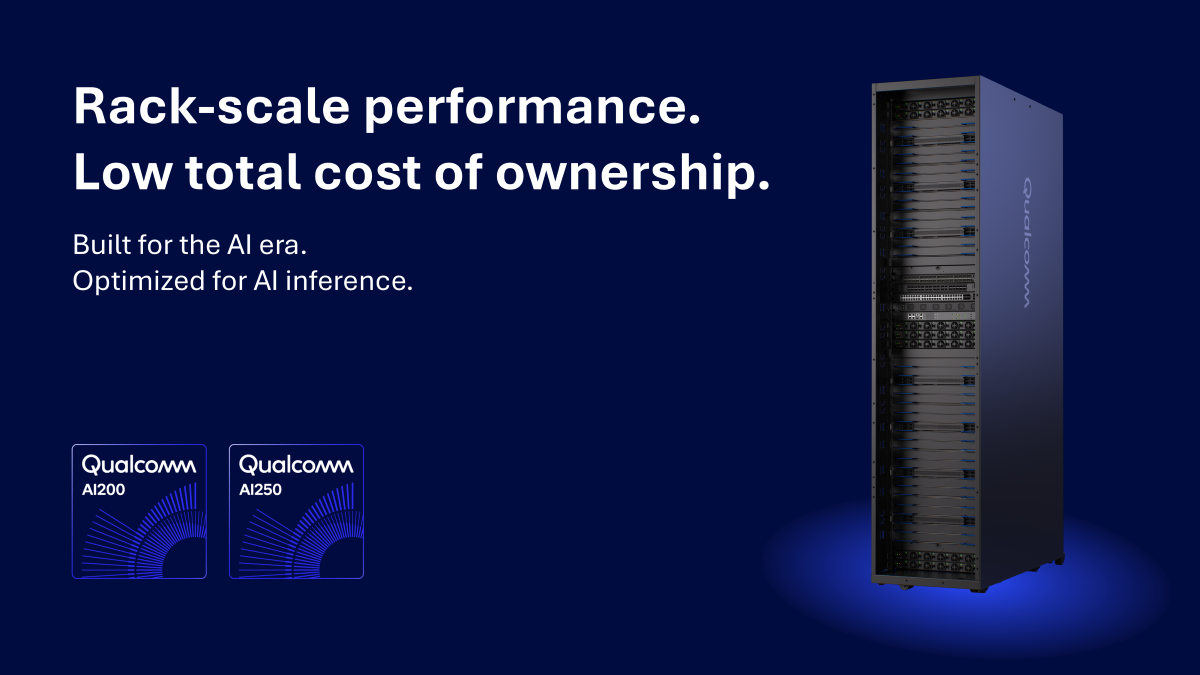
Qualcomm already has a presence in datacenter AI, but its current offerings are more focused on accelerator cards and rack level solutions. These products are largely built around the company’s Hexagon NPUs and AI accelerators designed for inference workloads. A dedicated datacenter CPU would represent a much broader step, giving Qualcomm a stronger position in server infrastructure and allowing it to compete more directly in the next generation AI compute stack.
The company has also been laying the groundwork through talent and technology expansion. Qualcomm reportedly hired a former Intel Xeon chief architect last year, signaling serious interest in server class CPU design. It also acquired Ventana Micro Systems, a startup focused on RISC V CPU development. While the current rumor points to an Arm based datacenter CPU, the Ventana acquisition still matters because it gives Qualcomm access to more CPU design expertise, server architecture knowledge, and advanced processor development experience.
Qualcomm also signed a memorandum of understanding with HUMAIN, a Saudi based AI company, in May 2025 to develop advanced AI and CPU solutions. This partnership already pointed toward a broader datacenter strategy, especially as sovereign AI projects, cloud infrastructure providers, and large enterprises search for more compute options beyond traditional x86 server CPUs.
There has also been speculation around Intel’s EMIB and advanced packaging technologies as a possible path for Qualcomm’s future CPU products. Advanced packaging is becoming increasingly important in AI infrastructure because companies are looking to combine CPUs, accelerators, memory, networking, and chiplets into more efficient system level designs. If Qualcomm wants to build a serious datacenter platform, packaging will matter almost as much as the CPU core architecture itself.
The NVIDIA angle is also important. Qualcomm has been moving closer to NVIDIA in the AI segment, and a previous CNBC report suggested that Qualcomm’s future datacenter CPUs could be paired with NVIDIA chips. That would place Qualcomm in an interesting position. NVIDIA already uses its own Grace and Vera CPUs for rack scale AI systems, while also working with Intel Xeon in certain AI offerings. If Qualcomm can offer a competitive Arm based CPU platform that integrates well with NVIDIA GPUs, it could become another option for AI infrastructure customers seeking efficiency, scale, and supply flexibility.
Qualcomm itself has already acknowledged that server CPUs are part of its datacenter roadmap. On its official Qualcomm Data Center Solutions page, the company states that it is developing state of the art datacenter CPU solutions.
"Qualcomm Data Center Solutions is developing state of the art data center CPU solutions. Stay tuned for more details."
That statement gives the latest rumor more weight. Qualcomm may not have officially revealed specifications, architecture details, launch partners, or product names, but the company has already made it clear that datacenter CPUs are part of the plan.
The bigger market reason is simple: AI infrastructure is no longer only about the biggest GPU clusters. Agentic AI changes the compute ratio. As AI systems become more autonomous and interactive, they need more CPU resources to manage workflows, call tools, process data, coordinate agents, handle user requests, and connect inference systems with real world applications. This is why major cloud and AI companies are now paying closer attention to CPUs again.
Intel recently argued that agentic and multi agent workloads could shift infrastructure ratios away from the traditional model where 1 CPU feeds many GPUs. In some future deployments, CPUs could become more numerous because they handle the control plane while GPUs focus on model execution. That trend creates an opening for companies like Qualcomm, especially if it can deliver efficient Arm based CPUs tuned for AI infrastructure.
The competitive landscape is already heating up. Intel has Xeon, advanced packaging, and foundry ambitions. AMD has EPYC and a strong datacenter CPU roadmap. NVIDIA has Grace, Vera, and full AI rack scale platforms. Amazon has Graviton, which is already gaining momentum in cloud workloads. Ampere remains active in Arm server CPUs. If Qualcomm enters this space with a dedicated datacenter CPU, it will be stepping into a crowded but rapidly expanding market.
Qualcomm’s potential advantage is efficiency. The company has decades of experience building power efficient chips, custom CPU designs, AI acceleration blocks, connectivity solutions, and system on chip platforms. If it can translate that expertise into server class CPUs, it could appeal to AI infrastructure customers looking for better performance per watt, especially as power availability becomes one of the biggest constraints in datacenter expansion.
The June 2026 timing also makes sense. AI infrastructure planning is accelerating, and customers are making long term decisions now around CPU, GPU, accelerator, networking, memory, and packaging suppliers. If Qualcomm wants to secure early partners, ecosystem support, and developer interest, it needs to move before the agentic AI hardware market becomes even more locked in by existing players.
Still, the rumor remains unconfirmed. Qualcomm has not officially announced the chip, and key details remain unknown, including core count, process node, memory support, packaging approach, socket strategy, accelerator compatibility, software ecosystem, launch partners, and whether the product will target hyperscalers, sovereign AI projects, enterprise servers, or NVIDIA paired AI systems.
Even so, the direction is clear. Qualcomm is no longer only a mobile and edge AI company. It is preparing to compete deeper inside datacenter infrastructure, and agentic AI may give it the opening it needs.
If the rumored June announcement happens, Qualcomm’s datacenter CPU could become one of the most important server hardware reveals of 2026. The AI market is hungry for more compute options, and CPUs are becoming central again as AI systems move from model training into real world agentic deployment.
Will Qualcomm’s rumored datacenter CPU become a serious Arm based challenger for AI infrastructure, or will Intel, AMD, NVIDIA, and Amazon keep control of the server CPU race?
