
OpenAI Researcher Praises Cerebras Inference Speed as AMD Expands Helios Strategy
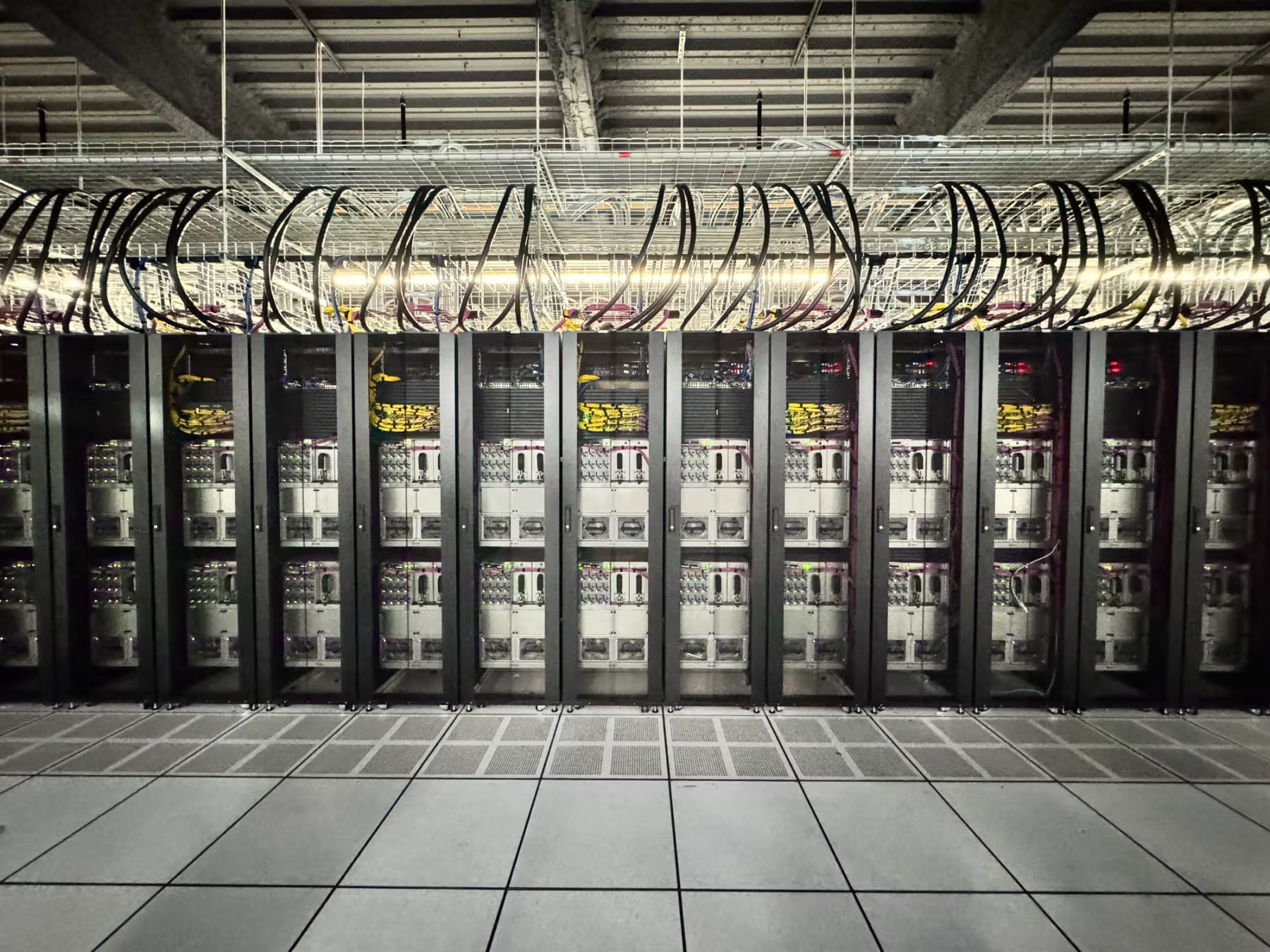
An OpenAI researcher has praised the inference performance delivered by Cerebras hardware, providing timely validation for the specialist architecture shortly after AMD selected the company as a technology partner for its Helios artificial intelligence infrastructure.
OpenAI researcher Jeffrey Wang said internal OpenAI models running on Cerebras systems were completing inference tasks fast enough to significantly improve his daily productivity. Workloads that previously required several minutes could finish before he had time to move to another task.
"Internally, we have some OpenAI models that are on Cerebras chips. They are incredible because they have such fast inference."
— Quote by: Jeffrey Wang
OpenAI researcher Jeffrey Wang reveals the internal models running on Cerebras chips are so fast that tasks now finish before he even has the opportunity to context-switch, and it increases his productivity.
— Fireside Alpha (@firesidealpha) July 28, 2026
"Internally, we have some OpenAI models that are on Cerebras chips.… https://t.co/Aajgm9J5xl pic.twitter.com/I9DZwBzwVW
The comments are especially relevant because OpenAI signed a major infrastructure agreement with Cerebras in January 2026. Under the official OpenAI and Cerebras partnership, Cerebras will add 750 MW of low latency artificial intelligence compute to OpenAI’s platform through several deployment phases extending into 2028. OpenAI said the capacity would support faster responses, more natural interactions, coding, image generation, and agent workloads.
Cerebras achieves its performance through the Wafer Scale Engine, which places large amounts of compute, memory, and bandwidth on a single silicon wafer. This design reduces the movement of model data between separate processors and external memory, helping the system generate tokens with lower latency than many conventional accelerator clusters.
AMD recently announced that Cerebras will contribute this fast token generation capability to a combined inference platform built around AMD Helios. The planned system separates inference into complementary stages. Helios processes prompts, large context windows, and high throughput workloads using AMD Instinct accelerators, while the Cerebras Wafer Scale Engine handles latency sensitive decoding and token generation.
AMD and Cerebras estimate that the integrated workflow could provide up to 5x more tokens per second per watt than a Cerebras only configuration at a comparable interactivity level. That result is based on internal modelling performed with the Kimi 2.6 1 trillion parameter model, meaning independent production testing will still be necessary before the performance claim can be applied broadly across other models and workloads.
Cerebras plans to deploy Helios systems inside its data centers, with the combined service expected to become available through Cerebras Cloud during the second half of 2026. This arrives as AMD begins sampling its MI450 accelerator family and reports that its largest upcoming artificial intelligence deployments are increasingly focused on inference rather than training alone.
Jeffrey Wang’s comments provide meaningful validation for Cerebras, particularly because they describe real internal OpenAI workloads rather than a controlled public benchmark. Fast inference can directly improve productivity when developers, researchers, and artificial intelligence agents repeatedly wait for models to reason, generate code, or complete complex tasks.
However, the comments should not be treated as direct validation of the complete AMD and Cerebras platform. OpenAI is discussing its current experience with Cerebras hardware, while the integrated Helios workflow remains a separate solution scheduled for deployment through Cerebras Cloud.
AMD appears to have selected a strong partner for latency sensitive inference, but the commercial outcome will depend on software integration, operational reliability, energy efficiency, pricing, and whether customers can move workloads between both architectures without adding unnecessary complexity.
Could combining AMD Helios throughput with Cerebras token generation create a stronger inference platform than relying on a single accelerator architecture?
