
AMD Helios Could Cost 40% More Than NVIDIA Vera Rubin
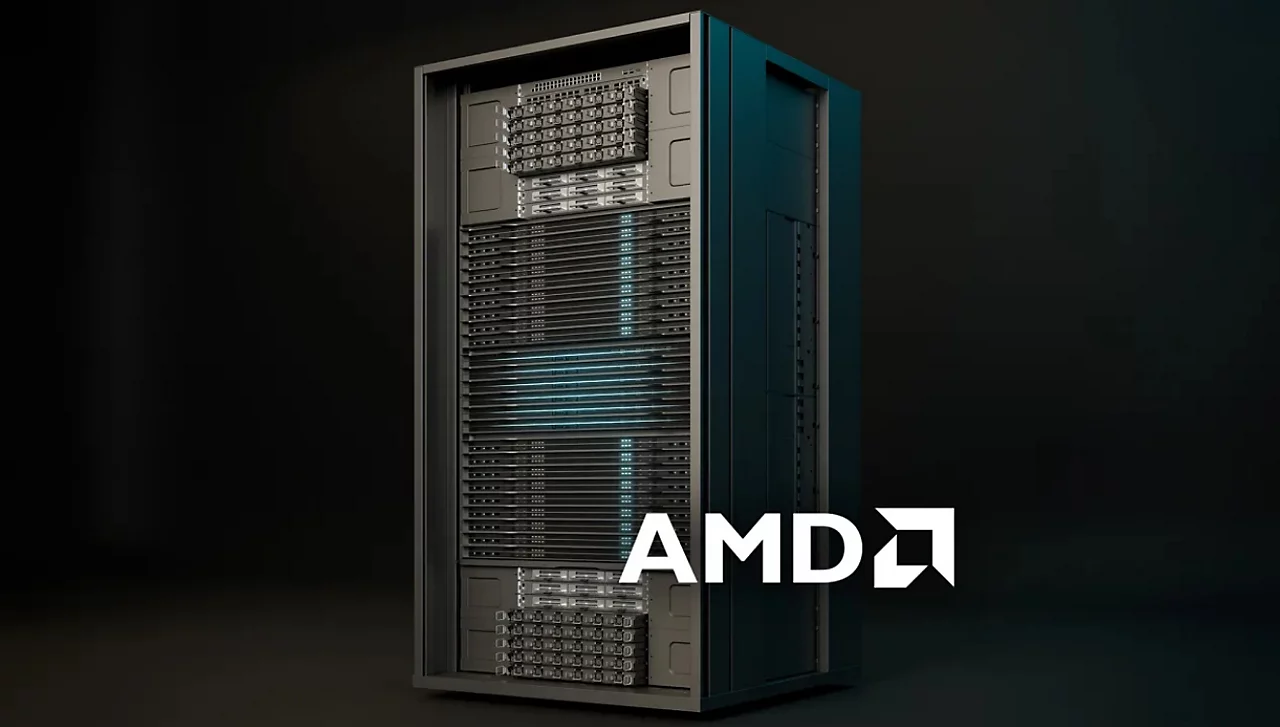
AMD’s Helios AI rack could cost between US$5 million and US$5.5 million, placing it approximately 40% above current estimates for NVIDIA’s Vera Rubin NVL72 system. The figures have not been confirmed by AMD, but the company appears confident that Helios can command a premium through its higher memory capacity, open architecture and integrated portfolio of Instinct accelerators, EPYC processors and Pensando networking.
The estimate, attributed to Futurum and shared by Antfeed, places NVIDIA’s Vera Rubin NVL72 at between US$3.5 million and US$4 million per rack. Comparing the midpoint of both ranges produces a difference of approximately 40%. However, these figures should be treated cautiously because final prices will depend on system manufacturers, memory costs, networking configurations, customer contracts and deployment scale.
AMD PRICES HELIOS ABOVE RUBIN: MICROSOFT STILL BUYS THE FULL STACK!
— Antfeed (@antfeedapp) July 21, 2026
TLDR: Microsoft is bringing AMD’s Helios systems to Azure even though Futurum estimates they cost about 40% more than Nvidia’s Vera Rubin, suggesting AMD is no longer competing as the cheaper alternative.… pic.twitter.com/NsysAUfTIg
This distinction is important because AMD officially describes Helios as a reference design rather than a product sold directly by the company. OEM and ODM partners will use AMD’s blueprint to produce their own branded systems, meaning AMD does not necessarily control the final price paid by every customer. Volume deployments are expected during the second half of 2026.
Helios integrates 72 AMD Instinct MI455X GPUs with 18 6th Gen EPYC Venice CPUs, Pensando Vulcano AI network interface cards, Salina DPUs, Infinity Fabric and the ROCm software platform. The complete liquid cooled system delivers up to 2.9 EFLOPS of FP4 performance, 1.4 EFLOPS of FP8 performance, 31 TB of HBM4 memory, 260 TB/s of scale up bandwidth and 43 TB/s of scale out bandwidth.
Each MI455X accelerator provides 432 GB of HBM4 memory and 19.6 TB/s of bandwidth, compared with 288 GB and 22 TB/s for each Rubin GPU inside NVIDIA Vera Rubin NVL72. NVIDIA maintains an advantage in memory bandwidth per GPU and peak FP4 inference performance, while AMD provides approximately 50% more memory capacity across the rack.
That additional memory could become one of Helios’ strongest commercial advantages. Frontier models, long context inference, retrieval systems and autonomous AI agents require increasing amounts of accelerator memory. Keeping larger models and active context data inside HBM can reduce transfers to external storage and improve response latency, potentially allowing customers to justify a higher initial acquisition cost.
Helios also uses EPYC Venice processors with up to 256 Zen 6 cores and 1.6 TB/s of memory bandwidth per CPU. Pensando Vulcano provides 800 Gbps Ethernet connectivity, while the Salina DPU uses 16 Arm N1 cores to offload networking, storage and security services. AMD combines these components through open standards including Open Rack Wide, UALink and Ultra Ethernet, presenting Helios as a more flexible alternative to NVIDIA’s proprietary NVLink centered ecosystem.
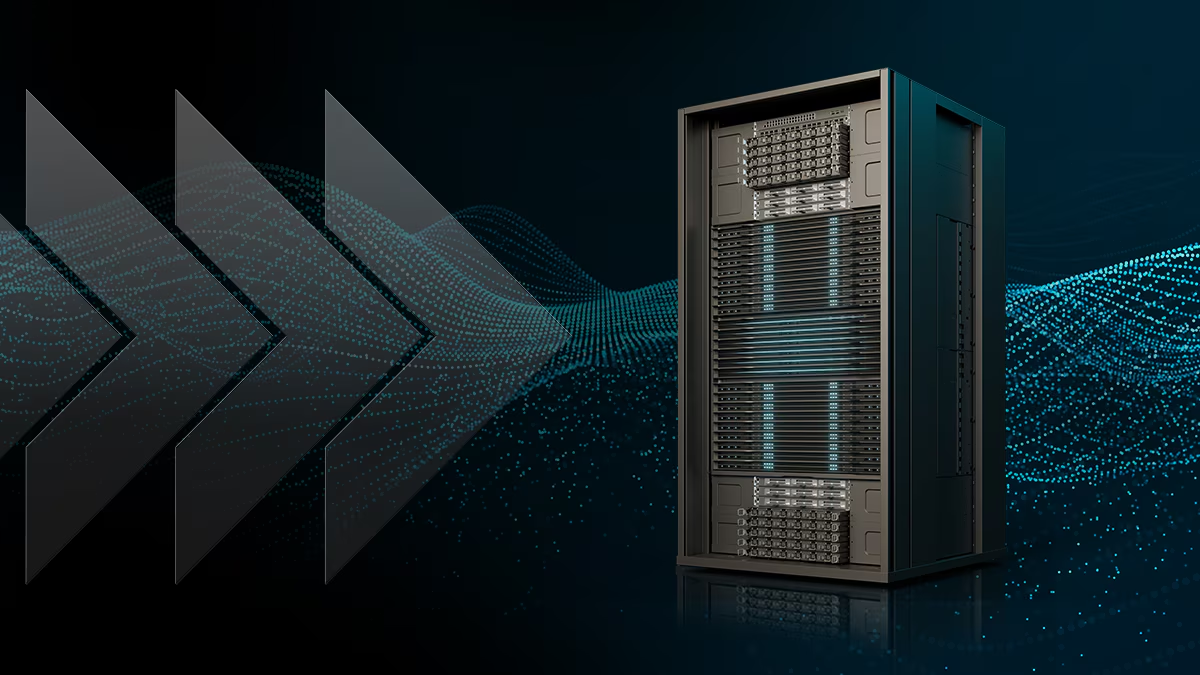
Microsoft has already confirmed that it will deploy Helios to power production scale AI inference and Azure AI services. The upcoming Azure ND MI455X v7 platform will combine MI455X accelerators with EPYC Venice processors for reasoning, search and agentic AI workloads. This provides AMD with an important hyperscale customer even before partner systems enter wider production.
AMD has also secured major infrastructure engagements with Meta and TCS. Meta plans to deploy up to 6 GW of AMD Instinct GPUs, beginning with a custom MI450 based accelerator and EPYC Venice processors built around the Helios architecture. TCS is working with AMD on Helios infrastructure for enterprise and sovereign AI deployments in India. These agreements indicate that large customers are evaluating AMD as a complete infrastructure provider rather than only as a lower priced accelerator alternative.
Ccustomers interest in AMD’s MI450 family and Helios architecture has strengthened as AI investment shifts toward large inference deployments. AMD has also shown a willingness to increase accelerator pricing when it believes its products deliver competitive value, as seen with MI350 price adjustment.
The reported Helios premium therefore represents a significant change in AMD’s market positioning. Rather than attempting to challenge NVIDIA primarily through lower prices, AMD is presenting memory capacity, open standards and scale out networking as premium capabilities worthy of higher infrastructure spending.
The reported US$5 million to US$5.5 million price should not be treated as an official AMD figure, particularly because Helios is a partner reference design. Even so, the estimate signals that AMD no longer wants Instinct platforms to be viewed as the budget alternative to NVIDIA.
A 40% premium will require more than impressive specifications. AMD must prove that Helios delivers better total cost of ownership through higher model capacity, stronger utilisation and competitive performance per watt. ROCm reliability, developer support and deployment complexity will be equally important because hardware advantages provide limited value when customers face additional software integration costs.
Microsoft’s commitment gives AMD a powerful validation point. The real test will come when Helios and Vera Rubin are deployed at scale and customers can compare generated tokens, energy consumption, operational reliability and total infrastructure costs under production workloads.
Would Helios’ 31 TB of HBM4 memory and open architecture justify paying approximately 40% more than an NVIDIA Vera Rubin rack?
