
OpenAI Reportedly Plans Sweetpea AI Earbuds Using Samsung 2nm Exynos
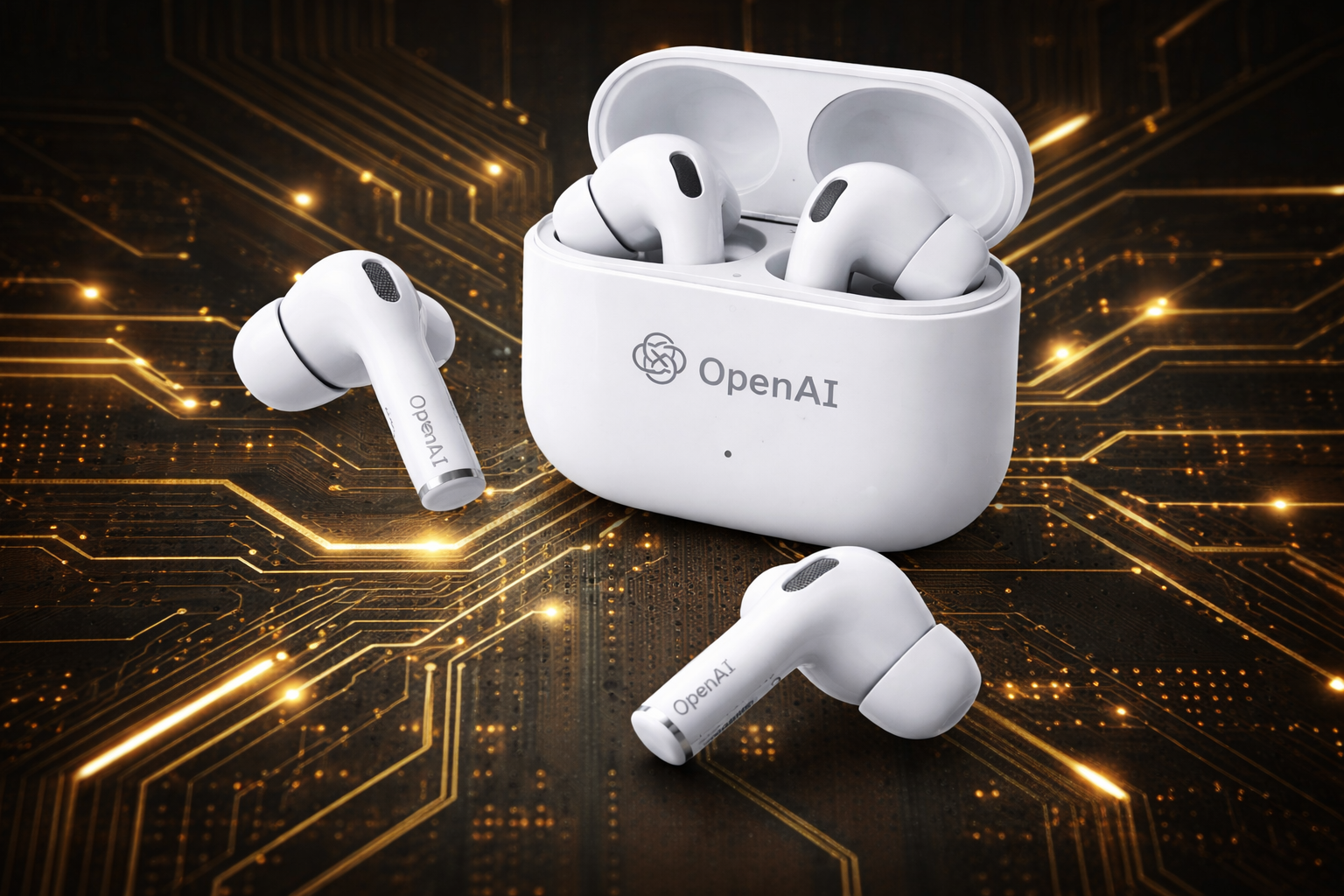
A new report from Taiwan claims OpenAI is expanding beyond software subscriptions into a broader hardware ecosystem, with 2 consumer devices and a custom data center chip effort moving in parallel. The report points to AI earbuds under the internal codename Sweetpea, a screenless pocket device called Gumdrop, and a dedicated AI focused ASIC effort codenamed Titan.
According to the report, the Sweetpea earbuds would rely primarily on cloud based AI processing, while still using a Samsung Exynos chip built on Samsung 2nm for certain on device tasks. The report does not specify which Exynos variant would be used, which leaves open multiple scenarios depending on timing and Samsung Foundry readiness.
From a product strategy perspective, this combination suggests OpenAI is exploring the same core playbook that defines modern wearable AI: lightweight local processing for latency sensitive actions, with heavier inference routed to the cloud to keep power draw and thermals under control. If this is accurate, Sweetpea would be less about raw on device capability and more about persistent access to OpenAI services through a frictionless form factor.
The same report describes a separate OpenAI device internally called Gumdrop, said to be roughly pen sized and similar in footprint to an iPod Shuffle style device, with no dedicated screen. The rumored feature set points toward contextual capture plus rapid conversion into usable inputs inside ChatGPT. The report lists the following capabilities:
Contextual awareness through sensors including cameras and microphones
Local execution of tailored OpenAI models, with cloud support for heavier compute
Handwriting conversion to text with instant upload to ChatGPT
Device to device communication similar to current smartphone workflows
Portable use either in a pocket or worn around the neck
Expected launch window of 2026 or 2027
If this direction holds, Gumdrop looks like an always available input node designed to increase daily AI engagement, especially for notes, reminders, and ambient capture use cases. That positioning aligns with a broader ecosystem strategy where the hardware primarily exists to increase retention and subscription stickiness.
Titan custom ASIC with Broadcom points to late 2026, not an immediate 2026 rollout
On the infrastructure side, the report claims OpenAI is working with Broadcom on a custom AI ASIC codenamed Titan, expected to be manufactured on TSMC 3nm and debut by late 2026. It also references a follow on chip, Titan 2, expected to move to TSMC A16.
This is important for expectation management: while some headlines frame Titan as arriving by the end of the year, the report itself places the meaningful debut timeline at the end of 2026. In practical terms, that is consistent with modern ASIC development cycles, where design, validation, and foundry allocation are long lead activities, especially at advanced nodes.
Strategically, Titan fits a clear business objective: improving OpenAI’s long term cost structure and negotiating leverage by reducing dependence on Nvidia style GPU supply. This mirrors what other hyperscale players have already done with internal accelerators, but OpenAI’s execution will hinge on securing enough manufacturing capacity and integrating the chip into a complete platform that includes networking, memory, and software enablement.
With these rumored devices and silicon programs, OpenAI appears to be building an integrated stack where consumer endpoints drive usage, and custom infrastructure improves margin and scale economics. Whether that becomes a breakout hardware ecosystem will depend on execution quality, pricing, and whether OpenAI can deliver genuinely everyday utility rather than novelty.
What would make AI earbuds compelling for you, offline capable features, ultra fast voice interactions, or seamless integration with your existing phone and PC workflow?
