
NVIDIA’s Vera CPU Pulls in CoreWeave, Meta, Oracle, and Alibaba as Early Deployers, Expanding the Company’s AI Push Beyond Rubin
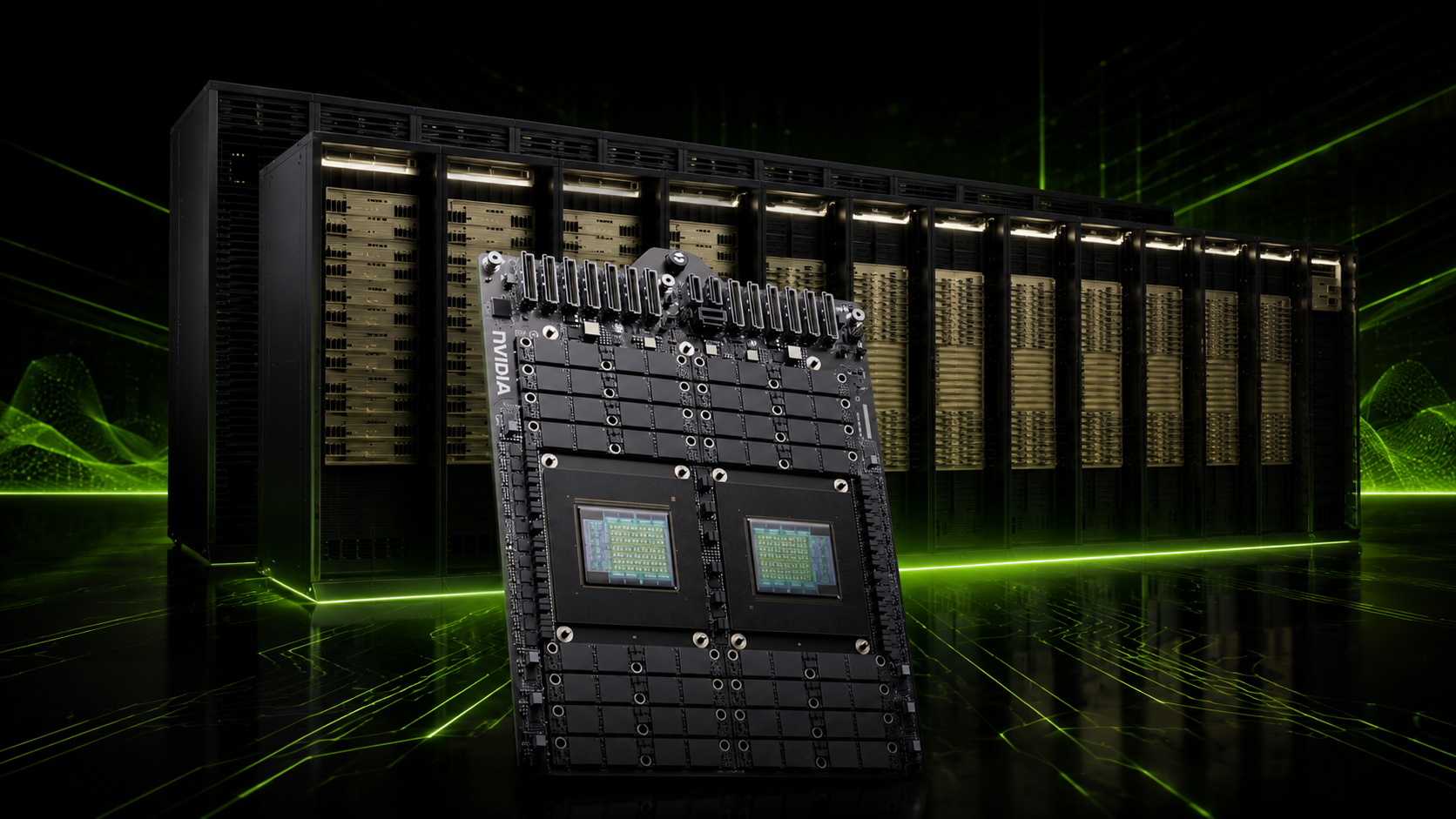
NVIDIA’s next major platform story is no longer just about Rubin GPUs. The company has now confirmed that several major cloud and AI players are collaborating to deploy the Vera CPU, including Alibaba Cloud, CoreWeave, Meta, and Oracle Cloud Infrastructure, giving its new Arm based data center processor an unusually strong starting position before broader rollout ramps up. In its official launch materials, NVIDIA also said Vera is designed both for dense liquid cooled CPU racks and for standard single socket and dual socket server platforms, showing that the chip is meant to stand on its own as a data center product and not only as a companion inside Vera Rubin systems.
That matters because Vera is aimed directly at the kind of control heavy infrastructure work now surging alongside agentic AI. NVIDIA says the CPU was built for reinforcement learning and agentic AI workloads, where large numbers of parallel software environments, tool use, code execution, and low latency data handling matter just as much as raw accelerator performance. The company claims Vera delivers 50% faster evaluation cycles under full load, twice the performance of its predecessor, and much stronger energy efficiency, making it a foundational compute layer for AI factories, cloud infrastructure, analytics, storage, enterprise workloads, and HPC deployments.
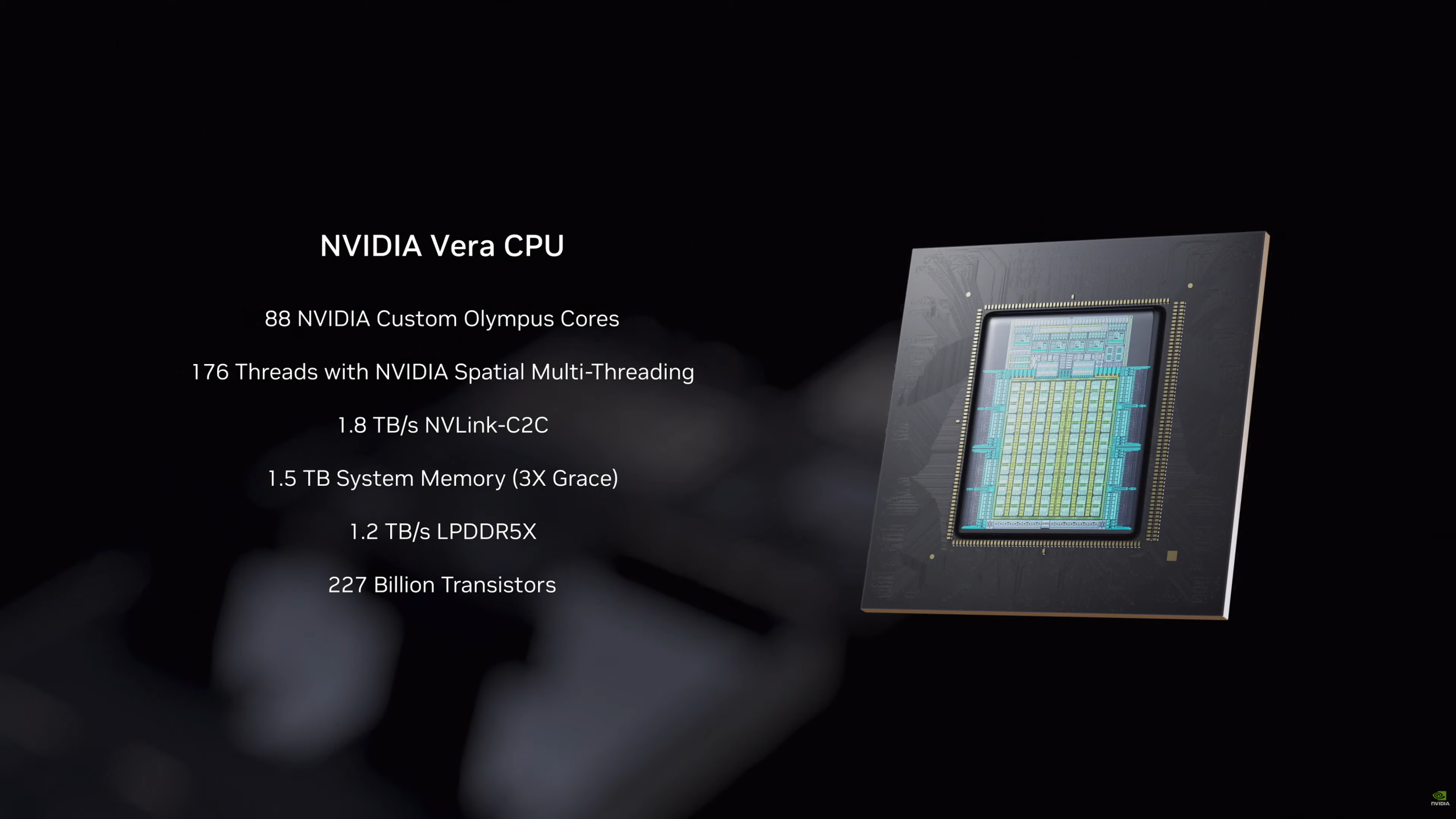
On the hardware side, Vera is a serious leap over Grace. NVIDIA says the processor uses 88 custom Olympus cores with 176 threads, support for FP8, up to 1.5 TB of LPDDR5X memory per socket, 1.2 TB/s of memory bandwidth, and up to 1.8 TB/s of NVLink C2C bandwidth in dual socket designs. The company is positioning it as the first data center CPU built specifically for the age of agentic AI, with the goal of maximizing throughput, responsiveness, and efficiency for large scale AI services and data intensive compute tasks.
The rack scale angle is where the opportunity starts to look much bigger. NVIDIA has already detailed a Vera CPU rack with 256 liquid cooled CPUs, 74 BlueField 4 DPUs, up to 400 TB of LPDDR5 memory, and as much as 300 TB/s of aggregate memory throughput. Tom’s Hardware reported that NVIDIA expects these rack systems to be offered to hyperscalers including Oracle, CoreWeave, Nebius, and Alibaba, while official NVIDIA material separately confirms Meta is already in the customer mix for Vera deployments. That combination suggests Vera is opening a broader CPU business lane for NVIDIA beyond the flagship Vera Rubin GPU rack narrative.
Meta in particular adds weight to that direction. Reuters reported in February that NVIDIA had signed a multiyear deal to supply Meta with millions of AI chips, including standalone Grace and Vera CPUs alongside Blackwell and Rubin products. That is a strong signal that NVIDIA’s CPU ambitions are no longer theoretical. The company is clearly trying to become more deeply embedded across the full AI infrastructure stack, from CPU control planes and data processing to rack scale accelerators and networking.
Alibaba Cloud’s presence on NVIDIA’s official Vera customer list is also notable, although NVIDIA has not publicly detailed the exact scope, location, or configuration of every planned deployment. What the company has confirmed is that Alibaba Cloud is one of the leading hyperscalers collaborating to deploy Vera, alongside CoreWeave, Meta, Oracle Cloud Infrastructure, ByteDance, Lambda, Nebius, and Nscale. That breadth shows Vera is being introduced with immediate hyperscaler relevance rather than as a niche internal CPU experiment.
According to GFHK:
— Jukan (@jukan05) May 12, 2026
- NVIDIA’s Vera CPU rack has already secured Alibaba, CoreWeave, Meta, and Oracle as early adoption customers.
- Qualcomm’s data center CPU is expected to ship in 2028, and Qualcomm is also developing scale-out switches and connectivity silicon for rack-level…
Strategically, Vera gives NVIDIA something it has wanted for years: a larger share of the compute stack around AI infrastructure. Rubin will remain the headline engine for top tier AI factories, but Vera lets NVIDIA monetize the CPU side of the buildout too, especially in environments where orchestration, memory bandwidth, per core responsiveness, and energy efficiency matter for agents and large scale service backends. Outside reporting has already framed Vera as a potential multibillion dollar CPU business for NVIDIA if adoption scales the way current customer interest suggests. That is still an expectation rather than a confirmed revenue figure, but the demand profile is clearly stronger than a normal first generation platform launch.
What stands out most is timing. As the AI market shifts from pure model training into reasoning, tool use, and persistent agent workflows, the CPU is becoming more important again inside the hyperscale equation. NVIDIA is moving aggressively to make sure that shift benefits its own silicon portfolio rather than only AMD, Intel, or custom in house designs. If Vera continues to convert interest from names like CoreWeave, Meta, Oracle, and Alibaba Cloud into real volume, this could become one of the company’s most important expansion moves beyond Rubin itself.
What do you think will matter more for NVIDIA over the next 2 years: Vera as a standalone CPU platform, or Vera as the backbone that strengthens Rubin deployments?
