
NVIDIA’s Rubin Ultra Could Hand Intel a Lifeline if UBS Is Right About EMIB T on a 4 Chip Variant
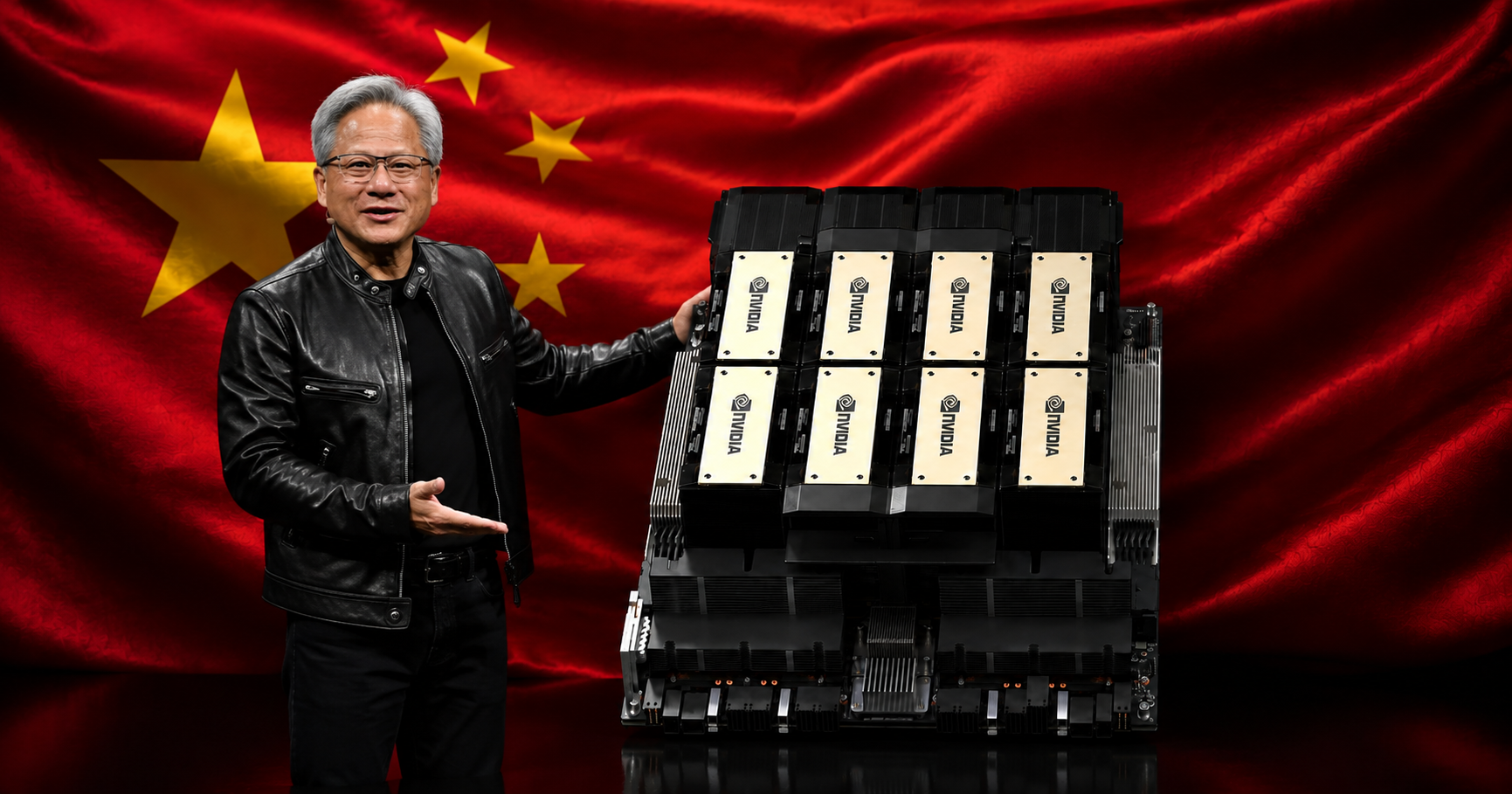
A new UBS note is putting fresh attention on Intel’s advanced packaging ambitions, after suggesting that NVIDIA could eventually use Intel’s EMIB T packaging for a possible 4 chip version of Rubin Ultra. That is not an official design win, and neither NVIDIA nor Intel has confirmed it. But if the scenario proves accurate, it would give Intel something it has been chasing for years: a meaningful role in one of the most important AI hardware platforms of the next cycle.
The key point is where the claim actually comes from. UBS, as quoted in secondary reporting, argues that NVIDIA’s out year gross margin profile could depend in part on whether Rubin Ultra arrives in both 2 chip and 4 chip forms, with the 4 chip version “likely using INTC’s EMIB T.” That wording matters because it is still framed as analyst expectation, not supplier confirmation. In other words, this is a credible financial and supply chain scenario, but it is still a scenario.
What makes the idea plausible is Intel’s own packaging roadmap. Intel has been publicly promoting EMIB T as a future facing advanced packaging option for high bandwidth memory class designs, and at Foundry Direct Connect 2025 it explicitly said the technology is meant to address future HBM needs. Intel has also described EMIB T as a way to push beyond traditional reticle limits by combining EMIB style bridging with through silicon vias for better power delivery and signal routing.
UBS raising $NVDA est:
— Sean (@sean_________) May 14, 2026
"We believe Rubin chip/compute board production is on track to start this Q, though some fine tuning on rack-level cooling issues seems to be pushing mass production for racks into the Sept/Oct timeframe."$TSM CoWoS upside too. pic.twitter.com/0F19Mb7509
Intel is also making a very direct pitch on scale. In its own foundry materials, the company says EMIB T already enables systems larger than 6 times reticle size, is moving beyond 8 times reticle size in 2026, and is on a path past 12 times reticle size by 2028, with support for very large die complexes and large HBM counts. That kind of messaging lines up naturally with the sort of ultra large package conversation that Rubin Ultra has triggered across the industry.
On NVIDIA’s side, the timing also fits. NVIDIA has already publicly roadmapped Rubin for 2026 and Rubin Ultra for 2027, making the latter one of the company’s most important next generation AI platforms after Blackwell and Rubin. Reuters and NVIDIA’s own roadmap materials both place Rubin Ultra in the 2027 window, which is exactly why UBS is treating it as a margin defining product family rather than a distant concept.
For Intel, the strategic importance would be enormous. Reuters previously reported that Intel’s foundry business was already generating revenue from advanced packaging, even before major wafer manufacturing wins materialize, and that the company expected more meaningful foundry revenue to build into 2027. If Intel were to land any real role in Rubin Ultra packaging, it would not just be incremental business. It would be a major validation event for Intel Foundry’s position as an alternative packaging supplier in the AI era.
That said, there are still several reasons to stay cautious. The UBS view does not guarantee NVIDIA has committed to a 4 chip Rubin Ultra SKU, it does not guarantee Intel would package it even if such a SKU exists, and it does not settle the practical questions around substrate readiness, yield, or large scale manufacturing economics. Even secondary reporting around Intel’s EMIB T push has repeatedly treated those factors as the real gating issues. So the more defensible conclusion is not that NVIDIA has chosen Intel, but that Intel has now worked its way into a conversation it would once have been excluded from.
If that conversation turns into business, the upside for Intel could be meaningful. Advanced packaging has become one of the most important choke points in AI infrastructure, and Intel is clearly trying to position EMIB T as a practical alternative where CoWoS capacity, size limits, or cost become pain points. Rubin Ultra may not end up being the moment that proves it, but UBS’s framing shows why investors and supply chain watchers are suddenly paying much closer attention.
Engagement
Do you think Intel’s real AI comeback is more likely to start in packaging than in leading edge wafer production?
